“I was a mess: white trainers covered in mud, blood on my hands — and I’d been sitting in a car” - Geraint Thomas given brutal introduction to new INEOS role on Opening Weekend
Cycling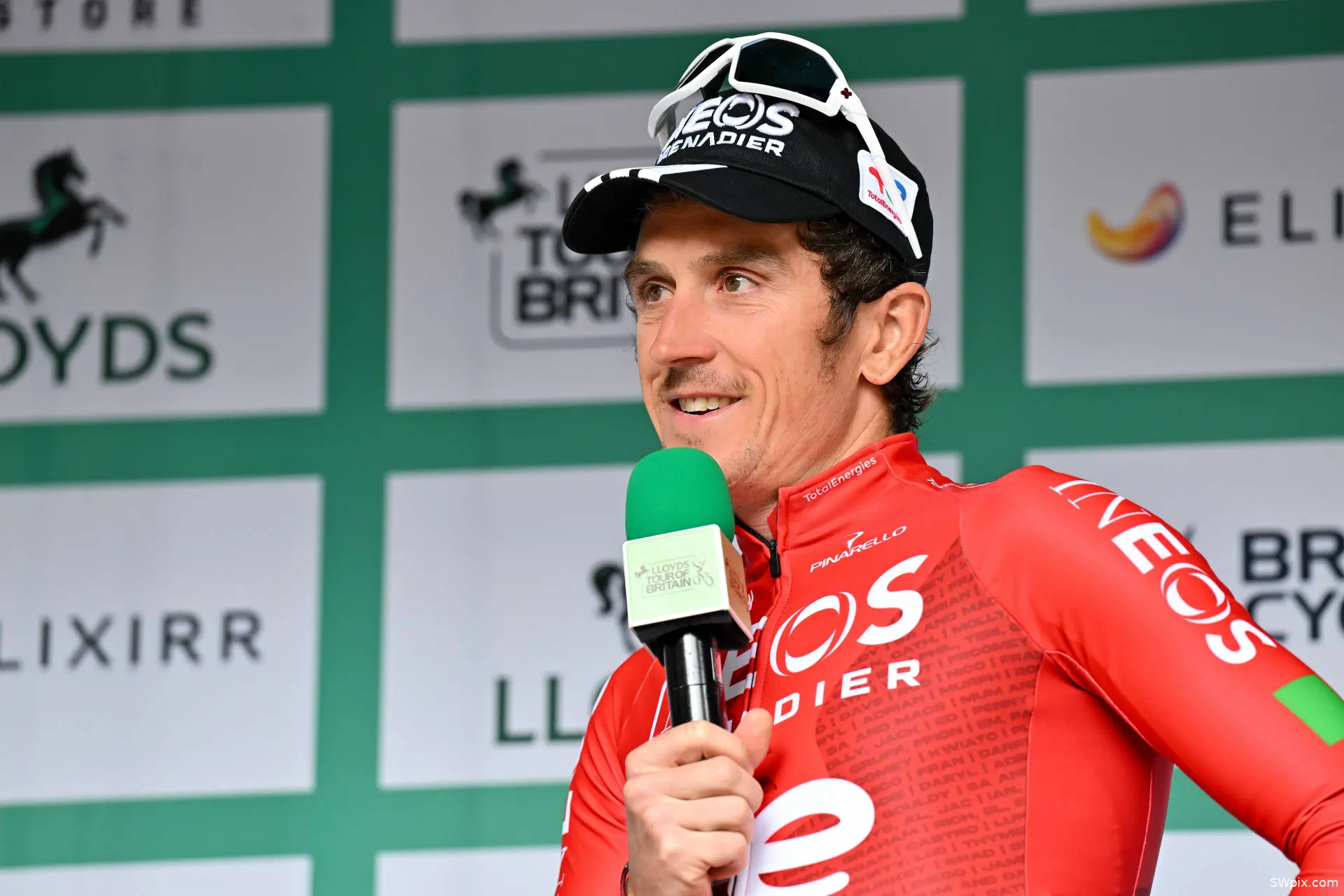
Opening Weekend always delivers chaos, but for Geraint Thomas the 2026 edition came with an entirely new perspective. No longer battling in the peloton after retiring from racing at the end of last season, the former Tour de France winner watched Omloop Het Nieuwsblad unfold from the INEOS Grenadiers team car. What he saw left a vivid impression.
“I got back on the bus after Omloop, and I was a mess: white trainers covered in mud, drink mix everywhere, blood on my hands — and I’d been sitting in a car,” Thomas and Luke Rowe recalled on the latest episode of the Watts Occurring podcast. “That’s classics racing for you.”
The image summed up the brutality of Opening Weekend.
Freezing temperatures, crosswinds and relentless positioning battles turned Omloop Het Nieuwsblad into a race defined less by terrain and more by chaos in the peloton.
Watching the classics from the team car
Thomas now works as Director of Racing at INEOS Grenadiers, a role that places him alongside the team’s leadership group, helping shape race strategy and preparation. It meant that, for the first time in his long career around the Spring Classics, he was witnessing the carnage of Belgian racing from the sidelines rather than the saddle.
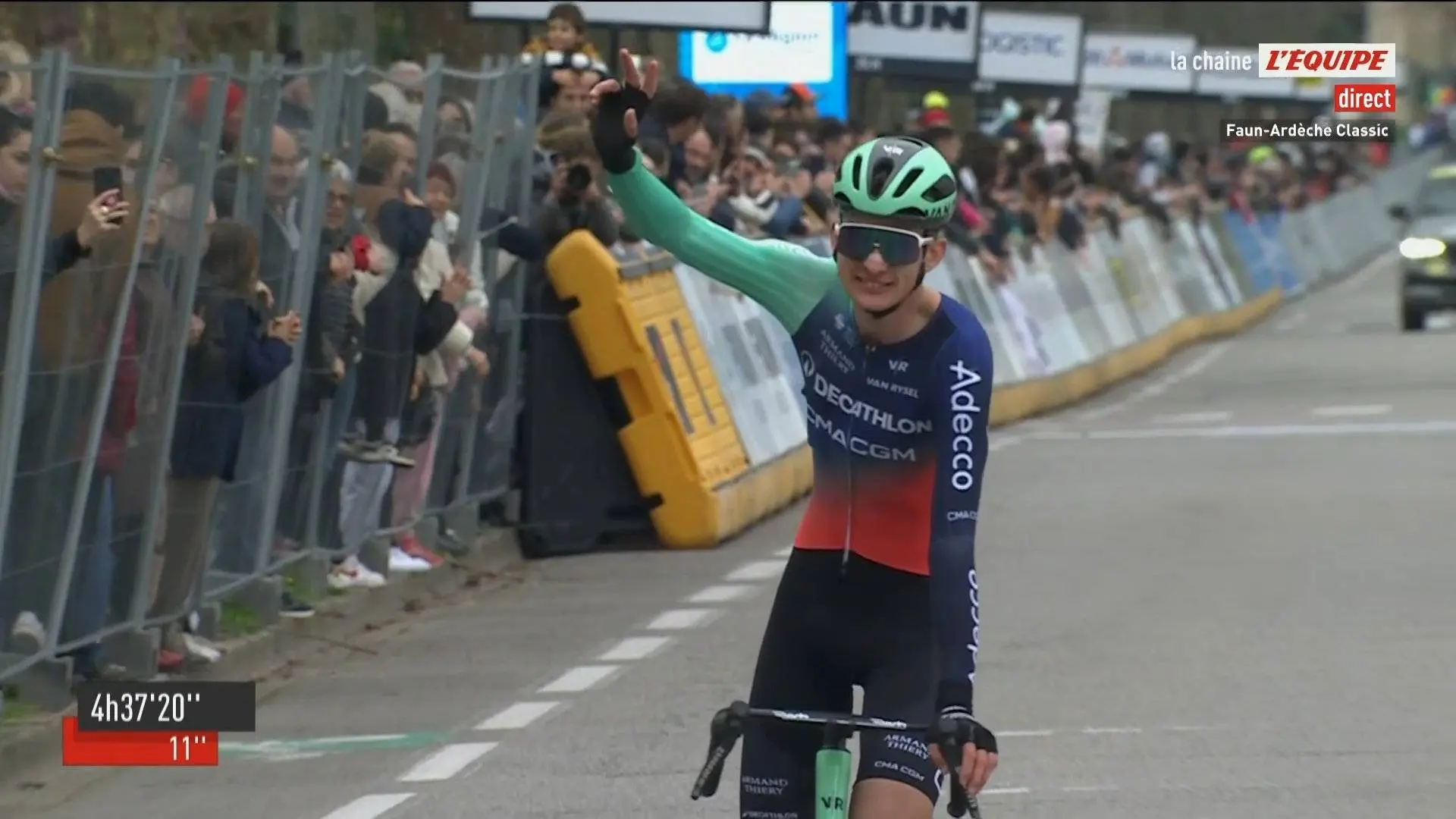
Rowe knows the feeling well. The former Welsh road captain retired in 2024 and is now a sports director with the Decathlon CMA CGM Team, directing races from the team car rather than the front of the peloton.
Both men spent the podcast reflecting on just how chaotic Opening Weekend had been.
“Omloop was freezing,” Rowe explained. “Nine degrees but it felt like zero with the wind. What’s mad is the wind didn’t split it. The climbs didn’t split it. The cobbles didn’t split it. Crashes split it.”
The constant pressure to hold position only added to the tension inside the bunch.
“No matter how far forward you think you are, it still feels like you’re behind,” Rowe continued. “That pressure causes more crashes.”

Thomas retired from the peloton at the 2025 Tour of Britain
The moment Omloop was decided
One of those incidents came at a decisive moment of the race. As the peloton charged towards the Molenberg, a crash near the front shattered the field and immediately put large sections of the bunch on the back foot.
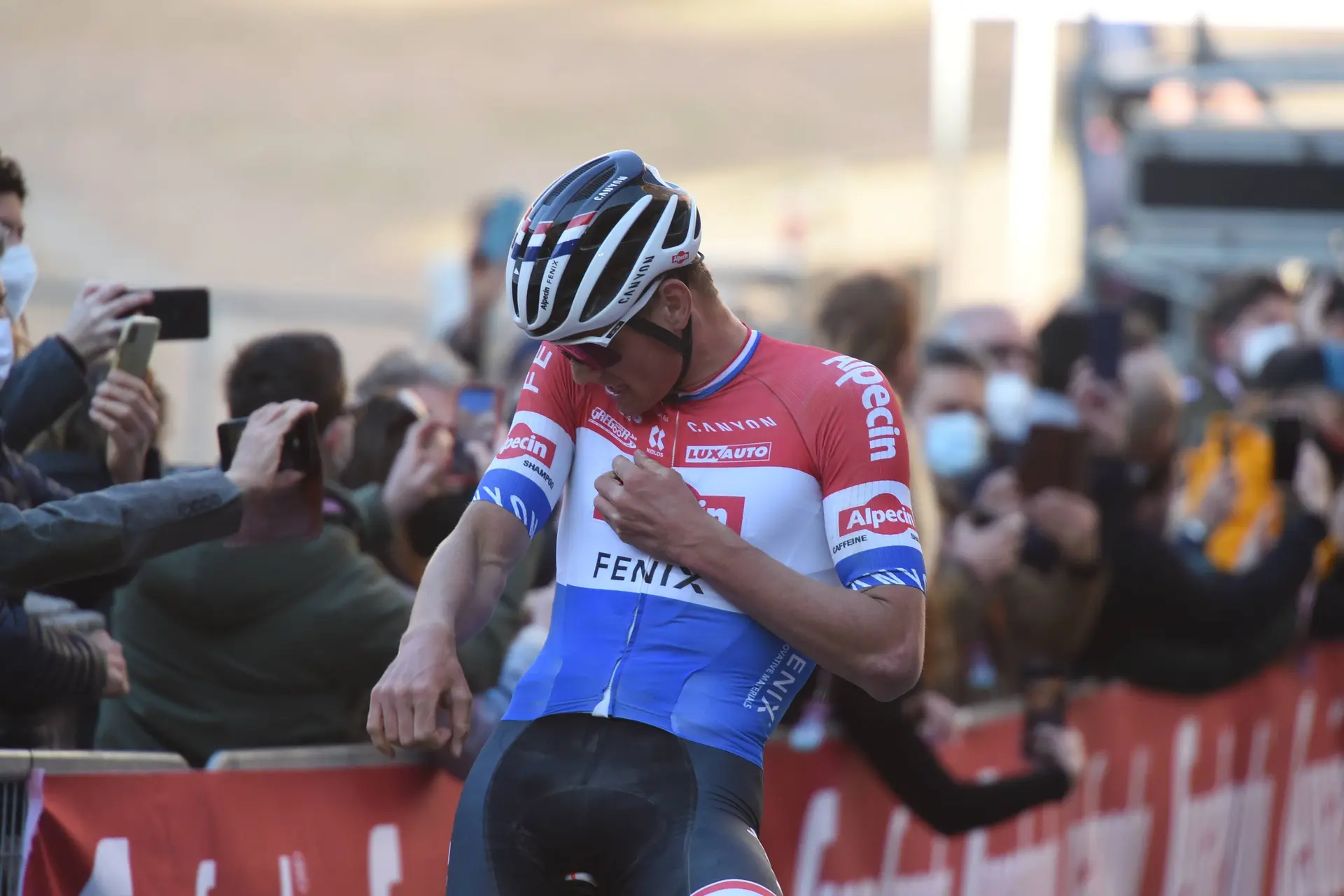
“Into the key moment on the Molenberg there’s a crash near the front,” Rowe said. “Van der Poel somehow stays upright. A few get through and everyone else is immediately on the back foot.”
Even without the incident, the Alpecin leader already looked unstoppable.
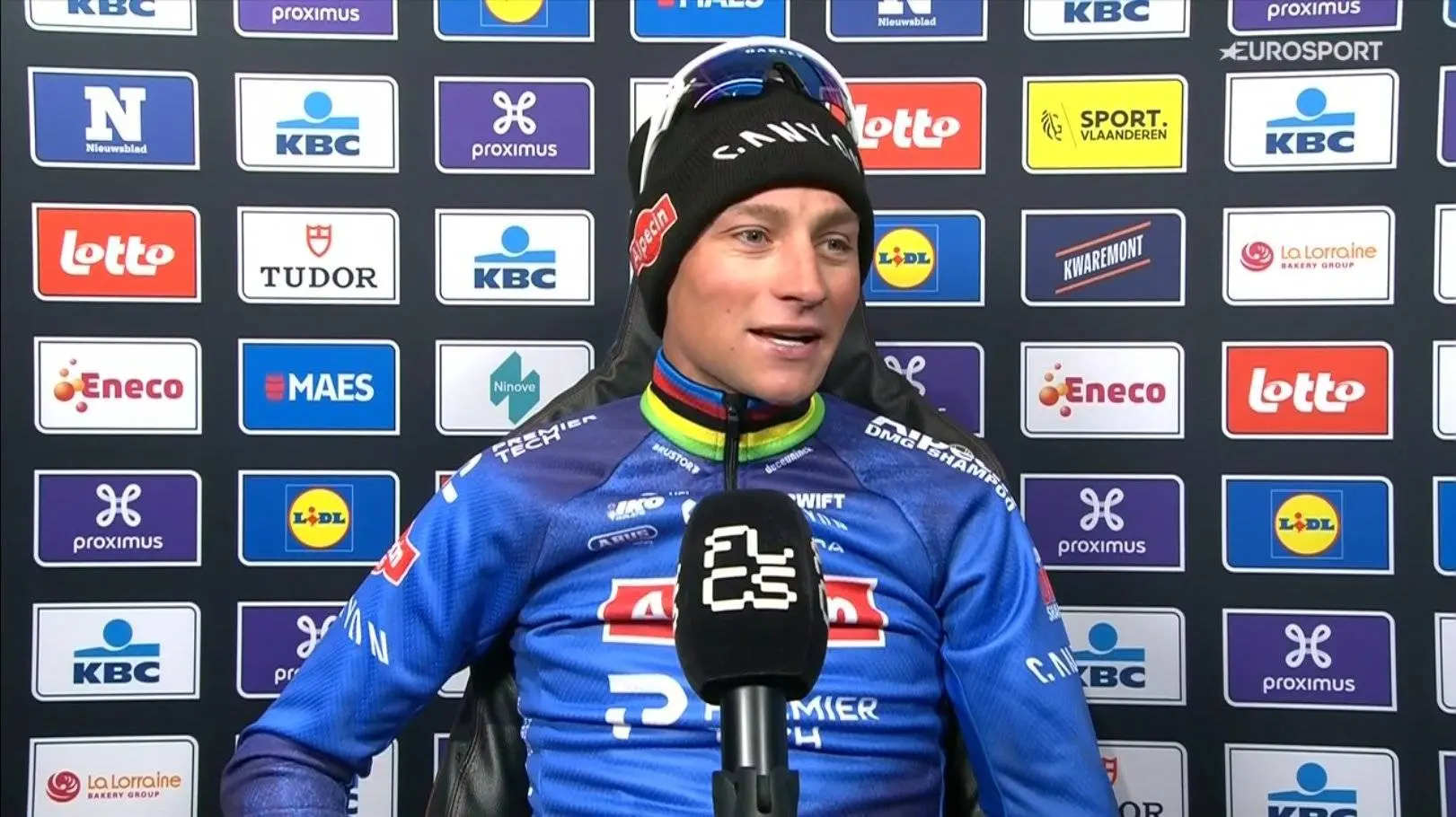
“And honestly, crash or no crash, it felt like only one guy was winning,” Rowe added. “Van der Poel looked completely in control. He went on the big climb and it was instantly game over. I haven’t checked the times but he looked a million dollars.”
Thomas also highlighted how quickly races can turn against a team during the classics, pointing to INEOS Grenadiers’ own difficult afternoon.
“INEOS had a nightmare run,” he said. “Crashes, people held up, and Ben Turner ends up alone for that crucial run-in to the Molenberg. That’s brutal — positioning yourself for five kilometres on your own and then still having legs for the climb. Fair play to him for hanging in.”
The Vermeersch debate
The Omloop finale also sparked debate about the tactics of Florian Vermeersch, who rode strongly alongside Van der Poel in the front group but later faced criticism for contributing too much to the chase.
Thomas admitted he was surprised by how much work the Belgian put in. “I still think: do a bit less,” he said. “Don’t do 50/50 — do 25/75 or 70/30. Save something for later.”
Rowe, however, argued that the situation is rarely so simple inside the race.
“He’s had flack for it, but it’s complicated,” Rowe explained. “A small group goes, they catch the break, and suddenly you’re in that situation. If you don’t contribute, you risk coming back to a bigger chase group and losing your shot at the podium.”
Team dynamics also play a major role.
“The other factor is team situation,” Rowe added. “One team had a sprinter behind, another didn’t. If you haven’t got a sprinter and you’re in the front group, you’re basically forced to commit to that move.”
Kuurne delivers more chaos
The following day’s Kuurne - Bruxelles - Kuurne produced a very different outcome but a similarly unpredictable race. Visma | Lease a Bike’s Matthew Brennan emerged victorious after a selective day that eliminated many of the pre-race sprint favourites.
“Brennan absolutely smoked them,” Rowe said. “We knew he was legit, but that win is huge.”
Thomas explained how the race developed into a difficult scenario for many of the sport’s fastest finishers.
“The climbs came mid race and Kuurne is always balanced between a breakaway, a reduced group or the sprinters coming back,” he said. “But with that forecast they were never coming back.”
Dropped riders simply never regained contact once the crosswinds began to bite. “The last hour was flat but most of it was crosswind,” Thomas added. “They got dropped on one of the climbs and never looked like closing it.”
Even teams that executed their strategy well were left frustrated by how the final kilometres unfolded.
“This race was one of the most frustrating I’ve ever been at,” Thomas admitted. “We did exactly what we said we’d do — stay alive through the climbs, follow the moves but don’t do anything stupid, and then really light it up in the crosswinds late.”
The plan worked almost perfectly until the decisive moment.
“But in the last five kilometres, we got hesitant, sat back slightly, and it never came back. Tobias didn’t get a chance to sprint. That’s what hurts — you get days where the stars align, and everything clicks, and it’s there.”
Read also
Laporte’s comeback and the cost of crashes
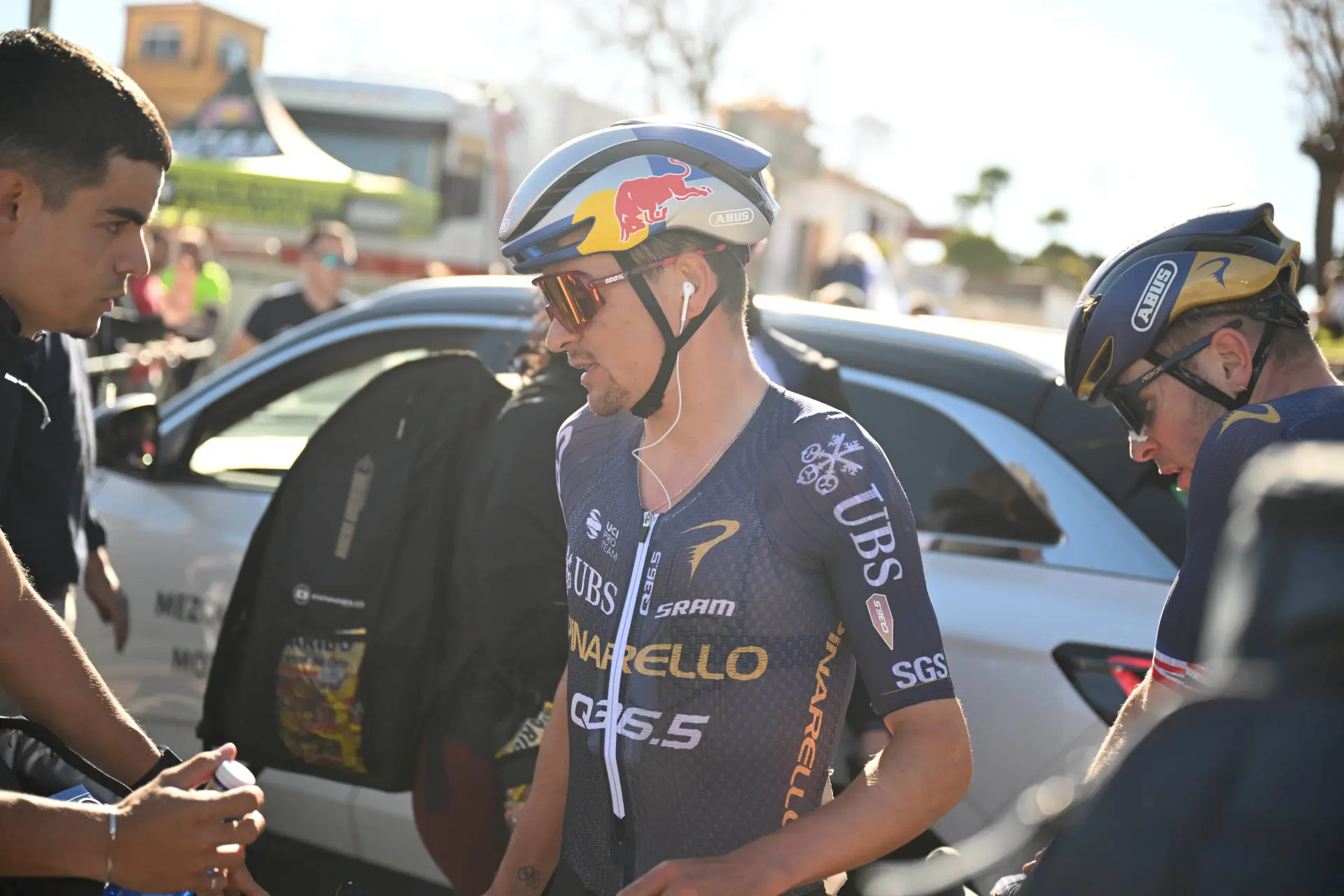
Rowe also pointed to the impressive return of Christophe Laporte, who finished fourth in Omloop before playing a key role in Visma’s Kuurne victory.
“Laporte surprised me,” Rowe said. “Fourth in Omloop and then the winning lead-out in Kuurne, ripping it up in the crosswinds. After being out for most of last year it’s good to see someone like that bounce back.”
Thomas agreed, adding that even fierce rivals never like to see careers interrupted by injury. “Even if he’s on a rival team, you don’t want to see someone lose a whole season like that,” he said. “Credit to him.”
The discussion also touched on the knock-on effect of injuries already shaping the early Classics campaign. “Tim Wellens broke his collarbone,” Rowe noted. “That’s a big one looking ahead to Sanremo. You lose key helpers, and it changes how you can race Cipressa and Poggio.”
For Thomas, the events of Opening Weekend underlined just how brutal this period of the season can be. “Months of work and then suddenly it’s gone,” he said.
Watching from the team car rather than racing himself only reinforced that reality. Even without turning a pedal, the Welshman found himself covered in the evidence of how unforgiving the Spring Classics can be.
Kieran WoodDeputy Editor-in-Chief
Kieran Wood is a sports journalist based in Wales and has been active in journalism since 2022. He regularly contributes to DartsNews.com and CyclingUpToDate.com, where he covers professional cycling and darts. In cycling, his work includes liveblogs from major races, including the Tour de France, the Giro d’Italia, and La Vuelta a España, alongside race reports and analysis. He has also conducted interviews with professional riders.
His reporting spans the full racing calendar, from one-day classics to stage races, with a focus on accurate, real-time coverage and clear contextual analysis. For statistics, results, and historical context, he regularly uses resources such as ProCyclingStats. To support reporting on rider activity and training context where relevant, he also references Strava.
In his work, Kieran places strong emphasis on careful sourcing, editorial accuracy, and updating articles as new, verified information becomes available.
claps 2visitors 1
Just in
Popular news
Latest comments
- unpredictability is not an issue. Most riders not named Pogi have that. The excuses are and the blaming teammates and other riders for insufficient support and blocking are. if weight is an issue get a nutritionist. If aircon is not working switch rooms. Position yourself or get your teammates and DS to keep reminding you of basic stuff if it is difficult to remember in a long race. Dont whine about other riders not working with you, use tactics yourself or get your DS to develop the tactics. Dont talk about noballs when you yourself have no ballsabstractengineer16-10-2026
- It’s worth remembering that cycling journalism has entered it’s “Shit-Stirring Hot Takes Winter” now in order to keep the clicks and views trickling in.wrsty16-10-2026
- Well that would be a major disappointment. The last two years are the first times I have bothered watching the last day. Maybe at worst it could be the 2nd last day but two classic finishes and then wompWaranga16-10-2026
- Vingegaard was the one showing signs of weakness. He was looking more likely to lose a podium spot or two than to make inroads on Tadej.Papijan16-10-2026
- Disagree with Ardennes, he has never done well there, not even a top 10. Giro Vuelta, avoid the stacked TDF where crashes can derail the rest of the season and even if he avoid that, at best a top 5 is possible. He is 31, no more time left for testing/trying.abstractengineer16-10-2026
- Respectfully disagree. He and the team will want to qualify the result at the Tour against TP, JV, and the other GT specialists who weren't in Spain. And remember, the team is looking for a new title sponsor. Or, at least a co-sponsor. So a run at the TDF would go a long way in securing that! As a fan of the team dating back to the Indurain days, I would love to see it. But I do not think that he can really take it to them in July. But I do think he will try. I do agree that he can do good rides, if not win, in Belgium.coachjulianx16-10-2026
- Kid, you just had to keep your mouth shut, now you opened it and it's too late, everyone knows you're dumb.elosanjos16-10-2026
- “He looked less than brilliant” then Pogacar attacked and distanced all his rivals, again! I swear these support riders are purely doing pr for their leaders at this point.Pedalmasher16-10-2026
- PogiFanBoy just doesn't like you attacking his Tadej boy ! He's quite protective of him as you may have noticed. No one can say a bad thing about him or fear reprisal.frieders316-10-2026
- Remco won the European title against a weaker field and not as tough of course and mileage as the worlds RR ! Apples to oranges comparison !frieders316-10-2026
Loading
Write a comment