DISCUSSION - Giro d'Italia stage 15 - Did the motorbikes influence the breakaway victory? Was there really a need to neutralise the GC times with 5 km to go?
Cycling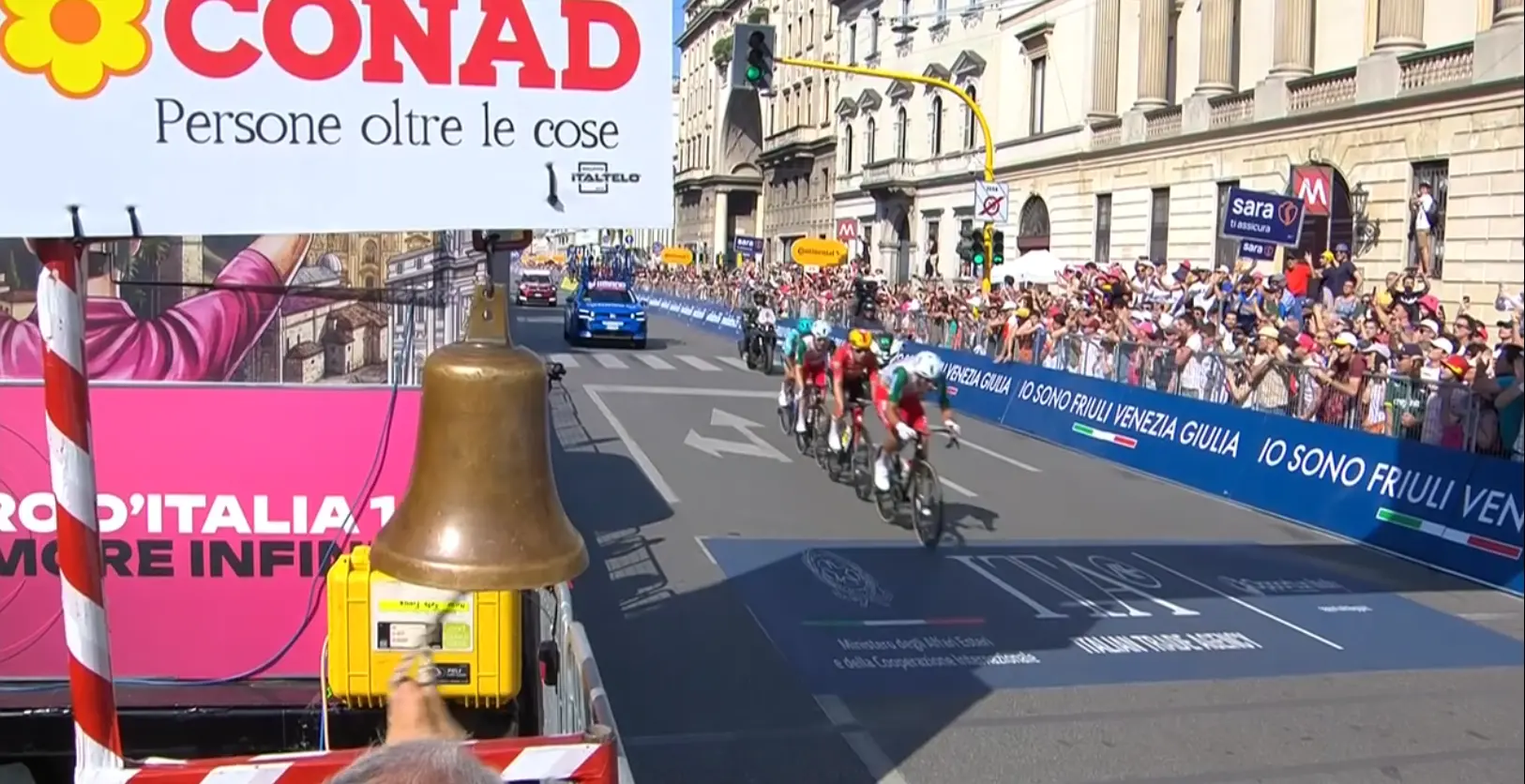
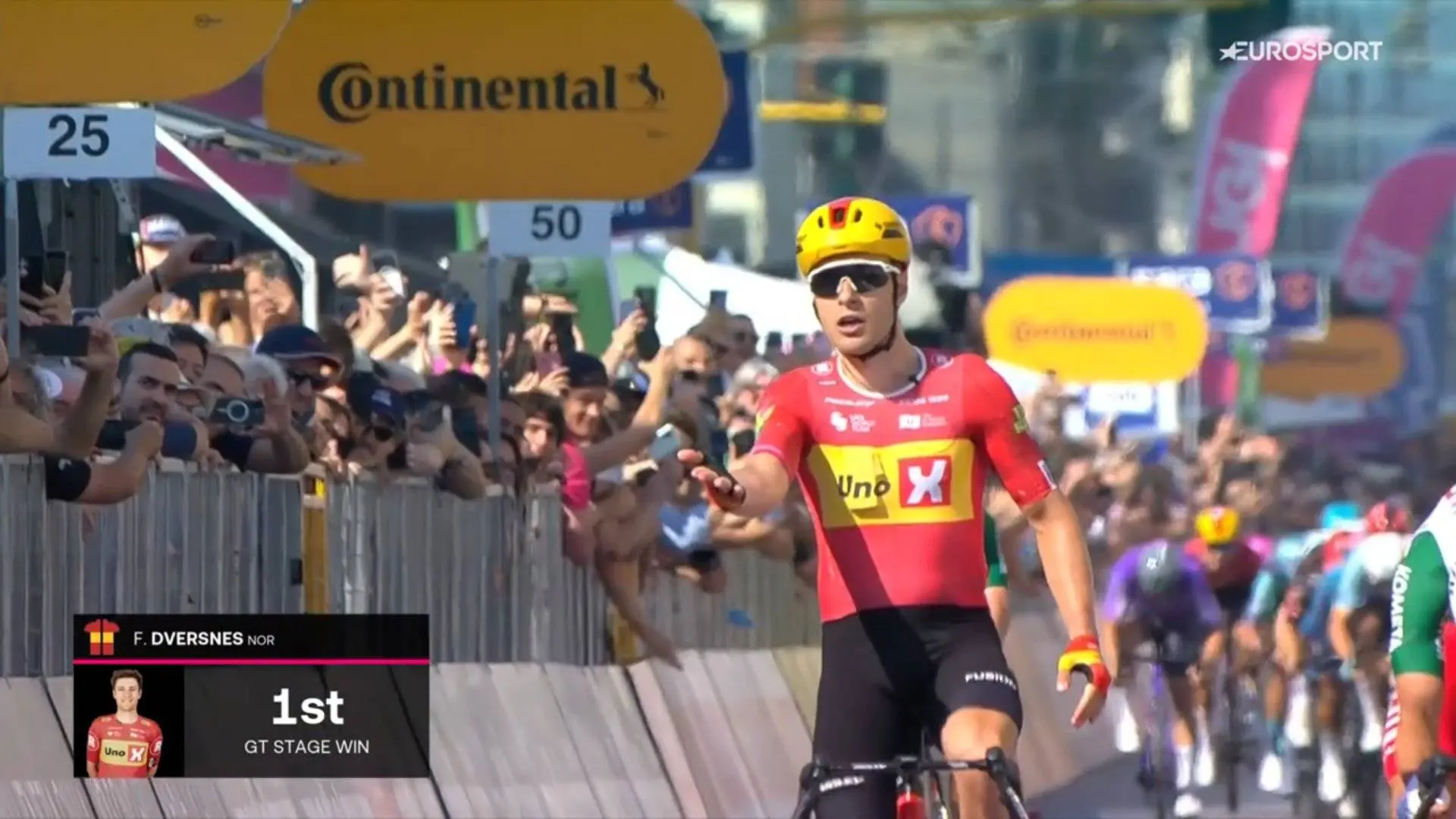
The miracles are not gone from cycling just yet. What looked destined to become another routine bunch sprint at the Giro d'Italia instead turned into one of the biggest surprises of the race so far, as Frederik Dversnes stunned the sprinters by winning from the breakaway in Milano.
After the brutal Alpine stage to Pila, most of the peloton was desperately looking forward to the upcoming rest day. The fifteenth stage appeared to offer some relief, especially for the general classification contenders. The flat 157 kilometres route from Voghera to Milano looked perfectly designed for the fast men, with riders such as Dylan Groenewegen, Jonathan Milan and Paul Magnier expected to battle for victory on the streets of Milano. Instead, the sprint teams were left stunned.
Four-man move gains freedom early
The opening phase of the stage featured an aggressive fight for the early breakaway. Several teams, including Alpecin-Premier Tech, Team Polti VisitMalta and Bardiani-CSF 7 Saber, tried repeatedly to force a move clear, while the peloton initially kept a tight leash on the attacks.
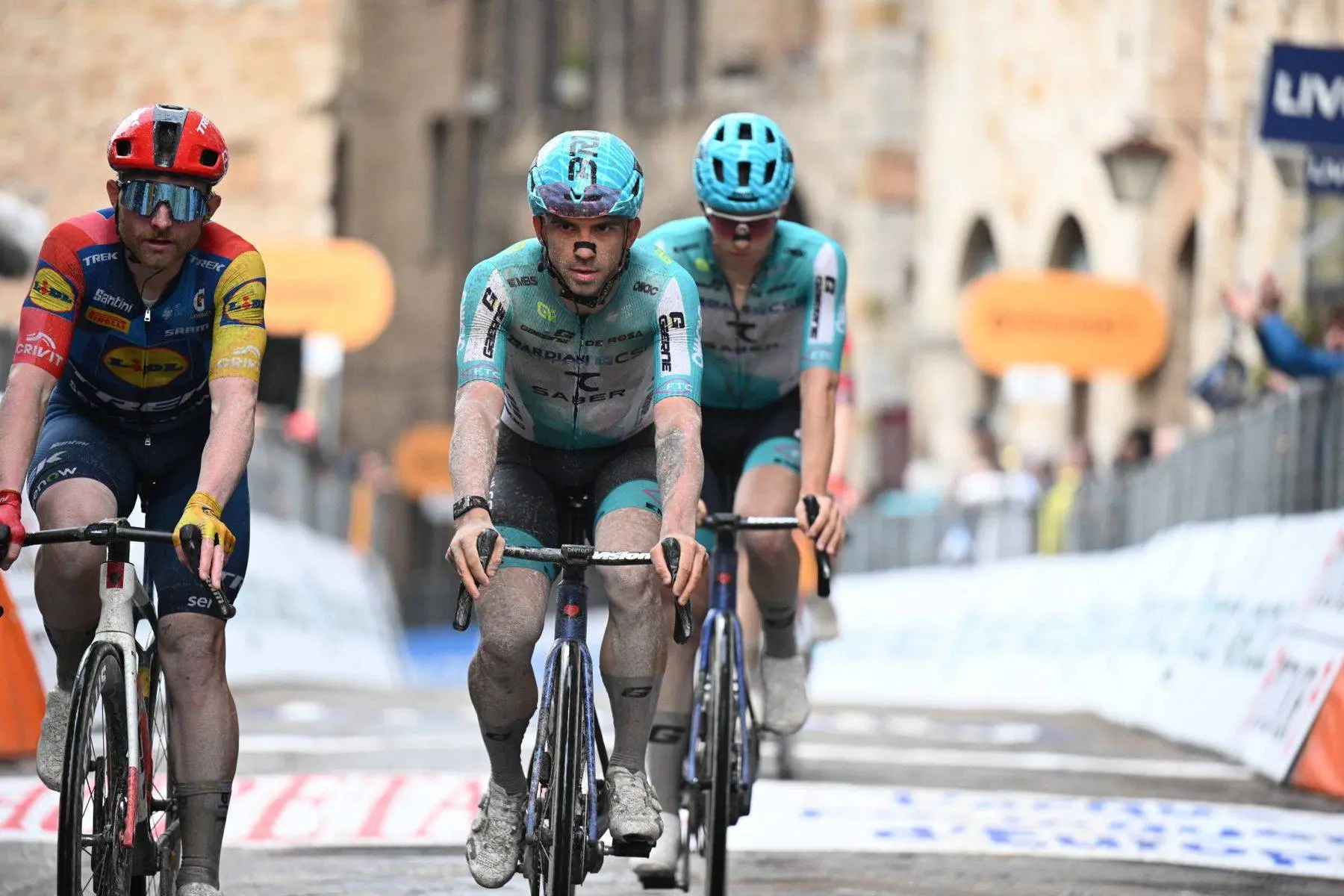
Eventually, four riders succeeded in escaping. Italians Martin Marcellusi, Mirco Maestri and Mattia Bais were joined by the powerful Norwegian rouleur Frederik Dversnes, representing Uno-X Mobility.
The quartet quickly established a lead of around three minutes. With none of the four considered dangerous for the overall standings, the peloton allowed the gap to grow while keeping the move under relative control.

The four men in the breakaway of the day held on all the way to the finish.
Magnier and Narváez battle for Maglia Ciclamino
For long stretches, the stage unfolded exactly as expected. The breakaway maintained a manageable advantage while the sprint teams prepared for the inevitable chase into the finish line.
The only real action before the finale came at the intermediate sprint in Pavia, where the fight for the points classification intensified. Jhonatan Narváez, wearing the purple jersey, faced direct competition from Paul Magnier, who continued his strong Giro campaign.
UAE Team Emirates - XRG even organised a lead-out for Narváez, but the Ecuadorian could not match Magnier’s speed. The Frenchman collected valuable points and moved level on 131 points in the classification. Still, the biggest prize remained at the finish line in Milano, where fifty points awaited the stage winner.
Breakaway refuses to surrender
What initially looked like a routine pursuit gradually became a growing concern for the sprint teams. The four escapees were riding exceptionally well together, and the gap was not coming down quickly enough.
Teams with sprint ambitions were forced to commit more and more riders to the chase. Even then, the peloton struggled to make meaningful inroads into the advantage of the breakaway.
Meanwhile, the GC contenders stayed safely tucked inside the bunch, avoiding unnecessary risks on the technical finishing circuit in Milano.

The peloton fiercely chased the breakaway riders inside the final circuit in Milano.
Vingegaard raises safety concerns during stage
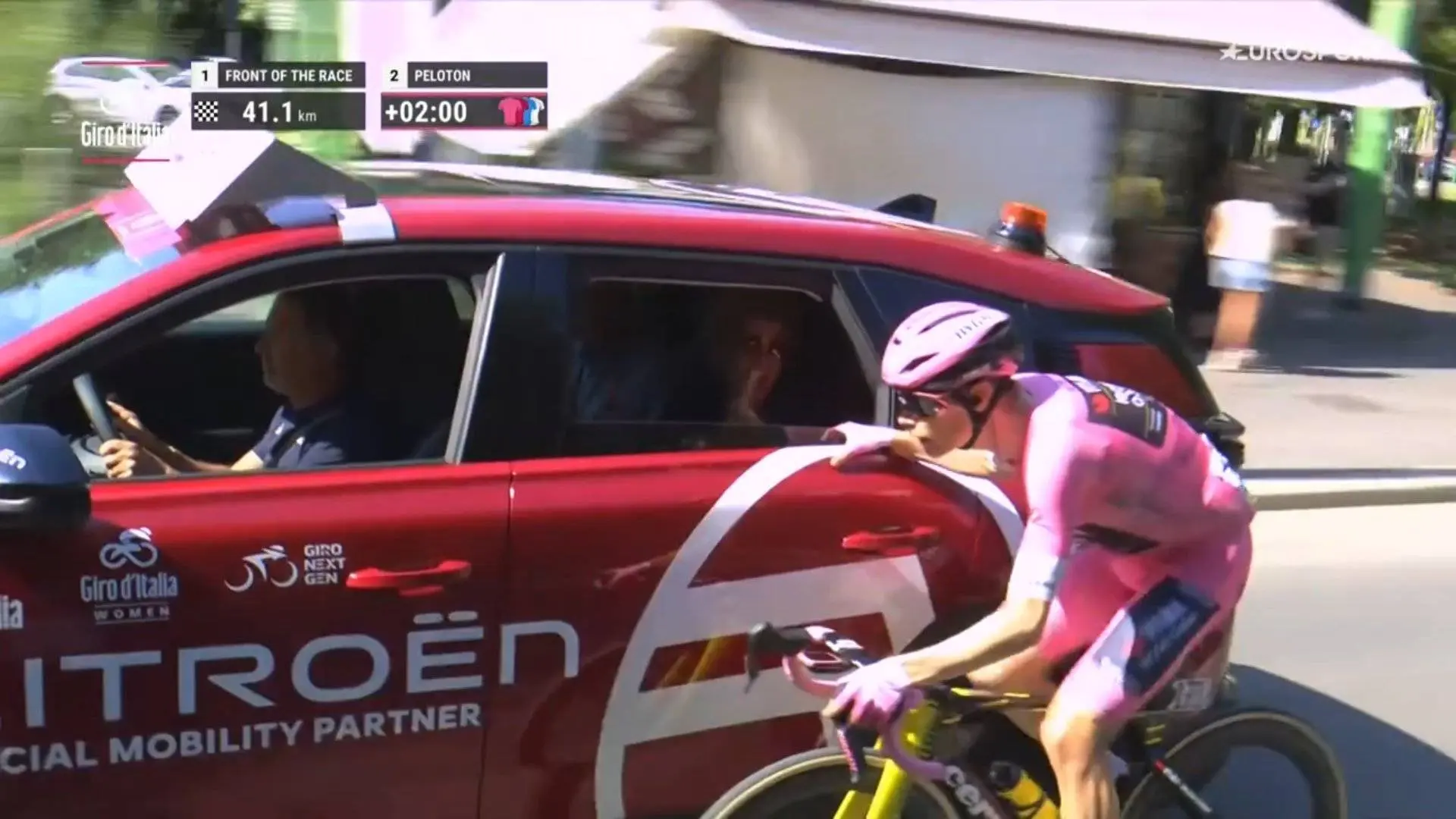
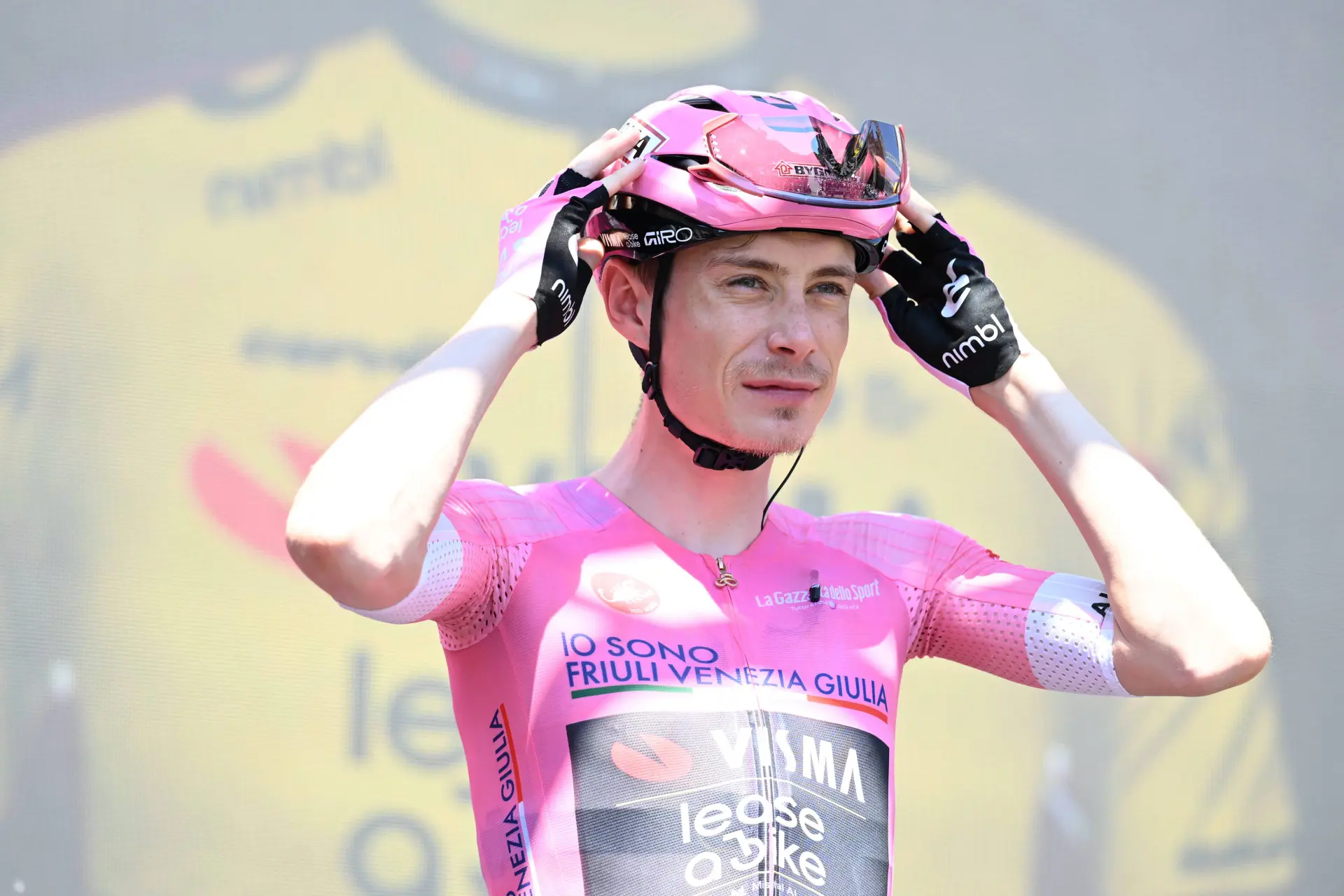
With just over forty kilometres remaining, race leader Jonas Vingegaard dropped back to the race director’s car to express concerns about safety barriers along the route.
Television images captured the Dane visibly frustrated, explaining that he had nearly crashed because of the positioning of the barriers on the urban circuit.
The organisers reacted quickly. The decision was made to neutralise general classification times at the final lap, five kilometres from the finish. At that moment, the breakaway still held close to a minute advantage over the peloton.
Dversnes completes unforgettable upset
Even with the GC times neutralised, the sprint teams continued the chase at full speed. However, fatigue from the previous mountain stages appeared to take its toll, and the gap never fully disappeared.
As the final kilometres approached, belief inside the breakaway started to grow. The impossible suddenly became realistic.
Inside the final kilometre, Mattia Bais sacrificed himself completely for teammate Maestri, delivering one final massive pull at the front. Behind them, the peloton was running out of road. The sprinters had simply left it too late.
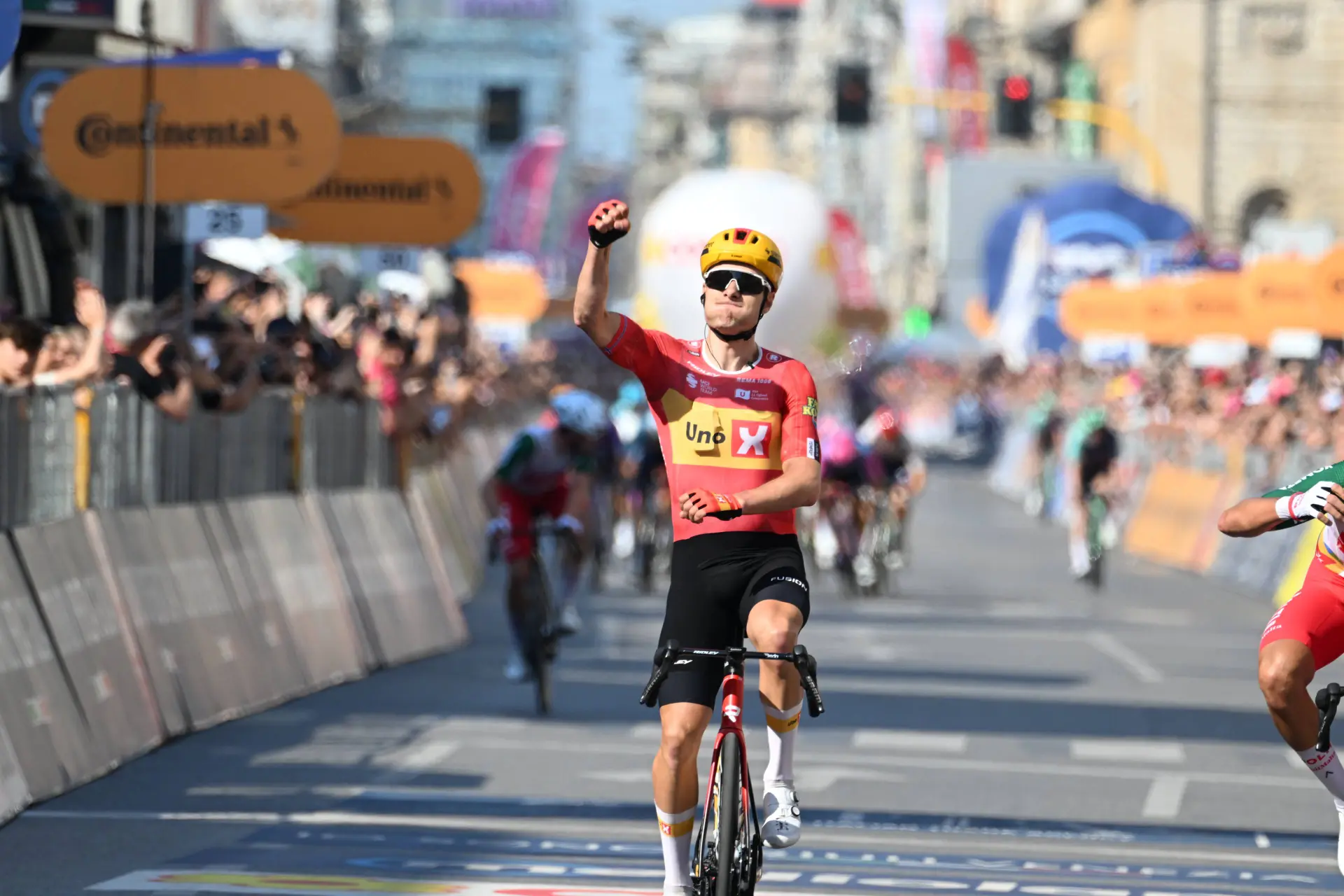
In a stunning conclusion to the stage, Frederik Dversnes emerged victorious from the four man escape, sealing one of the most unexpected wins of this year’s Giro and delivering a painful lesson to the sprint teams who underestimated the strength and determination of the breakaway.
How did four riders beat an entire peloton?
Carlos Silva from CiclismoAtual made a brief analysis of the day and raised some pertinent questions.
"Everyone expected, and wanted, a sprint finish in Milano. But Fredrik Dversnes turned the tables on Lidl-Trek, Soudal Quick-Step and Unibet Rose Rockets, the teams that controlled, chased and tried everything to bring back the breakaway, yet still failed to do so."
"Sure, the finale was highly technical, packed with corners, constant braking and endless accelerations. But come on, it was the same for everyone. The same conditions applied to both the breakaway and the peloton."
"Like everyone else, I saw Derek Gee move to the front of the peloton to raise the tempo. Teams were emptying the tank in the chase, throwing every last bullet at the pursuit, and it still was not enough."

Fredrik Dversnes won the three-man sprint in Milan and gave Uno-X Mobility their first victory in the Giro d'Italia 2026
"Maybe today I saw the same thing I saw during the individual time trial involving Sjoerd Bax from the Pinarello Q36.5 Pro Cycling Team. The Dutchman finished in a remarkable fourth place, his best ITT result in years after previously taking second in a time trial at the Tour of Denmark. Bax was only seventh in the 2025 Dutch national ITT championships, so we are not talking about a pure time trial specialist."
"Yet over 42 kilometres he finished fourth, largely because the police motorbike was blatantly riding just metres ahead of him throughout the effort. The Dutch rider clearly benefited from the slipstream and produced a standout result."
"Today, I watched teams burn through all their resources and still fail to catch a group of four riders. So why did that happen? Race commissaires may not have noticed it, but with so many corners and repeated accelerations, were the motorbikes perhaps riding too close to the four men out front?"
"I have my own opinion, and I believe they were. It does distort the reality of the race, even if opinions on it will differ."
A tactical failure from the sprint teams
Ruben Silva from CyclingUpToDate gave his take on what happened during the day, saying:
"Peloton disasterclass. A day that was pan-flat without a single climb, with a breakaway of four very modest riders should've been very easy for the peloton to control."
"The speeds were very high all day long, and there were several teams wanting to control the race, it wasn't a scarcity of resources. Once again, luck rewards the brave, and that seems to be a trend in this Giro peloton."
"For the sprinters it is a disappointment and almost a shame I would say, a shame for the sports directors who make the decisions behind. The second week did not have a sole bunch sprint, despite having two stages where it looked certain."
"On stage 12 everyone looked at each other whilst Alec Segaert escaped with a win; and here the peloton simply let the breakaway's gap grow to numbers that they shouldn't have allowed. The math is not complicated: The stage is flat, speeds are high, so the gap can't ever grow above a certain number otherwise it will be hard to bring back any group because the peloton has to ride unbearable speeds to close it back down."
"The sports directors know this. Lidl, Unibet, Quick-Step, they knew what they had to do and did not execute it. Other teams could follow wheels, but then they also don't put their men to the front and don't stand a chance to win with their sprinter to begin with."
"It is almost shameful then to see teams such as Groupama and Picnic, who stand no chance of winning a stage in regular conditions, simply not putting men in the breakaway. No GC men, sprinters that don't give guarantees and lineups that are either full or have lost 1 rider, yet they don't dare to try and put one rider in the breakaway to try and win a stage."
"It is something that for me has become impossible to ignore. The lack of ambition, the lack of proper tactics to try and use a team's riders is staggering. These two teams came with very modest lineups to the Giro and have every right and reason to chase 'unlikely wins' such as today's but they continue to race like they have a Paul Magnier or a Jonas Vingegaard in their lineup."
"Now there is a broader discussion regarding the motorbikes. Following the finish several riders quickly complained, on TV, that the influence was very large and that it was simply not possible to succeed with the race situation that had developed. I personally did not see them but the riders know best, and it is truly staggering that three teams chasing all out couldn't close a gap to that group."
"But many riders do not talk about it publicly, whilst the men out front will never point it out. But the influence of the motorbikes in races seems to be growing even more and escalating further."
A victory built on intelligence
Our colleague Pascal Michiels from RadsportAktuell spoke about the stage, highlighting a few key aspects.
"Uno-X needed a Giro moment. Dversnes gave them one. Not with a reckless attack, not with brute force, not with a miracle solo from distance, but with nerve. In a finale full of noise, he stayed quiet."
"In a break full of Italians, he stayed patient. In perhaps the fastest Giro road stage ever, he made the fastest men in the race look too late. The sprinter teams lost control in Milano, but Fredrik Dversnes won by staying calm."
"The sprinter teams did not lose this Giro stage to bad luck. They lost it because they mismanaged the chase. On paper, this was their day: 157 flat kilometres to Milano, a broad finish and enough fast men in the peloton to make a bunch sprint feel inevitable."
Read also
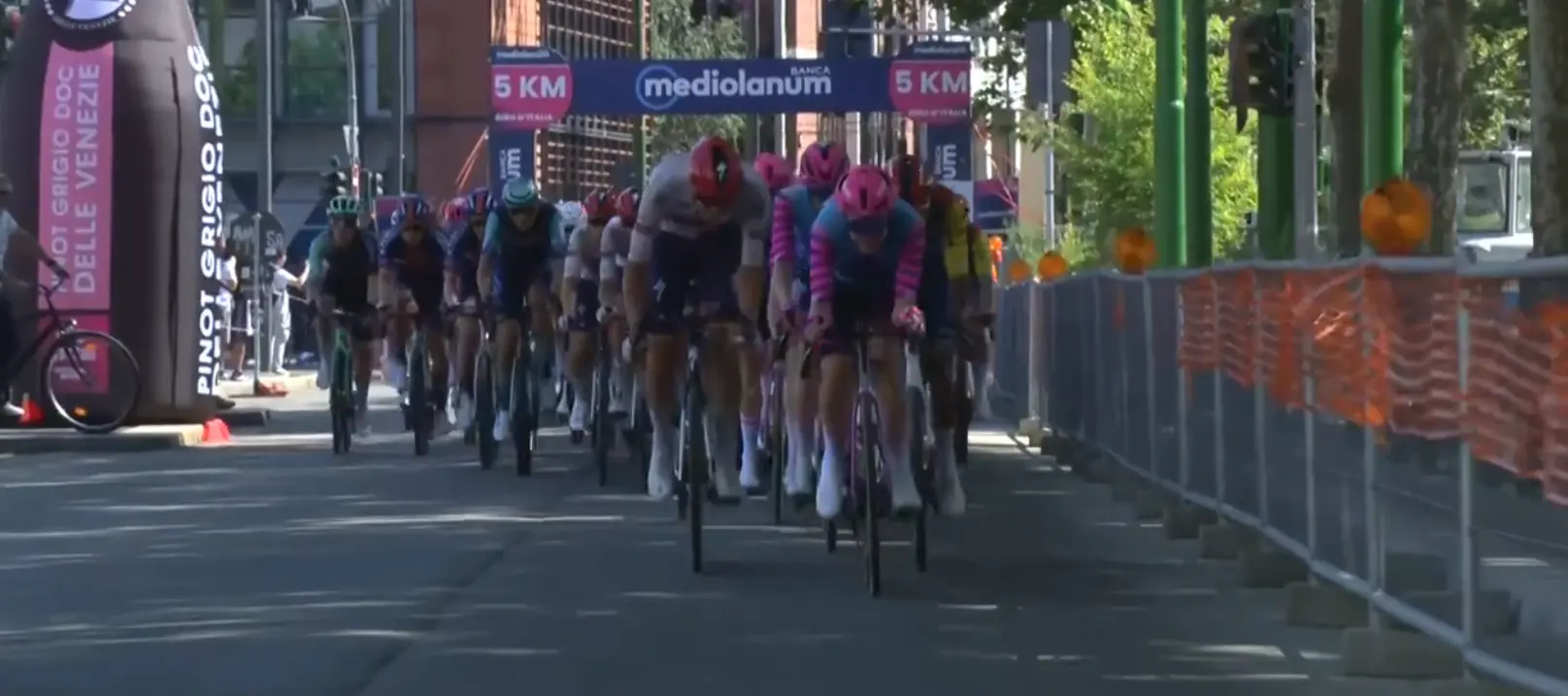
"Yet with 30 kilometres to go, control had already turned into panic. Lead-out riders were being sacrificed too early, trains were falling apart and the break was still alive. That made Fredrik Dversnes’ victory even smarter. He was alone with three Italians, including two Polti teammates, but he never panicked."
"Even in the final kilometres, when he seemed to have the freshest legs, he resisted the temptation to attack. He waited, waited, and waited.He forced the others to keep going because he himself showed them how it was done."
"Then he chose the perfect wheel.It was not a spectacular sprint. It was better than that: a patient, intelligent victory sitting all the time probably on his bike as a hungry wolf. Paul Magnier winning the bunch sprint for fifth only made the failure behind more painful."
"The sprinter teams had the speed, but not the timing. In perhaps the fastest Giro road stage ever, Dversnes proved that calm thinking can still beat three Italians and a chasing peloton."
Read also
Cycling cannot become sterilised
Jorge Borreguero from CiclismoAldia also shared his thoughts with us in the end of the day.
"The 15th stage of the 2026 Giro d’Italia delivered one of those victories that honours the traditional spirit of cycling. What Fredrik Dversnes achieved was a display of belief and resilience: when everything pointed towards an inevitable sprint finish in Milano, the breakaway somehow found strength where none seemed to remain."
"The collective work of Marcellusi, Bais, Maestri and Dversnes himself over the final ten kilometres was extraordinary, maintaining incredibly high speeds against a charging and perfectly organised peloton. For a breakaway to survive nowadays on such a tightly controlled urban circuit deserves enormous credit."
"The behaviour of the peloton also leaves mixed feelings. The sprint teams pushed their calculations too far, relying on the assumption that the break would eventually be caught through pure mathematical logic, and by the time they reacted it was already too late."
"Lidl-Trek, Soudal and Unibet misjudged the situation. In a Grand Tour, giving away even a few seconds through overconfidence is usually punished, and this time the escapees delivered a tactical and psychological lesson in determination."
"As for Jonas Vingegaard, it was a calm day from a sporting perspective, but it once again raises the debate about the excessive protection given to the favourites. The decision to neutralise the general classification times with 5 kilometres remaining, following complaints about the Milan circuit, is difficult to defend."
"Cycling has always lived with tension, nerves and the risks of urban finishes, they are part of the very essence of a Grand Tour. If you wear the pink jersey, you also carry the responsibility of defending it all the way to the finish line, not asking the commissaires to remove real racing from the decisive section of the stage."
"I understand that safety must remain the priority, but these measures create the impression that some race leaders want cycling to become increasingly sterilised and controlled. Grand Tours cannot turn into “protected” routes for the favourites every time a technical circuit or nervous finale appears."
"The constant complaints are regrettable because they gradually strip away the natural character of the race: the Giro has always rewarded the strongest rider, yes, but also the bravest one and the cyclist most capable of surviving chaos."
Results powered by FirstCycling.com
Tactics, controversy and the spirit of modern cycling
The reactions after the stage in Milano largely revolved around two major themes: the tactical collapse of the sprint teams and the possible influence of race motorbikes on the outcome. Several analysts questioned how a small four-man breakaway managed to resist a full peloton on a completely flat stage, especially with teams like Lidl-Trek, Soudal Quick-Step and Unibet investing heavily in the chase.
While some pointed towards poor race management and delayed organisation from the sprint teams, others also raised concerns about motorbikes potentially offering an aerodynamic advantage to the riders at the front, particularly on such a fast and technical circuit.
At the same time, many observers praised Fredrik Dversnes and the breakaway for their intelligence, composure and determination. Rather than relying purely on strength, the victory was seen as a triumph of patience, tactical awareness and commitment under pressure.
The stage also reopened a wider debate about modern cycling, with criticism aimed at the increasing tendency to neutralise dangerous finales and overly protect general classification contenders. For some commentators, chaotic and nervous finishes remain part of the identity of Grand Tours, where courage and adaptability should continue to be rewarded alongside pure physical strength.
And you? What did you make of the stage 15 of the Giro d'Italia 2026? Tell us your thoughts, share your opinion on all the key moments and incidents from the race, and join the discussion.
Carlos Silva is a writer for CyclingUpToDate.com, where he contributes race reports, interviews, analysis pieces, and live coverage of the international cycling calendar. Holding a degree in Sports from the Jean Piaget Institute, he combines academic knowledge of performance, training, and competition with hands-on journalism experience in professional cycling.
Throughout his career, Carlos has conducted interviews with leading figures in the sport, including Alberto Contador, Joaquim Rodríguez, Óscar Pereiro, João Almeida, Isaac del Toro, Derek Gee, John Degenkolb and Geraint Thomas. These conversations reflect direct engagement with Grand Tour winners, Classics specialists, and emerging talents.
He has provided on-site coverage at major events ranging from the Vuelta a España to the Tour de France, alongside stage races such as Vuelta a Andalucía, Volta ao Algarve, Volta a Portugal and O Gran Camiño. Covering the mythical climbs of the Giro d'Italia remains one of his professional ambitions.
Carlos is responsible for liveblog coverage of all major WorldTour races and beyond, including the Tour de France, Giro d'Italia and Vuelta a España. His reporting integrates verified data from ProCyclingStats to ensure statistical accuracy, contextual depth, and analytical precision.
A lifelong cycling enthusiast, he approaches storytelling across written, photographic, and video formats with a focus on credibility, tactical insight, and informed race interpretation.
claps 6visitors 6
Just in
Popular news
Latest comments
- “…measures to reduce speeds.” Might as well shorten the race course to just 50km as well? ASO generates at minimum €300m a year and 30- 40% profit. Maybe stop being greedy and spend more of the profit to protect the riders instead.b3tlla17-10-2026
- he also had quite the life off the bike during his pro years. he used his celebrity status to full affect.mij17-10-2026
- Nairo and Froome’s battles were great.mij17-10-2026
- I think it is a good sign to have only signed a couple of riders. it shows their system is working - retention of their own riders and using their development squad. As for retention of their own riders, they won a GT, a monument, they took a points jersey in another GT. They have a U23 WC. They have multiple one day and one week race wins. Keep the core. Their development squad has delivered fantastic results. And for all the talk of Vismas decline, their culture must be amazing since no one signed elsewhere. That is a very GOOD sign.mij17-10-2026
- Why is it beyond people's intellectual capabilities to stop accusing others of doping without proof? How are we supposed to live in a world where suspicion is evidence of guilt?This is pure infantile asinine nonsense.
 Brucegel17-10-2026
 - is that the standard for sharing thoughts here?OCexile17-10-2026
- If he was less brilliant than usual at the Tour, then I don't even want to imagine his 'usual' level of brilliance.Cooldude17-10-2026
- ok, i take back my wish. you’re right, i didn’t stop to think about how much i was damaging the sport. that was a close one. sometimes i forget how much power i wield and how capricious i can be…OCexile17-10-2026
- Reducing speed is not something that can realistically happen. This is all just a smokescreen for avoiding talking about the real solutions, such as airbags. A comparison to a more binary sport such as rock climbing (not free solo) would show this: Saying "go slower" is the same as "do easier climbs" Saying "use airbags" is like "use better harnesses"...
 Rafionain-Glas17-10-2026
 - Globalisation of pro cyclingRafionain-Glas17-10-2026
Loading
8 Comments