“I don’t like how the rules work” - Chris Horner calls for change to cycling’s concussion protocol after Paul Seixas’ Tour Auvergne-Rhône-Alpes drama
Cycling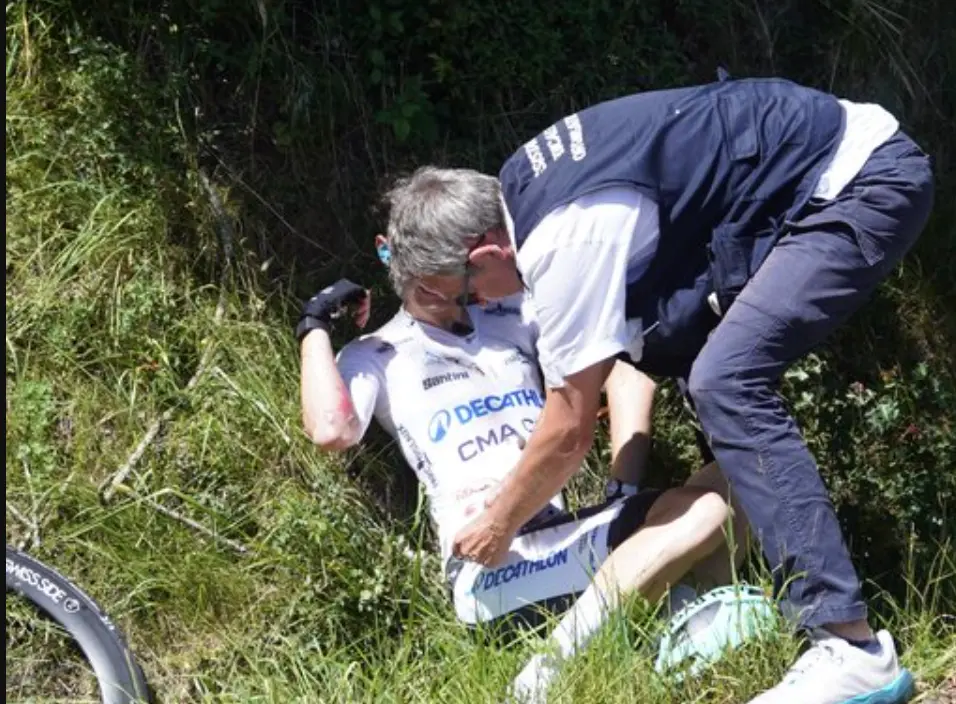
Paul Seixas’ bruising chase back after his Tour Auvergne-Rhône-Alpes crash has drawn a pointed warning from Chris Horner, who believes cycling’s post-crash protocol can leave riders facing an unfair sporting penalty once they are allowed to continue.
Seixas crashed heavily on a descent before the Grand Colombier finale, losing several minutes before beginning a long chase back with Decathlon CMA CGM Team team-mates. The 19-year-old eventually rejoined the main GC group, only to lose time again on the final climb as Isaac del Toro rode clear to stage victory.
Speaking on his YouTube channel, former Vuelta a Espana winner Horner made clear he was working from what he saw on the broadcast rather than an official medical explanation. But he said the roadside images, including Seixas stopped with medical staff and his helmet removed, suggested there may have been a concussion check before the Frenchman continued.
“I am assuming there was some kind of concussion protocol,” Horner said. “That is my best guess from 25 years of experience.”

Horner questions what happens after the check
Horner stressed that his criticism was not aimed at the existence of concussion checks. His issue was with what happens once a rider has been assessed, cleared to continue and sent back into a race already moving at full speed. “I love that they have it, but I don’t like how the rules follow afterwards,” he said.
Seixas had already lost a major chunk of time before the chase began. Horner then took issue with the way the race convoy was moved aside as the Decathlon rider and his team-mates tried to make contact with the peloton.
“So you’re going to put this kid Paul Seixas, one of the favourites, and you’re going to make him go through all the protocols,” said Horner. “Have him sitting on the side of the road. Have him dropping time left, right and centre. And now you can’t even let him use the cars, the caravans at the back of the peloton. You can’t even let him use this as a help to make up for the minutes that he had to sit on the side of the road.”
Horner had no issue with riders being stopped and checked after a heavy crash. His criticism centred on the sporting cost once a rider has been permitted to race on. “There needs to be some way that you can at least make up some of that time that they’re holding you on the side of the road,” he argued.

Paul Seixas bloodied after his stage 7 crash at the 2026 Tour Auvergne-Rhône-Alpes
“You can at least use the cars”
Seixas’ crash came at one of the worst possible moments of the stage. The race was already under pressure after a volatile opening phase, with attacks up the road and GC teams beginning to shape the approach to the Grand Colombier. By the time the Decathlon chase was underway, Horner estimated that the gap had at one point gone out towards four minutes.
Decathlon then used Valentin Paret-Peintre, Nicolas Prodhomme and Leo Bisiaux to drag Seixas back through the race. Horner praised the way the team organised that chase, particularly the decision to drop riders back from the peloton to help rather than leaving Seixas exposed.
The frustration came when the race caravan was not available as part of that chase after the time lost during the roadside check. “I have no problems if you want to allow the caravan of cars to stay at the back of the group and a rider that’s crashed, that’s gone through concussion protocol, can at least use the cars,” he said. “Instead, they pull them out of the way.”
Seixas got back, but not cheaply. Bloodied and scratched from the crash, he reached the Grand Colombier only after Paret-Peintre, Prodhomme and Bisiaux had spent themselves in a chase Horner believes should not have been made harder by the race caravan being pulled aside.

Kieran WoodDeputy Editor-in-Chief
Kieran Wood is a sports journalist based in Wales and has been active in journalism since 2022. He regularly contributes to DartsNews.com and CyclingUpToDate.com, where he covers professional cycling and darts. In cycling, his work includes liveblogs from major races, including the Tour de France, the Giro d’Italia, and La Vuelta a España, alongside race reports and analysis. He has also conducted interviews with professional riders.
His reporting spans the full racing calendar, from one-day classics to stage races, with a focus on accurate, real-time coverage and clear contextual analysis. For statistics, results, and historical context, he regularly uses resources such as ProCyclingStats. To support reporting on rider activity and training context where relevant, he also references Strava.
In his work, Kieran places strong emphasis on careful sourcing, editorial accuracy, and updating articles as new, verified information becomes available.
claps 4visitors 4
Just in
Popular news
Latest comments
- Well said @RideHills 👏🏼anonymouscyclist14-10-2026
- OMG!!! As I wrote in the post below the other article, Paul is incredibly good, but he isn't quite at Tadej's level yet.MajorPayne14-10-2026
- The season is over, so there has to be something to write about. No one disputes that Paul is a top-tier young cyclist. But in the absence of other news, comparing him to Tadej is utter nonsense. He still has a lot of developing to do before he can win Grand Tours or Monuments that Tadej also competes in.MajorPayne14-10-2026
- It is easy to celebrate those who won the grand tours and the monuments. and the world championships. What I notice more are the ones who were at the world tour and kept going on the pro tour level for that little bit longer, still wanting to ride after their bodies had aged, after their teams no longer needed them. It is good to see the domestiques. as well. Congratulations to all these folks on an impressive career, no matter the wins. Cycling is a team sport, and it’s the ones we don’t see much of that allow the leaders to stand out and win the accolades.RidesHills14-10-2026
- Biestrebos is a real sprinting talent. Initially it was thought that he'd be a classics domestíque but his sprinting has improved dramatically over the course of the year. He's the only thing going well with Picnic now and for that reason it is likely that he'll leave
 Rafionain-Glas14-10-2026
 - well this one definitely makes my STUPIDEST ARTICLES OF 2026 list. chapeau…OCexile14-10-2026
- Cyclocross is nothing without stars like MVDP, WVA, Pidcock... etc. Out of all cycling disciplines, road racing is the most popular discipline in professional cycling, especially in terms of global prestige, major-event audiences, and the historical status of its greatest riders. People that don't follow cycling as a sport have heard of Merckx, Hinault, Pantani, Armstrong, Remco, Vingegaard, MvDP, Van Aert, Pogačar etc. So if we're talking about professional cycling and the sport's most famous athletes, road racing is the clear number one. Road cycling's greatest champions are judged across such a wide scale. E.g. - Pogačar can win the Tour de France and then go after Paris–Roubaix and other prestigious one day races. These races also have a wide range of versatility: cobbles, gravel, punchy, hilly, TT. This versatility is a huge part of why road racing is No.1 in cycling. Maybe Sven Nys is a dutch cycling "legend"... but that's where it starts and ends. Ad acta.PogiSloFans14-10-2026
- “at some point those guys will turn their backs on OUR sport”? after dedicating so much of their lives to cyclocross and in mathieu’s case winning more world championships than anyone, it would seem to me like they’ve earned the right for it to be always be THEIR sport, too, even after they retire from it.OCexile14-10-2026
- It takes two to tango. Riders also have a say. Maybe they didn't see any opportunities on a stacked team such as Visma's? Who knows, but could be a multitude of reasons why deals fall through.Pogboom14-10-2026
- Eventually Pogi will get older and slower. Father Time will favor the young. The question is whether he can beat Pogi before Pogi decides to retire. You never know... Pogi may retire after winning paris-roubaix :)b3tlla14-10-2026
Loading
4 Comments