"All the strongest have been caught for doping, except Cunego and Bettini" - Former pro Riccardo Riccò launches huge doping accusations against Italian legends
Cycling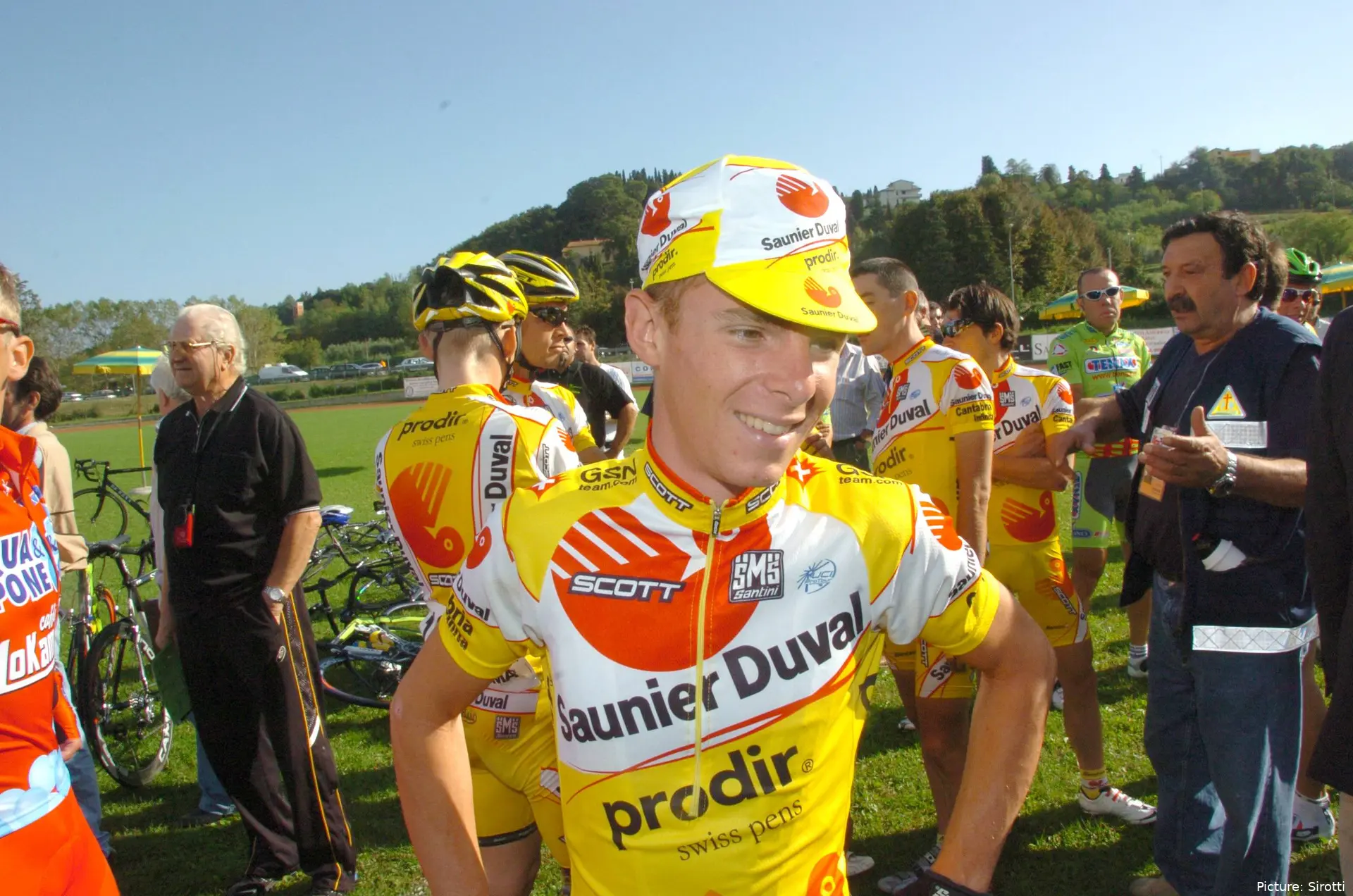
Riccardo Riccò’s life has taken a sharp turn away from professional cycling. Banned for life after several doping-related episodes, the Italian has rebuilt his day-to-day outside competition, focused on his business and a calmer relationship with the bike. In an interview with La Stampa, the former rider looks back on his past, owns his mistakes, and explains how he managed to recover after the hardest moments.
A pure climber, at the height of his time he battled for some of Italy's most prestigious races such as the Giro d'Italia and Il Lombardia, coming close to winning both but taking several high-level wins during his stint as a pro. Riccò was part of the disgraced Saunier Duval team, in which he performed well above expectations in his first years as a pro, which featured three Giro d'Italia wins. In 2008 he was second to Alberto Contador, but this level was not reached naturally, but instead through the use of CERA, a third-generation form of EPO.
However his doping habits did not stop after the suspension he was given. In 2011 he confessed to blood transfusions, after one such almost ended his life - although he initially denied his use of the forbidden procedure.

Riccardo Riccò, cyclist banned for life for doping
Riccò acknowledges the impact of his fall from grace: “They destroyed me, I went through tough times, fell into depression and other complicated situations, but I don’t want to play the victim.” For years, cycling was a painful memory: “I got back on the bike three years ago, after ten in which it hurt to see my former rivals racing and winning. It reminded me of what I couldn’t do. I didn’t even watch the races.”
With time and professional help, his perspective has shifted: “Then I began to process it, also thanks to therapy. Now I’m at peace, even though the wound is still there.” Today, cycling is no longer his profession, but it remains in his life as a hobby: “I use apps to compare myself with the pros’ times and I’m still competitive.”
The Italian also keeps a link to the sport through amateurs, whom he advises: “Besides giving tips, I do some coaching. I know two or three things about cycling. I’ve suffered and I’ve won, so I said to myself: why not? I’m coaching eight amateurs now, I enjoy it, it’s my world.”
On his past, he doesn’t dodge responsibility, though he frames the era: “I’m not looking for excuses and I accept my guilt, but over time many other cases have come out".
The Italian has also launched a stunning remark against two of his compatriots, some of Italy's most successful riders of the 21st century. "If you look at the list of riders, all the strongest have been caught for doping, except [Damiano] Cunego and [Paolo] Bettini".
"When there’s business involved, that’s how it works.” In the same vein, he claims he was part of a widespread dynamic: “I was doped when everyone was doped.”
One of the most serious episodes of his career was the self-blood transfusion that nearly cost him his life, a practice he describes starkly: “It wasn’t the first time I’d done it. I’d been doing it for a year, because it was the only way not to test positive: you take your own blood and then put it back in.” As he explains, it wasn’t an isolated idea: “I didn’t invent it. Moser set the Hour Record in Mexico City and said publicly that he’d done it.”
Acting without weighing the risks
Riccò admits he acted without weighing the risks: “With self-administered transfusions, it’s something that can happen. I wasn’t afraid and I did it carelessly. If I’d injected cortisone immediately, nothing would have happened, but I didn’t know and, at twenty, you feel omnipotent.”
Regarding his lifetime ban, he argues that his situation was aggravated by a case in which, he says, he had no direct responsibility: “I got caught up in a trafficking case involving doping substances that I had nothing to do with, and I proved it in court, but sporting justice wanted to remove me for good and it succeeded.”
Rúben SilvaEditor-in-Chief
A founding contributor to CyclingUpToDate since its launch in January 2022, Ruben Silva has played a central role in shaping the site’s editorial direction and long-term growth. Before joining the project, he built his experience through independent blogging at Echelons Hub and by producing race previews for Ciclismo Internacional, developing a strong analytical voice rooted in daily engagement with professional cycling.
Beyond editorial work, he has been closely involved in the expansion and coordination of CyclingUpToDate’s wider network, helping establish and support sister platforms across multiple languages. This includes ongoing collaboration with CiclismoAlDia (Spanish), CiclismoAtual (Portuguese), WielrennenUpToDate (Dutch), and RadsportAktuell (German), contributing to a shared editorial vision and consistent international coverage.
He also helps oversee editorial governance across the network, setting standards for accuracy and consistency and coordinating updates or corrections when needed.
Originally from the Porto metropolitan area in Portugal, he holds a bachelor’s degree in Geography. His path into cycling journalism was shaped not through formal media training, but through independent reporting, community engagement, and sustained on-the-ground involvement in the sport.
Over the course of his career, he has conducted approximately 100 interviews across road cycling and cyclocross, ranging from one-to-one conversations and online formats to press conferences and on-site pre- and post-race coverage. His interviews include leading riders, team managers, and prominent figures within cycling media: Tadej Pogacar, Jonas Vingegaard, Mathieu van der Poel, Primoz Roglic, Wout van Aert, Joao Almeida and Tom Pidcock; managers like Patrick Lefevere and Joxean Matxin; and YouTube personality Bryan Kennedy (BKXC)...
Within 18 months of launch, he helped grow CyclingUpToDate’s English-language platform into one of the most-read cycling news websites, built entirely from the ground up. As both a professional journalist and lifelong cycling enthusiast, his focus remains on delivering accurate, timely, and well-contextualized coverage.
claps 10visitors 6
Just in
Popular news
Latest comments
- He didn't even try to sprint all outvappaxbipmv18-10-2026
- Campenaerts looked like a rolling pumpkin with that all orange leaders skinsuit !frieders318-10-2026
- He can take his dumb a$$ politics somehwere else !frieders318-10-2026
- good to have her back. fingers crossed she‘ll be able to stay!Ketterechts17-10-2026
- A tenner and he wins the Tour next year, too 😂anonymouscyclist17-10-2026
- the answer is either stick to classics or GTs but not bothabstractengineer17-10-2026
- the exodus already stared with Ciccone. Already they were struggling with two sprinters, now there are three. Also Ganna will demand leadership. Gall is the most proven GC, Ayuso has the most potential. GC leadership for everybody will be impossible. Literally a UAE style mess without pogi.abstractengineer17-10-2026
- I raced as an amateur for 12 years, including six years on my country’s national road cycling team. I secured two national titles and competed in three World Championships plus more than 15 international stage races. At 23, we travelled to Italy for a training camp—or so I assumed. On a rest day, we watched a presentation about adopting a more “professional” training approach. It was crystal clear what “professional” meant. That moment first exposed me to this dilemma. After returning from Italy, I left cycling—at least at the competitive level I had known. Over the following two years, the whole team was caught doping. I hold that everyone is innocent until proven guilty. In my view, current stakeholders operate on a different scale, and the sums involved are vast. I am unsure whether any doping would ever be revealed. I try to stay positive and enjoy the show. My 2c.
 vannpelt17-10-2026
 - Fiver he wins 🤣
 leedorney17-10-2026
 - “…measures to reduce speeds.” Might as well shorten the race course to just 50km as well? ASO generates at minimum €300m a year and 30- 40% profit. Maybe stop being greedy and spend more of the profit to protect the riders instead.b3tlla17-10-2026
Loading
4 Comments