“His biggest danger looks to be crashes” - Danish expert says Jonas Vingegaard’s Giro d’Italia rivals may not be his main threat
Cycling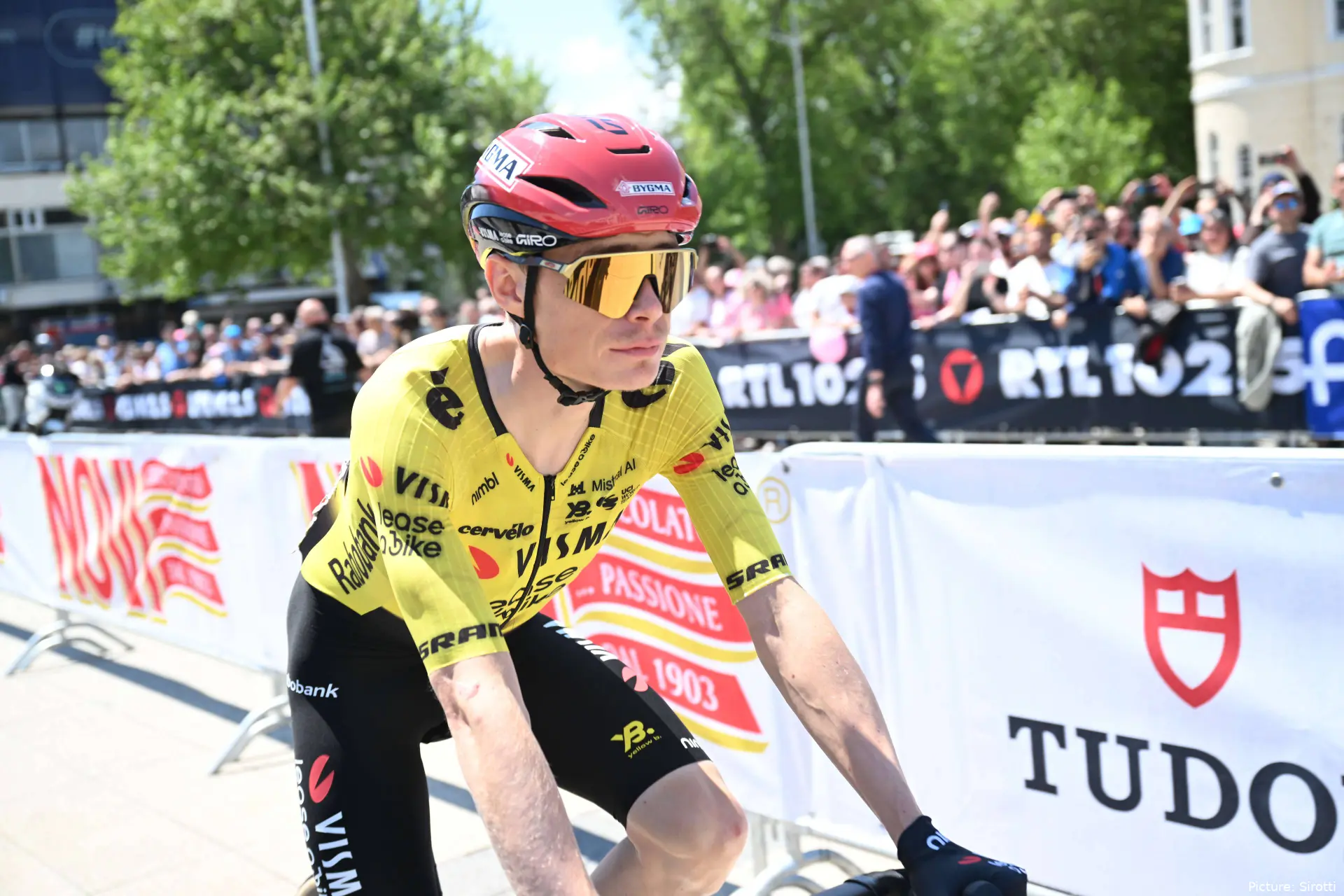
Jonas Vingegaard has reached Italy with exactly the kind of opening Giro d’Italia weekend Team Visma | Lease a Bike would have wanted on paper. No time loss, no major scare, no wasted energy in the wrong places, and enough sharpness on Stage 2 to remind the rest of the peloton who the clear favourite remains.
Yet after a brutal start in Bulgaria, where crashes have already taken Adam Yates, Jay Vine, Marc Soler, Santiago Buitrago, Matteo Moschetti and Andrea Vendrame out of the race, the biggest danger to Vingegaard’s Maglia Rosa bid may not be another climber at all.
Speaking for Eurosport.dk, former Danish national coach Anders Lund argued that Vingegaard’s tactical choices across the opening three stages have to be judged through that lens. “Jonas is in a really good position,” Lund said. “The most important mission with the start in Bulgaria was really that he had to get through without losing time and get safely to Italy. That succeeded, but beyond that, he has also shown great commitment and a desire to race.”
That desire was most obvious on Stage 2, when Vingegaard attacked on the Lyaskovets Monastery climb and briefly went clear with Giulio Pellizzari and Lennert Van Eetvelt. Although the move was caught before the finish, it still changed the tone of the Giro’s opening weekend. Visma had spent Stage 1 riding deep in the peloton to avoid the sprint chaos. A day later, Vingegaard was suddenly using his legs to remove himself from danger.
Vingegaard’s safety-first Giro plan wins support
Visma’s Stage 1 tactics divided opinion, with the team riding near the rear of the peloton while sprint squads fought for position ahead of the finale in Burgas. The plan was later vindicated when a major crash ripped through the bunch in the final kilometre, leaving Vingegaard and his teammates out of trouble.
Lund believes the approach made sense. “He has made some sensible choices,” he said. “Especially on Stage 1, which has divided opinion, but I thought it was very smart. In terms of the Giro’s general classification, his biggest danger looks to be crashes, and he removes that risk by sitting smartly in the peloton.”
That assessment feels even sharper after Stage 2. UAE Team Emirates - XRG saw their Giro ambitions heavily damaged by the horror crash before the final climb, with Yates, Vine and Soler all later forced out. Buitrago also abandoned after the same incident, while Derek Gee-West lost time and several other riders were left battered.
For Vingegaard, the first weekend has become a reminder that control in this Giro may mean more than simply riding faster uphill. On Stage 2, Visma’s solution was different. Instead of hiding from the risk, they tried to ride clear of it. “Visma made it sound as though it was a defensive way of racing, and that it was protection,” Lund explained. “The safest thing Vingegaard could do was ride away from the rest of the peloton and ride alone on the final descent in as small a group as possible.”
That attack did not bring the stage win, but it did send a clear message. Vingegaard had the legs to put pressure on the race almost immediately, even on terrain that was not expected to decide the Giro outright. “That was the safest thing, you could say,” Lund added. “But it also shows that on a relatively manageable climb, he can put his rivals under pressure. Vingegaard simply looks like the best. He looks really, really good.”

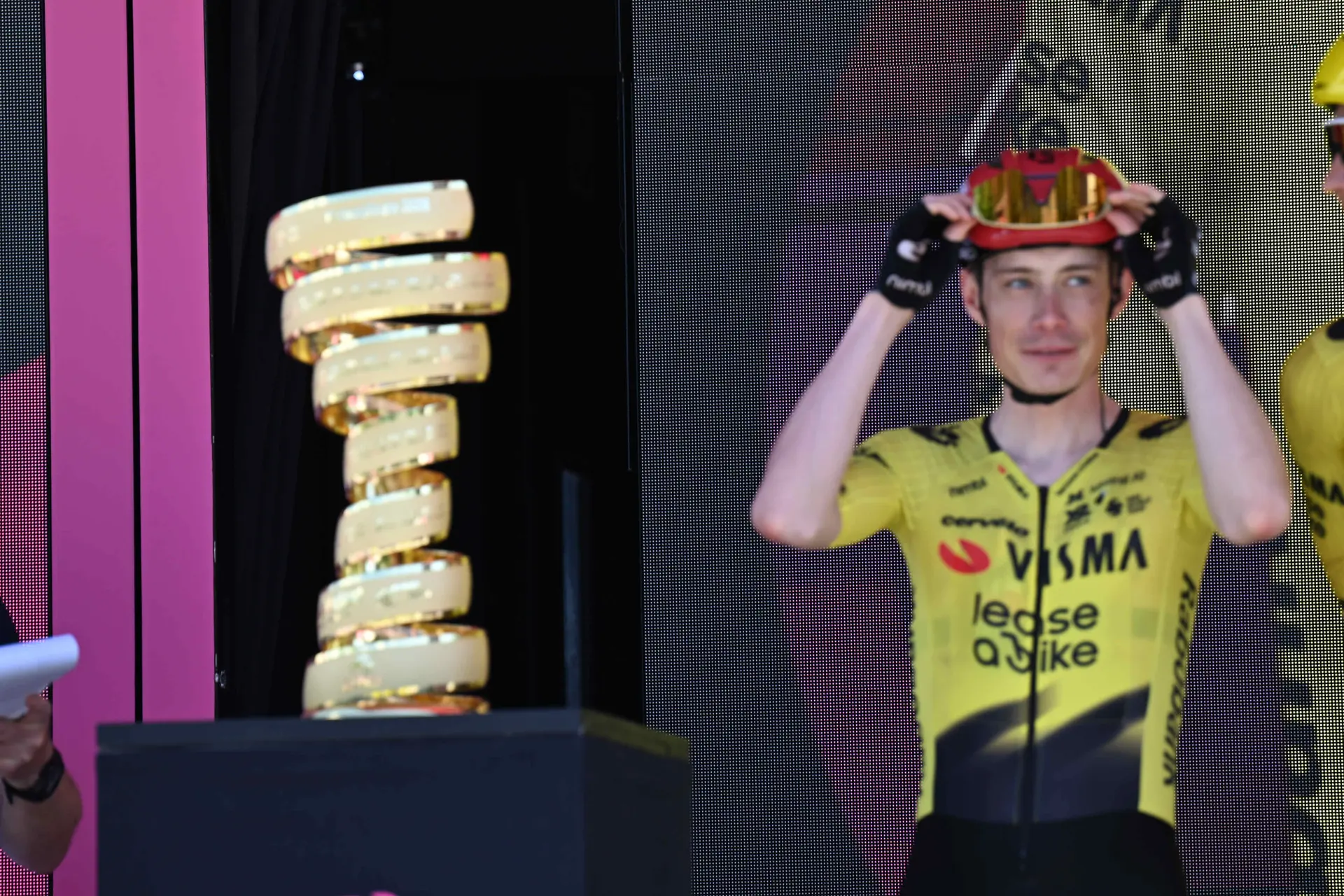
Jonas Vingegaard poses next to the Giro d'Italia trophy
Pellizzari emerges as early danger
If there was one rider who emerged from Bulgaria with his status enhanced alongside Vingegaard, it was Giulio Pellizzari. The Red Bull - BORA - hansgrohe rider was one of only two men able to follow the Dane’s acceleration on Stage 2, with Van Eetvelt the other.
Lund pointed to Pellizzari as the clearest early rival to Vingegaard, at least from what the race has shown so far. “Pellizzari could follow Vingegaard in the finale on Stage 2,” he said. “He also looks really good and has come through the first part just as well as Vingegaard. So that is how it looks after the first three stages.”
The real test is still to come. Friday’s summit finish on Blockhaus should give the first proper reading of the climbing hierarchy, with the Giro’s longest stage ending on one of the toughest ascents of the race.
For now, though, Vingegaard has left Bulgaria where he needed to be. He is safely in the GC picture, already active, already watched by everyone, and still untouched by the chaos that has reshaped the race around him.

Kieran WoodDeputy Editor-in-Chief
Kieran Wood is a sports journalist based in Wales and has been active in journalism since 2022. He regularly contributes to DartsNews.com and CyclingUpToDate.com, where he covers professional cycling and darts. In cycling, his work includes liveblogs from major races, including the Tour de France, the Giro d’Italia, and La Vuelta a España, alongside race reports and analysis. He has also conducted interviews with professional riders.
His reporting spans the full racing calendar, from one-day classics to stage races, with a focus on accurate, real-time coverage and clear contextual analysis. For statistics, results, and historical context, he regularly uses resources such as ProCyclingStats. To support reporting on rider activity and training context where relevant, he also references Strava.
In his work, Kieran places strong emphasis on careful sourcing, editorial accuracy, and updating articles as new, verified information becomes available.
claps 0visitors 0
Just in
Popular news
Latest comments
- Happy to help :-)Mistermaumau08-10-2026
- Well, ok but, it’s also a structural, team, budgeting, direction and all sorts of other issueMistermaumau08-10-2026
- I wouldn’t call it an analogy but maybe his criticism is a little unfair. On the other hand, the fact Cicco made a public affair out of it despite having received all the explanations and proof makes me feel he now deserves being criticised for not accepting there is nothing to discuss.Mistermaumau08-10-2026
- Much as I like him (one of my favourites), I do want to attract a little attention to the coincidence of his recent performances in the current context. Not the first time a rider improves noticeably when there’s a job interview to prepare. In the same lighthearted humour of his, i hope the UCI will let him wear it at home as the rules quite strictly state you can only wear it during participation in the discipline you won in, and we all know how capable they are of interpreting rule interpretation ;-) Also, if it’s going to be retirement (please not), I wouldn’t call that an agreement as somebody will probably feel they didn’t get what they wanted.Mistermaumau08-10-2026
- Agreed. There used to be a team willing to pay though. I take all these figures (that vary enormously according to who is publishing) with handfuls of salt. We don’t know how salaries are treated (especially between a UK employer and Andorran resident), we don’t know how numbers are derived and from where, if deductions have been taken into consideration, etc. but if he returns to Colombia, he’s going to need quite a bit in protection money.Mistermaumau08-10-2026
- And another one gone, another one gone, another one bites the dust. Ah gonna get you too…Mistermaumau08-10-2026
- Top marks RidesHills. A great post that sums up exactly Egan Bernals situation.Cyclingsbestfan08-10-2026
- Thanks for pointing out that typo. Now ammended.Prorodsandstuff08-10-2026
- Great signing by Uno-X. Hope he develops and can get som great results.
 Vikingrider08-10-2026
 - It always worries me when people so knowledgeable about a subject base lengthy detailed explanations or analysis on a single erroneous fact or figure so blatantly wrong thereby invalidating just about everything they made the effort to say. I always wanted to meet some top theoretical physicist to make sure they hadn’t overlooked something obvious as their figures for the mass of the universe don’t work out. This is like basing the US budget on a debt of 4 trillion instead of 40, something I know one person would be very capable of attempting.Jumpyjohn08-10-2026
Loading
Write a comment