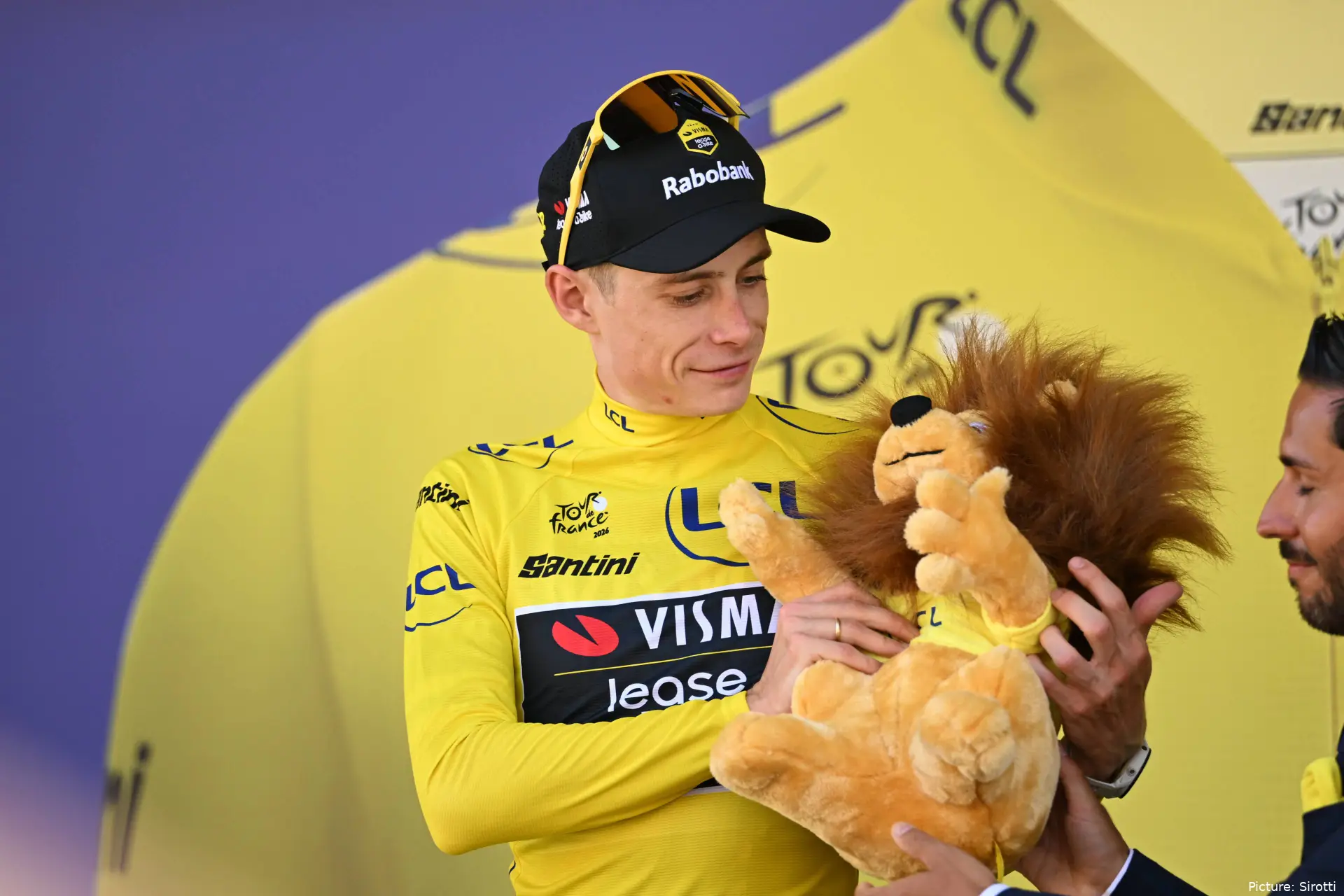
Who is Jonas Vingegaard?
Jonas Vingegaard is Danish pro cyclist who is most known for winning the Tour de France. His famous story, from fish factory worker to Tour de France winner in a few years has been incredibly popular, whilst he led the Team Visma | Lease a Bike team to its ultimate goal in 2022 and 2023. He is also a Giro d'Italia and Vuelta a España winner, becoming one of the most successful stage racers in cycling history.
Name: Jonas Vingegaard
Born: 10 December 1996
Birthplace: Thy, Denmark
Turned Pro: 2016
Height: 1.75m
Born: 10 December 1996
Birthplace: Thy, Denmark
Turned Pro: 2016
Height: 1.75m
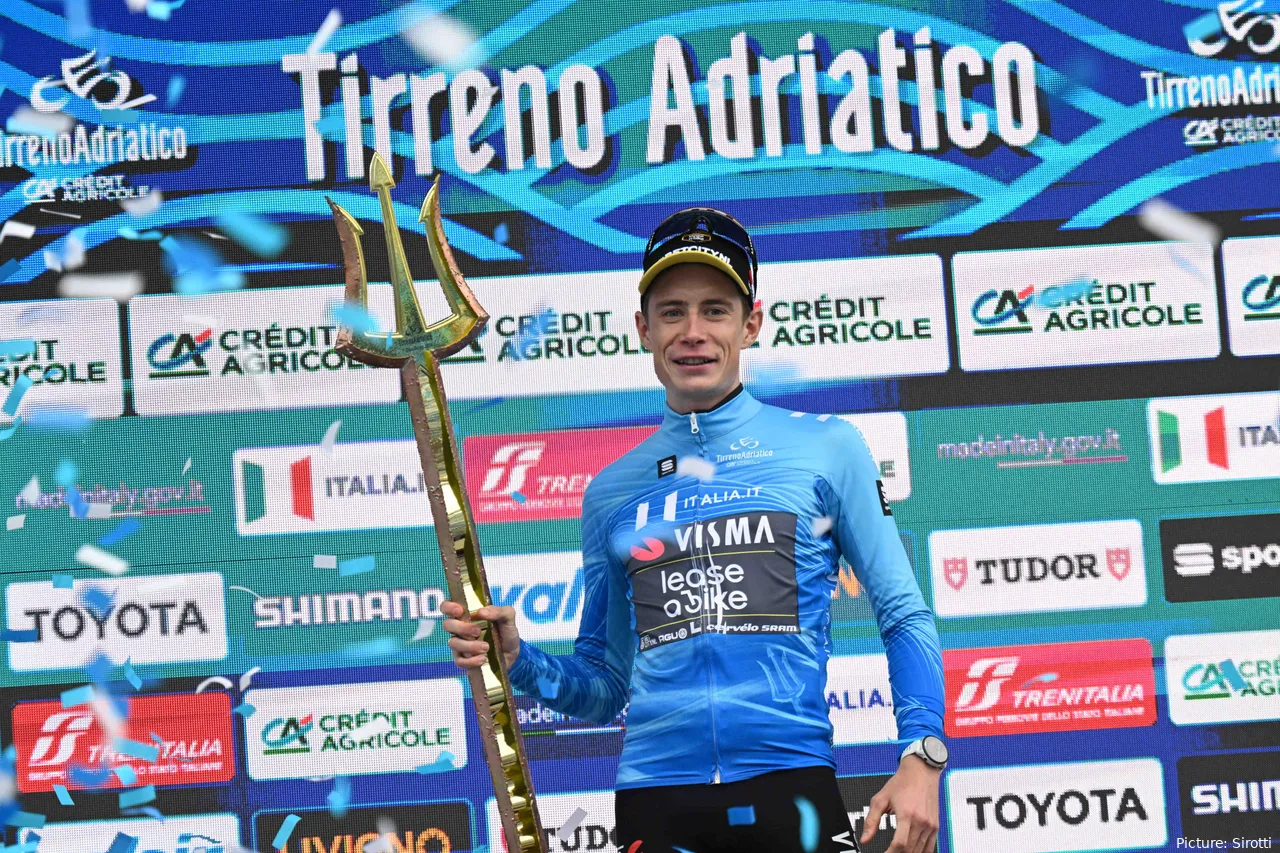
Jonas Vingegaard wins the Tirreno-Adriatico race
Jonas Vingegaard was born on the 10th of December 1996 in the town of Thy in Denmark. He is a Danish climber who has recently taken to the top of road cycling with an abrupt ascent within Team Visma | Lease, reaching his highest potential to win the Tour de France in 2022 and then repeating it in 2023. He has also won the 2025 Vuelta a España and 2026 Giro d'Italia, joining an exclusive list of triple-Grand Tour winners.
Vingegaard is married to Trine Hansen, with the couple having their first child in 2020. They had their second child in the summer of 2024. His mother-in-law is a famous Danish TV star, and he has had an upbringing through a fish-related job exactly alike fellow compatriot and rider Michael Valgren. He is a very reserved figure within the peloton, and factors such as his salary and FTP are completely unknown to the public eye. It is estimated that he rode the climb to Plateau de Beille at the Tour de France with a power output of 6.85W/Kg for 41 minutes, however, which he himself said was accurate. His FTP can be estimated to be around 6.6-6.7W/Kg.
Vingegaard entered cycling with 11 years of age in his hometown of Thy, in his local Cyckle Ring club which he spent five years with, before moving to the Aalborg Cykle Ring in 2013 as his talent was beginning to be discovered. His final junior year, in 2014, also didn't see him stand out from the crowd, however had shown enough potential and achieved enough results to jump into the under-23 field with the Odder Cykel Club, where he spent his 2015 season and the first half of 2016.
In 2016 he signed with Danish Continental team ColoQuick-Cult, effectively entering the pro ranks. Throughout this period is where his famous story as a fish factory worker took place, as he worked in the town of Hanstholm throughout the week, combining it with his cycling ambitions. This year he showed his first glimpses of potential at the pro peloton with a second place in the 2.1 Tour of China I, however distant still from what he was to achieve later on. His 2017 went rather similar until May, when a crash saw Vingegaard suffer a broken femur at the Tour des Fjords which sidelined him throughout the rest of the year.
Read also

In 2018, his final year before joining Jumbo-Visma in the World Tour, Vingegaard didn't have too many results to show for, although an occasional good day had him near the top. He won the mountain time-trial at the Giro Ciclistico della Valle d'Aosta Mont Blanc, a result that brought the attention of some pro teams, and he managed to secure a contract with the Dutch team, albeit only as a young talent who would be working for the team leaders. His first year at World Tour level 2019 was also not too flashy, although towards the end of the season he showed good form and achieved some results.
Vingegaard won the queen stage of the Tour de Pologne, effectively breaking through into the spotlight as a new strong rider. Weeks later he would go on to finish second at his home Tour of Denmark, but his role remained with Jumbo-Visma. 2020, the year where the Covid-19 pandemic cause the most chaos, saw Vingegaard start his season only in August at the Tour de Pologne where he finished on the Top10. As Primoz Roglic rode to his second GC win, Vingegaard supported him in the main mountain stages, showing his quality in the highly mountainous terrain, most noticeably the brutal Alto de l'Angliru. In 2021 he won the summit finish at Jebel Jais at the UAE Tour, famously being confused with teammate Chris Harper at the time, further showcasing the point that he was relatively unknown in the peloton.
Over the coming months he was to change that however, riding into the GC win at the Settimana Internazionale Coppi e Bartali where he took stage wins, and right after finishing second in the GC of Itzulia Basque Country whilst supporting Primoz Roglic to the win. His growing role as Roglic's right-hand man earned him a position at the Tour de France, where he started the race with a domestique, although having strong arguments for himself after a strong time-trial on stage 5, having him in the Top10 of the race. It was on the first high-mountain stage however that he's consolidated himself as a GC contender, as after Roglic's abandon Vingegaard finished amongst the main GC group to climb into fifth position. On the 11th stage, Vingegaard attacked and effectively dropped Tadej Pogacar at Mont Ventoux. Although later caught, his position as an incredibly gifted climber had been proven.
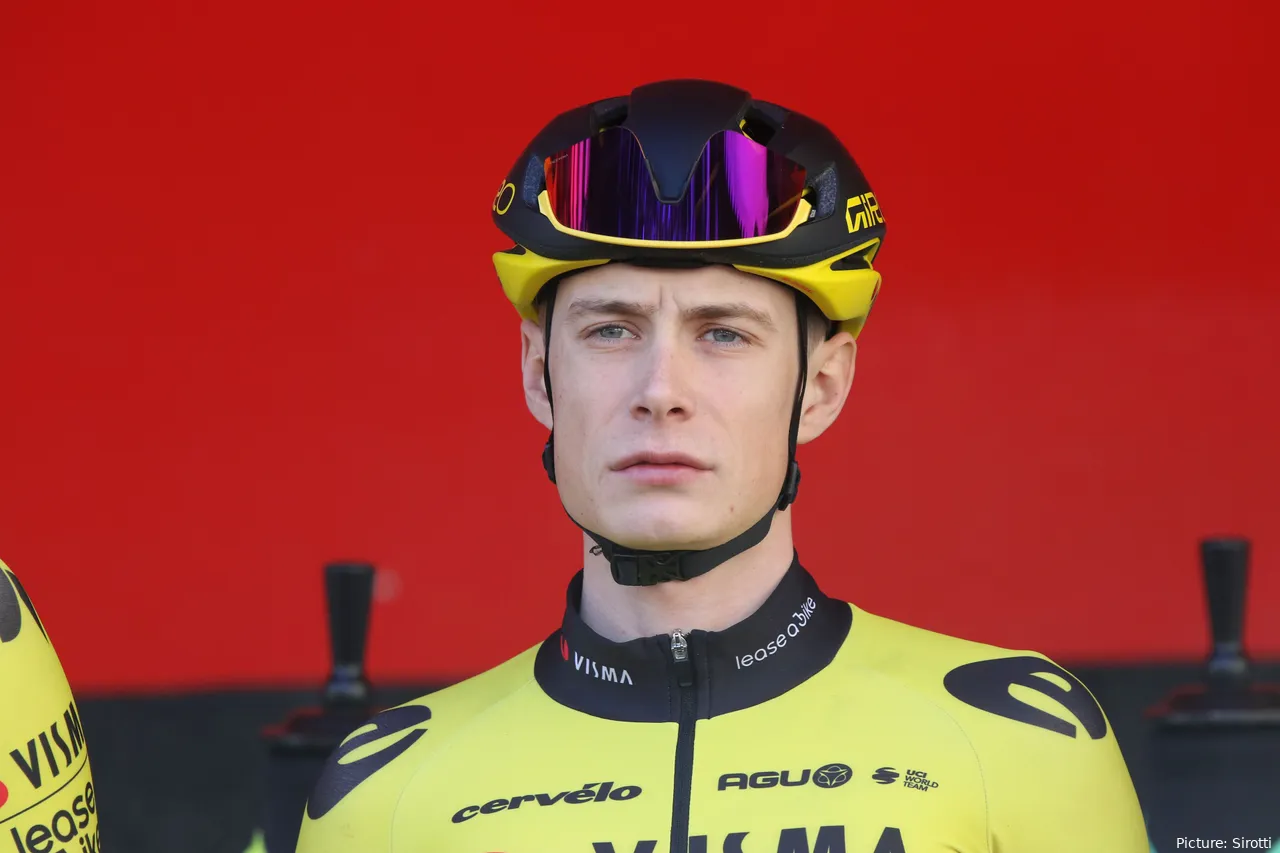
Jonas Vingegaard racing for Team Visma | Lease a Bike
Throughout the rest of the race Vingegaard was consistent, finishing second in both summit finishes at the Pyrenees - where Pogacar won - and third in the final time-trial, riding into a runner-up position in the final classification. The rest of his season was modest, but he was to enter 2022 in a leading position within the team, and as a new leader. Early in the year he further cemented that position, winning the Drôme Classic and finishing second to Pogacar once again at Tirreno-Adriatico. As Jumbo-Visma set plans to win the Tour de France, the Dane was well part of the plan to attack Tadej Pogacar, as Vingegaard and Roglic headed to the race with a co-leadership, supported by an immensely strong team.
Before the Tour the duo dominated the Critérium du Dauphiné, riding to first and second in the GC, with Vingegaard winning the final and queen stage after giving signals of superiority in the longer ascents. With Roglic crashing in the 5th stage of the race and losing time, Vingegaard had become the superior card to play for Jumbo at the Tour, as over the opening week he looked to be Pogacar's closest competitor. On stage 11, one of the most explosive of the 2022 season, Pogacar was attacked several times at the Col du Galibier, the highest point of the race. Later on, Vingegaard would attack the Col du Granon to take the stage win, the yellow jersey, but most importantly almost three minutes to Pogacar.
This lead was immense. What would follow throughout the following two weeks however would be a consistently aggressive posture from the defending champion, to which Vingegaard had to respond. Alpe d'Huez, Mende, Foix, Peyragudes and Hautacam hosted five different finales where he was put to the test, but responded promptly every time, with the duo a level above the competition. He rode a strong time-trial to take the overall win and the yellow jersey, with an extra win at Hautacam to bring home even more achievements. This was an immense win, with Vingegaard being received by roaring crowds back in Denmark, and later he fell out of the public eye to assimilate all his recent success with his family back at home. Vingegaard finished his season with two stage wins at the Cro Race and a strong but modest 16th place at Il Lombardia.
He wanted to repeat his success of the 2022 season in 2023. Vingegaard began his season at O Gran Camiño, where he won three stages and the overall classification. He was defeated by Tadej Pogacar at Paris-Nice weeks later, however got his confidence back at Itzulia Basque Country where he won the overall classification and three stages against a strong field. His spring campaign ended there as he looked to build towards a busy summer. Vingegaard returned to racing at the Criterium du Dauphiné where he won the overall classification in convincing manner, placing himself as the man to beat for the Tour de France.
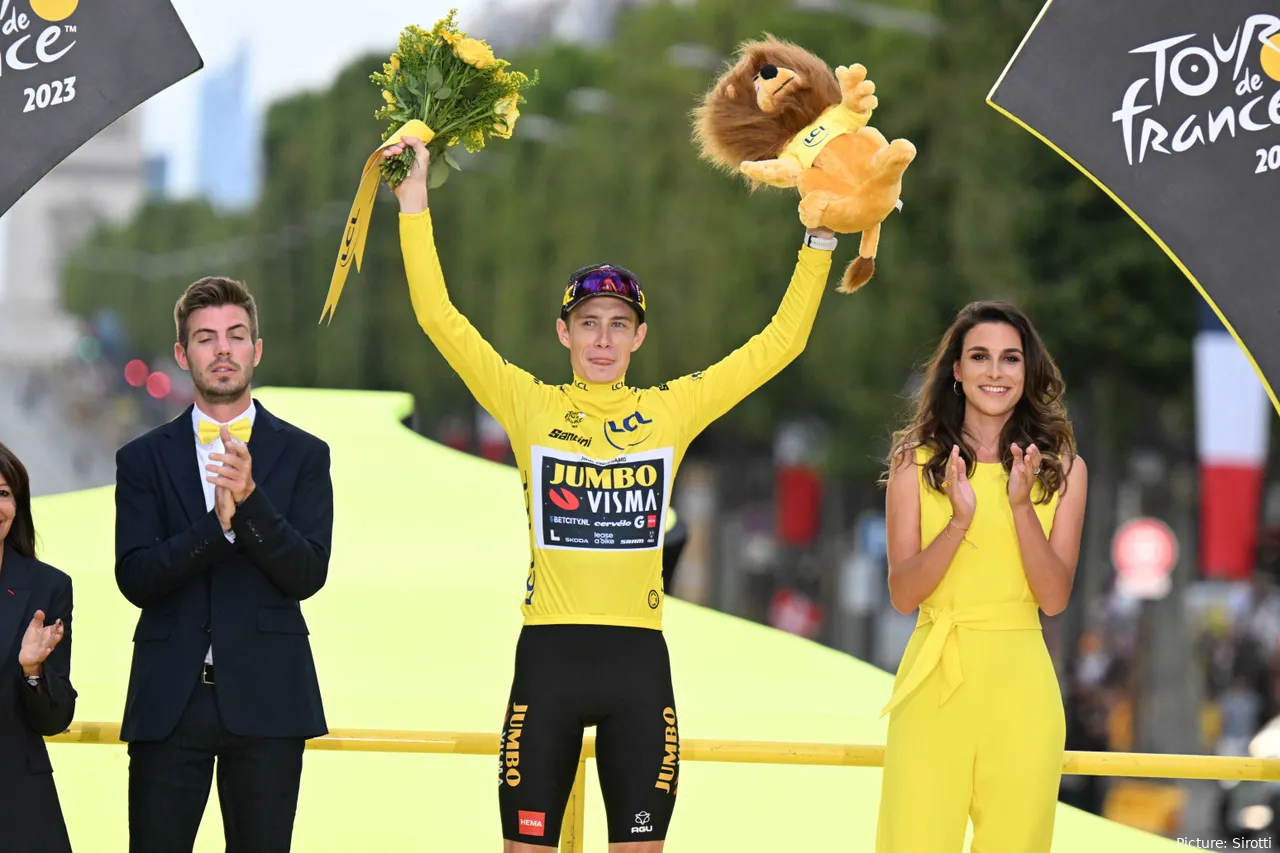
Vingegaard won the 2023 Tour de France
He won stage 16's time-trial and that was his sole stage win, however Vingegaard showed his very best level once again. The Dane withstood the attacks of Tadej Pogacar throughout the first and second weeks, and in the final week of the race he stamped his authority. The Jumbo-Visma rider was the race leader since the sixth stage, but it was on stage 17 that Tadej Pogacar cracked completely and Vingegaard grew his gap immensely. He ended up winning the Tour de France with 7:29 minutes of lead over the Slovenian. He decided to prolong his season and race a second Grand Tour in a season for a first time in his career.
He won stages 13 and 16 to the Col du Tourmalet and Bejes respectively, which propelled him into second place in the overall classification. Vingegaard could've very well won it, but it was his own teammate Sepp Kuss who benefited from a first week breakaway who won the overall classification. The team decided to work for the American from stage 18 onwards and Vingegaard was onboard with the idea of supporting his most loyal domestique.
Jonas Vingegaard began his 2024 season with an impressive victory in the second stage of O Gran Camiño (having won all three classified days). Despite heavy rain during the stage, he launched a solo attack on the Alto de San Pedro de Líncora, leaving his competitors behind. This victory ensured he took the lead in the general classification, marking a powerful start to the season where he won all three classified stages.
One of the highlights of Vingegaard's season was his dominance in the Tirreno-Adriatico. In the sixth stage, on the steep climb of Monte Petrano, he launched a decisive attack that no other rider could follow. With this solo victory, he secured not only the stage win but also the overall victory in the general classification. His superior climbing abilities and excellent form were evident, giving him great confidence for the races later in the year.
In the Basque Country, the Dane has suffered a career-threatening crash during stage 4, alongside the likes of Primoz Roglic and Remco Evenepoel. The Dane suffered a fall that left him in need of medical attention on the scene. He suffered a fractured collarbone, ribs and a punctured lung. This led him to stay 8 days in intensive care at a hospital in the region and almost two weeks before he managed to return home to Denmark. Despite the less than ideal preparation, he slowly took the necessary steps to build his form back up, and returned to the Tour de France already with good form which allowed him to contest for the victory.
In the 2024 Tour de France, Vingegaard appeared again as the two-time defending champion. He faced strong competition and various challenges along the way. He won stage 11 in an exciting sprint against Tadej Pogacar in Le Lioran and finished the overall classification in second place - not being able to successfully defeat the Slovenian. He went on to win the Tour de Pologne less than a month after the Tour, winning the time-trial on stage 2 and then defending the race lead successfully.
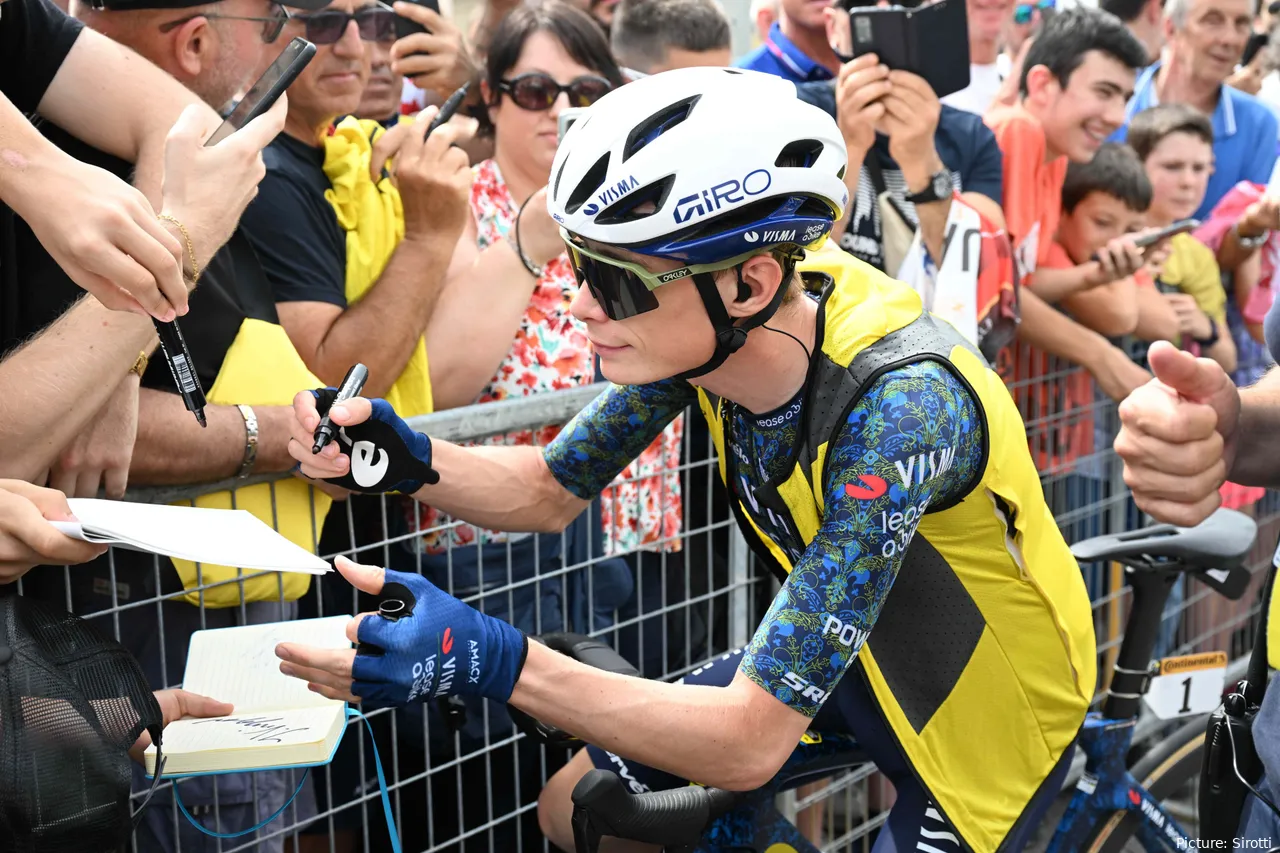
Jonas Vingegaard giving autographs at the 2024 Tour de France
In 2025 Vingegaard had a start at the Volta ao Algarve where he didn't seem to show great form, but won the time trial with a strong display and hence conquered the overall classification. He started Paris-Nice with the ambition of winning, but a crash on stage 5 whilst wearing the yellow jersey saw him suffer a concussion. He finished the stage, but wouldn't start the next day, and required almost two weeks off the bike. Hence he missed out on the Volta a Catalunya and subsequently the rest of his spring schedule, taking another step back whilst Tadej Pogacar remained healthy and continued to evolve. The Dane only returned to racing at the Criterium du Dauphiné, where he showed a very high level but was met against and unbeatable Pogacar.
Vingegaard was second on five stages and the overall classification, and at the Tour de France he met the same faith, putting in a stellar race and being the Slovenian's only competitor, but ending the race with eight podium places, no wins and a second place in the overall classification. However he would go on to race the Vuelta a España after the Tour and despite not showing his best level, he rode to the overall win, his third Grand Tour and first Vuelta triumph. He won stages in Limone, Estacion de Valdezcaray and Bola del Mundo, and managed to beat João Almeida and Tom Pidcock to win his first Grand Tour in over two years.

Jonas Vingegaard after winning the 2026 Giro d'Italia
Vingegaard followed a different plan into the 2026 season, confirming his debut at the Giro d'Italia as a major goal. His season start was delayed due to a crash and bout of illness during the month of February. His start to the season was flawless however, taking place at Paris-Nice where he was the overwhelming favourite and won the overall classification without much of a battle. After Juan Ayuso's withdrawal whilst wearing the yellow jersey, the Dane won two stages and carried the yellow jersey into Nice - where he won all three classifications as well.
Vingegaard then took part in the Volta a Catalunnya, winning both mountain stages to La Molina and Queralt, conquering the overall classification in what was the most important stage-race leading up to the Giro d'Italia. The Team Visma | Lease a Bike rider was the overwhelming favourite to win the pink jersey, and delivered in spectacular fashion.
With a display of climbing prowess and consistency, Vingegaard won the mountain stages to Blockhaus, Corno alle Scale, Pila, Carí and Piancavallo. He carried the pink jersey from stage 14 onwards, and took the overall win ahead of Felix Gall and Jai Hindley. The Dane then took on an altitude camp, aiming for the Tour de France where he was once again touted as Tadej Pogacar's biggest rival.
Vingegaard and Visma won the opening team time trial in Barcelona at the Tour de France, with him taking the yellow jersey for the first time since the 2023 Tour - which he then won. Vingegaard lost it on stage 3 as Pogacar won the uphill sprint to Les Angles. On stage 6, the Slovenian's attack on the Col du Tourmalet created a gap, and Vingegaard - second on the stage - would go on to lose 2:38 minutes on the road to his main rival, alongside much of his chances of winning the Grand Boucle.
Throughout the first and second week he still appeared to be the second strongest in the race, but his Tour - and season - would come to an end on stage 15, as he crashed in the lead-up to the arrival at the Plateau de Solaison, suffering a fractured collarbone. Despite taking place in mid-July, the fall led him to end his season at the time.
Rúben SilvaEditor-in-Chief
A founding contributor to CyclingUpToDate since its launch in January 2022, Ruben Silva has played a central role in shaping the site’s editorial direction and long-term growth. Before joining the project, he built his experience through independent blogging at Echelons Hub and by producing race previews for Ciclismo Internacional, developing a strong analytical voice rooted in daily engagement with professional cycling.
Beyond editorial work, he has been closely involved in the expansion and coordination of CyclingUpToDate’s wider network, helping establish and support sister platforms across multiple languages. This includes ongoing collaboration with CiclismoAlDia (Spanish), CiclismoAtual (Portuguese), WielrennenUpToDate (Dutch), and RadsportAktuell (German), contributing to a shared editorial vision and consistent international coverage.
He also helps oversee editorial governance across the network, setting standards for accuracy and consistency and coordinating updates or corrections when needed.
Originally from the Porto metropolitan area in Portugal, he holds a bachelor’s degree in Geography. His path into cycling journalism was shaped not through formal media training, but through independent reporting, community engagement, and sustained on-the-ground involvement in the sport.
Over the course of his career, he has conducted approximately 100 interviews across road cycling and cyclocross, ranging from one-to-one conversations and online formats to press conferences and on-site pre- and post-race coverage. His interviews include leading riders, team managers, and prominent figures within cycling media: Tadej Pogacar, Jonas Vingegaard, Mathieu van der Poel, Primoz Roglic, Wout van Aert, Joao Almeida and Tom Pidcock; managers like Patrick Lefevere and Joxean Matxin; and YouTube personality Bryan Kennedy (BKXC)...
Within 18 months of launch, he helped grow CyclingUpToDate’s English-language platform into one of the most-read cycling news websites, built entirely from the ground up. As both a professional journalist and lifelong cycling enthusiast, his focus remains on delivering accurate, timely, and well-contextualized coverage.
claps 1visitors 1
Just in


Popular news
Latest comments
- he had one good year of his career. gotta think he was doping hard.mij25-11-2026
- bam! two grand tour starts claimed by the younger sprinter just like this. what if merlier also plans for 2 grand tours?Ketterechts25-11-2026
- writing about yourself in third person ... please, at least have someone else from your staff author these self-coverage articles!Ketterechts25-11-2026
- Don’t forget Yates’s podium at 2023 TdF!Lozza25-11-2026
- It was stage 14 to Morzine that Carlos Rodriguez won in 2023, not Puy de Dome. And Kwiato actually won the previous stage himself to Grand Colombier!Lozza25-11-2026
- Go Pogi!! 🐐❤️Lozza25-11-2026
- They didn’t have or need “extraordinary information”. All they needed was for a French judge to sign off on the night-time testing for it to go ahead.Lozza25-11-2026
- If the sponsors voted for Primoz then you get him, otherwise not.flyer25-11-2026
- It sure can feel or seem that way but I wonder if the same amount of prodigious performances (compared to the others) would occur if no one was ever doping at all.flyer25-11-2026
- Given the similarity of two articles (published on I think the same date), I'm reusing (copy-n-pasting) my post from the twin: I've always thought the last day of each of the grand tours was problematic mostly in that the GC is considered completed before the race starts when that is not really true. There is some tension, but not desirable tension. What saves the awkward practice is the race finish is legit for those who participate - so it's not wholly different from the other stages. That neutralizations usually make good sense demonstrates their necessity so if that has to be the way to go I agree that the design plan for the neutralization should be completed before the race starts. This years end stage in the Vuelta had one of the best first half's I've seen in that many of the riders looked to be thoroughly enjoying themselves making it a joy to watch. But I think it was slightly closer to the exception rather than the rule.flyer25-11-2026
Loading
Write a comment