Pedal Punditry #27 - The good, the bad and the shameful about the 2026 Giro d'Italia
CyclingMonday, 01 June 2026 at 14:10
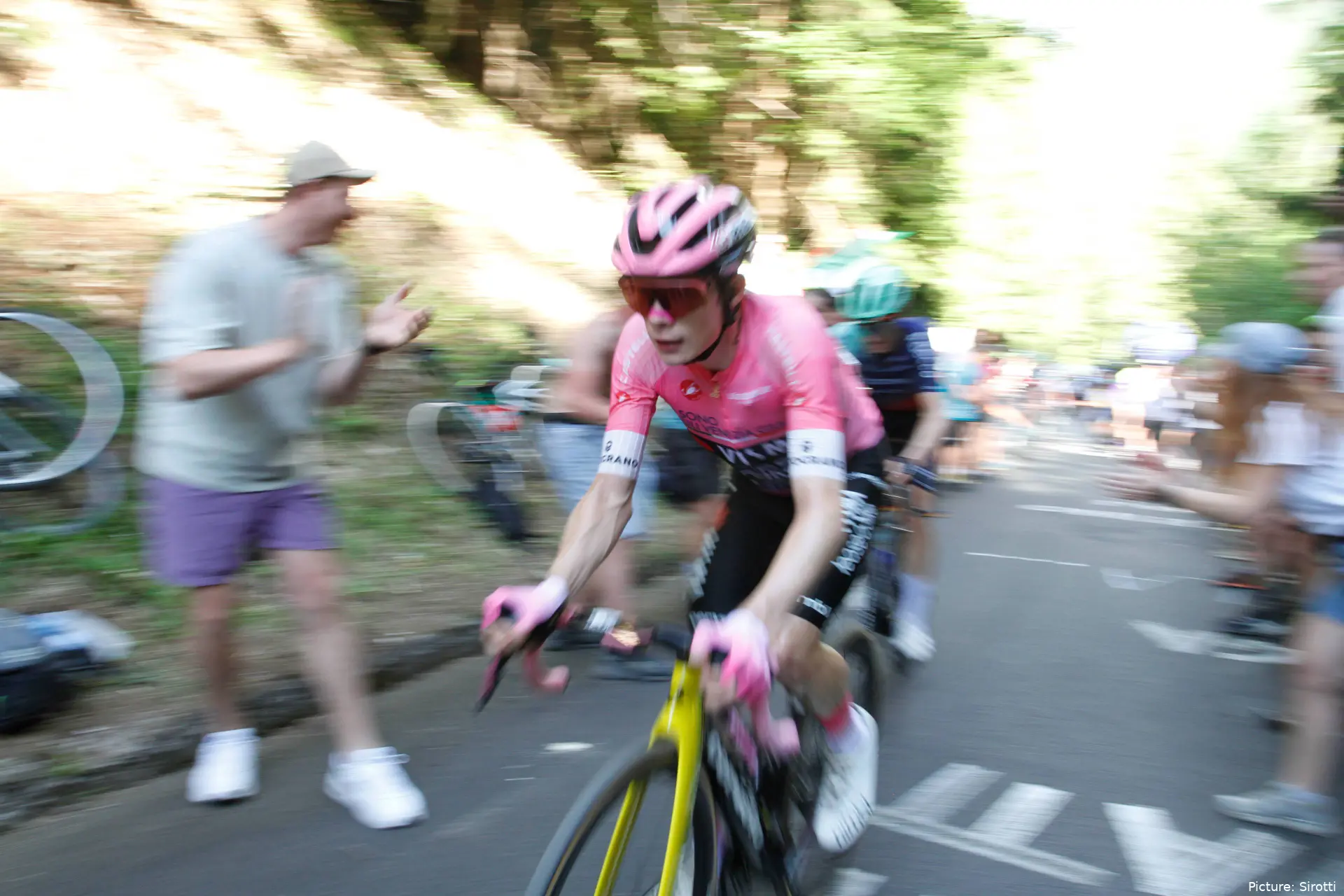
The 2026 Giro d'Italia is over. The last three weeks of racing have provided a lot of fireworks, but also a GC battle that was perhaps as uncompetitive as it was back in 2024 when Tadej Pogacar won six stages. This time around, Jonas Vingegaard won five, and ruled over the pink jersey the entire time even though he only wore it for a week. Throughout the Giro a few things have caught my attention and had me reach a few interesting conclusions.
The race has had lots of good, and also a few days where the action was lackluster. We've had daily discussion posts on CyclingUpToDate where several of our writers, including myself, have shared opinions on the daily occurrences of the race. In the bigger picture, a few points throughout the Giro have caused an itch that could not be scratched. Some are good, some are not so good, and some outline serious problems with some of the current World Tour teams.
Can it be argued that Jonas Vingegaard will be competitive against Tadej Pogacar?
The first one is perhaps the most positive one, although it does not seem like my opinion was shared by the general audience. Jonas Vingegaard has reached a very high level at this Corsa Rosa. Not at first, in fact his first half of the race didn't really have anything particularly bright to show off. Felix Gall is a tremendous climber, but the gaps on Blockhaus and Corno alle Scale to the Austrian were a combined 25 seconds. When the goal is ultimately to be up against Tadej Pogacar in July, this doesn't cut it.
The time trial was also quite poor from the Dane, not a shocker since he weights a reported 58Kg at the end of the day, but when comparing to previous TT performances I can understand why it will take some people by surprise. But this is very much a real concern, as at the 2025 Tour he lost considerable time in the also-flat time trial, and whilst this year the Tour organizers were afraid of planning a proper time trial, he still has to limit losses to Pogacar there - under regular circumstances.

Jonas Vingegaard won twice before, but only on stage 14 did he actually climb like I expected him to
But on stage 14 my vision on Vingegaard changed. Visma's strategy was clearly to attack the race from stage 14 onwards, and it seems all of their riders peaked at the right time. On their part, a perfect execution, with Sepp Kuss delivering a mythical win on the 19th day, Davide Piganzoli's signing proven to be a big hit in an otherwise poor budget when comparing to other teams; and Victor Campenaerts not only climbing like never before but also keeping the team's spirits and public image quite good on social media - that is, when he is not peeing in a bidon. A 'peedon' some called it, which I've formally adopted as a new term in my dictionary from now on too.
I follow 'Na1chaca's power estimated. I believe he is a credible source for these estimations, taking into consideration Vingegaard himself in the past has quoted the Plateau de Beille as quite accurate. Taking into consideration that was the best climbing performance perhaps in the history of the entire sport, that means something. It creates a strong base which we can use to gauge our expectations towards what Vingegaard may or may not be able to do this summer against the World Champion.
In Pila, he climbed for 40:39 minutes at 6.39W/KG; In Carì 6.77W/Kg for 30:50 minutes; and in Piancavallo 6.81W/Kg for 36:15 minutes. None of these stages were brutal, let's be honest, or ridden very hard until then. But there's a couple notes that can provide hope for those who aren't looking to see Tadej Pogacar ride his own solo mountain event at the Tour.
Firstly we acknowledge that the 2024 climbing level at the 2024 Tour was the highest ever, and in 2025 neither did efforts that were much above this, if at all. Hautacam, where Pogacar did 6.74W/Kg for just over 35 minutes, is the most notable one. A harder race yes, but when you think of it, the Plateau de Beille supersonic climbing times were achieved at the end of a very difficult stage that also had 200 kilometers in distance. These riders are genetic freaks and they can do their very best performances at the end of hard day. Hence, Vingegaard's numbers at the 2026 Giro can be replicated at the Tour, and that is a competitive level.
Vingegaard also clearly peaked in the second half of the race. Perhaps he entered it undercooked, or with a healthy weight. Both would mean that he did not have to push his body into the extreme for too long here; and mentally he didn't have the hardest of races either, as no-one actually challenged him for the pink jersey.
After all, understanding that Pogacar was carrying a few extra kgs, but his Tour de Romandie performance was perhaps the most modest climbing times that he has done in years. 6.8W/Kg for 21 minutes was the best he did, and Vingegaard has indeed showed a superior level so far this season.
Yet when I argued, after stage 16 into Carì, that we could actually have a battle this summer after his performance, a lot of people on X turned on me. Amongst the many dozen replies were a few that struck my mind such as the repeated argument of what Pogacar did on Plateau de Beille, forgetting Vingegaard put in almost the same watts that day; or the 'cope harder' which particularly made me chuckle, to this day I don't know what I should be coping. Maybe one day I'll have the answer.
Vingegaard put out numbers he didn't have to, his Giro win was comfortable, safe and without a doubt the easiest Grand Tour of his career. Renewed motivation and run-in to the Tour can do miracles this summer and from a fan point of view, I hope for such. I believe Paul Seixas won't do three weeks at his very best level and Remco Evenepoel simply isn't as strong of a climber, so Vingegaard is realistically the only rider with good chances of being a contender for the yellow jersey against the Slovenian. In 2024, Pogacar reached his best level after a Giro where he rode almost the same way, so there is ground for this argument to stand on until July.
Read also
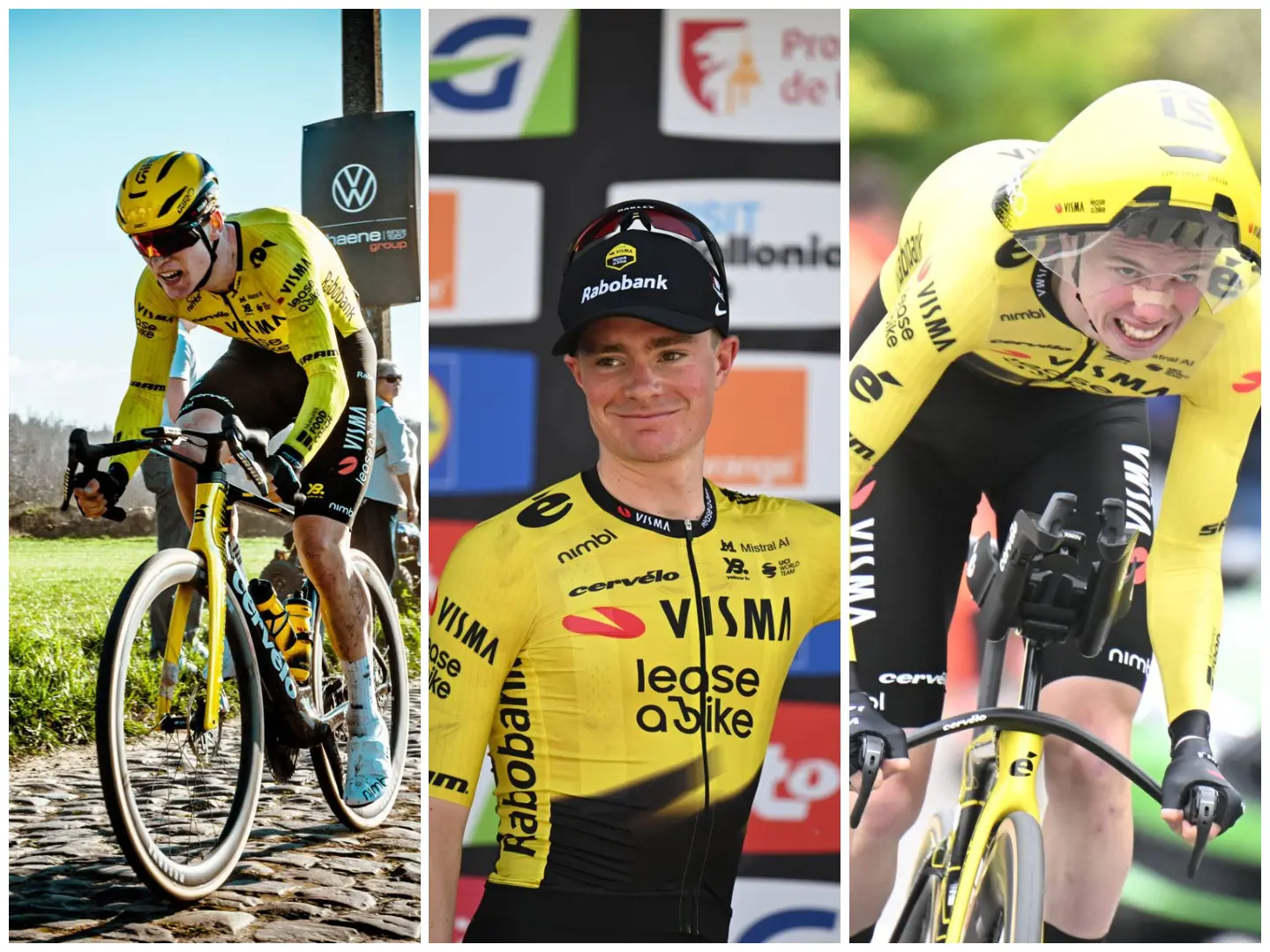
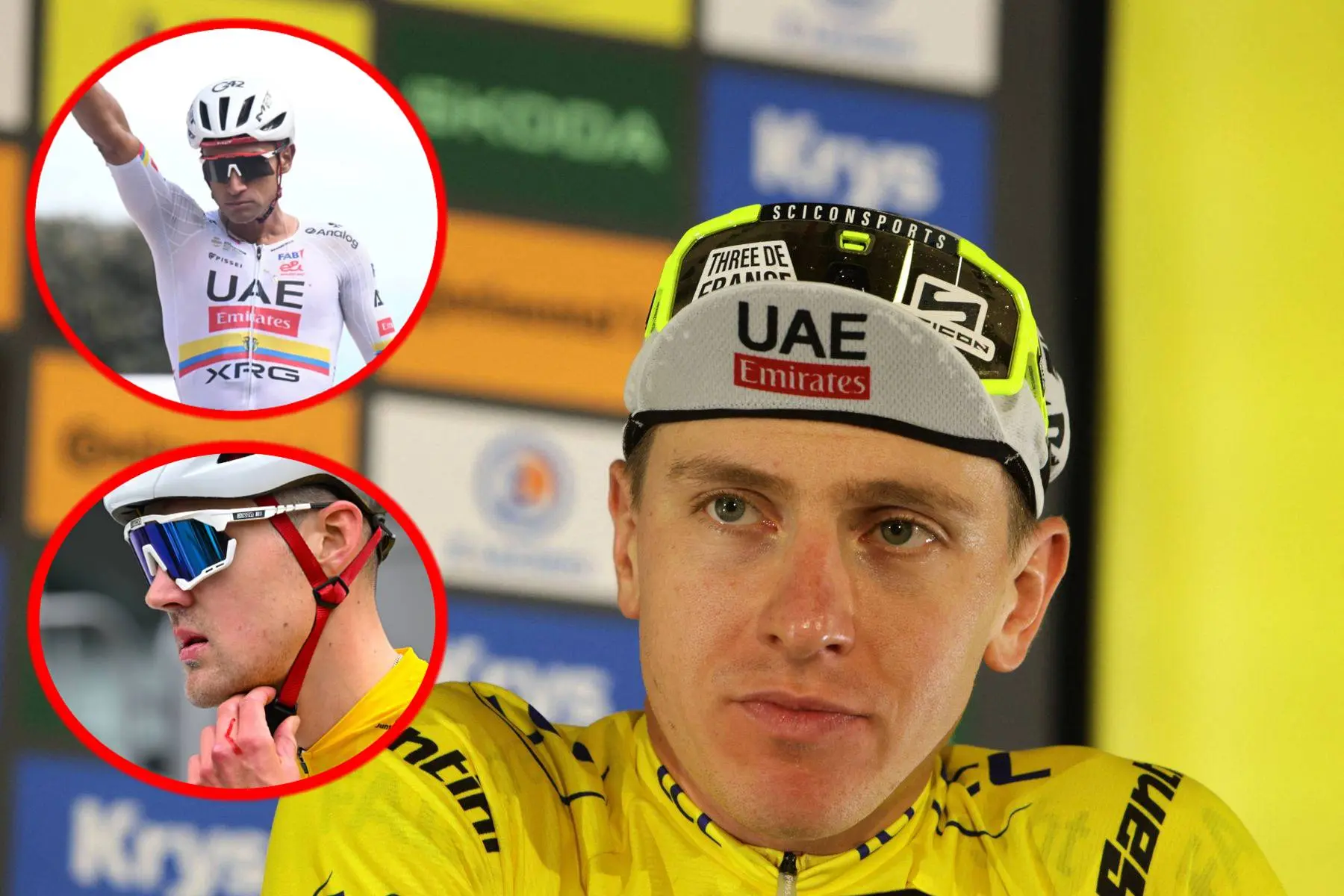
The Tour of the Alps is no longer what it was
The Vuelta a España has its Vuelta a Burgos; the Tour de France has its Criterium du - Sorry, Tour Auverge - Rhône Alpes; and the Giro d'Italia has its Tour of the Alps. Or does it? Or do any of them actually have the 'ideal' preparation race anymore? Pro cycling is not the same anymore, and we live in an era where the top riders more and more tend to use training as their sole method of preparation towards three-week races.
I can understand that, as it lowers the risk of injuries or illnesses; it reduces the chance of physical or mental fatigue throughout the Grand Tour; and the training methods now allow for riders to achieve that 'race rhythm' without actually being in the peloton. The Tour of the Alps has not featured any rider that was on the podium of this year's Giro, and in fact none of them did any stage-race.
Jonas Vingegaard and Felix Gall rode up to the Volta a Catalunya; whilst Jai Hindley rode a couple of one-day races in the Ardennes where he had a minor role. On the contrary, those who raced the Tour of the Alps now seem to suffer more and more as the years go by in the Giro. You look back a decade and you find Michele Scarponi win in 2011; Vincenzo Nibali winning in 2013; Richie, Mikel Landa, Geraint Thomas, Thibaut Pinot... Unfortunately these last four were always known for crashing or becoming ill at the worst moments, but they would all win in the Alps ahead of their big Giro tilt. And the startlist would consistently be packed. Above all, it just felt like the big victory contenders would race it, more than today.
But on the contrary, the winners of the Tour of the Alps are now on a yearly basis simply not making it. In 2024 Juan Pedro López had a breakthrough performance and at the Giro he was nowhere to be seen; In 2025 Michael Storer DOMINATED it and then at the Giro - although due to a few crashes - he never reached his best level. Now in 2026 Giulio Pellizzari used it to fuel high expectations, a great victory that put him as favourite number 2 at the Giro. After an illness bout, he too fell out of the Top10. The Tour of the Alps is not a good omen, but above all the main GC contenders in general feel like they do not need it. The race feels, in my opinion, like it is losing that status that has made it special.

Pellizzari ended the 2026 Giro without the results he hoped for
The disregard for rider safety was abhorrent
In the first half of the race this was a major issue in my eyes, which took over the discussion pieces on a few occasions too. Stage 1 saw a mass crash in the final kilometer, seemingly as the barriers that are now common in sprint finishes, without their feet handing out at the bottom, never made it to Bulgaria. In 2026, in a Grand Tour, it is unaceptable, and was a very bad way to start off the race.
Stage 2 was also marked by a crash, this one though not the organizers' fault. I could argue stage 15, in Milano, was also quite dangerous - this was more the riders' view, not my own, but I am aware they know much better than me.
My issue was with stage 6, finishing in Napoli, on streets I know well from my own time in the city. A city that for the past few years has delivered several sprint finales in a sea-side avenue, which worked safely. Safety is a big word in 2026, as both fans and riders seek to stop a rise in crashes that devastates the peloton on a frequent basis. Hence when the route in the finale was designed to finish on the Piazza del Piebiscito.
The problem: The final kilometer was mostly on cobbles or large slabs; and it featured several corners, including a 180-degree with around 300 meters to go. Now picture a peloton of hungry sprinters racing into it, with the finish line in sight... And now picture that, but with rain. It's not the organizers' fault that it rained, but that is always a possibility, and a route can't be designed with the idea that it can't be raced safely in the rain, that is simply absurd.

The stage 6 crash at the Giro ruined an expected bunch sprint, and everyone saw it coming
The finale was dangerous, there's no discussion. I have never seen a more easily anticipated crash, and I got the sense that most people had the same feeling. How do you have a 180-degree corner with 300 meters to go on a cobbled road in a bunch sprint stage of a Grand Tour, where the fastest sprinters and leadouts are at the start? When the race has a proven and safe alternative, already used plenty times to success.
The reason is to make an attractive finish, a beautiful picture. The riders... 'They're professionals, they know the risks they take'. I argue something which I think is common sense, which is that perhaps don't create unnecessary dangers for them, specially when to begin with safety is already a massive issue in the sport.
I'm sure that was made possible due to the race's director Stefano Allocchio who coincidentally was also the race's UCI safety manager. Interesting how that works...
Netcompany INEOS might be the media's biggest enemy
Netcompany INEOS is a team that in the past has had a lot of scrutiny. And perhaps because of that, they are quite closed to the media. While this was a topic of discussion mainly within the media bubble, it has escaped it somewhat throughout this Giro.
I can speak personally of a notable lack of feedback or communication from the INEOS team. It is purposeful. During the winter there were several attempts of reaching out to them, through various channels, so as to speak to the team's riders. I had absolutely no response.
But as I discovered that is widespread. For obvious reasons I will not share them, but I have gotten the word from journalists that are above me on the charts that they have had the same feedback. The team is almost fully closed off to the media, and at this Giro, they have taken it to very notable levels.
Non-ironically, INEOS' protection of Arensman (of which there is a point to make, I won't argue otherwise) has reached the level where even race organizers RCS were reportedly quite mad with the Dutchman's absolute silence throughout a great part of the race - this, when he was on the fight for the podium the whole way.
That is not accidental and also not something decided in the moment. According to Daniel Benson himself, the team was said to have a specific strategy for Arensman to be out of the spotlight as much as possible when it came to his contact with the media.
This spring Remco Evenepoel decided to debut at the Tour of Flanders, but denied it for months, even coming to the point where he and the team have lied to the media as a whole regarding his plans. Arensman's situation reinforces a trend that seems to be on the rise, which is the creation of a grey line when it comes to how riders' words can be trusted or interpreted by the media, which take the sport and its sponsors (where the money comes from) to readers all around the world and keep the sport in a healthier place; and also becoming a huge obstacle for outlets who spend a lot of financial resources to be in touch with the riders personally, only to be denied contact with them.

Thymen Arensman was in the fight for the Giro podium for three weeks, but we didn't hear much of him
Some teams have had... Questionable decisions
Lotto-Intermarché, Groupama - FDJ United and Team Picnic PostNL have not gathered headlines throughout this Giro d'Italia. Teams of a smaller level, but their choices have puzzled me throughout the race, for different reasons. From least bad to worst, I've had the chance to notice a few issues.
Team Picnic PostNL: Max Poole was meant to be present, but was not able to due to health issues, which naturally created an obstacle for the Dutch team. Still, with 2025 stage winner Casper van Uden in the startlist, the team could have hopes.
The performance was sub-par, in fact completely unnoticeable, as van Uden had a 10th spot as his best result in the entire race, and that was in the crash-marked finale of Napoli. The team is on a level that is not competitive in any way in the World Tour this year, and its below many ProTeam-level outfits in fact, a very large difference.
The team management however shows no concern towards UCI points, and consistently has their leaders race in events where they stand very little chance of succeeding. Relegation feels like a certainty, if the team even reaches the end of the 2028 season, as the first 6 months have already created such a massive gap to their rivals that it is hard to argue they can recover from it realistically.
But my main pet peeves was with the selection of Frank van den Broek, the team's best stage hunter on the lineup perhaps. The only problem is he was brougth to the race with no form and with a spring schedule that looked like a 2022-AI designed program. Picnic's decision is shameful, there is no point on being soft.
He was initially planned to race the spring classics as his main focus. He raced Milano-Sanremo, two cobbled classics, Itzulia Basque Country, all three Ardennes classics and Eschborn-Frankfurt ahead of the Giro. He achieved no meaningful result, had no proper training inbetween races, and admitted to Wielerflits that he was ill and had one proper training session for the month leading up to the Giro.
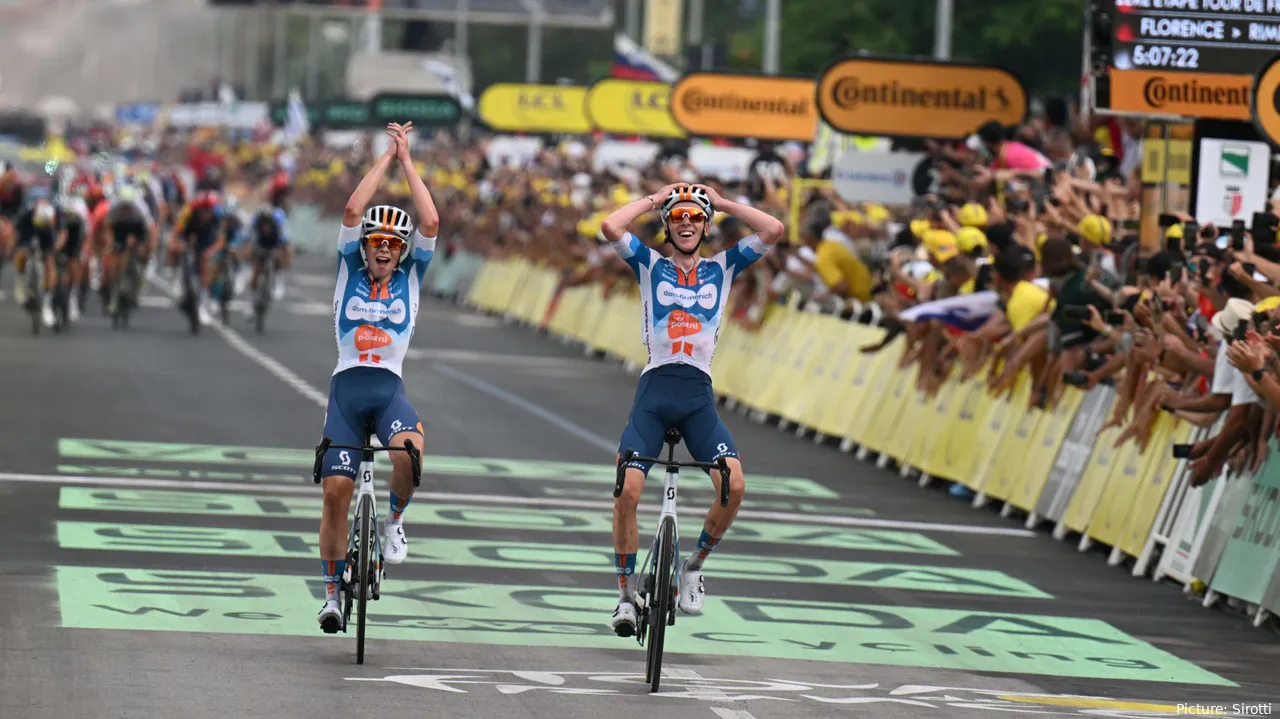
In 2024, Frank van den Broek delivered Romain Bardet to the Tour de France's yellow jersey. In 2026, the same can't be expected
It gets worst: Van den Broek crashes on stage 2, suffering a shoulder injury. One of the team's leaders seems to be dragged throughout the entire three-week race. He finished on the Top100 of a stage only four times, was nowhere near his actual level at any point in the race, and also served no purpose to the team's potential help of Casper van Uden. On top of that, it's impossible for him to recover and prepare for the Tour de France properly in order to do what he did on the opening day of the 2024 race where he helped the team into the yellow jersey.
Van den Broek was inserted in the lineup because of Poole's illness but in the space of month and a half (he was told at the time of the E3 Saxo Classic) the team made no effort to prepare him for the Giro, safeguard his health or... I don't know. I just actually don't know what they're doing or who makes these decisions.
Lotto-Intermarché has done something not as bad maybe, but a set of choices that were mind-boggling too. Lennert van Eetvelt had a spring where he too was ill, and hadn't shown form ahead of the Giro d'Italia. Like 2025, he was programmed to race two Grand Tours, big classics and high-level stage-races all throughout the year with no real blocks - just leading the team anywhere and hoping for the best.
He did reach good form in the Giro, I will give it to him, but he crashed out of the race, without achieving desired results, and his Tour is also at risk. But the team brought in Arnaud de Lie and Milan Menten to the Giro, knowing both were ill after they raced in... Manure infested roads at the Lotto Famenne Ardenne Classic. Both riders did not even show up to the team presentation in Bulgaria, suffered through the opening days with no results and nothing to show for, and were kept in the race way longer than common sense dictated. The team did not adapt to the health situation that bad luck cast on it, and it ended the race with only four men.

Arnaud de Lie spent his entire Giro d'Italia debut ill
Lastly Groupama - FDJ which ended the race with all of its eight riders. Johan Jacobs and Axel Huens were often on the attack trying to find a lucky breakaway, and Rémi Cavagna also gave it a go on the final week. But throughout a lot of the race the French team, who had no GC ambitions, very limited sprinting ambitions, and let's be real nothing else to really go for - did not make it into breakaways that could earn it success.
On stage 15 it was notable that all three teams mentioned above missed the breakaway, on a flat stage. I get surprised seeing these teams, who don't stand a chance of winning a stage in any other way, not go all-out to put themselves in a breakaway and give themselves a chance to take a stage win. Remarkable in fact how all three missed out on that break, which with the level the group had, could've actually seen them win and save their race.
But Groupama specially had my jaw dropped on stage 13, a day the entire peloton knew was for the breakaway to battle. In a group of 15 riders, they had three - they did good. The pieces were there, and even if they didn't succeed, they had a decent shot there with a good number of riders which allowed them to race tactically and put pressure on other riders.
They burned Johan Jacobs and Axel Huens, literally, working at the front of the breakaway to do a leadout into the final climb. Josh Kench was their hope, a rider with no proven ability against men like Alberto Bettiol and Andreas Leknessund who fought for the stage win. It's worst than you think. Kench is a solid rider, who showed his abilities at this Giro.
But it's the sports director's job to guide the team into results, or try to win a race. On this day they did the opposite. In a group of 15 they finished 6th, 14th and 15th. Which is, again, shameful. But it's the fact they did not try. Jacobs and Huens could've attacked, they could've helped create groups that would put Kench's rivals working; and all three riders could benefit.
The team put two of them to work for no reason, when they had no responsibility, created no difficulties for Kench's rivals and then simply watched the stage win fly up the road. Which was expected. But it is beyond puzzling why that call was made. How is it possible that such an opportunity is first of all thrown out the window - they literally told their secondary men to work, with nothing to gain - and just act against their own interests on a day where they could've saved the race, one where they come out of without nothing to show.
Einer Rubio...?
I can keep it short on the Colombian who had great form throughout the whole Giro but had difficulties on the worst day, and then good legs on the days where he wasn't given freedom. A frustrating race, I will give him that, but his final days of the race looked to be driven by pure anger - reminding me of Miguel Ángel Lópe in a way.
The Movistar rider entered stage 19 in a position where the GC was not on the table, the KOM classification was possible but stopped being the case as Giulio Ciccone joined him in front... After Derek Gee sprinted to a Red Bull Kilometer Rubio entered demon mode, arguing with everyone in the group, and then going against his own interests of a stage win to burn himself sprinting against Ciccone merely out of spite, to 'steal' points from him as the Italian was chasing the KOM jersey.

Rubio and Ciccone on stage 19, right before a heated verbal battle
Only emotions, no logic. But that could somewhat be justified, as after the race he explained the 'deal' they had - Ciccone takes KOM points, Rubio gets Red Bull - and I would say it's the fault of Ciccone for not communicating with Derek Gee for the sprint. Rubio did in fact have a chance to win the Red Bull classification, and moved into the lead nevertheless on stage 19.
Hence we move onto stage 20, where Rubio climbed Piancavallo with the peloton on the first ascent. At the top, Igor Arrieta of UAE attacked together with Lorenzo Crescioli, and then in the sprint, gained enough points to overtake Rubio in the classification.
The problem: Rubio was in the peloton the whole time. The Colombian simply did not react to Arrieta, did not attack on the climb to try and go get points, and just watched as his lead disappeared. Rubio was ready to go to war with Lidl-Trek 24 hours before over a matter of a few points in a minor classification and the day after... I don't know if a lack of professionalism from him, Movistar... He simply let his rival collect the points with no pushback. Which raises question on what he was doing over the last few days of the race. Entertaining for sure, puzzling for certain.
Rúben SilvaEditor-in-Chief
A founding contributor to CyclingUpToDate since its launch in January 2022, Ruben Silva has played a central role in shaping the site’s editorial direction and long-term growth. Before joining the project, he built his experience through independent blogging at Echelons Hub and by producing race previews for Ciclismo Internacional, developing a strong analytical voice rooted in daily engagement with professional cycling.
Beyond editorial work, he has been closely involved in the expansion and coordination of CyclingUpToDate’s wider network, helping establish and support sister platforms across multiple languages. This includes ongoing collaboration with CiclismoAlDia (Spanish), CiclismoAtual (Portuguese), WielrennenUpToDate (Dutch), and RadsportAktuell (German), contributing to a shared editorial vision and consistent international coverage.
He also helps oversee editorial governance across the network, setting standards for accuracy and consistency and coordinating updates or corrections when needed.
Originally from the Porto metropolitan area in Portugal, he holds a bachelor’s degree in Geography. His path into cycling journalism was shaped not through formal media training, but through independent reporting, community engagement, and sustained on-the-ground involvement in the sport.
Over the course of his career, he has conducted approximately 100 interviews across road cycling and cyclocross, ranging from one-to-one conversations and online formats to press conferences and on-site pre- and post-race coverage. His interviews include leading riders, team managers, and prominent figures within cycling media: Tadej Pogacar, Jonas Vingegaard, Mathieu van der Poel, Primoz Roglic, Wout van Aert, Joao Almeida and Tom Pidcock; managers like Patrick Lefevere and Joxean Matxin; and YouTube personality Bryan Kennedy (BKXC)...
Within 18 months of launch, he helped grow CyclingUpToDate’s English-language platform into one of the most-read cycling news websites, built entirely from the ground up. As both a professional journalist and lifelong cycling enthusiast, his focus remains on delivering accurate, timely, and well-contextualized coverage.
claps 17visitors 14
Just in

POLL - Would you pay for ad-free CyclingUpToDate?
Jul 29, 09:38
4

Popular news
Latest comments
- As I said, it's using a few examples that don't compile to an end result but it's certainly close. Concerning bikes from then to now, fatter tires now, they are faster, more aero frames now, a tiny amount faster, weight is the same. They've been doing altitude camps for decades, Lances teams included. Nutrition is better, but lance was a nutrition extremist back then, so other than in race fueling there's not a whole lot of difference. You are missing the first big piece of evidence, that when Lance was 22 his Vo2 system was recorded at 81.2 ml/kg/min. Miracles and fantasies don't happen in procycling. If they did I could have taken my 66 Vo2 system, trained my eyeballs out (which I did anyway) and won the Tour in my twenties.awp29-07-2026
- That is a silly apples to oranges comparison. You give Pogi and all the rest the advantages of modern bicycles, training, fueling and "altitude camps' but compare that to what was being done twenty years ago. Riders from then moved forward in time with all the modern advantages would be just as competitive now. They would just have to adjust to the modern doping techniques compared to what they did then.cdw29-07-2026
- Researchers (e.g., Norwegian Ole Kristian Berg, Pedro L. Valenzuela, Samo Rauter, Tim Podlogar and colleagues) have estimated Pogačar’s VO2 max in the high 90s (around 91–96 ml/kg/min on average, potentially up to 96–102 ml/kg/min) based on his climbing performances in the Tour de France and other races. Feelings don't play into it, only data.awp29-07-2026
- They almost the same personality when you spend time around both of them.textrips29-07-2026
- I hope he does win 7 or 8 then the Lance fan boys can finally shut up.Pedalmasher29-07-2026
- How much time have you spent around Lemond? I beg to differ.textrips29-07-2026
- According to whom? Total BS, you have no idea what anyone’s real VO2 is in the pro peloton. Unless you are the scientist running the test. Facts over feelings.textrips29-07-2026
- Lance's best recorded vo2 max test was when he was 22 at 81.2 ml/kg/min. It's been estimated that Tadej is a 95-96, Jonas is around this same number while Remco is closer to Lemond at 92 or 93. Based on Lances physiology, he would finish thirty minutes to over an hour behind Tadej in this years Tour edition or tenth to fifteenth place. Vo2 max is not everything but it is a key indicator of an athletes potential and while Lance did have talent he was not even close to Tadej. He acknowledges this and I'm not an anti Armstrong guy, I watched all of his Tours and enjoyed them all. The whole peloton was cheating back then and may be cheating now, if they are, we don't know the methods, but I like to think they aren't until they are caught..awp29-07-2026
- It was estimated that Big Mig had a Vo2 system around 88 ml/kg/min. He had talent but he was nowhere near Lemond who is estimated to be about where Remco is today, in the lower 90's. Vo2 is not everything though, but we all know that Big Mig was using EPO during his Tour winning years. Especially when you consider his size and how he was able to hold on in the mountains. Miracles don't happen in cycling, you either have it or you don't genetically, when you add training into the equation it can elevate what you have naturally, these guys all took shortcuts in that era.awp29-07-2026
- So I can give a few examples. In 2004, Lance's best year when he was winning Tours, he won Plateau de Beille, a mountain he also won in 2002. He finished with Ivan Basso and they put a touch over a minute into the third guy on the road. Tadej reset the record books on that climb in 2024, in fact he, Jonas and Remco own the top three times on that climb, almost six minutes faster than Armstrong's best recorded performance compared Tadej's. Lance's best Vo2max that was ever recorded was when he was 22 and it was 81.2 ml/kg/min, which is a great number but not a Tour dominating number. Throughout his Tour winning years he was estimated as to have a 83-85 ml/kg/min. Tadej has been estimated to be around 91–96 ml/kg/min range from sports physiologists and researchers with Jonas being right around this number. Remco has been estimated in the low 90's. If Lance in his prime were to race the 2026 Tour, his physiology, even on recovery drugs, would put him about thirty minutes to just over an hour behind Tadej, this would be 10th to 15th best in the Tour. This is an estimation of course and Vo2 max is just one consideration, but it's a major consideration and the core building block to realizing an athletes potential.awp29-07-2026
Loading
2 Comments