"Each stage will be an opportunity" – Marco Frigo eyes Vuelta success as springboard to major championship glory
Cycling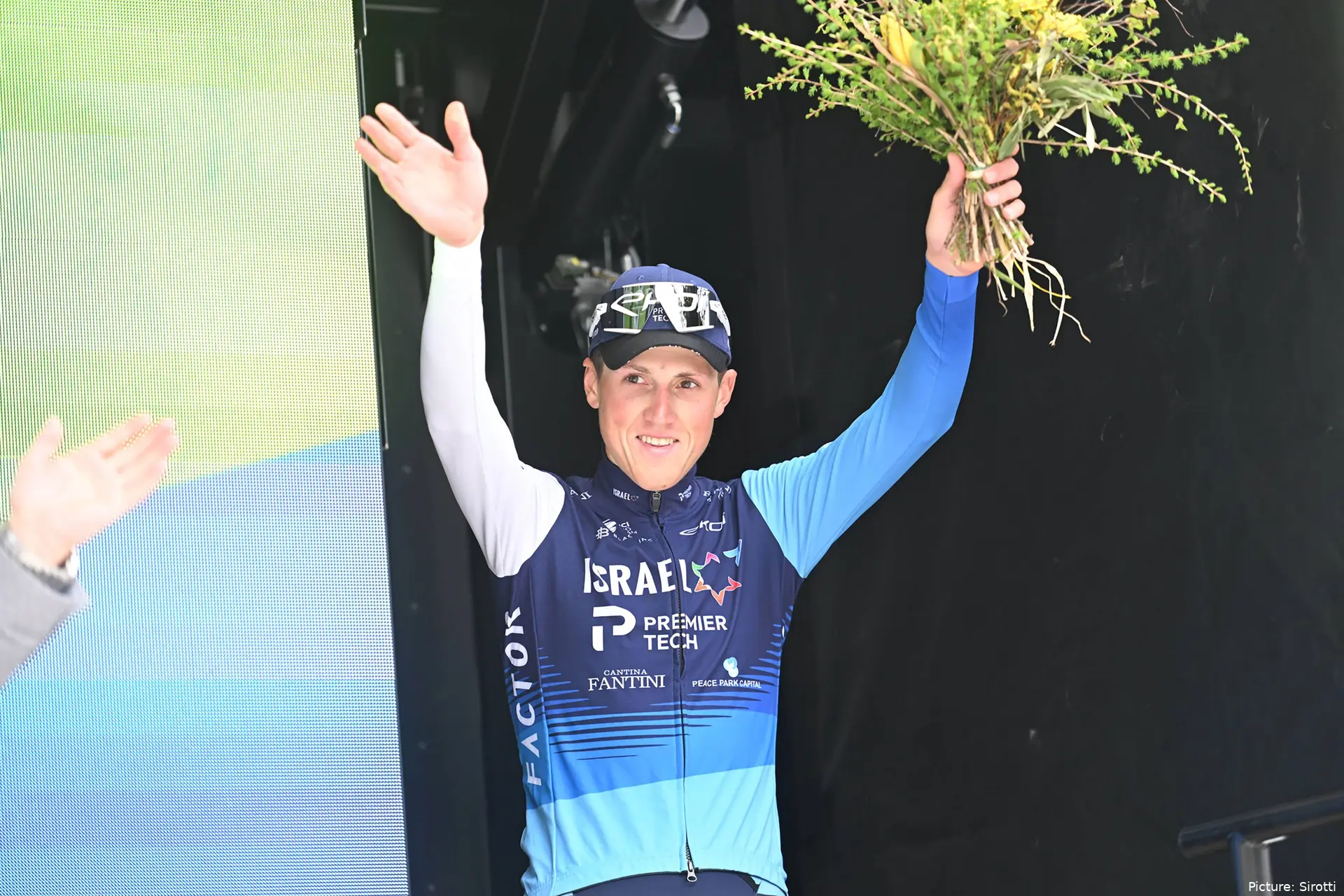
With a quietly consistent season now gathering momentum, Marco Frigo is heading into La Vuelta a Espana 2025 with a clear plan, growing confidence — and the hope that a strong showing could open the door to a return to the iconic blue of the Italian national jersey at the upcoming European Championships..
“Each stage will be an opportunity to try something,” says Frigo excitedly in conversation with Bici.Pro ahead of the La Vuelta. “I’m not aiming for the general classification. I’ll look to make the most of any chances that come, especially if breakaways are allowed the space to succeed.”
The 25-year-old Israel - Premier Tech rider has emerged in recent months as one of Italy’s most promising climber-puncheurs. After a string of solid performances — including his first pro win and a confidence-boosting Tour de Pologne — Frigo sees this Vuelta not just as a proving ground, but as a potential launchpad towards a spot in Italy’s team for the European Championships.
From building blocks to breakthrough
Though his name may have flown under the radar for some, Frigo’s trajectory in 2025 has been anything but quiet. Aside from a commendable fifth overall at the Baloise Belgium Tour, it was his seventh place at the Tour de Pologne — cemented with a strong final time trial — that confirmed his progression is more than just steady: it’s accelerating.
“I came into Pologne after a solid Belgium Tour and a focused altitude camp in Livigno,” he explains. “I had good sensations, but you never know how the legs will respond after a month at altitude. So to come away with a top-10, just over ten seconds off the podium, gave me huge confidence.”
That Polish campaign also offered Frigo an important lesson in racing with intent. “I was targeting the GC, and on stage two to Karpacz, I realised I’d left myself too far back at the start of the final kilometre. I had the legs — I overtook a lot of riders — but finished 13th. That stage was a real turning point mentally. I finished it angry, but convinced I could do more. From then on, I raced with more purpose.”

Frigo already rode the Giro d'Italia earlier this year
Targeting opportunity, not classification
With La Vuelta looming, Frigo’s focus is on stage success rather than a high overall placing. And in a race often defined by aggressive breakaways and mountainous unpredictability, that strategy may well suit him perfectly. “As a team, our goal is to go after stage wins, and I’m fully aligned with that,” he says. “I’ll be looking to take my chances when the race allows. I don’t have a strict roadmap — I want to stay adaptable and see how the race evolves.”
This pragmatic approach reflects both maturity and tactical flexibility — traits which have steadily sharpened throughout the season. While Frigo admits to earlier mistakes, particularly around timing and positioning in key moments, he’s quick to reframe those as necessary learning steps. “There were times — like in Zakopane — where I probably made my move too early. But that’s part of the process. They’re not regrets, they’re lessons. I know I’m improving.”
The European dream
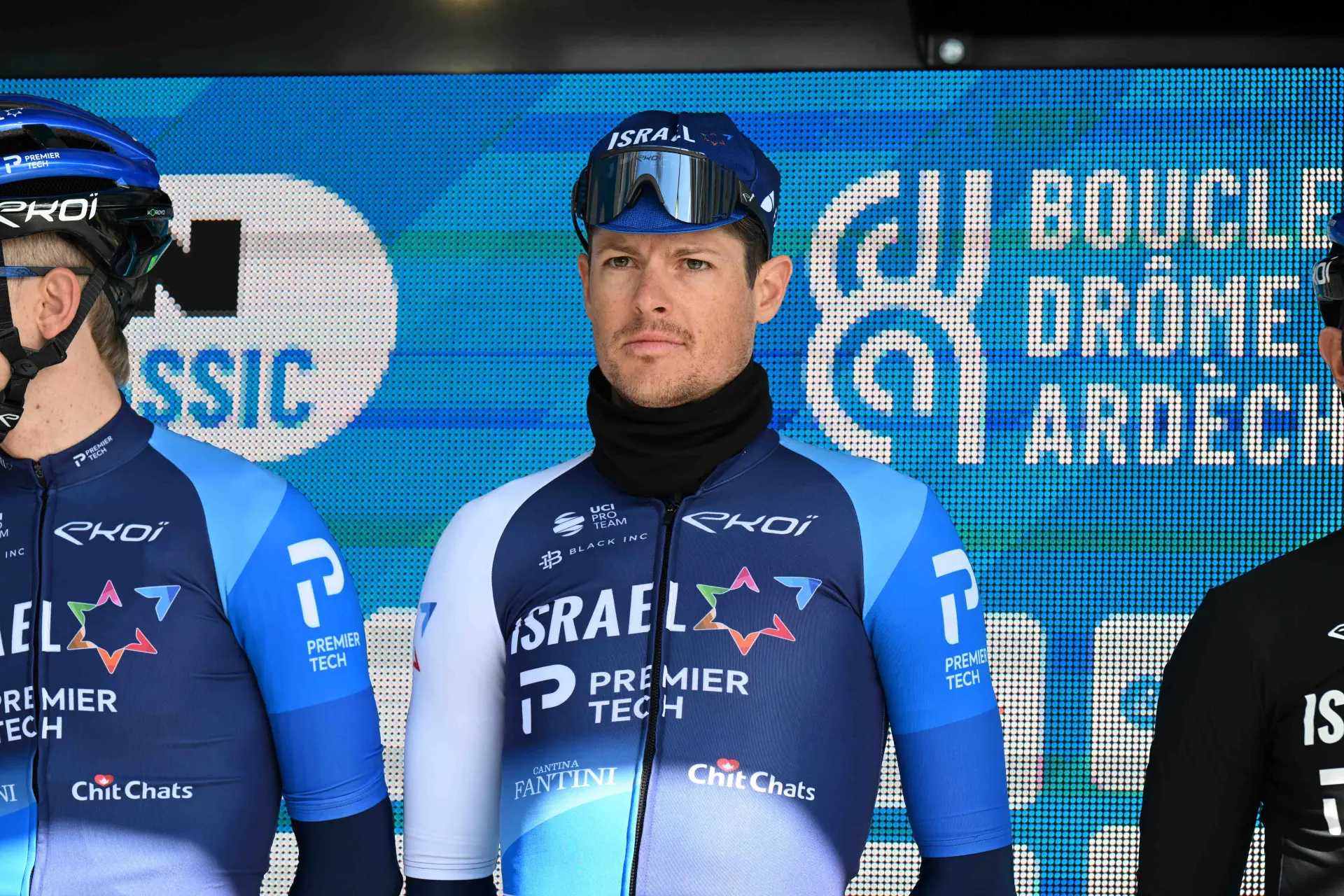
Frigo’s ambitions, however, stretch beyond the Spanish Grand Tour. His form, and how he carries it through the Vuelta, could well dictate whether he earns a coveted call-up for the European Championships in Ardèche — a race he believes suits him down to the ground.
“I’ve already spoken to the national coach [Marco Villa], and told him I’d be available if my condition is good,” he reveals. “I think the parcours in Ardèche could really suit my characteristics. I’d love to be there — even as a support rider. If that means working all day or stepping up when needed, I’m ready. I just want to wear the blue jersey again.”
Villa is expected to be present for the Vuelta’s opening stages in Piemonte — an early litmus test for potential national team contenders. Frigo knows the significance of that window. “I want to give him some positive signals straight away. The form is there. Now it’s about showing it.”
In an era where Italy continues to search for its next generation of stage-hunting GC riders, Marco Frigo is quietly putting his name forward — not with bombast, but with resilience, steady growth, and a tactical eye. La Vuelta may not mark the end point of his 2025 campaign, but it could well be the launchpad. From the steep ramps of Asturias to the blue of Ardèche, Frigo’s next steps will be shaped by how well he seizes each opportunity — just as he intends to.

Kieran WoodDeputy Editor-in-Chief
Kieran Wood is a sports journalist based in Wales and has been active in journalism since 2022. He regularly contributes to DartsNews.com and CyclingUpToDate.com, where he covers professional cycling and darts. In cycling, his work includes liveblogs from major races, including the Tour de France, the Giro d’Italia, and La Vuelta a España, alongside race reports and analysis. He has also conducted interviews with professional riders.
His reporting spans the full racing calendar, from one-day classics to stage races, with a focus on accurate, real-time coverage and clear contextual analysis. For statistics, results, and historical context, he regularly uses resources such as ProCyclingStats. To support reporting on rider activity and training context where relevant, he also references Strava.
In his work, Kieran places strong emphasis on careful sourcing, editorial accuracy, and updating articles as new, verified information becomes available.
claps 0visitors 0
Just in
Popular news
Latest comments
- Top marks RidesHills. A great post that sums up exactly Egan Bernals situation.Cyclingsbestfan08-10-2026
- Thanks for pointing out that typo. Now ammended.Prorodsandstuff08-10-2026
- Great signing by Uno-X. Hope he develops and can get som great results.
 Vikingrider08-10-2026
 - It always worries me when people so knowledgeable about a subject base lengthy detailed explanations or analysis on a single erroneous fact or figure so blatantly wrong thereby invalidating just about everything they made the effort to say. I always wanted to meet some top theoretical physicist to make sure they hadn’t overlooked something obvious as their figures for the mass of the universe don’t work out. This is like basing the US budget on a debt of 4 trillion instead of 40, something I know one person would be very capable of attempting.Jumpyjohn08-10-2026
- His analogy is bad, there are a lot of things we use, we dont know how it works not do we have the brain capacity to know everything we use. as a cyclist he is supposed to know to how to race, not every detail about every tech on his bike or around him.abstractengineer08-10-2026
- Db cant do anything, its a physical issue not a mental or training issueabstractengineer08-10-2026
- If they’d run a poll, I’d vote this best CUTD post of 2026.Jumpyjohn08-10-2026
- Bernal's case the writing was already on the wall about his decline with the back issues that he had in 2020. then he had that horrendous crash. After that he was not the same plus he crashed a lot of other times. After that any potential to challenge for GTs went away. Now his max is Top 10, few stages wins, if Ineos cannot pay millions for that then no one else will. slaving for other for 100-300k may not be worth it since he earned more than 15-20million i would say.abstractengineer08-10-2026
- Starting to throw stones in glass houses?. Best not to associate individuals with their nationality if you’re going to go down that road.Jumpyjohn08-10-2026
- You can say that again, saved you from embarrassment. Better start concentrating on crowdfunding the next generation so you won’t have to spend the rest of your days being nostalgic.Jumpyjohn08-10-2026
Loading
Write a comment