DISCUSSION | Itzulia stage 3 & Scheldeprijs 2026 - Is the Itzulia a graveyard for riders? Who came up with that finish in Belgium?
Cycling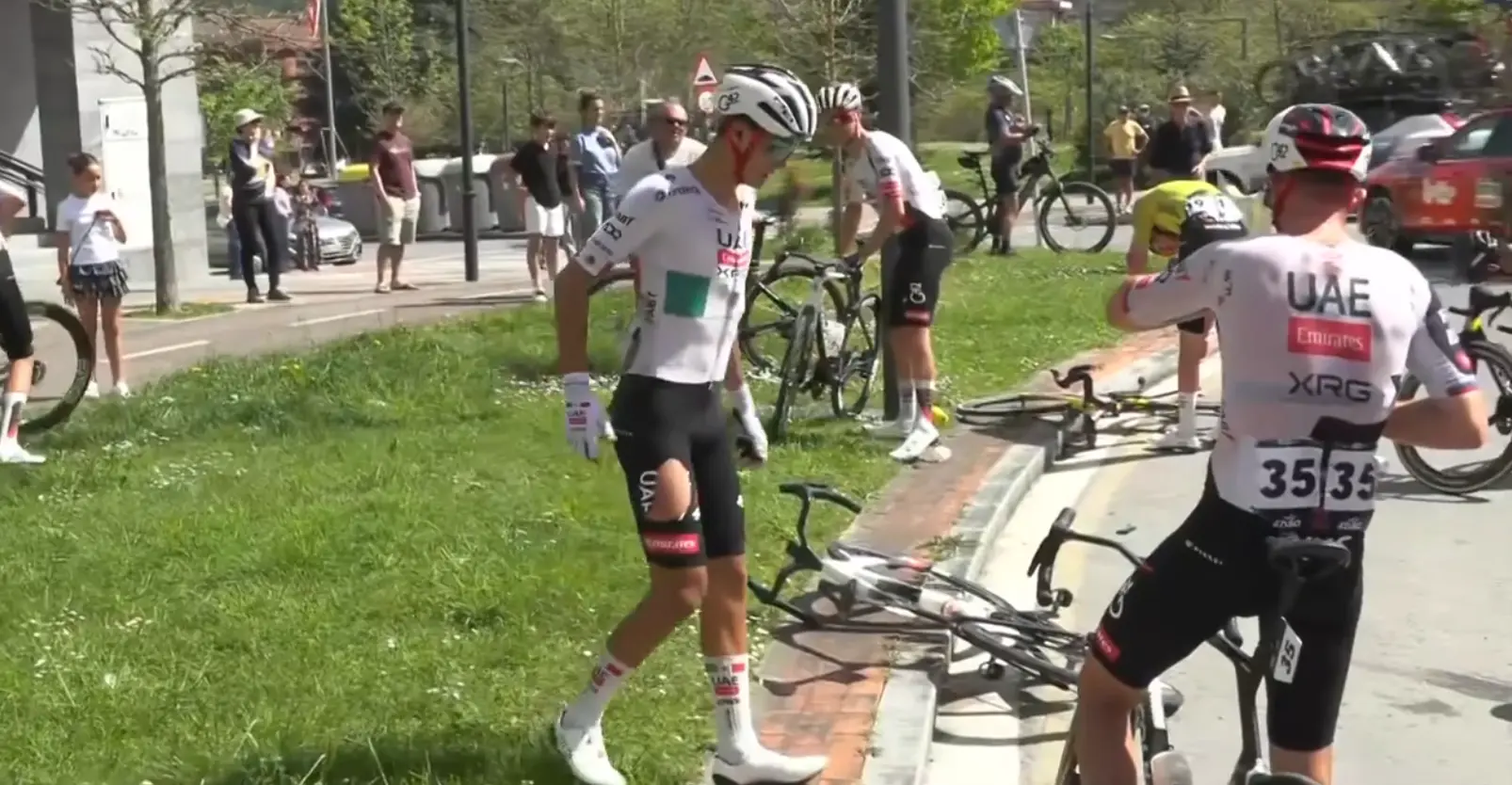
Stage three of Itzulia Basque Country delivered one of those unpredictable days where persistence from the breakaway finally paid off, but only after a relentless and chaotic opening phase that tested the entire peloton.
From the very first kilometres, the race refused to settle. Repeated attacks on the flatter roads created constant tension, stretching the bunch and causing several splits, yet none of the early moves had the strength or cohesion to stick.
It took close to 90 kilometres for a decisive breakaway to form, a reflection of both the aggressive racing and the difficulty of establishing a stable move. When it did finally go, it was a sizeable and dangerous group of 16 riders.
Among them were Axel Laurance, Igor Arrieta and Biniam Tesfatsion, alongside Ilan Van Wilder, Tobias Halland Johannessen, Lorenzo Fortunato and Guillaume Martin.
The group also featured several strong engines and climbers capable of surviving the rolling Basque terrain, making it immediately clear that this move could go all the way.

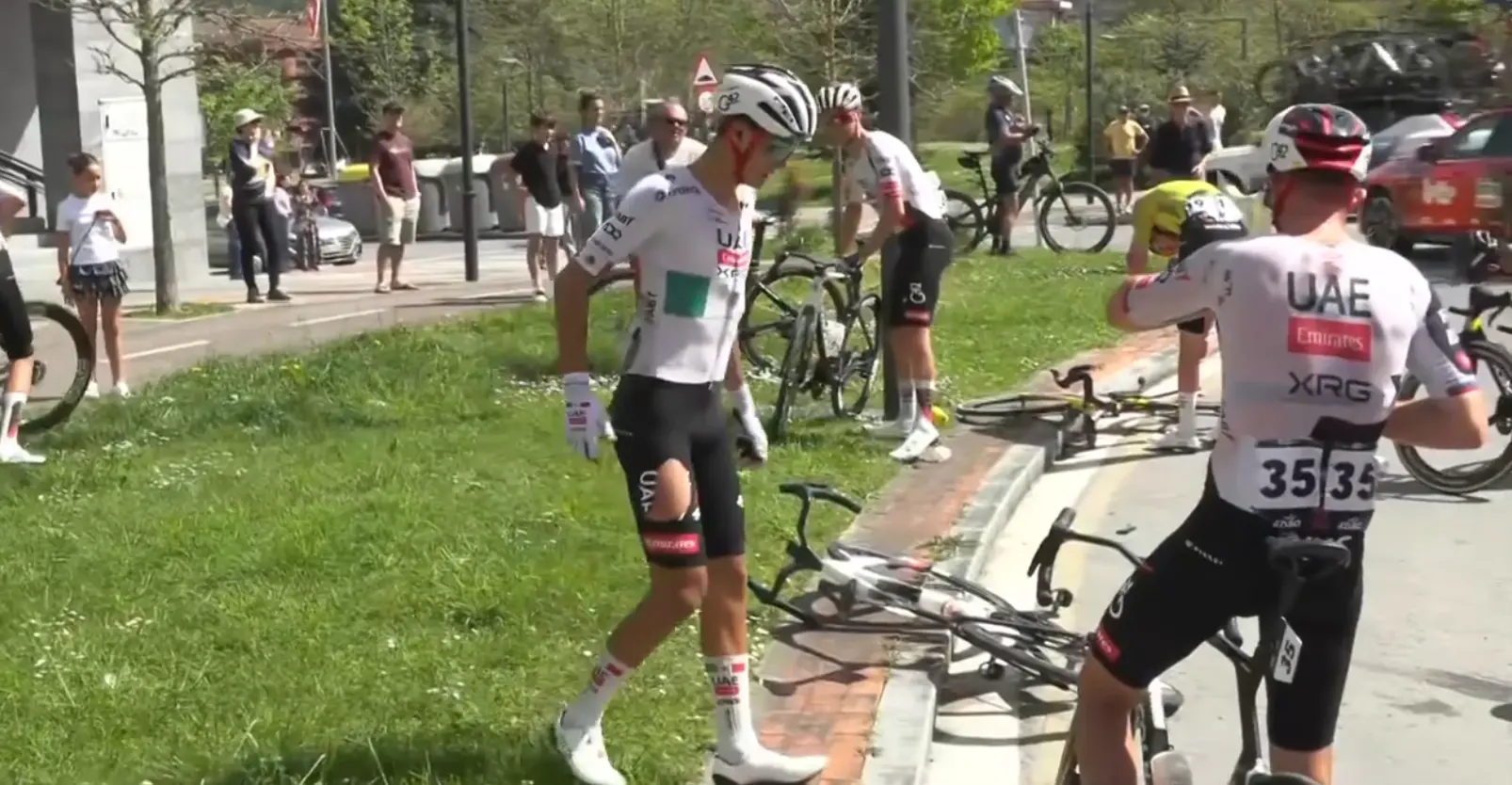
Isaac del Toro fell and withdrew from the race shortly afterwards
The race was not without its setbacks. Isaac del Toro, who had started the day eighth overall and still within striking distance in the general classification, saw his race come to an abrupt end after crashing with 85 kilometres to go.
His abandonment was a blow not only to his own ambitions but also to UAE Team Emirates-XRG, who had been hoping to play a role in the GC battle later in the week.
Behind the break, the peloton never fully lost control, but neither did it show real urgency. Teams like Decathlon CMA CGM, Cofidis and Tudor Pro Cycling kept a steady tempo at the front, ensuring the gap hovered at manageable levels, rarely exceeding two minutes. Still, that controlled approach would later prove costly.
As the race moved deeper into the climbs, the composition of the breakaway began to change. Fatigue set in, and the elastic started to snap. Riders were dropped one by one, particularly on the demanding slopes of Bikotx-Gane.
By the time the race reached Sarasola, the group had been significantly reduced, and it was Arrieta and Laurance who made the decisive move. The pair crested the climb with a small but crucial advantage, quickly building a gap of around 30 seconds over the remaining chasers.
What followed was a subtle but decisive shift in race dynamics. The peloton behind appeared to hesitate, perhaps expecting the chasing group to close things down.

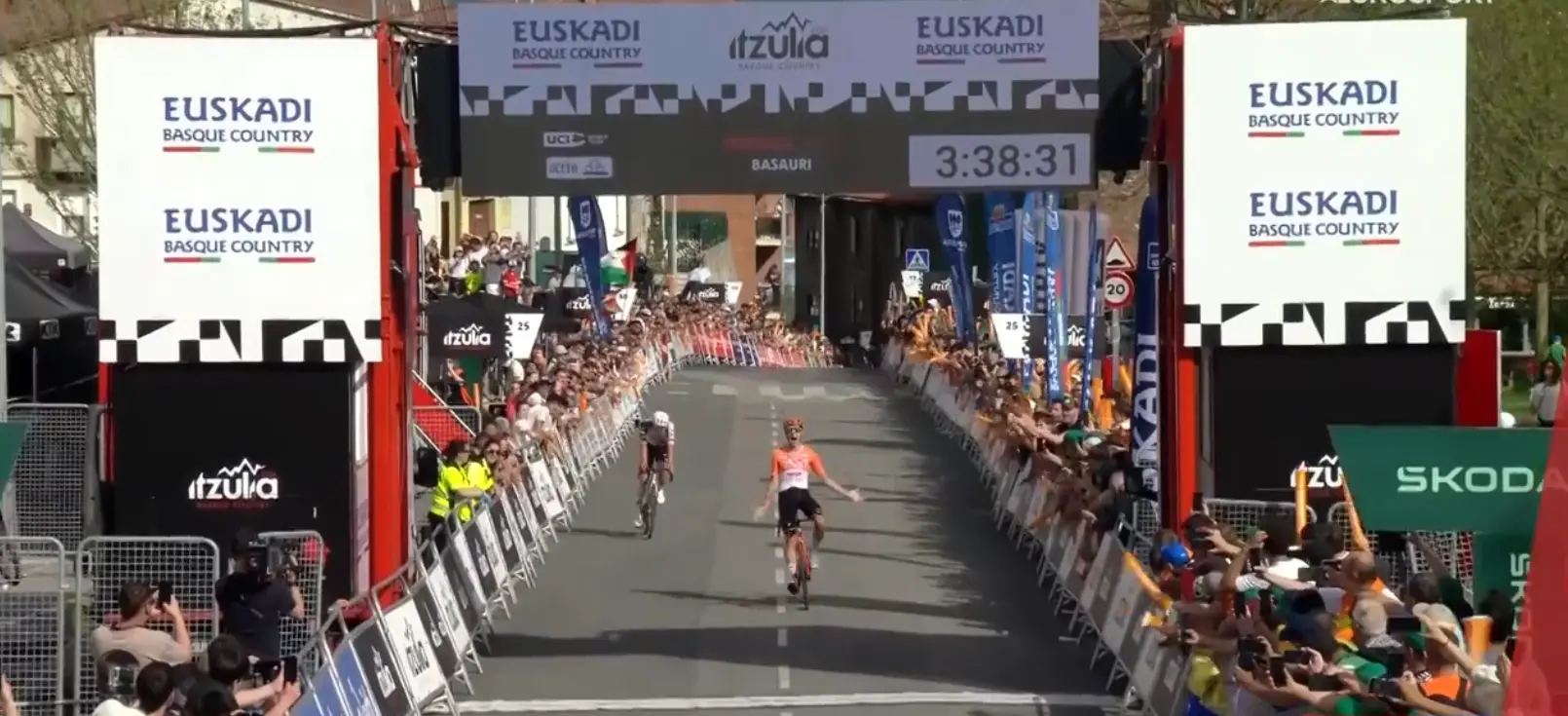
Axel Laurence tries to break away from Igor Arrieta, but to no avail. They will ride together to the finish line to battle it out for the stage victory.
Instead, the gap began to grow again. With 14 kilometres to go, Arrieta and Laurance had extended their advantage to over three minutes, putting them firmly in control of the stage.
Even so, the race was not over. The chasing group reorganised and began to cut into the deficit as the road tilted upwards once more in the final kilometres. By the time the leaders reached the final climb into Basauri, their once-comfortable margin had been slashed to just over a minute, and then even less.
Arrieta, riding intelligently on Laurance’s wheel, seemed to be waiting for the perfect moment. As they approached the finish, he launched his sprint from a long way out, hoping to catch his rival off guard.
For a moment, it looked like a winning move. But the effort proved just a touch too early. In the final metres, Laurance found another gear, coming around Arrieta right on the line to take a dramatic and hard-fought victory.
At Scheldeprijs, the script was more familiar, but the storylines were no less compelling. Known as one of the purest sprinters’ races on the calendar, the Belgian Classic once again built towards a high-speed finish, but not without its share of twists.

Jasper Philipsen changed his bike, only to have to stop again a few moments later due to a puncture
The early breakaway of six riders was allowed to go clear without much resistance. Robin Carpenter, Bram Dissel, Joost Nat, Jonah Killy, Dorđe Duric and Jelle Harteel worked together smoothly, building a modest advantage that never truly threatened the peloton. With calm weather and very little wind, conditions were ideal for the sprinters’ teams to maintain control.
As expected, the gap gradually came down. By the time the race entered its final hour, the breakaway’s advantage had been reduced to under a minute. One by one, riders began to drop away from the front group, until only a handful remained.
The decisive moment came with just under 10 kilometres to go. A crash near the front of the peloton split the bunch and caused significant disruption. Around a dozen riders went down, including Dylan Groenewegen, while many others were forced to slow or stop. In the chaos, the peloton was reduced to roughly 40 riders, effectively creating a new race for victory.

Bad luck struck Dylan Groenewegen, who was involved in a crash in the final kilometres of the stage
Despite the disruption, the remaining breakaway riders continued to push on. Bram Dissel showed particular determination, pressing ahead even as the peloton rapidly closed in. He was eventually caught inside the final four kilometres, just as the sprint teams began to organise themselves.
Alpecin-Premier Tech took control in the final kilometre, setting up Jasper Philipsen for what seemed like a perfect opportunity. But sprinting is rarely straightforward. As the speed ramped up, Max Walscheid launched a long-range sprint, forcing others to react earlier than planned.
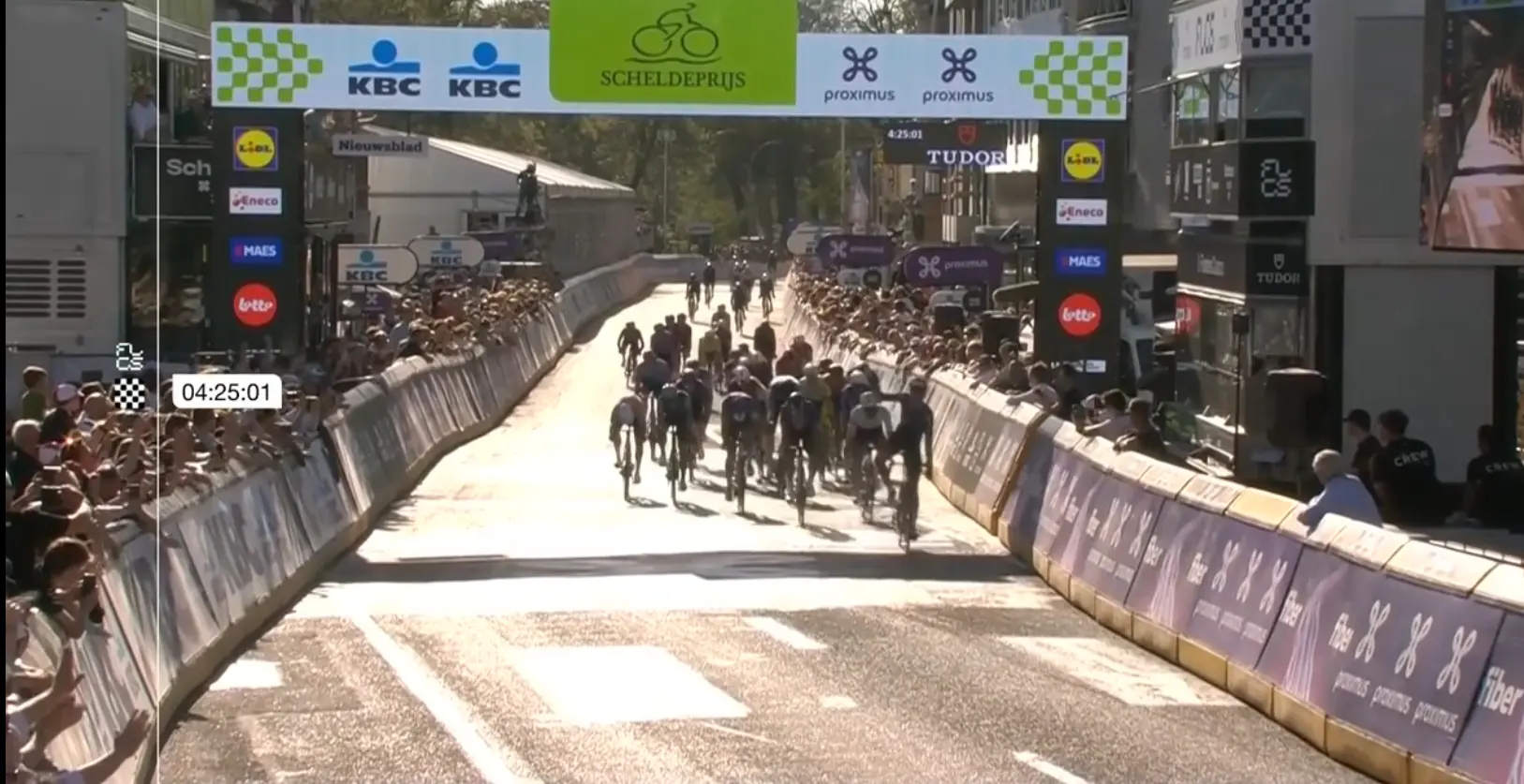
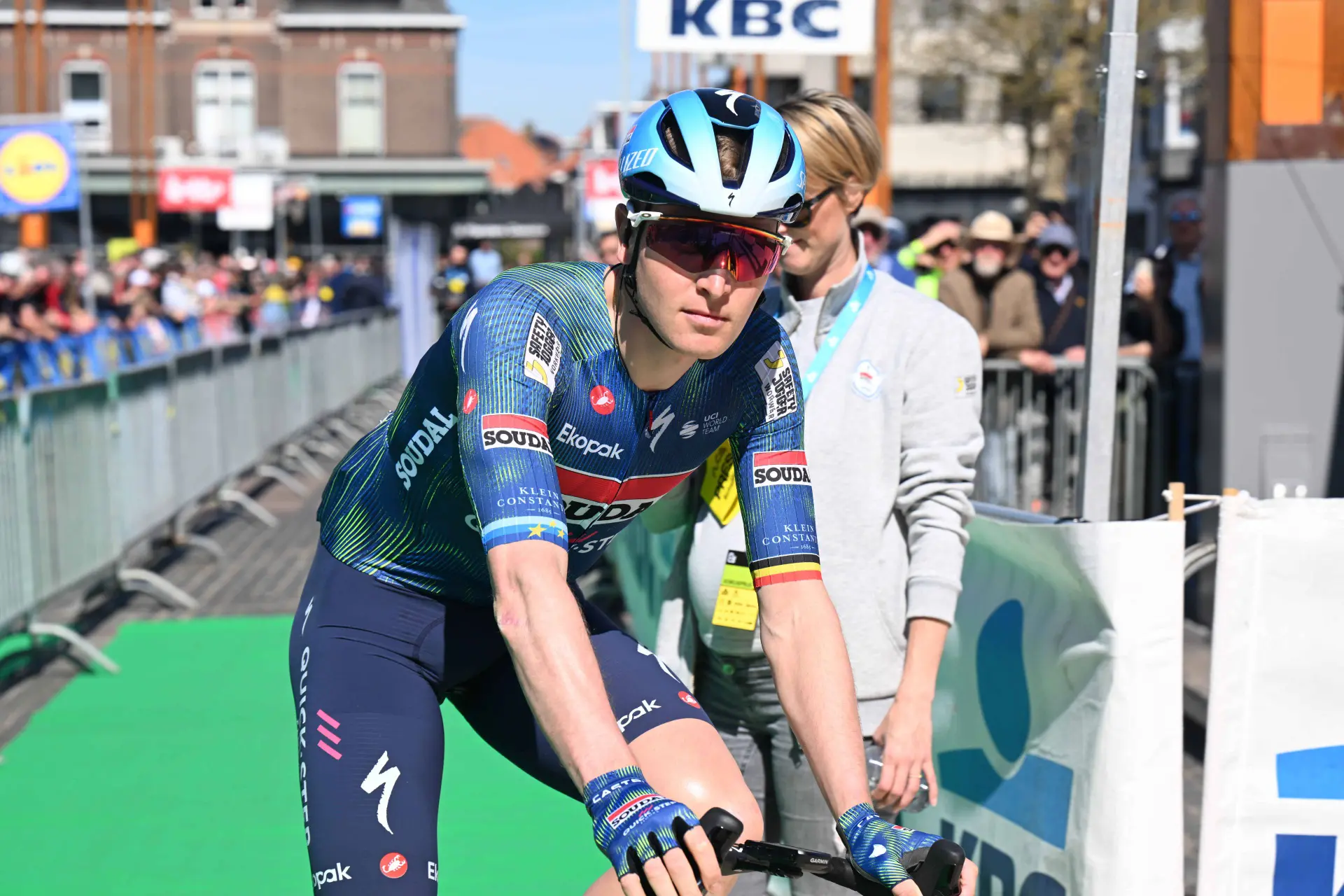
When Walscheid faded, the door opened for Tim Merlier. The Soudal-Quickstep rider, who had entered the race with minimal racing in his legs after recovering from a knee injury, timed his effort to perfection. Exploding out of the wheels, he surged past his rivals with authority. Philipsen, boxed in at the crucial moment, had no chance to respond.
Merlier crossed the line first, securing a remarkable victory given his limited preparation. Pavel Bittner and Emilien Jeannière followed him home, completing the podium on a day that once again highlighted the unpredictable nature of sprint finishes.

Tim Merlier rode the final few hundred metres on Jordi Meeus’s wheel and launched a powerful sprint to victory in the race
The women’s race at Scheldeprijs offered a different rhythm but built towards a similarly explosive conclusion. Charlotte Kool finally claimed her long-awaited victory after finishing second in the previous three editions, confirming her status as one of the fastest finishers in the peloton.
The race began under bright and dry conditions, with a seven-rider breakaway forming early. Ilken Seynave, Yonna van Dam, Mari Porton, Clara Jäger, Lea Huber, Lucy Gadd and Leila Gshwentner combined well, building an advantage of around three minutes over the peloton.
Behind them, the race unfolded in a controlled manner, though not without incident. A crash at 65 kilometres to go briefly disrupted the peloton, but fortunately all riders involved were able to continue. The breakaway was eventually reeled in with around 50 kilometres remaining, as the major teams began to assert themselves at the front.
From that point on, the race was shaped by positioning and control. Lidl-Trek, SD Worx-Protime, UAE Team ADQ and AG Insurance-Soudal all contributed to keeping the pace high and discouraging further attacks. A late move from Marina Garau briefly animated the race, but she was caught before the final lap, setting the stage for a sprint finish.

Charlotte Kool wins Scheldeprijs 2026
The closing kilometres were tense and chaotic. The fight for position led to several crashes, gradually reducing the size of the peloton. A major incident inside the final two kilometres split the race, leaving a select group of around 20 riders to contest the victory.
In the final run-in, Fenix-Premier Tech executed their plan to perfection. Their lead-out train delivered Kool into the final 150 metres in an ideal position. From there, she did the rest. Launching her sprint with confidence, she quickly opened a gap that her rivals could not close.
Nienke Veenhoven and Elisa Balsamo gave chase but were unable to match Kool’s speed. This time, there would be no second place. Kool powered across the line to take a deserved and long-awaited victory, finally turning a sequence of near-misses into a defining win.
Read also
Carlos Silva (CiclismoAtual)
The Itzulia Basque Country is becoming a race capable of ending a rider’s entire season if they dare to line up at the start. Everyone still remembers what happened to Jonas Vingegaard, Remco Evenepoel… and dozens of other riders.
This year alone we’ve already seen incidents involving Kévin Vauquelin, Mikel Landa, Isaac del Toro… among many, many others.
That region breathes cycling. But the roads leave a lot to be desired when it comes to hosting a race of UCI level. This has nothing to do with the speed of the riders or their experience in the peloton… it’s about the roads.
Are they narrow? Yes. Are there very dangerous corners? Yes. The fight for positioning to enter a climb well placed, or to pass through a town… where exactly do more than 100 riders fit when they’re all coming in at full speed?

Kévin Vauquelin and Axel Laurence crashed during yesterday’s stage. The Frenchman went on to win today’s stage.
I know there are similar situations in every race. Of course there are. But in the Basque Country, it’s constant. They are constantly narrow, winding, with very technical descents and often with uneven tarmac.
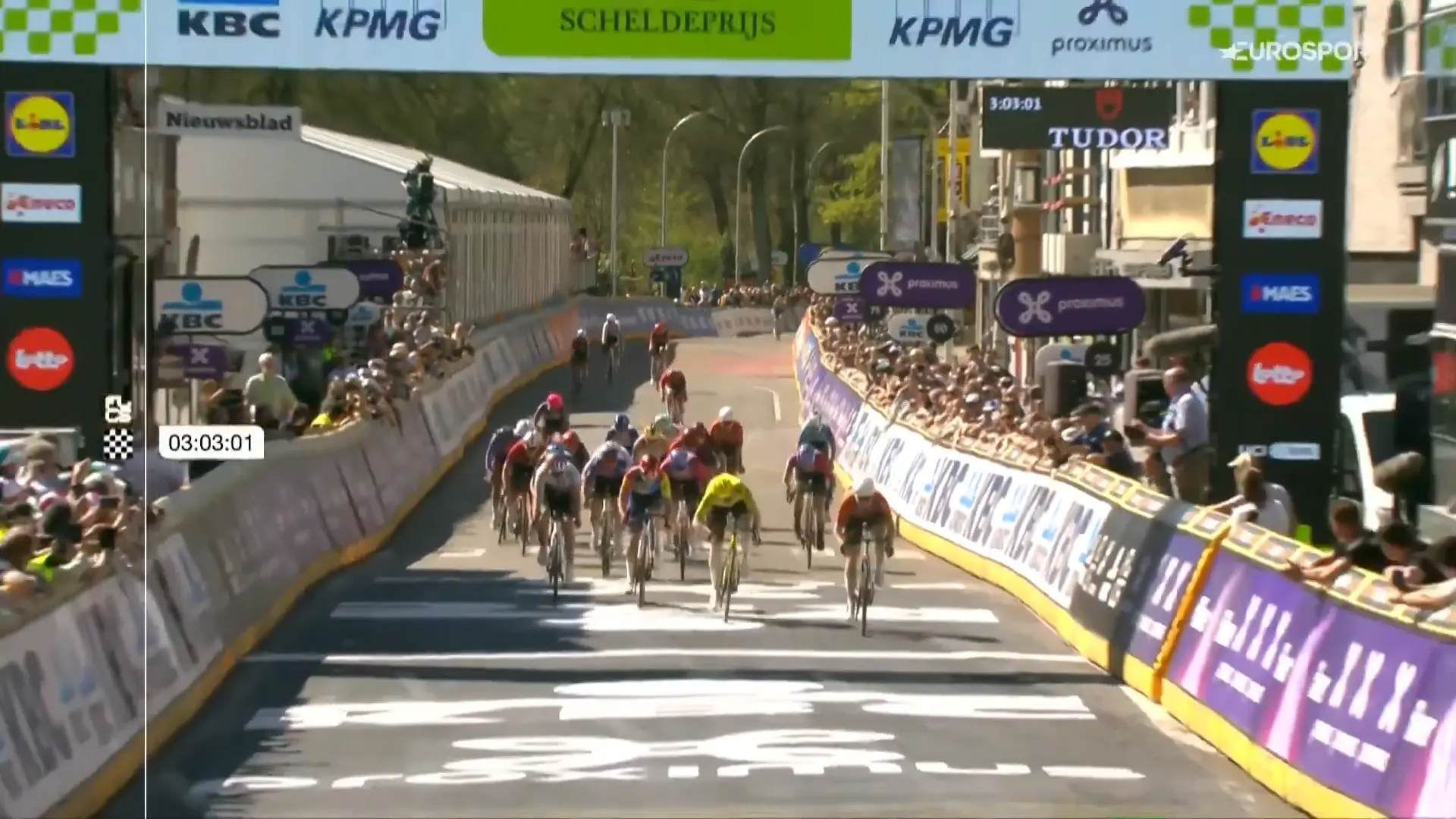
Since I’m talking about roads, let’s jump to Belgium. The organisers of Scheldeprijs designed a fantastic course, with a dreadful finale.
How is it possible to design a tight right-hand turn followed immediately by another left-hand turn, what I call a “corner into corner”, with around 1 km to go? Sure, you can do it, it’s not written in the regulations that you can’t. But morally, it’s unacceptable. Riders are coming in at full gas. There has to be some awareness.
Once again… where are those people who always claim to defend riders safety? Are they at home watching TV? Or do they only show up when fatal accidents happen, like those of Gino or Muriel? Have some shame. Money makes you turn a blind eye to far too much.
Juan Larra (CiclismoAlDia)
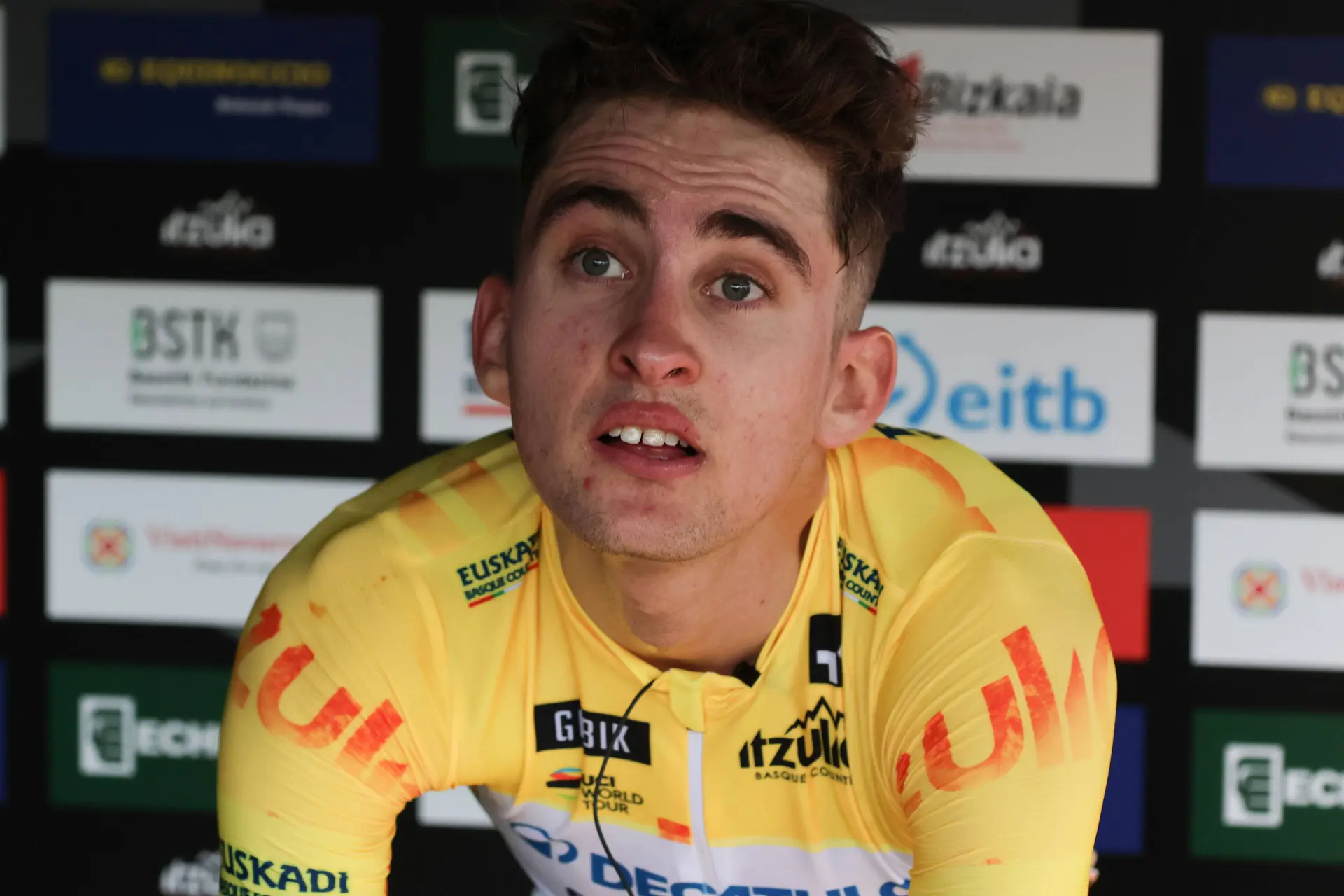
A transitional stage at the Itzulia Basque Country 2026 allowed Decathlon and Paul Seixas to rest. As for the winner, a lot of credit goes to Axel Laurance, who was sensational, and together with a combative Igor Arrieta they were the smartest riders of the day.
It was a wasted day for the Movistar Team, who had Natnael Tesfatsion with incredible legs but had to settle for third place, while the most important news was the withdrawal of Isaac del Toro after a crash, a bad day for the Mexican who had won the last four stage races he had taken part in, and we will see if he is ready for the Ardennes Classics.
Mikel Landa also abandoned after being hit by the medical car yesterday, and hopefully he arrives in good condition at the Giro d'Italia, his first big goal of the year, while from a Spanish perspective Juan Ayuso skipped the stage, definitively dropped out of the general classification and, we assume, will fight to win a stage on Friday or Saturday.
Javier Rampe (CiclismoAlDia)
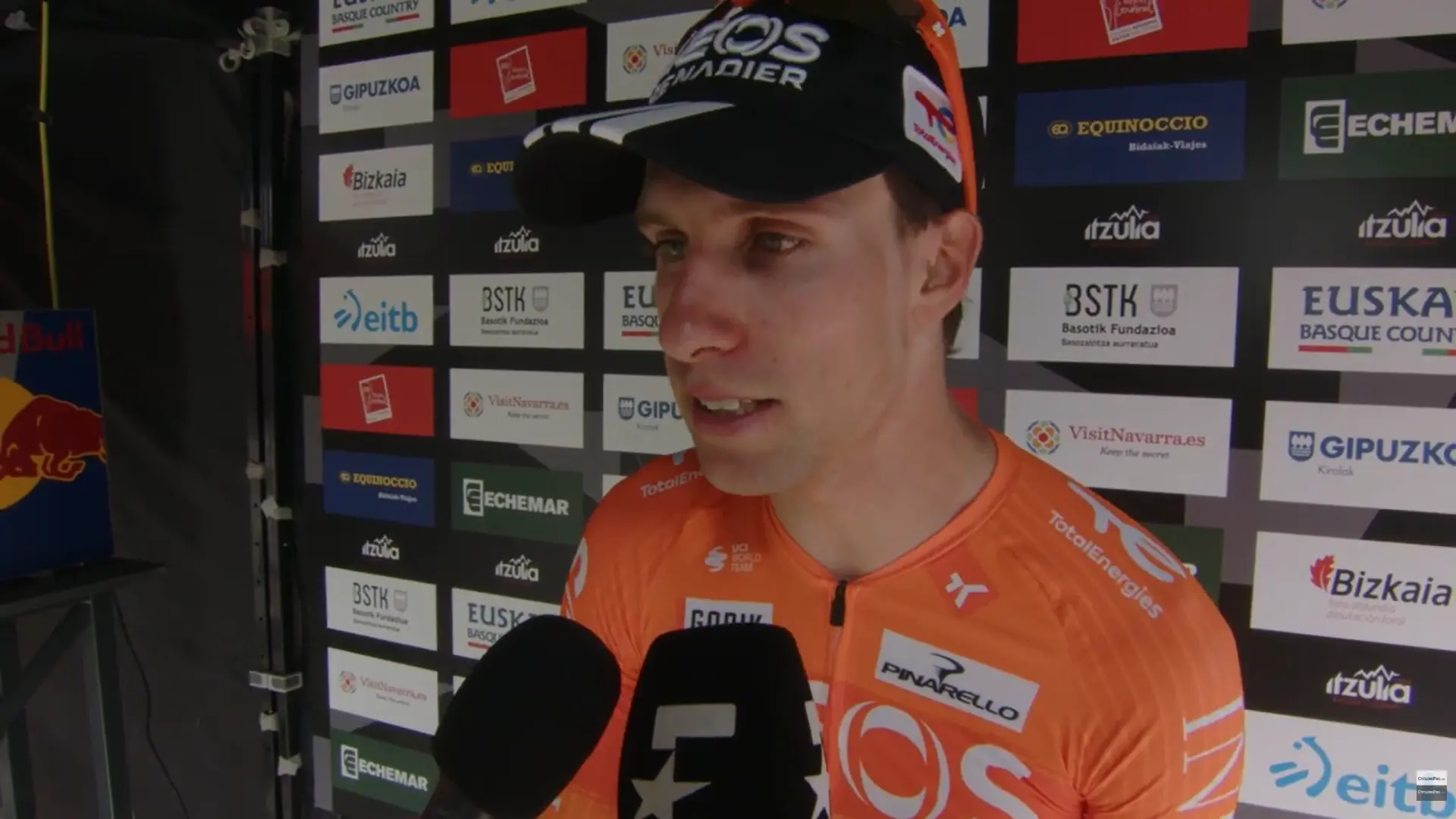
Tim Merlier moves into second place in the Hall of Fame - which from today he will share with Mark Cavendish and Oellibrandt - after securing his third consecutive victory at the Scheldeprijs.
Marcel Kittel, with five wins, remains the all-time record holder, but the Belgian from Soudal Quick-Step is positioning himself as the only rider capable of breaking that record in the years to come.
It is a shame that his team has already decided its lineup for Paris-Roubaix, where they will go with Jasper Stuyven and Dylan van Baarle for reasons that are not entirely clear, when they have one of the best cobbled riders available, capable of launching a sprint without his rivals even sensing his slipstream after more than 200 km of effort.
What must Patrick Lefevere be thinking.
And you? What’s your opinion on Itzulia Basque Country Stage e and Scheldeprijs 2026 ? Tell us what you think and join the discussion.

Isaac del Toro got back on his bike after the crash. He would go on to abandon the race a few metres further on.
Carlos Silva is a writer for CyclingUpToDate.com, where he contributes race reports, interviews, analysis pieces, and live coverage of the international cycling calendar. Holding a degree in Sports from the Jean Piaget Institute, he combines academic knowledge of performance, training, and competition with hands-on journalism experience in professional cycling.
Throughout his career, Carlos has conducted interviews with leading figures in the sport, including Alberto Contador, Joaquim Rodríguez, Óscar Pereiro, João Almeida, Isaac del Toro, Derek Gee, John Degenkolb and Geraint Thomas. These conversations reflect direct engagement with Grand Tour winners, Classics specialists, and emerging talents.
He has provided on-site coverage at major events ranging from the Vuelta a España to the Tour de France, alongside stage races such as Vuelta a Andalucía, Volta ao Algarve, Volta a Portugal and O Gran Camiño. Covering the mythical climbs of the Giro d'Italia remains one of his professional ambitions.
Carlos is responsible for liveblog coverage of all major WorldTour races and beyond, including the Tour de France, Giro d'Italia and Vuelta a España. His reporting integrates verified data from ProCyclingStats to ensure statistical accuracy, contextual depth, and analytical precision.
A lifelong cycling enthusiast, he approaches storytelling across written, photographic, and video formats with a focus on credibility, tactical insight, and informed race interpretation.
claps 1visitors 1
Just in
Popular news
Latest comments
- Seixas best chance is obviously UAE. They are the best team in history of the sport and they developed pogacar into the goat. They also developed Del Toro to be nr 2 in world. Seixas would become unstoppable at UAE. Lets see if Seixas stays at decathlon but if UAE comes knocking its impossible to say no. Barcelone and real madrid combined into one team, thats UAE in cycling it feels like..miguel12-10-2026
- I think he does or goes to whichever team gives him the scope to become the rider everyone thinks he'll be when Tadej stops.. that simpleslappers6612-10-2026
- I remember at one time he was mentioned in the same breath as Seixas. no more. Onley has a lot of work to do to be deserving of that.mij12-10-2026
- I hope he goes to Bahrain-Victorious to mentor Jakob
 Rafionain-Glas12-10-2026
 - I hope he stays! Cycling is more fun with Primoz, even if he is not winning.mij12-10-2026
- yes for sure, there will be more chances for him at Euro than Lombardia. I wonder if that emotion wasn't also because he knows he has now been eclipsed by a younger rider w/o his goals being checked off. At least when Seixas over takes Tadej someday, Tadej will have accomplished his major goals. He still has Roubaix left, but Seixas isn't a threat there. And he should find a year to get Vuelta. Remco now is behind at least 2 riders w/o ever having won a Tour, one monument to his name, and the next few World Championships are not Remco friendly. I would still take Remco's wins though!!!mij12-10-2026
- Remco was at 100%. He raced as expected: 15th best on the climbs and then best in the sprint of the chasing group. Exactly what he did at Liège-Bastogne-Liège, where he was on similar form. His win in Amstel was comparable to Quebec or the EurosRafionain-Glas12-10-2026
- "inside the tent pissing out" is an idiom based on a quote from President Lyndon Johnson. Not sure if you're saying you don't understand the term. The full phrase is "it's probably better to have him inside the tent pissing out, than outside the tent pissing in."wrsty12-10-2026
- Pissing out?? Who is forcing them? They can follow Ayuso's example. And they can be leaders on another team. Ayuso's example again. :)MajorPayne12-10-2026
- Hmm it's an interesting take with certain disclaimers e.g. comparing them at the same age (Pogi wasn't given chances so early in his career so we will never know), the level of the competitors in the race or tour (really hard to compare, as you would be looking at multiple competitors, let alone comparing just Seixas vs Pogi). In any case, Seixas' future certainly looks very bright, especially as he has the advantage of youth, access to new scientific knowledge/methods that weren't around when Pogi started, and most importantly has Pogi as an extremely good example to aspire to (e.g. copying training methods, nutrition, tactics, race craft, etc., to list just a few...).Pogboom12-10-2026
Loading
1 Comments