DISCUSSION - Giro d'Italia stage 12 - Is Visma a boring team? One attack, zero reaction: why the sprint teams failed against Alec Segaert?
Cycling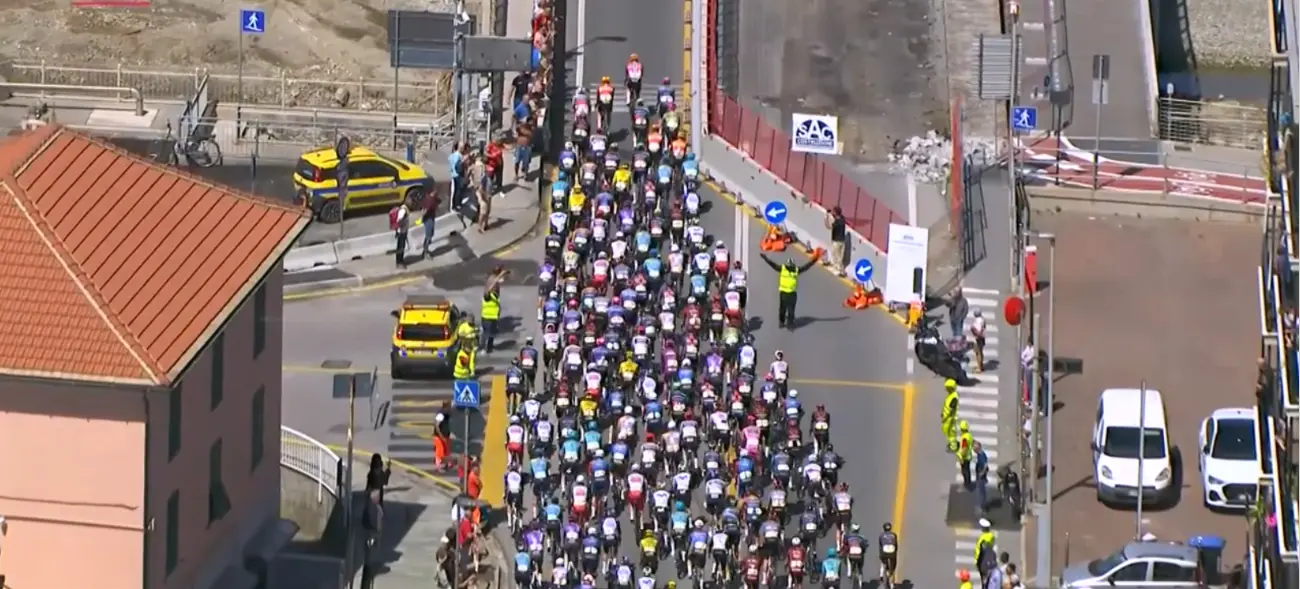
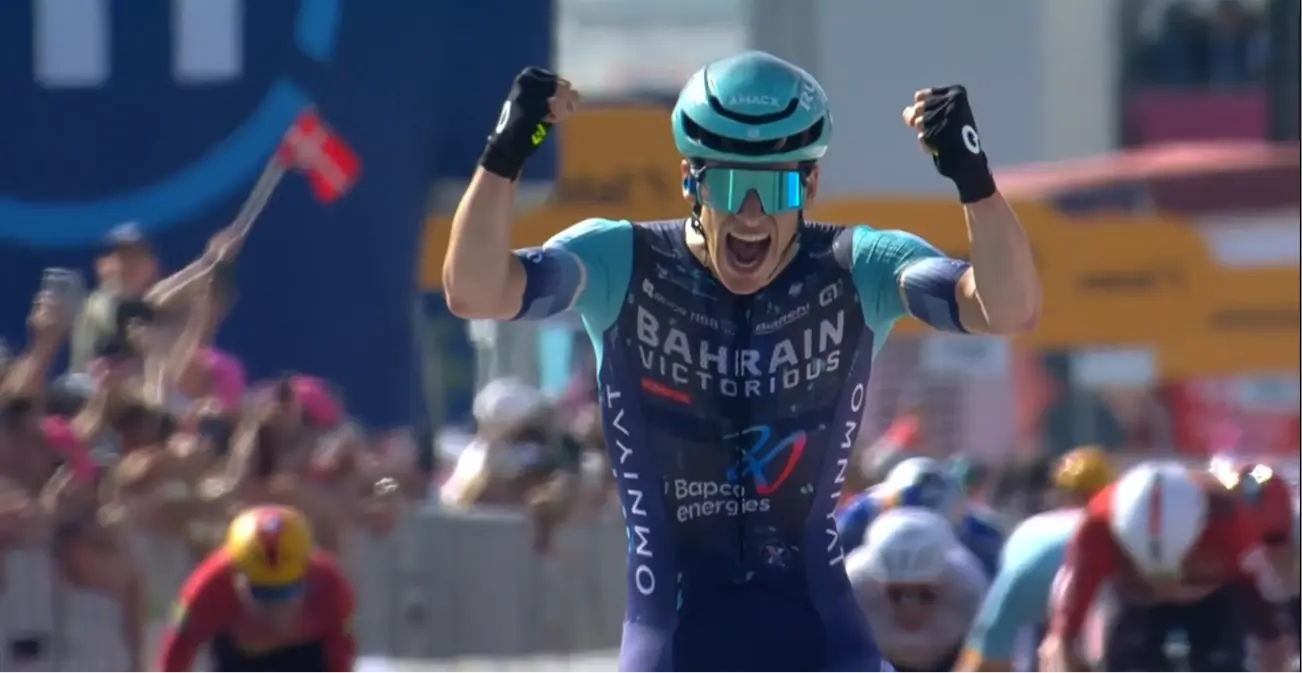
Belgian rider Alec Segaert produced the ride of his young career on stage 12 of the Giro d'Italia, launching a perfectly timed solo attack inside the final three kilometres to claim a sensational victory in Novi Ligure.
The 22 years old rider from Bahrain - Victorious caught the reduced peloton by surprise and never looked back, holding off the chasing group to secure his first ever Grand Tour stage win. Fellow Belgian Toon Aerts completed a memorable day for Belgium by sprinting to second place just seconds later, while Guillermo Thomas Silva rounded out the podium.
Breakaway sparks chaos early on
Stage 12 travelled 175 kilometres from Imperia to Novi Ligure and, although it lacked major mountain passes, the route was never expected to be straightforward for the sprinters. The climbs of Colle Giovo and Bric Berton softened the legs before a fast and nervous finale.
Aggressive racing began almost immediately after the flag dropped. After a series of attacks, five riders eventually established the day’s first significant breakaway. Among them were Dutch rider Jardi Christiaan van der Lee from EF Education-EasyPost and Belgian rider Jonas Geens of Alpecin-Premier Tech. They were joined by Juan Pedro López, Manuele Tarozzi and Mattia Bais.
The advantage briefly stretched to two minutes before teams with sprint ambitions began to organise the chase. Unibet Rose Rockets and Soudal - Quick-Step both contributed at the front, hoping to set up opportunities for Dylan Groenewegen and Paul Magnier respectively.
As the gap came down, the race exploded again. A large counterattack bridged across to the leaders, creating a dangerous move that included experienced names such as Jasper Stuyven, Oliver Naesen and Fabio Van den Bossche. The reshuffling did not stop there, with another six-man group eventually emerging clear at the front.

Nick Schultz loses control of his bike and crashes to the ground.
All the sprinters lose contact
The decisive moment for the sprinters came on the Colle Giovo. Movistar Team dramatically increased the pace in support of Orluis Aular, and the consequences were immediate. Pure sprinters such as Tobias Lund Andresen and Dylan Groenewegen were dropped, while riders including Pascal Ackermann and Jensen Plowright also struggled to hold the pace.
Jonathan Milan, Paul Magnier and Casper van Uden initially survived, but the repeated accelerations gradually took their toll. Milan eventually cracked near the top of the Bric Berton, ending the hopes of a traditional bunch sprint.
With the main sprint contenders distanced, the stage became an open contest between puncheurs, classics riders and opportunists. Teams such as NSN Cycling and EF Education-EasyPost joined forces with Movistar to ensure the dropped sprinters never returned.
There was still time for a small battle in the general classification at the Red Bull km intermediate sprint. Race leader Afonso Eulálio picked up six bonus seconds, while Ben O'Connor collected four. Shortly afterwards, Giulio Ciccone attempted to force a split with an aggressive move on a short rise inside the final seven kilometres, with Igor Arrieta quickly responding.

The moment Alec Segaert launched his attack for victory in Stage 12 of the Giro d'Italia 2026.
Segaert delivers perfectly timed late attack
Their attack was neutralised, and it briefly appeared the reduced peloton would prepare for a controlled sprint finish. Instead, Segaert seized his moment.
The Belgian attacked just over three kilometres from the line while the bunch hesitated behind him. The gap rapidly opened into several bike lengths and, despite a late chase led by Uno-X Mobility, nobody could close him down.
Segaert entered the final kilometre with more than ten seconds in hand and powered all the way to the finish, arms aloft, to take the biggest victory of his career so far. Behind him, Aerts surged to second place in the sprint for the remaining podium positions, sealing a remarkable Belgian one-two on Italian roads.
"Chapeau Bahrain"
Our colleague from CiclismoAtual Carlos Silva, delivered far more than a simple analysis of the stage, he poured out the feelings that truly come from deep within his soul.
"All I feel like saying is: chapeau Bahrain. Nothing else. But there are many men in the peloton to whom I feel like saying chapeau. Manuele Tarozzi, Matias Bais, Edward Planckaert, Jasper Stuyven, Davide Ballerini, Jhonatan Narváez, and so many others. Some have already abandoned the race, others are still hanging in there. And I take my hat off to them because this is what I love about cycling. Defiance, rebellion, racing without fear and without overthinking everything."
"Honestly, I feel like inviting all of them out for dinner, and I’ll pay. Because they are the ones who create the spectacle. They are the ones who animate the race, constantly throwing themselves into breakaways, bringing colour and excitement to every stage. They are not cynical. They don’t arrive at the race giving interviews about targeting one specific stage. They target every single one of them. And even if many of them never win anything, they still gain one thing: my deepest respect."
"Imagine what the Giro would look like with 20 Team Visma | Lease a Bike squads. Seriously, think about it for a second. What enjoyment would there be in watching a race filled with teams like that? That’s why Jonas Vingegaard will never come close to Tadej Pogacar. Because Pogacar attacks everywhere, uphill, downhill, on the flat... while Vingegaard limits himself to being the most successful Grand Tour winner at sucking wheels. Last year, and without even going further back in time, he won the Vuelta by sucking wheels. Even Tom Pidcock’s."
"And today Bahrain slapped teams like Movistar, NSN, EF Education-EasyPost, Uno-X and the rest across the face. Because they have fearless riders. First Afonso Eulálio, who despite already admitting that the GC is not for him, got out of the saddle and sprinted for bonus seconds. “Vingegaard doesn’t need that,” you’ll say. Of course he doesn’t. But if Pogacar had been here, he would have sprinted too. Was that arrogance? No. It was simply the confidence of someone who knows he is the strongest. And Eulálio didn’t sprint because of Vingegaard anyway, he sprinted because of the other GC contenders and the battle for the youth classification lead."
"Then came Alec Segaert, launching an attack with 3 kilometres to go and goodbye peloton. How is that even possible? Teams with sprinters, teams that had worked all day for the reasons we all saw, allowing a rider like Segaert to gain a hundred metres. That should never have happened. But it did happen. And with the biggest smile on my face, I say to all of them: you are a bunch of failures."
"Luck Rewards the Brave"
These are the thoughts of Ruben Silva from CyclingUpToDate following a dramatic and tactically chaotic day at the Giro d’Italia.
"It's hard to put a finger on what was happening today. A stage that could see breakaway success, but first of all the sprinter teams kept the gap way too low, which sparked more action before the climb and made the stage tougher. Then Movistar replicated their stage 4 formula, deploying their men at the front to drop most sprinters. However, the climbs were not as hard and so a few sprinters survived. Aular gained rivals, but this ultimately helped him, as EF and NSN suddenly had an interest in closing down the important moves."
"Only they didn't. The work on the climbs was all done by Movistar, and the two teams joined in afterwards to ensure that Milan, Magnier and others would not return. However, that is worth nothing for a sprinter, who only cares about victories, when you aren't capable of then controlling the race to a sprint. But the blame for the peloton isn't specific to one or two teams, but several."
"Alec Segaert took a win on merit, this is his specialty. But he really didn't do anything special, there weren't any tactics involved. It was simply a matter of choosing the right moment for a three or four-minute effort. Once a gap is established, the peloton has to ride at insane speeds to bring it back. They cannot. So Segaert, a pure rouleur, won."
"My question is how it was possible that no one responded or reacted in any way when he attacked. This was an attack for victory that first of all should never have been given freedom. It wasn't even on a climb, he simply rode away on a regular flat road. And secondly, it had to be brought back immediately. It doesn't take a maths genius to understand that if Segaert rides three kilometres at 55km/h with a 10-second gap, the peloton has to ride at around 60km/h, and there are no lead-outs capable of such a massive effort. Visma was at the front but had zero reason to do any work, and they didn't, obviously. They had no business chasing him down."
"Movistar, NSN and EF are somewhat excused because they worked so much. But again, the DS' job is to ensure the domestiques don't burn themselves out and can still respond to attacks in the finale. And we're talking about three teams, surely they could have done better. But then you see Uno-X and Tudor coming to the front in the final 1.5 kilometres with their own lead-outs after the stage was already lost, and you can't help but wonder why they didn't react when Segaert attacked. What is the point of launching a lead-out when there is no stage left to win anymore, when having one or two riders immediately react to the attack would very likely have shut Segaert down?"
"In the end, luck rewards the brave, and Bahrain continue their dream Giro."

EFEducation - EasyPost and NSN Pro Cycling Team pulling in peloton
"Visma’s conformism is dragging the Giro down"
These are the thoughts of Javier Rampe from CiclismoAlDía following a tense and tactical 12th stage of the Giro d’Italia.
“A nervous day unfolded through the province of Alessandria during the 12th stage of the Giro d’Italia. It was a day full of skirmishes, typical of the Italian Grand Tour, or at least the kind of racing it used to consistently deliver.“
“The Spaniards of Movistar Team were the ones who proposed the most. Obsessed with hunting a stage win, they drove the peloton hard on the Colle Giovo in an attempt to destroy the ambitions of the sprinters. Only Ethan Vernon and Michael Valgren managed to survive the relentless pace set by the Telefónica squad.“
“Despite all their determination and aggression, the riders of Eusebio Unzué, who today also saw one of their strongest men, Javi Romo, abandon the race due to respiratory problems while still taking antibiotics, had to settle for sixth place with a disappointed Orluis Aular.“
“The Venezuelan and his lead-out train did not count on the power of Alec Segaert, who wanted to replicate the victory he achieved at GP Denain back in March.“
“As for the general classification, it was another day successfully survived by Jonas Vingegaard, who continues to ‘gift’ the pink jersey to an ever-alert Afonso Eulálio. The Portuguese rider is honouring the race lead. Something Visma are dragging through the mud with their boring conformism.”
Results powered by FirstCycling.com
A Giro That Still Rewards Courage
Stage 12 of the Giro d’Italia may not have featured a summit finish or huge gaps in the general classification, but it delivered something that modern cycling often lacks: instinct, unpredictability and pure racing spirit. From Bahrain’s relentless aggression to Alec Segaert’s perfectly timed strike, it was a day where daring riders and attacking teams were rewarded while hesitation and calculation were punished.
The reactions from Carlos Silva, Ruben Silva and Javier Rampe all point towards the same conclusion: the Giro is at its best when riders race without fear. Whether it is Afonso Eulálio sprinting for bonus seconds, Movistar blowing the race apart on the climbs or Segaert gambling everything on one decisive move, these are the moments that give life to a Grand Tour. In the end, cycling belongs to those willing to take risks, not simply to those waiting for others to make mistakes.
And you? What did you make of the stage 12 of the Giro d'Italia 2026? Tell us your thoughts, share your opinion on all the key moments and incidents from the race, and join the discussion.
Carlos Silva is a writer for CyclingUpToDate.com, where he contributes race reports, interviews, analysis pieces, and live coverage of the international cycling calendar. Holding a degree in Sports from the Jean Piaget Institute, he combines academic knowledge of performance, training, and competition with hands-on journalism experience in professional cycling.
Throughout his career, Carlos has conducted interviews with leading figures in the sport, including Alberto Contador, Joaquim Rodríguez, Óscar Pereiro, João Almeida, Isaac del Toro, Derek Gee, John Degenkolb and Geraint Thomas. These conversations reflect direct engagement with Grand Tour winners, Classics specialists, and emerging talents.
He has provided on-site coverage at major events ranging from the Vuelta a España to the Tour de France, alongside stage races such as Vuelta a Andalucía, Volta ao Algarve, Volta a Portugal and O Gran Camiño. Covering the mythical climbs of the Giro d'Italia remains one of his professional ambitions.
Carlos is responsible for liveblog coverage of all major WorldTour races and beyond, including the Tour de France, Giro d'Italia and Vuelta a España. His reporting integrates verified data from ProCyclingStats to ensure statistical accuracy, contextual depth, and analytical precision.
A lifelong cycling enthusiast, he approaches storytelling across written, photographic, and video formats with a focus on credibility, tactical insight, and informed race interpretation.
claps 4visitors 4
Just in
Popular news
Latest comments
- Well if UAE the best team in history comes knocking their the only team in the world who can get Seixas. Seixas will become incredible there. Lets see if he stays at decathlon or goes to UAE.miguel11-10-2026
- Ahem, stage 16 of the 2025 Giro
 Rafionain-Glas11-10-2026
 - Can we get a comment from the UCI on this. The silence from Aigle is deafening! Come on cycling journalists , start annoying them to get a comment please.Paul53111-10-2026
- A shame to see him retire, I really liked him as a rider. His dignified tribute along with Matej Mohorovic to Gino Mader after his death was class and will always live in my memory. Enjoy your retirement.GregT11-10-2026
- A shame to see him retire, I really liked him as a rider. His dignified tribute along with Matej Mohorovic to Gino Mader after his death was class and will always live in my memory. Enjoy your retirement.GregT11-10-2026
- I thought Seixas had hit the end of the road from a fatigue standpoint, after the WC meltdown - and he still finished ok. This was impressive and an amazing return.mij11-10-2026
- totally, eating crow for breakfast this morning. after the world championships I thought we were looking at a late season fade from fatigue. way to go Paul!mij11-10-2026
- Pogi would have won the Vuelta at around 10 min. But it would have been boring for fools like you. Capish?PogiSloFans11-10-2026
- Rather than me describing the technology at length on here, If you google. Line-scan cameras. They are also sometimes called Slit-Scan cameras. Either search will fill you in. You can read all about how they. work. Enjoy! Just to be clear the cyclist is saying he wants to see exactly where the digital finish line is in relation to the actual physical finish. At this point we only have the word of the authority that the digital line corresponds to the exact starting edge of the physical finish line. That seems like a reasonable request to me.Prorodsandstuff11-10-2026
- 100% @Jumpyjohn, good point well raised.anonymouscyclist11-10-2026
Loading
Write a comment