David Lappartient surprised that the proposal of budget caps was rejected by teams: "It was the smaller teams"
Cycling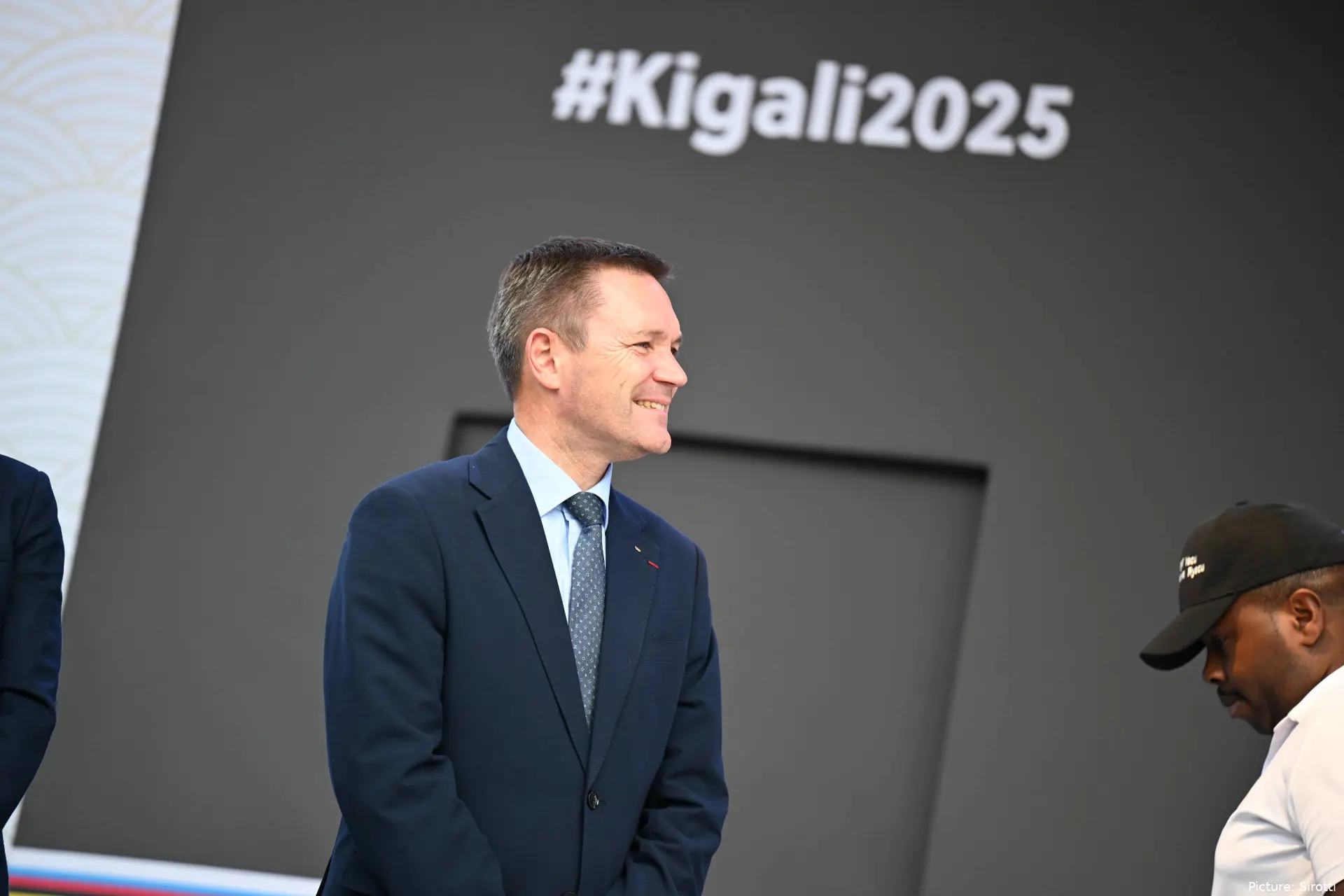
The disparity between best and worst WorldTour teams couldn't be more alarming. It is no secret that UAE Team Emirates - XRG operate on double (or sometimes even triple) the budget of teams such as Intermarché - Wanty and then it doesn't come as a surprise that the latter has opted to merge with Lotto to build a "more competitive" new formation with increased backing. Still, their resources will be no match for UAE who can shop at the transfer market at will. The only possible solution seems to be the introduction of budget caps, but the proposal was turned down. In particular by team such as Intermarché - Wanty.
"The big teams have very large budgets, and as a result, where before a relatively small sum could be enough to achieve a decent result, today you're just a bystander," UCI president David Lappartient told Ouest-France. "We considered implementing a 'budget cap' for all the teams, and paradoxically, the teams didn't accept it. I was surprised that it was mostly the smaller teams that refused. I think they were wrong because it seems necessary to level the playing field."
"Why vote against it when a budget cap is proposed?" Lappartient questioned the odd decision.
The Frenchman then goes on to explain what bugged the teams. According to them, the proposed budget cap was not going to fix most of the current problems. "They say yes, but first the cycling model needs to change. With a budget cap, if you exceeded the limit, you had to pay a tax that went to other teams. There was a mitigating mechanism in place."
UAE can't compare to La Vie Claire
Lappartient compares the current overlords UAE Team Emirates - XRG to the Bernard Hinault and Greg LeMond's La Vie Claire which dominated in the mid-1980s. Next to the two winners of combined 8 Tour de Frances, also future Giro winner Andrew Hampsten, Kim Andersen, Jean-Francois Bernard and Steve Bauer formed one of the strongest teams of cycling's history.

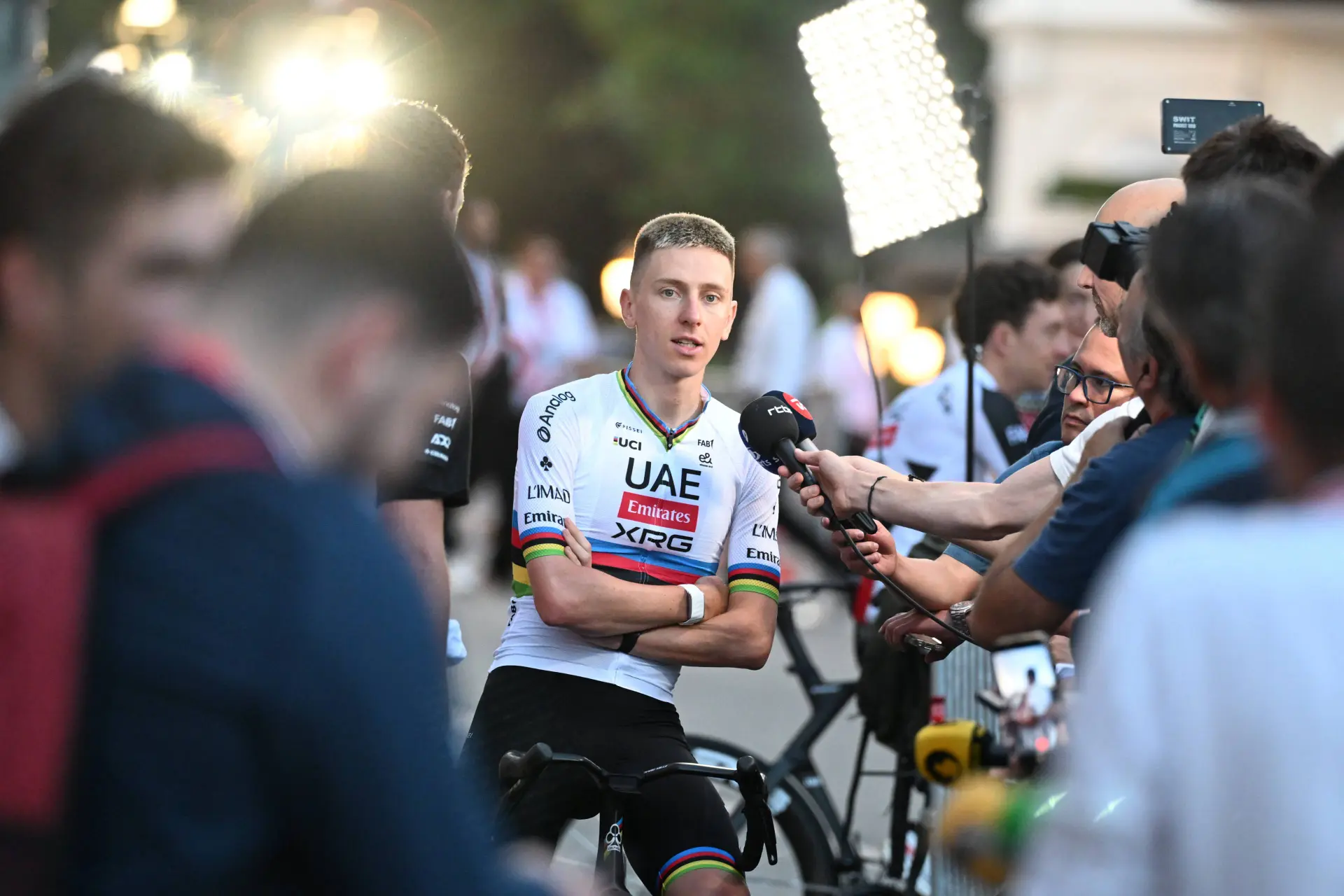
UAE Team Emirates - XRG led by Tadej Pogacar seem a level ahead of their competition at the moment
"When you look back at cycling history, consider La Vie Claire. They finished 1st, 2nd, 4th, 7th, and 12th in the 1986 Tour de France. And the team's budget at the time, relative to the others, was probably even higher than UAE Team Emirates'. I'm not saying it was right. But there have always been teams with more resources than others. The goal is to regulate things a little. And I remain convinced that a budget cap is one of the elements to achieve that."
Asked if he thought cycling's sponsorship model was outdated, the Frenchman's response somewhat evaded the subject of organizing parties such as ASO making a lot more money from races than they probably should. Instead, he pointed out the positive aspects of nowaday super-sponsors:
"Can't we say that cycling was undervalued compared to its true worth, and that today, it's a sport that has taken on a global dimension? And, as a result, we have sponsors of a more global scale, with more international teams. Perhaps this is the price of success, with cycling enjoying very high viewership. The real winners are the riders, who are earning a much better living."

Ondrej ZhasilCycling Journalist
Ondřej Zhasil is a cycling journalist at CyclingUpToDate and has been part of the team since 2023. He is based in Ostrava, the third-largest city in the Czech Republic, and covers professional cycling across the main UCI competitions, including the Tour de France, the Giro d’Italia, and La Vuelta a España. A key focus of his work is startlist analysis and pre-race coverage, where he examines team selections, rider line-ups, and tactical scenarios ahead of major events.
Alongside WorldTour coverage, Ondřej has developed specific expertise in junior cycling and in racing across East Asia, including competitions in China and Japan. He also maintains a broad working knowledge of other disciplines and levels, including cyclocross, while continuing to expand his understanding of mountain bike racing.
Ondřej holds a bachelor’s degree in Mathematics and Physics, which supports his analytical, data-driven approach to performance and race analysis. In his reporting, he regularly uses ProCyclingStats for results, statistics, and historical context. He places strong emphasis on careful sourcing, editorial accuracy, and updating articles promptly when new, verified information becomes available.
claps 0visitors 0
Just in
Popular news
Latest comments
- Interesting you claim Visma isn't a top 3 team anyomore yet their UCI rank is ...#3. Lidl Trek is only #5. Visma has 2 riders in the top 10, Lidl Treks top rider, Pederson is 16th. Their big Grand Tour signing, Ayuso is ranked 38th and has been a bust so far.GB05-10-2026
- Yes, it's fairer that way. A bit like Adam Bradać and Dušan Rajović in Poreć the other day, when they both were declared winners. As I said on the other thread, the uncertainty of the finish line - and the red line may not be on the right part finish line - is much more than that non-existent winning margin. But if they show the finish line here, they have to fo it everywhere and we know the problem there
 Rafionain-Glas05-10-2026
 - I truly appreciate the way that Ciccone in no way takes away from Evenepoel, praises him throughout, and casts no doubt in his fellow rider. That’s character. Also, he has every right to make these demands. I thought yesterday that the photo finish was clearer than it turned out to be, and now I’m amazed that they called it when there is enough doubt. Back in the day they had ties at moments like this. I wouldn’t mind seeing two European champions in the coming year, after a race that good.RidesHills05-10-2026
- From the photo it's literally a millimetre difference. The uncertainty of the finish line is considerably moreRafionain-Glas05-10-2026
- I wasn't trying to be too critical of Remco and said he just wins and is amazing - so compliments thrown in for sure too. just speaking out loud with my other comment on his demonstrations and vocalizations. yeah, don't change for sure Remco! because he is a winner. anyone that says otherwise is sorely mistaken. the first rider to win on all continents. the double olympic gold. monuments. grand tours. the first rider to have a championship at national, euro, world and olympics in TT and road. plus how many one day races, one week races, and more. he just makes me laugh - you KNOW there is always going to be something from Remco either before or after a race. many times both. and as I'm laughing and loving the drama, I have to shake my head and think put all of that into the pedals. his Jonas critique of no balls was not only funny, but IMO true of at least that stage. if Jonas had ridden, they basically would have solidified a top 3 for each of them. then it is just who is on one step. and this years tour was beyond impressive. so many times that guy was dropped, and there he is finishing top 3 for the stage. he does not give up, he is a fighter. cycling would suck without some Remcos thrown into the mix.mij05-10-2026
- All jokes aside, I agree. But being completely honest, I love Remco and the sheer chaos he brings. He totally lights up a race. His complaints over the Vuelta Stage 1 TT lighting? Electric. His anger towards Jonas’ lack of b*lls? Hilarious. Whining about a rider’s lack of support? Pure entertainment. Some of his complaints are totally fair, others are straight-up tantrums, but either way, cycling is so much more fun with him in it. You can't deny the spark he brings. It’s personalities like his that draw us to our sport. Never change, Remco.anonymouscyclist05-10-2026
- I’m waiting for when Pidcock joins this conversation regarding Amstel Gold… his jibe in the podcast with Matt Stephens was quite telling!anonymouscyclist05-10-2026
- absolutely agreed! if they cannot provide the image from the finish line showing that remco was ahead, they have to declare both of them winners. anything else would be unfair at the least. it would also not be good for remco because his title would remain to be questioned forever.Ketterechts05-10-2026
- using hitler in the same conversation as Sydney Sweeney. nice. I dismissed you as it is not right to look at someone and determine who they are on looks alone. I wouldn't make that video. I don't want my daughters to make it. I respect your right to not like it as well and don't disagree with you on that. what I do disagree with is someone looking at a video and assuming she is (a) stupid because she is "hot". (b) she has no talent because she is "hot". (c) she only got to where she is because she is "hot". and this is a sore point because I have beautiful daughters, one who is studying to be an aerospace engineer, and she is drop dead gorgeous. and I see how people look at her and the assumption they make, until they hear what she is doing, and it is not right. so to be clear - yes, I don't even disagree with your comments on the content. I disagree with your comments on the person. she can turn herself into a whatever one wants to call that in the video, but still be smart. and I don't give up because I have daughters and will defend women.mij05-10-2026
- Ciccone seems like a good dude. Understandable why he didn't ride. Remco is amazing, he just wins, but wow he just can't focus on his own race ever it seems. You know someone isn't going to ride in that situation, why bother getting worked up. put the energy into the pedals.mij05-10-2026
Loading
1 Comments