Danilo Di Luca without filters - "I didn’t kill anyone. A lifetime ban is disproportionate"
CyclingThursday, 30 April 2026 at 16:41
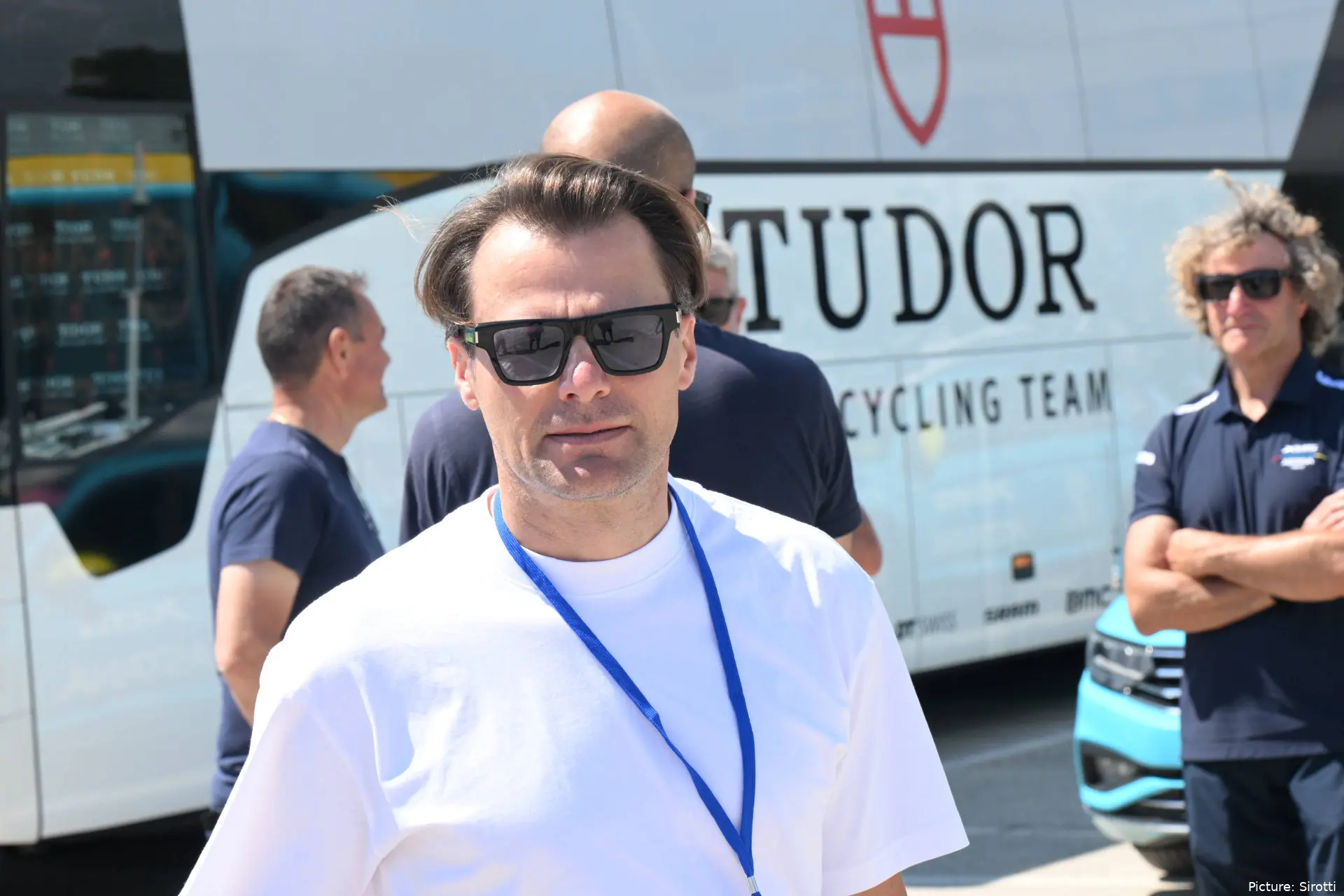
Danilo Di Luca, winner of the Giro d'Italia and Liège-Bastogne-Liège in 2007, has spoken openly once again about his career, modern cycling and the lifetime suspension for doping. In an interview with Spanish newspaper AS, the former Italian rider was blunt, sharp and showed no intention of rewriting his past.
Now 49, he lives in Pescara and works in the high-end bicycle business. But he still watches cycling with the same intensity as in his racing days, even while carrying the burden of being permanently banned from the sport that made him famous.
“Liège was the most beautiful race of my career”
Despite winning the Giro de Italia in 2007, Di Luca admits that victory in Liège-Bastogne-Liège that same year still holds a special place.
“My memories are intact. It was, without doubt, the most beautiful race I won in my professional years.”
The Italian explained that it took him nine years to finally win the Belgian Classic after first racing it as a professional. “When I rode it for the first time, I told myself immediately: sooner or later I have to win this.”
In 2004, he came close, but a physical issue prevented him from even starting.
“That year I was fourth in the Amstel Gold Race, third in La Flèche Wallonne, and I believed I could win Liège. But the night before I had a prostate problem and didn’t race.”
When he finally triumphed, he felt he had completed something unfinished. “It was the stone missing to build the house.”
Giro d'Italia? “The emotion of Liège was greater”
Even though he won Italy’s biggest race, Di Luca places the Ardennes Monument above the Giro in emotional terms.
“For an Italian, the Giro is everything. The most important race in the world. But I choose Liège because all the emotions are concentrated into one day.”
Speaking about the three-week Grand Tour, he said he already knew victory was within reach before the finish.
“In my case, I knew long before that I was going to win. I could already feel it in the days before arriving in Milan.”
Beating Pogacar? “Right now it is impossible”
Asked about young talents capable of challenging Tadej Pogacar, Di Luca was direct when discussing Paul Seixas.
“For now, no. Maybe he can be second when Pogacar is there. Winning when Tadej doesn’t race, yes.”
He then underlined the current level of the Slovenian star. “To beat the Slovenian right now is impossible. Maybe when his decline begins in a few years.”
“Today’s riders are robots”
One of the strongest parts of the interview came when he compared modern cycling to his own era. For Di Luca, the sport has lost spontaneity and humanity. “The riders of today are robots.”
In his view, everything revolves around numbers, data and total control. “What matters now are values: watts, kilometres, how much they ate during the race…”
By contrast, he described the peloton of his era as more unpredictable. “We were more human. We looked more at our rivals than at numbers. It was more beautiful for the fans. There were attacks from one hundred kilometres out, there was improvisation.”
He also believes winners are easier to predict now. “If Pogacar is there, he wins.”
Italy and Spain have fallen behind
Di Luca also expressed concern about the decline of cycling in countries that historically dominated the sport, such as Italy and Spain.
“There is very little to work with. Everything has changed. There is no competitiveness.”
According to the Italian, the root of the problem lies in youth development. “Everything starts at the base, with the federation.”
He then delivered a striking line about the current situation in his homeland. “If a child tells his father he wants to start cycling, the father says no.”
For Di Luca, cycling now truly lives above all in Belgium. “I was at the Tour of Flanders and everything is still the same: the crowd, the passion, the aura. In Italy everything has changed.”
“Without doping I would have won much more”
One of the most controversial statements came when he returned to an opinion he has expressed before: he believes he would have achieved even more without doping.
“Without doping, the champion shines even more. With doping everything becomes flatter, more balanced.”
In his view, banned substances reduced the natural gap between elite talent and ordinary riders. “Without it, the difference between a champion and a normal rider is much bigger.”
Di Luca was suspended multiple times for doping offences and was permanently banned in 2013. He still considers the punishment excessive. “After thirteen years, I still don’t understand the lifetime ban.”
He continued. “In life we all make mistakes. Then enough is enough. I didn’t kill anyone. I work, I have a family… The rest is disproportionate. I am a good person.”
“I feel like an artist”
At the end of the interview, he reflected on his personality and how he channelled anger and frustration throughout his career.
“Yes, exactly. In some way, I feel like an artist.”
A sentence that sums up the contradictory figure Danilo Di Luca still is: talented, controversial, punished, and incapable of speaking neutrally about the sport that made him famous.
Carlos Silva is a writer for CyclingUpToDate.com, where he contributes race reports, interviews, analysis pieces, and live coverage of the international cycling calendar. Holding a degree in Sports from the Jean Piaget Institute, he combines academic knowledge of performance, training, and competition with hands-on journalism experience in professional cycling.
Throughout his career, Carlos has conducted interviews with leading figures in the sport, including Alberto Contador, Joaquim Rodríguez, Óscar Pereiro, João Almeida, Isaac del Toro, Derek Gee, John Degenkolb and Geraint Thomas. These conversations reflect direct engagement with Grand Tour winners, Classics specialists, and emerging talents.
He has provided on-site coverage at major events ranging from the Vuelta a España to the Tour de France, alongside stage races such as Vuelta a Andalucía, Volta ao Algarve, Volta a Portugal and O Gran Camiño. Covering the mythical climbs of the Giro d'Italia remains one of his professional ambitions.
Carlos is responsible for liveblog coverage of all major WorldTour races and beyond, including the Tour de France, Giro d'Italia and Vuelta a España. His reporting integrates verified data from ProCyclingStats to ensure statistical accuracy, contextual depth, and analytical precision.
A lifelong cycling enthusiast, he approaches storytelling across written, photographic, and video formats with a focus on credibility, tactical insight, and informed race interpretation.
claps 15visitors 9
Just in
Popular news
Latest comments
- Until crashing, Jacob was mine and he still did well. Another youngster with a big future. As for Remco, it’s time he took on the hour challenge. If anyone is going to break it, it’s him.Mistermaumau20-09-2026
- And we (dome more than others) all complain all the time about him doing it. Good thing there’s no website for people to complain about CUTD posters, right? Although I guess all those from CN complaining about it who came for a look early on and left must have gone back there and are now complaining about us instead.Mistermaumau20-09-2026
- About how I thought it would go but Seixas third place is astonishing.awp20-09-2026
- Bringing this thread back to your suggestion I am not in a position to criticise SS due to not having achieved enough (of the kind of things YOU would value), I will just point out it’s a pretty risky bet to make as you know even less about me than her. I’ve not let on to that much here over the years but believe me, you’d quieten down quite quickly if you knew half of it and if you actually want to, it’s not hard to organise without revealing sensitive personal information so just let me know and we can continue this in private. I had to laugh even more when I read the latest because somehow you always manage end up in situations or with questions or suggestions where you make it easier for me to reply. Amongst the many other things I’ve done in life, I had the pleasure (and misfortune) of working with or for numerous photographers (and also in an advertising agency) and what I can tell you from all those experiences is that your experience is not a given, because depending mostly on the kind of people you surround yourself with for a project like things can go from extremely badly to extremely well.Mistermaumau20-09-2026
- Love him or hate him, Remco Evenepoel is the preeminent time trialist of our generation, and that was an impressive performance. Congratulations to him on his fourth consecutive title.
 santiagobenites20-09-2026
 - No idea who will win but seeing this and Remco and Paul and a few others should make next week extremely competitive and strategic. Teams will be working overtime on plans now.Mistermaumau20-09-2026
- Bäckstedt is a phenom, but Reusser was simply far better. On PCS they had a chart of the first 5 in comparison to each other. Of them, Reusser started tied for slowest and then sped up over the last 3/4 of the race. Fabulous!RidesHills20-09-2026
- One performance after the next sets up next weekend as a fabulous road raceRidesHills20-09-2026
- Seixas is my surprise, and Evenepoel was as usual dominant. What a ride, power and form better than anyone else. Congratulations!RidesHills20-09-2026
- It was amazing!!!averagecyclist20-09-2026
Loading
7 Comments