Tour de Romandie 2026 preview, profiles, favourites & predictions - Tadej Pogacar the man to beat in his first stage-race of the year
Cycling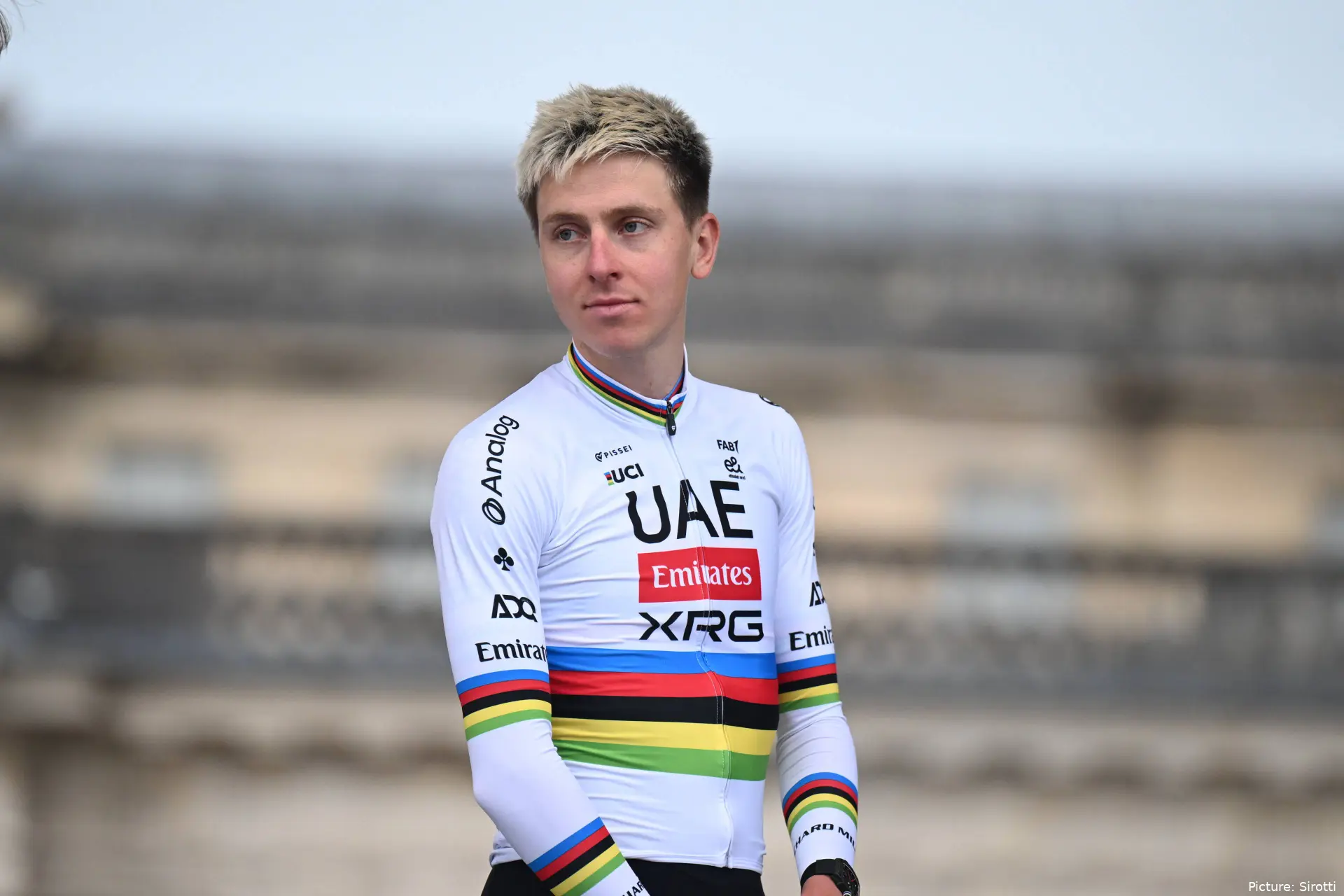
The 2026 Tour de Romandie will take place from the 28th of April to the 3rd of May and will make for Tadej Pogacar's debut in a stage-race this year. The Swiss race provides the final big test ahead of the Giro d'Italia whilst also following the spring classics, a period where many are looking to save their campaign. We preview the race ahead.
The race was first held in 1947 with Belgian Désiré Keteleer taking the first win. Taking part in the French part of Switzerland, it is a race that has had a very international list of winners, from several generations and also different types of riders. But many of the greats have marked their name on it such as Eddy Merckx, Bernard Thévenet, Bernard Hinault, Stephen Roche and Laurent Jalabert.
Already this century we've had Cadel Evans, Bradley Wiggins and Chris Froome use Romandie ahead of their maiden Tour de France wins; whilst huge names such as Nairo Quintana, Richie Porte, Primoz Roglic and Geraint Thomas have also won the GC on what is considered one of the seven big non Grand-Tour stage-races.
Adam Yates won it in 2023, Carlos Rodríguez in 2024; and in 2025 it was João Almeida who won the race on the final day after dethroning Lenny Martínez from the yellow jersey.
Read also
Profile prologue: Villars-sur-Glane - Villars-sur-Glane

Villars-sur-Glane - Villars-sur-Glane, 3.1 kilometers
The race starts off with a prologue but in good Romandie fashion, it is anything but simple. In fact, it is a hard one to pace, taking place fully within Villars-sur-Glane, the riders will have only 3.1 kilometers to tackle, but they are not flat.
The first part is extremely fast, as the riders descend straight away after starting their effort, and then climb back up through a climb that is in total 1.3 kilometers long at 5%. There is an 800-meter-long ramp at 7% where the main differences or the day are expected to take place. It's a short effort where the gaps will be minimal; with the pure power and aerodynamics being key to the outcome of the stage.
Profile stage 1 : Martigny - Martigny

Martigny - Martigny, 170.9 kilometers
The race moves into the Rhône valley for a stage with a profile that is typical of the region. That is because the riders have a beautiful region with roads extending through the massive valley, whilst the valley slopes are packed with steep climbs. These can be short, or they can be long, into the towns that are scattered over the mountains.
With the profile put into context, the riders will first take on a circuit just north of Martigny which on three occasions will have had the peloton tackle a 2.5 kilometre long climb at 8.5%. This will serve as a warm-up before the riders head east towards the main climb of the day.
And this is a brutal one, where we should see massive W/Kg displays. The climb to Ovronnaz is on the menu, and it is the most difficult of the race, with 8.9 kilometres in distance and 9.8% average gradient. The riders should arrive at the bottom relatively fresh.
The climb is going to split the race to bits with its gradient and switchbacks, ending with 35.5 kilometres to go. The descent is very tactical, and the riders head back to Martigny through the pan-flat valley once again for the finish.
Profile stage 2: Rue - Vucherens

Rue - Vucherens, 173.7 kilometers
Stage 2 of the race provides a slightly easier profile than the previous one, however one with more overall climbing throughout the day. It lacks a mountain, but the 173 kilometer day from Rue to Vucherens has 2700 meters of climbing, which start right from the first kilometres.
The riders then take a three-lap circuit finishing in Vucherens, with the finish line following a small ascent. It's a day for classics specialists to have a chance, although a sprint finish is quite likely from a peloton that includes only those who can survive the climbs - a breakaway can also well succeed.
In these rolling roads, it's not easy to control, and the final climb may be made harder by the fatigue that will set itself throughout the day. 3.1 kilometres long at 5.4% will end with a mere 2.5 kilometres to go. The pace will be high, attacks are likely, and even an opportunist move can succeed here. If not, a reduced bunch sprint should provide the fast men with their only chance of the week.
Profile stage 3: Orbe - Orbe

Orbe - Orbe, 176.5 kilometers
Stage 3 is a mountainous day, however perhaps the easiest of the four mountain stages. A day for the 'baroudeurs', the breakaway specialists, without a particular focus whether they are climbers, rouleurs or classics specialists.
The hilly start will be quite explosive and is favourable to the formation of a strong group whilst the gaps at this point in the race will be big enough that most will be allowed up front. The finale is usually too hard for the sprinters but not easy enough for the climbers to really make a difference - which means it's a day when chaos and tactical knowhow can rule.
Most of the day is rather hilly but without any major climb, this will come in the final fourth of the race with the Col du Mollendruz - 9 kilometres at 6.7%. A difficult climb, but nothing crazy, and no sections that are Uber-steep.
The climb ends with 33 kilometres to go, from there on mostly downhill until Orbe. Only the final 10 kilometres are flat, making it terrain where it is still possible to chase back a breakaway if there is an organized peloton behind.
Profile stage 4: Broc - Charmey (Val-de-Charmey)

Broc - Charmey (Val-de-Charmey), 149.3 kilometers
Stage 4 is another day in the mountains, one with the particularity that the riders will be going up the same mountain three times, all of which through different sides. The stage takes place from Broc to Charmey, but it is the Jaunpass that's the star of the day.
The first kilometres are flat but after 15 of them, the peloton begins to climb. The first ascent is 6 kilometres long at 7.8% through Jaun and after descending, they go up it through Littisback which is 7.4 kilometres long at 8.8%. Both take place over 100 kilometres to the finish, but allow for the breakaway opportunists to try and surprise.
The riders then go back to the start line and back around the valley to return to the Jaunpass, but this time around climb it through the road they descended it for the first time - which is via Weissenbach.
This ascent is the toughest of the three, featuring 8.1 kilometres at 8.3%. The climb ends with just 16.5 kilometres to go and will be treated like a final ascent, since from the summit back to the finish in Charmey (through roads they will have already BOTH climbed and descended through earlier on) the road is half downhill and half a false-flat to the finish, making it very fast.
Profile stage 5: Lucens - Leysin

Lucens - Leysin, 182.6 kilometres
The final stage begins in Lucens and the start is rolling, making it explosive and good for a strong breakaway formation. It is a mostly hilly day, taking place in the northeast of Lausanne, before making its way south back into the Rhône Valley.
The climbers will take a detour deep into the Alps this time around however and head into the Leysin ski station, a regular finish location in the Swiss race.
The final ascent, this time around, will be tackled through a long side, which is 14.3 kilometres in total at 5.9% average gradient - with its base in Aigle, where the headquarters of the UCI is.
The hardest kilometers of the climb are in its final third and so this is an ascent where the action should be reserved towards the end, with the race finishing atop the climb.
The Favourites
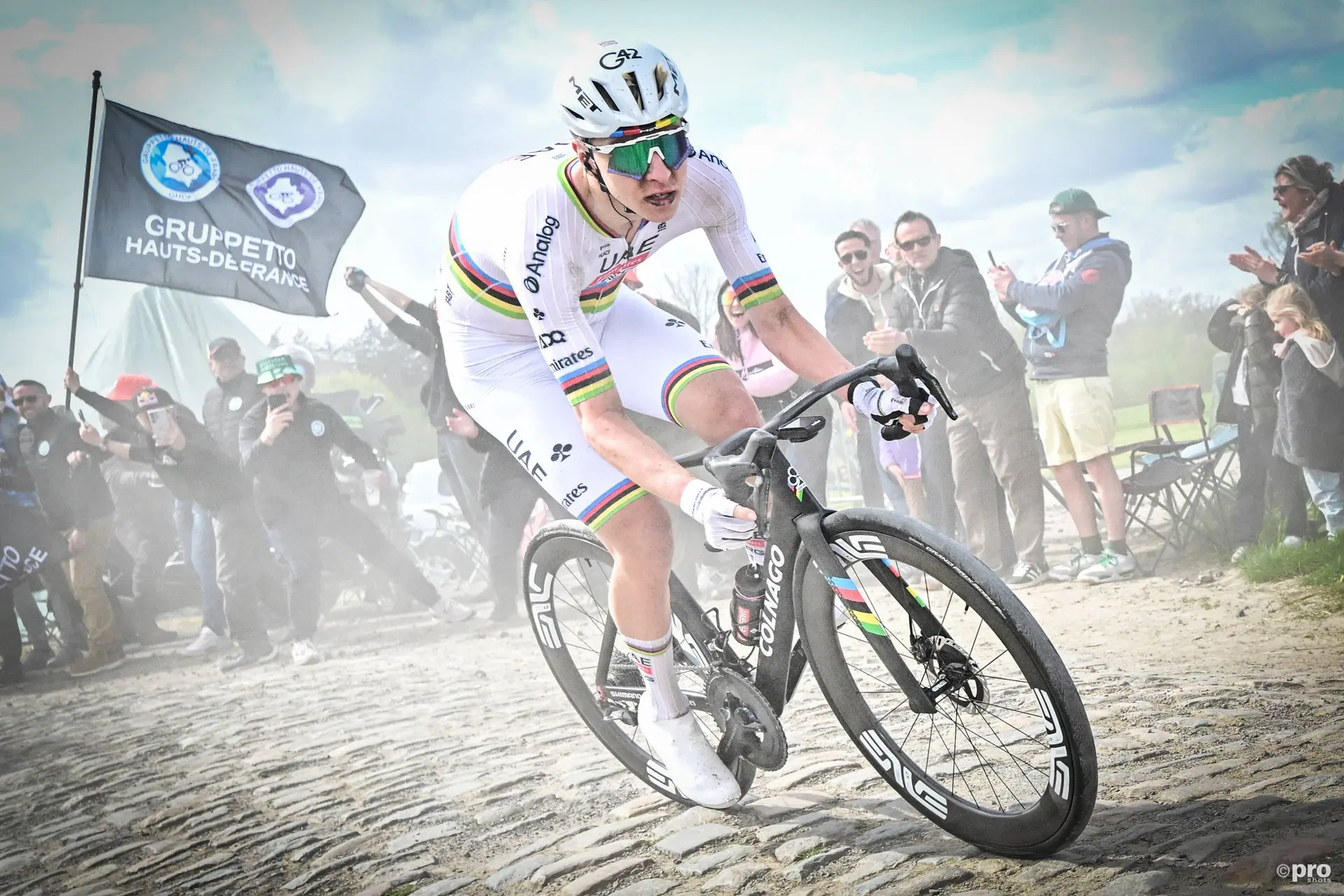
This is Tadej Pogacar's race to lose, there is no real doubt about that, and I argue that if UAE so desires, he has a legitimate chance of winning every single stage. I foresee a Seixas-itzulia scenario in which the World Champion will be the main favourite for every stage, it will be a matter of whether UAE will want to work for it or not - likely not, but that can happen. The Slovenian will come in with form and even if his support is rather modest, he doesn't really have to fear big attacks from his rivals unless he has a terrible day on the bike in one of the queen stages.
To potentially challenge him we have Oscar Onley who leads in INEOS Grenadiers; Bahrain - Victorious who have Lenny Martínez - whilst Antonio Tiberi and Damiano Caruso's form are questionable - and of course, Red Bull - BORA - hansgrohe.
The German team have Florian Lipowitz who should be favourite number two for the race. This is the race he had a breakthrough in two years ago, the climbs suit him, and his form has been steadily improving all spring long which means he should arrive here quite well - not having put any focus on the classics either, but the stage-races. Primoz Roglic and Daniel Martínez are both part of a very climber-heavy lineup which can do damage, podium contenders if they are at their best level.
Furthermore, the startlist - which does not really feature sprinters, classics specialists or time trialists as most stages are mountainous - features mostly climbers. Although there are only a mere 15 teams at the start, making for a tiny peloton of just over 100 riders. Lorenzo Fortunato, Cristián Rodríguez, Pablo Castrillo, Jorgen Nordhagen, Luke Plapp, George Bennett, Georg Steinhauser and Marco Brenner are also men who can take on the main men and fight for the overall classification.
Prediction Tour de Romandie 2026 overall classification:
*** Tadej Pogacar
** Florian Lipowitz, Lenny Martínez, Oscar Onley
* Antonio Tiberi, Primoz Roglic, Daniel Martínez, Lorenzo Fortunato, Pablo Castrillo, Jorgen Nordhagen, Luke Plapp, Georg Steinhauser
Pick: Tadej Pogacar
Original: Rúben Silva
Rúben SilvaEditor-in-Chief
A founding contributor to CyclingUpToDate since its launch in January 2022, Ruben Silva has played a central role in shaping the site’s editorial direction and long-term growth. Before joining the project, he built his experience through independent blogging at Echelons Hub and by producing race previews for Ciclismo Internacional, developing a strong analytical voice rooted in daily engagement with professional cycling.
Beyond editorial work, he has been closely involved in the expansion and coordination of CyclingUpToDate’s wider network, helping establish and support sister platforms across multiple languages. This includes ongoing collaboration with CiclismoAlDia (Spanish), CiclismoAtual (Portuguese), WielrennenUpToDate (Dutch), and RadsportAktuell (German), contributing to a shared editorial vision and consistent international coverage.
He also helps oversee editorial governance across the network, setting standards for accuracy and consistency and coordinating updates or corrections when needed.
Originally from the Porto metropolitan area in Portugal, he holds a bachelor’s degree in Geography. His path into cycling journalism was shaped not through formal media training, but through independent reporting, community engagement, and sustained on-the-ground involvement in the sport.
Over the course of his career, he has conducted approximately 100 interviews across road cycling and cyclocross, ranging from one-to-one conversations and online formats to press conferences and on-site pre- and post-race coverage. His interviews include leading riders, team managers, and prominent figures within cycling media: Tadej Pogacar, Jonas Vingegaard, Mathieu van der Poel, Primoz Roglic, Wout van Aert, Joao Almeida and Tom Pidcock; managers like Patrick Lefevere and Joxean Matxin; and YouTube personality Bryan Kennedy (BKXC)...
Within 18 months of launch, he helped grow CyclingUpToDate’s English-language platform into one of the most-read cycling news websites, built entirely from the ground up. As both a professional journalist and lifelong cycling enthusiast, his focus remains on delivering accurate, timely, and well-contextualized coverage.
claps 4visitors 4
Just in

Popular news
Latest comments
- 50 million isnt low. But if you hire super domestiques for a million and 3rd rung leaders for 3-5 million, natural you dont have money left not the results expected. Most monuments and TDF are out of reach due to Pogi. But there were a promising 2nd rung leaders on the market and they went for broke to get Onley and Kevin. I put their entire troubles due to mismanagementabstractengineer25-10-2026
- I think it’s becoming clear that cycling got way ahead of itself for a few reasons and is now coming to the realisation that some rider salaries just exploded without justification and it snowballed until sponsors started pulling money out because THEY did not see any return on increased costs. Cycling is still a dying sport (that never moved out of the niche family) and will remain so if it doesn’t embrace and promote new ventures or manage to attract new markets. Even within cycling, fans are basically compartimentalised, (almost nobody here follows track for example), and the multiplication of possibilities hasn’t grown the sport, it has just split it into a larger number of smaller branches. If it weren’t for nation state sponsors (far too numerous already) other teams would never have (had to resort to) raised bigger budgets that are now leading to sponsor abandonment. That’s the difference between long-term steady growth and financial doping, the latter can also just blow up in your face. I will venture to wager that apart from one or two exceptional cases, rider salaries will no longer go up and are quite likely to actually drop over the next decade.Jumpyjohn25-10-2026
- You know you can post all this on idlprocycling too with your account(s) don’t you? There’s a whole bunch more articles and people there to inform.Jumpyjohn25-10-2026
- That’s the kind of word my foreign grandma would have rendered fashionable again, like flabbergasted (at her time) ;-) Perhaps he should get a pro to fill out his papers and pack his bag too, customs have become keen on controlling anyone from the balkans.Jumpyjohn25-10-2026
- Alternatively, just call Rod StewardJumpyjohn25-10-2026
- I will be in Adelaide in a shot if Pogi comes to the Tour Down Under. Fingers and toes crossed that this will eventuate, he has just got to remember to stay aware of kangaroo’s, as Jay Vine can attest to. Though can’t be any worse than some of the passionate fans in EuropeSearider25-10-2026
- "The Spaniard also highlighted Florian Lipowitz, third in the recent World Championship time trial, as a rider to watch as he continues to gain experience." Please stop the AI slop
 Rafionain-Glas24-10-2026
 - I think it's great! Now there's a real reason forcing the people-who-don't-fix-the-potholes to fix the potholes... or notRafionain-Glas24-10-2026
- Roglič brought in as many points as some of the lower standing teams, so you would think that more than one team would be trying to get one of the top 25 points machines onto their team. He brought in only 500 points less than the entire Picnic Post NL team. Take those points and Unibet is still not in the top 18, but put him on one of the teams fighting for 18th and they get some security. NSN at 18th with Roglič’s 2100 points would be in 11th place.RidesHills24-10-2026
- He's 20, in two years or so he will be the guy winning everything.awp24-10-2026
Loading
4 Comments