Canary Islands refuse to host 2026 Vuelta a Espana amid ongoing controversy surrounding former Israel - Premier Tech
Cycling
The Canary Islands have withdrawn their interest in hosting the 2026 Vuelta a Espana, citing political concerns linked to the continued presence of the former Israel - Premier Tech team in the professional peloton. Officials in Gran Canaria argue that the squad’s planned name change and shift in registered nationality for next season do not amount to a meaningful transformation.
Their stance contrasts with that of other regions — including Catalonia, which has accepted a Tour de France start following confirmation of the team’s rebranding — and has reignited debate over the place of the Israel structure in major cycling events.
Gran Canaria’s authorities point to the turbulence seen during the 2025 Vuelta, where several stages were disrupted by protests and the race ultimately ended with an improvised podium ceremony in an underground garage in Madrid. They maintain that a cosmetic administrative change is unlikely to prevent similar situations, and that aligning the island’s image with a potentially volatile edition of the race would be unwise.
The council also stresses that money was not the sticking point. Gran Canaria insists it had the organisational capacity and financial resources to host the race, as it has in previous years. The decision, they say, is based solely on avoiding reputational risk should new protests or disruptions arise.
Tenerife, meanwhile, has expressed disappointment at the collapse of a joint bid involving the Canary Islands government and the councils of Tenerife and Gran Canaria. Gran Canaria’s withdrawal made the project unviable, leading to disagreements between institutions that had been hoping to bring the Spanish Grand Tour back to the archipelago.
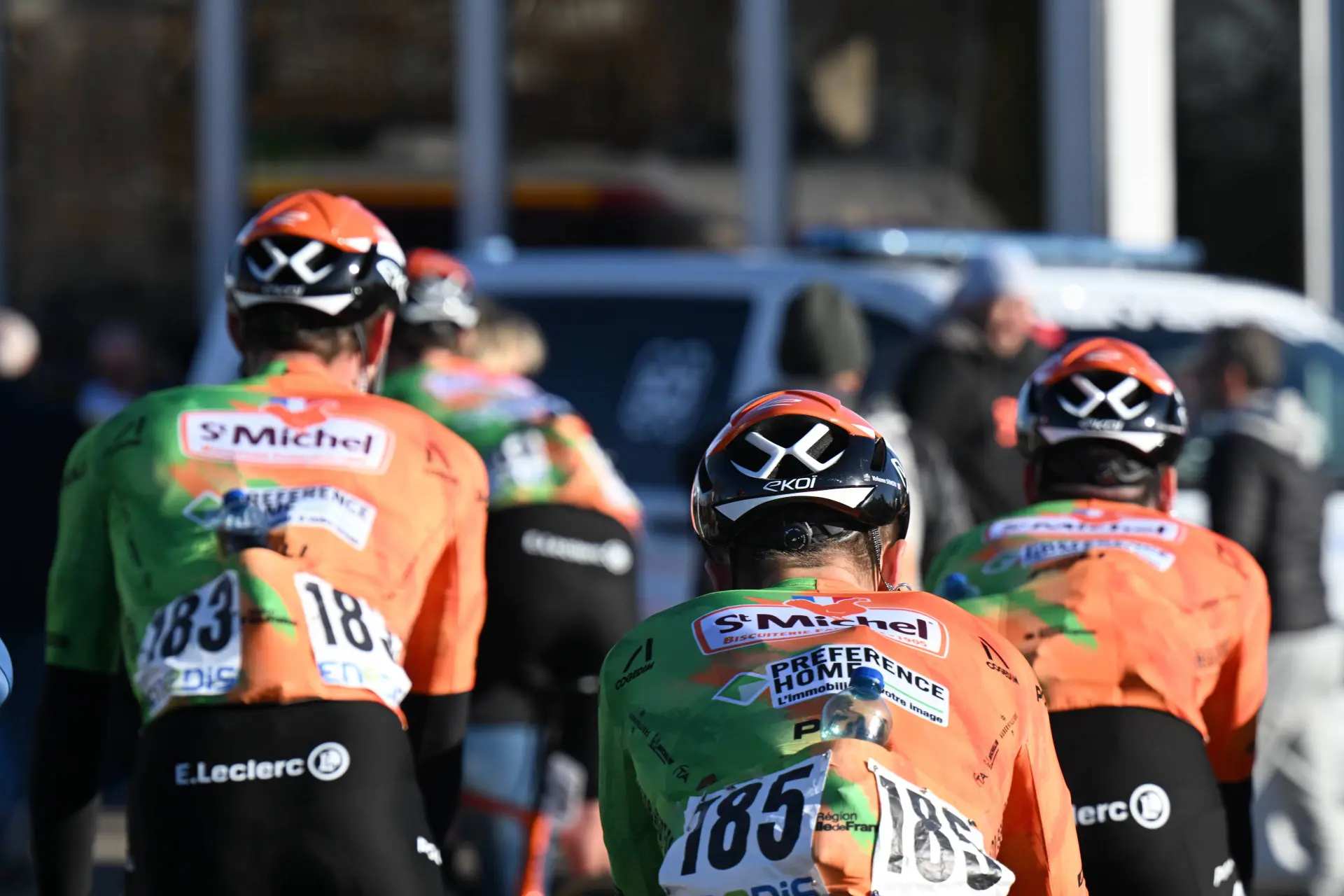
There were numerous incidents involving the formerly named Israel - Premier Tech team during the 2025 edition, including the cancellation of Stage 21 in Madrid amid large-scale protests.
Read also
Why Gran Canaria said no
Speaking to La Provincia, Aridany Romero commented: “Several months ago, both the president — Antonio Morales — and I made clear that Gran Canaria did not want its name associated with the Vuelta a Espana while Israel-Premier Tech were competing.” On the team’s proposed changes, he added: “It is an attempt to whitewash, through sport, the genocidal actions of the state of Israel.” He continued: “They put ‘Israel’ on the jersey, and now, after everything that has happened these months, they have simply reverted to their previous position,” concluding: “At heart, nothing has changed.”
From Tenerife, Lope Afonso cautioned that “the latest developments do not bring good prospects” and said “the original plan falls apart” following Gran Canaria’s decision to step aside.

Scenes like these marred the 2025 Vuelta a Espana

Kieran WoodDeputy Editor-in-Chief
Kieran Wood is a sports journalist based in Wales and has been active in journalism since 2022. He regularly contributes to DartsNews.com and CyclingUpToDate.com, where he covers professional cycling and darts. In cycling, his work includes liveblogs from major races, including the Tour de France, the Giro d’Italia, and La Vuelta a España, alongside race reports and analysis. He has also conducted interviews with professional riders.
His reporting spans the full racing calendar, from one-day classics to stage races, with a focus on accurate, real-time coverage and clear contextual analysis. For statistics, results, and historical context, he regularly uses resources such as ProCyclingStats. To support reporting on rider activity and training context where relevant, he also references Strava.
In his work, Kieran places strong emphasis on careful sourcing, editorial accuracy, and updating articles as new, verified information becomes available.
claps 5visitors 1
Just in

Popular news


Latest comments
- When will they start dropping Pogi? Oh yeah, when Pogi reaches 40+ years, that's when young cyclists will start dropping him. But until then... eat your hearts out and cry. Pogi will remain the G.O.A.T. for years to come. Capish?PogiSloFans13-10-2026
- I figure he would have found out how to outsprint Paul and take the win, maybe. He's 28 now but I would say he's right at the peak of his powers. It was great race though, Paul showed me something different about himself.awp13-10-2026
- Slowly, very slowly... 5-7 yrs. ;)MajorPayne13-10-2026
- Up to this point: "It is just not yet at the level of Vingegaard and Pogacar." First Jonas, and then level of Tadej. Period!MajorPayne13-10-2026
- The sport has long had a divide between the more diesel-like riders and the more explosive riders. Where does Pogačar fit? His explosive attacks are followed by a high speed diesel climb and he's rarely been caught in the past 5 years (people can name the moments, it's so rare). Seixas is young and we have no idea where his body will end up on this spectrum (just like we didn't with Pogačar when he was 20 and being a diesel up the Vuelta mountains of 2019). Speculation is fun, being a fan while it unfolds is going to be more fun.RidesHills13-10-2026
- yeah it'll be an epoch shift when Pog can't drop people, and/or when they start dropping him.wrsty13-10-2026
- Yes, he won't ride away yet, but he will and that day will be notable
 leedorney13-10-2026
 - Expect the young French rider to slowly asphyxiate the Slovenian into retirement.
 Front24213-10-2026
 - My thinking is that Pog's experience and strength would have outweighed any fatigue in Il Lombardia. But the sad thing is, we'll never see peak Pog (call it Pog 2) go head to head with Seixas. However well he recovers from his crash, he'll return as Pog 3, with the shadow of severe concussion always there.Hills3313-10-2026
- Some speculation and opinion. Had Tadej not crashed out of the Vuelta he would have been less fresh and I'm not sure he would have beaten Seixas in this race. Maybe he would have been able to contest the race in a sprint and maybe not. Believe me when I say I keep up with many of Tadej's climbing feats and records and I understand how great he is but the Paul we just saw at Il Lombardia was not that far behind Tadej.awp13-10-2026
Loading
Write a comment