“Being in the hotel with Van Aert, Vingegaard, and so many champions really makes you think” – Teenage Visma recruits describe life inside cycling’s elite
Cycling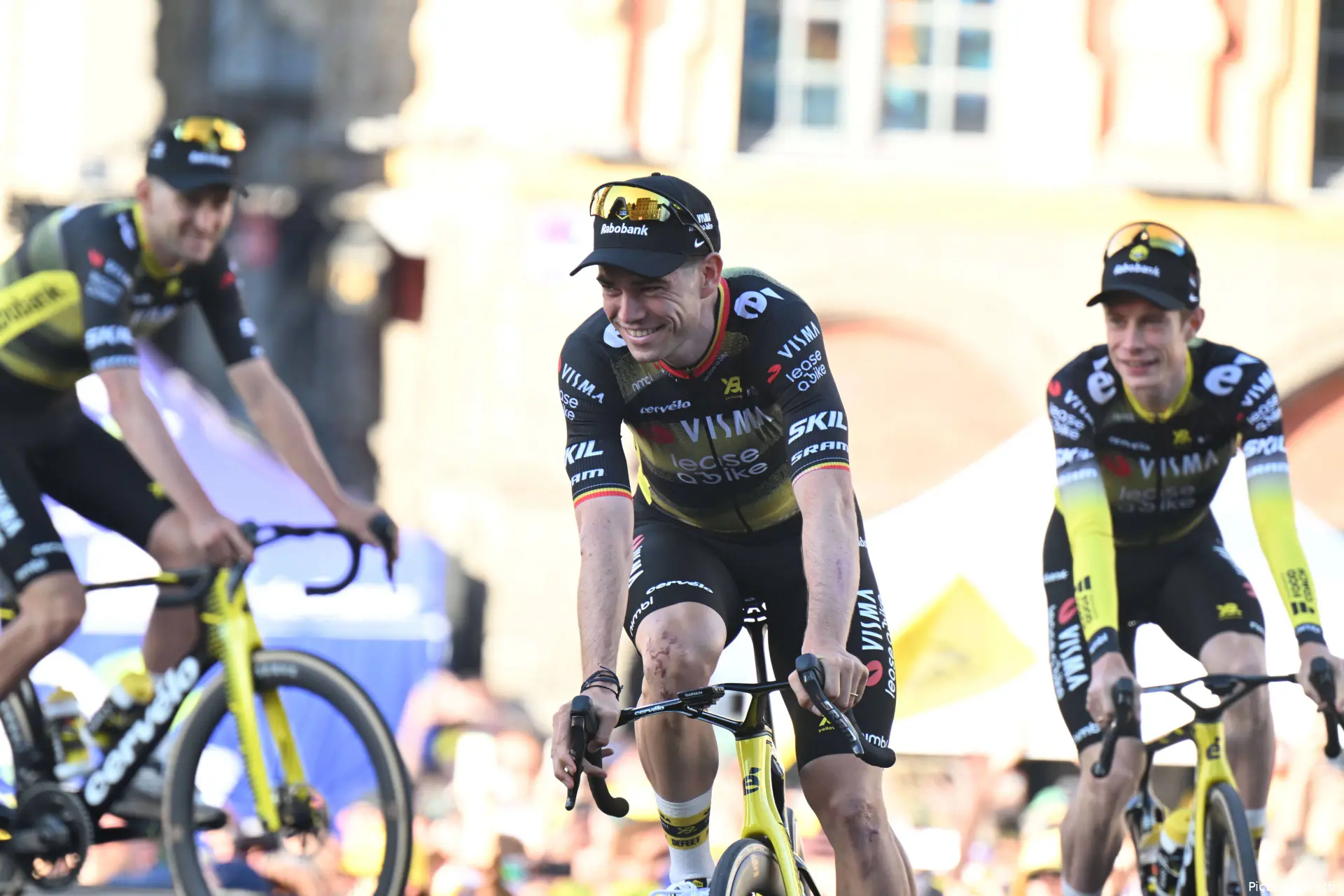
For young riders arriving at Team Visma | Lease a Bike, the shock is rarely the workload. It is the proximity.
For Francesco Baruzzi and Fabio Segatta, both 18 and newly embedded in the Dutch team’s development structure, the first weeks have brought something far more formative than watts or kilometres.
They have found themselves sharing hotels, training camps and conversations with riders they had previously only watched on television.
“It really makes you think,” Segatta admitted in conversation with Bici.Pro, reflecting on life inside a WorldTour environment that suddenly feels very close.
Proximity without intimidation
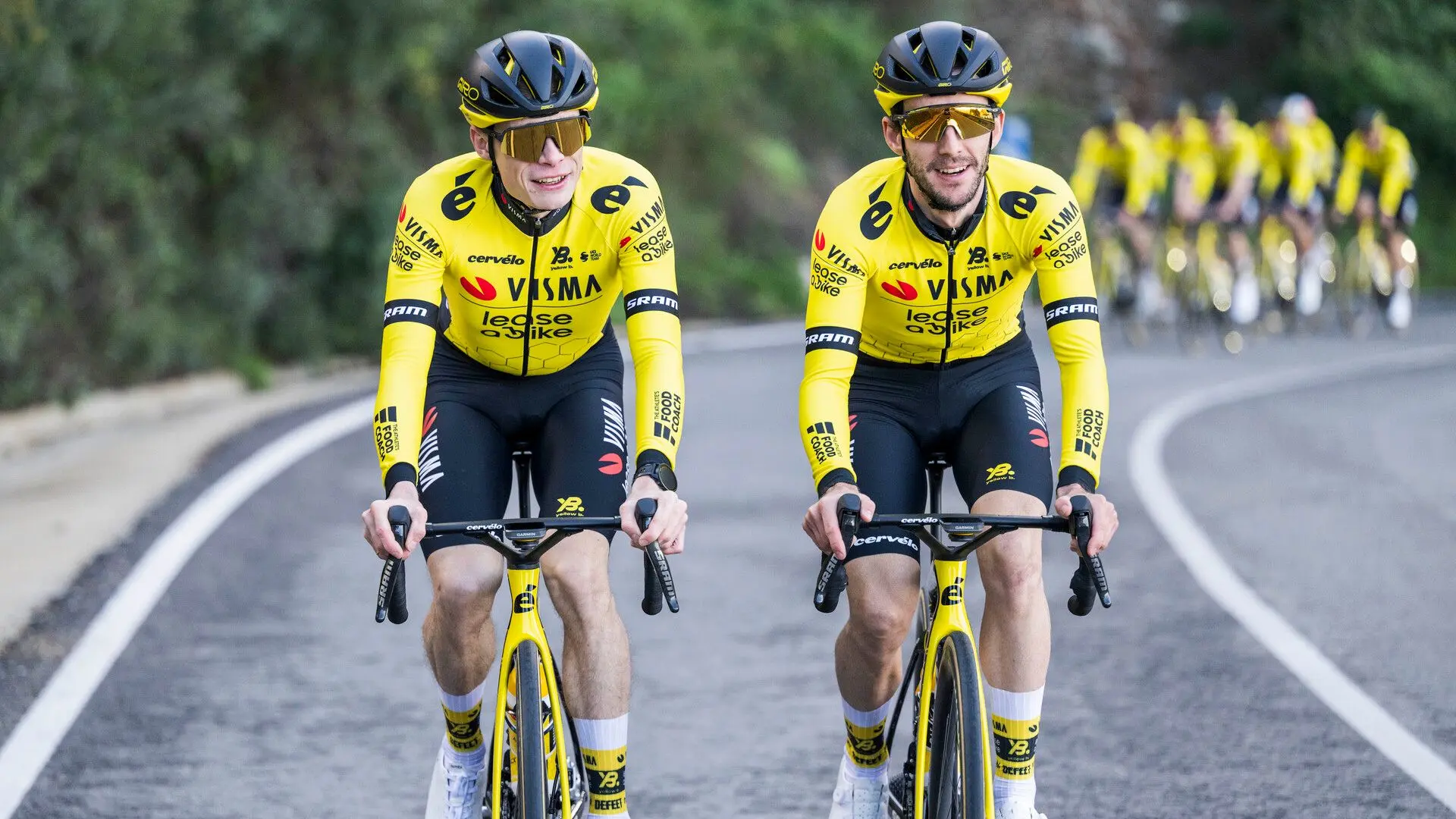
Baruzzi and Segatta’s reactions echo a familiar refrain from inside Visma this winter. Riders stepping up at different levels have repeatedly spoken not about hierarchy or distance, but about accessibility.
“Being in the hotel with Van Aert, Vingegaard, and so many champions really makes you think,” Segatta said. “It’s beautiful. Even just talking with Piganzoli and Affini is emotional. These are riders I was watching on television until yesterday, and now they’re teammates.”
Baruzzi was equally direct about the impact of that closeness. “Van Aert has always been my idol,” he said. “Seeing him and speaking to him is something that doesn’t happen every day. It’s an emotion and a memory that will stay with me forever.”
That sense of awe, importantly, is not accompanied by fear. Like other young riders who have spoken publicly about their first months inside Visma, neither Baruzzi nor Segatta describe an environment built on intimidation. Instead, they repeatedly emphasise openness.
“There’s incredible availability from everyone,” Baruzzi explained. “Staff, directors, teammates. The impact of joining a team like this is huge, but everyone helps you.”
A familiar Visma pattern
Those comments sit comfortably alongside similar testimony already heard inside the team this season.
Earlier this winter, Davide Piganzoli spoke about being surprised by how much dialogue shapes Visma’s daily work, while Matthew Brennan has described being supported into responsibility rather than shielded from it. Even riders already established in the WorldTour have highlighted how quickly newcomers are made to feel part of the structure.
For Baruzzi and Segatta, that integration has extended well beyond racing. From carefully planned travel schedules to training camps in Norway and Spain, they describe learning what it means to be a professional long before results are expected.
“Saying it sounds trivial, but we know everything,” Baruzzi said. “Where we start racing, when we travel, and when to take the plane. Even the tickets for camps arrive two months in advance. You learn a lot, even just travelling alone through airports.”
Segatta agrees. “You learn a lot. Travelling on your own is sometimes fun too. You discover new places.”
Learning the job before chasing results
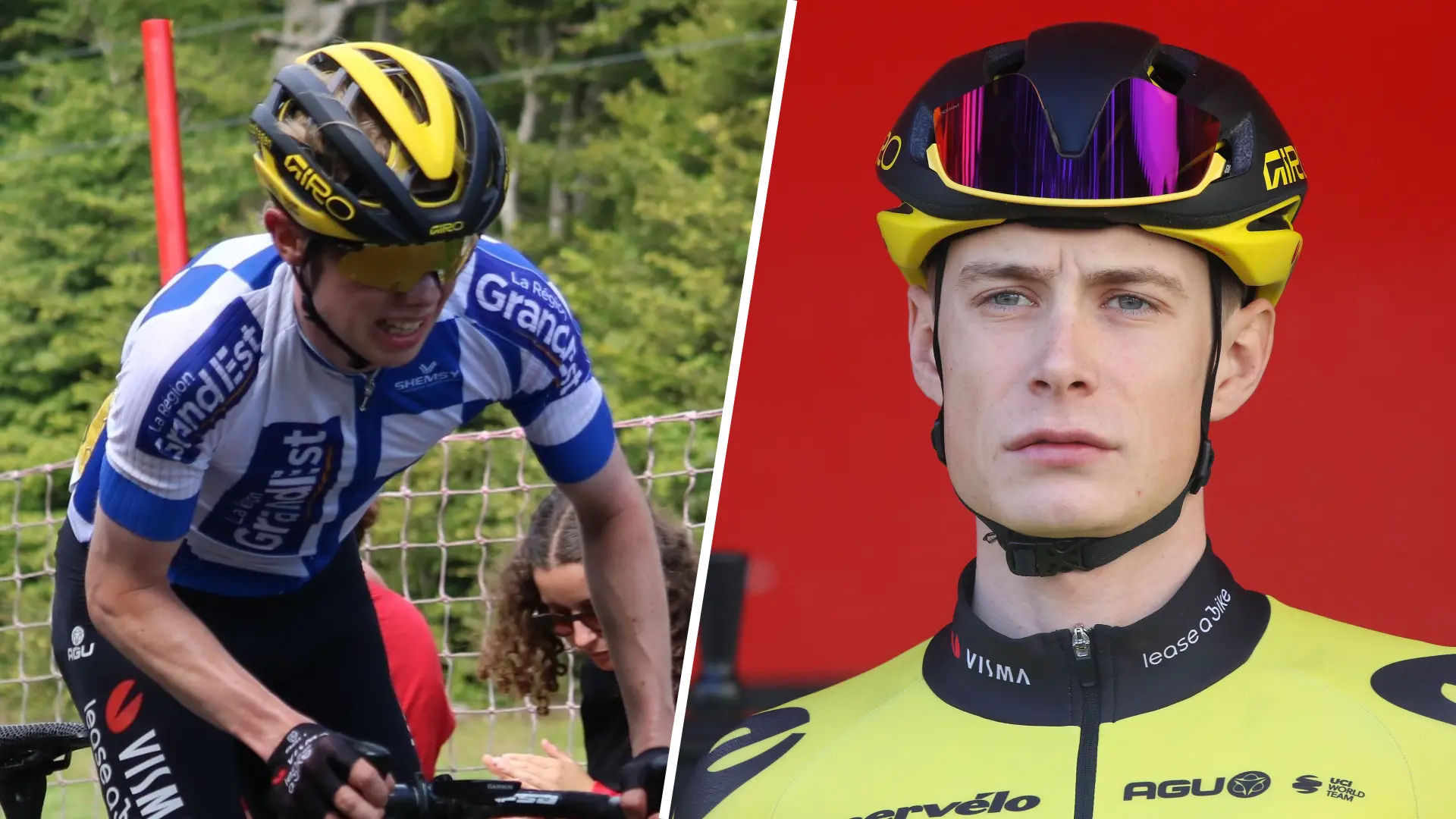
Both riders are clear that this stage of their careers is about education, not immediate success.
“Being here is a starting point,” Baruzzi said. “It means you are maybe one step higher, but that doesn’t mean there won’t be a lot of work to do. We’ll be put in the best conditions to reach where we dream of getting, which is the professional level.”
Segatta echoed that long view. “Being here means the team really believed in us. Now we have to learn and grow to make this job work and one day reach the WorldTour.”
That patience mirrors what has already been seen with other Visma prospects. The message is consistent: exposure first, responsibility later, results when the foundations are in place.
Stars as reference points, not barriers
Perhaps the clearest insight from Baruzzi and Segatta is how Visma’s biggest names function less as distant benchmarks and more as daily reference points.
“They always have a joke ready,” Baruzzi said of the senior riders. “If they see you a bit on your own, they pull you into the group.”
For teenagers arriving from junior teams, that dynamic matters. It transforms the experience from one of silent observation into active learning.
“It’s special just to wear this jersey,” Segatta added. “Even going home and training with it, people notice. It makes you proud, but it also makes you understand where you are.”
In that sense, Baruzzi and Segatta are not outliers. They are the latest voices to confirm a pattern that has already defined Visma’s development pathway this winter. The stars are present, visible and demanding, but never unreachable.
And for riders just beginning their professional journey, that may be the most important lesson of all.

Kieran WoodDeputy Editor-in-Chief
Kieran Wood is a sports journalist based in Wales and has been active in journalism since 2022. He regularly contributes to DartsNews.com and CyclingUpToDate.com, where he covers professional cycling and darts. In cycling, his work includes liveblogs from major races, including the Tour de France, the Giro d’Italia, and La Vuelta a España, alongside race reports and analysis. He has also conducted interviews with professional riders.
His reporting spans the full racing calendar, from one-day classics to stage races, with a focus on accurate, real-time coverage and clear contextual analysis. For statistics, results, and historical context, he regularly uses resources such as ProCyclingStats. To support reporting on rider activity and training context where relevant, he also references Strava.
In his work, Kieran places strong emphasis on careful sourcing, editorial accuracy, and updating articles as new, verified information becomes available.
claps 1visitors 1
Just in
Popular news
Latest comments
- Campenaerts looked like a rolling pumpkin with that all orange leaders skinsuit !frieders318-10-2026
- He can take his dumb a$$ politics somehwere else !frieders318-10-2026
- good to have her back. fingers crossed she‘ll be able to stay!Ketterechts17-10-2026
- A tenner and he wins the Tour next year, too 😂anonymouscyclist17-10-2026
- the answer is either stick to classics or GTs but not bothabstractengineer17-10-2026
- the exodus already stared with Ciccone. Already they were struggling with two sprinters, now there are three. Also Ganna will demand leadership. Gall is the most proven GC, Ayuso has the most potential. GC leadership for everybody will be impossible. Literally a UAE style mess without pogi.abstractengineer17-10-2026
- I raced as an amateur for 12 years, including six years on my country’s national road cycling team. I secured two national titles and competed in three World Championships plus more than 15 international stage races. At 23, we travelled to Italy for a training camp—or so I assumed. On a rest day, we watched a presentation about adopting a more “professional” training approach. It was crystal clear what “professional” meant. That moment first exposed me to this dilemma. After returning from Italy, I left cycling—at least at the competitive level I had known. Over the following two years, the whole team was caught doping. I hold that everyone is innocent until proven guilty. In my view, current stakeholders operate on a different scale, and the sums involved are vast. I am unsure whether any doping would ever be revealed. I try to stay positive and enjoy the show. My 2c.
 vannpelt17-10-2026
 - Fiver he wins 🤣
 leedorney17-10-2026
 - “…measures to reduce speeds.” Might as well shorten the race course to just 50km as well? ASO generates at minimum €300m a year and 30- 40% profit. Maybe stop being greedy and spend more of the profit to protect the riders instead.b3tlla17-10-2026
- he also had quite the life off the bike during his pro years. he used his celebrity status to full affect.mij17-10-2026
Loading
Write a comment