“I can learn from him. Jonas has a lot of experience” – Jorgen Nordhagen steps into Jonas Vingegaard’s shadow as Visma begin next-generation shift
Cycling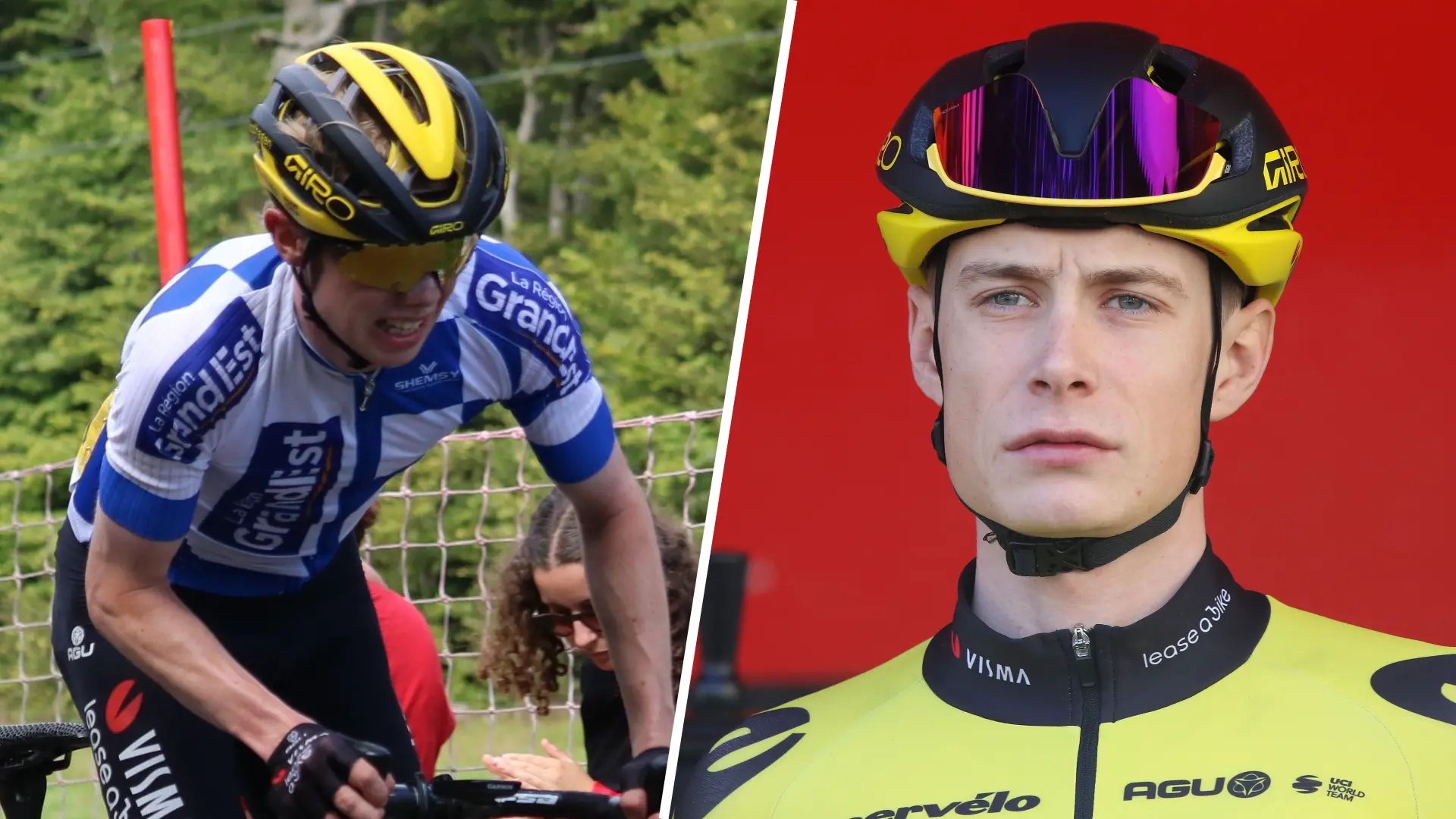
The original plan for Jorgen Nordhagen’s 2026 season was clear. The UAE Tour was meant to be the first race in which he would line up alongside Jonas Vingegaard, beginning a year designed around learning directly from Team Visma | Lease a Bike’s established GC leader. Vingegaard’s withdrawal from the race has delayed that debut pairing, but not the thinking behind it.
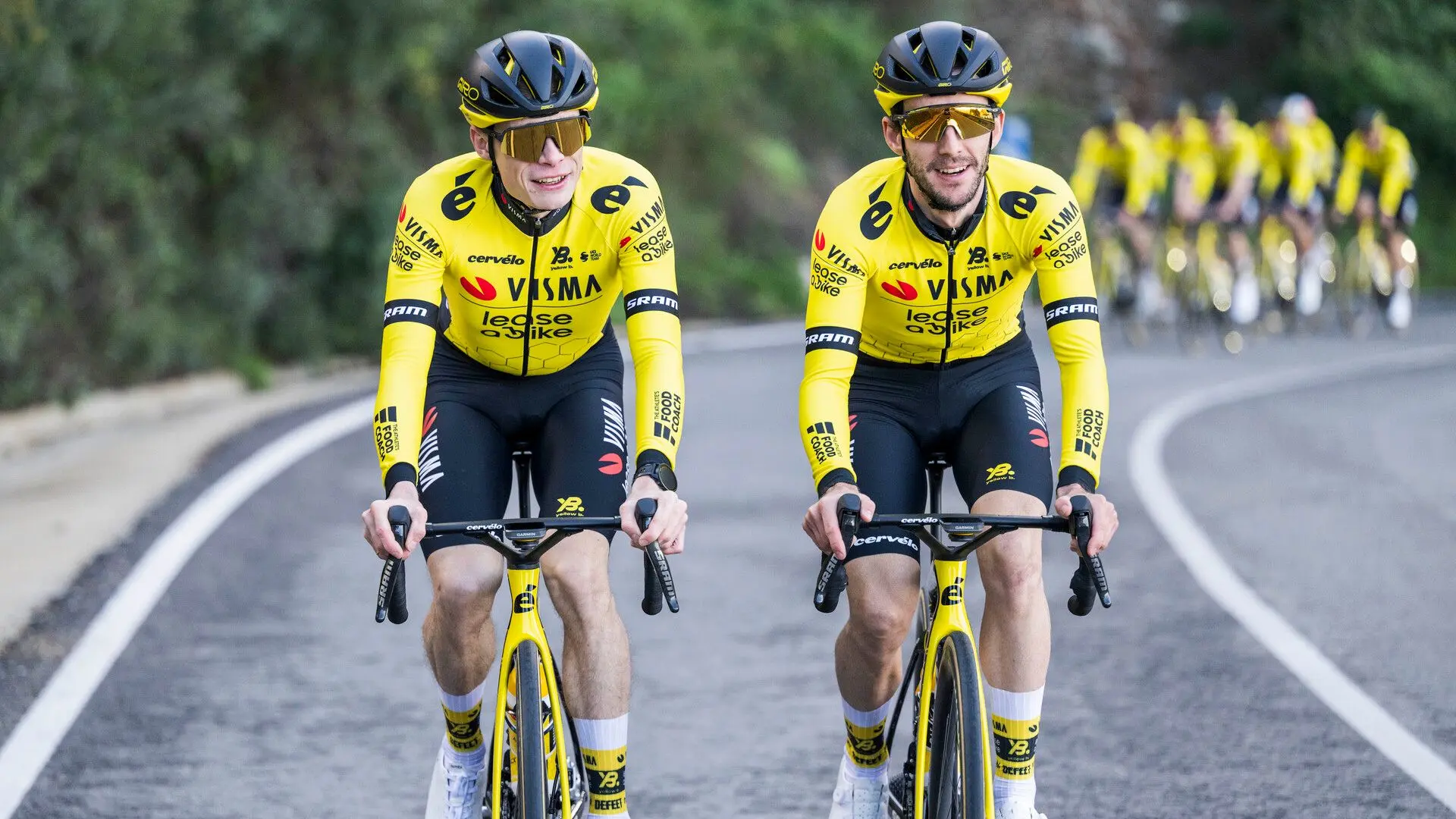
Speaking to WielerFlits, Nordhagen explained that racing alongside Vingegaard sits at the heart of how Visma have structured his season. “This year I will also race more with him,” he said.
“The idea was that we would do the UAE Tour together and then later the Volta a Catalunya," he added. "That way I can learn from him. Jonas has a lot of experience.”
That proximity, Nordhagen stressed, goes beyond simple presence in the same race. “With him in the race, we have a clear strategy and a clear role,” he continued. “It motivates me to see how Vingegaard approaches things. That, combined with races where I get opportunities for myself.”
Learning inside the race, not just alongside it
Nordhagen’s exposure to Vingegaard did not begin this season. Last year, the Norwegian was repeatedly placed in the same room as the Dane during training camps, a deliberate decision by Visma to accelerate learning through observation.
“That was done so I could learn from him,” Nordhagen explained. “This year, that continues more in the races themselves.”
How that looks on the road remains flexible. Nordhagen made clear that his role will depend on both his condition and how each race unfolds. “That depends on myself, how I feel at that moment and how the race develops,” he said. “If we go for stage wins, that offers opportunities to race openly.”
At the same time, he acknowledged where hierarchy remains clear. “Jonas is the leader,” Nordhagen said. “Maybe we then have to control the race. But if other teams do that, I hope to stay with Jonas for as long as possible.”
A calendar built around stage races
Visma’s intentions are also visible in Nordhagen’s programme. His focus in 2026 is almost exclusively on stage racing, with the classics left firmly for the future. “This season I will only ride stage races,” he explained. “I really enjoy the classics, but that is something for later.”
The possible exceptions underline how selective the approach is. “The only exceptions this year might be the European Championships and the World Championships,” he added.
That structure reflects how Visma see Nordhagen’s long-term development, particularly in races that reward sustained climbing rather than repeated explosive efforts.
Discovery rather than expectation in the Vuelta
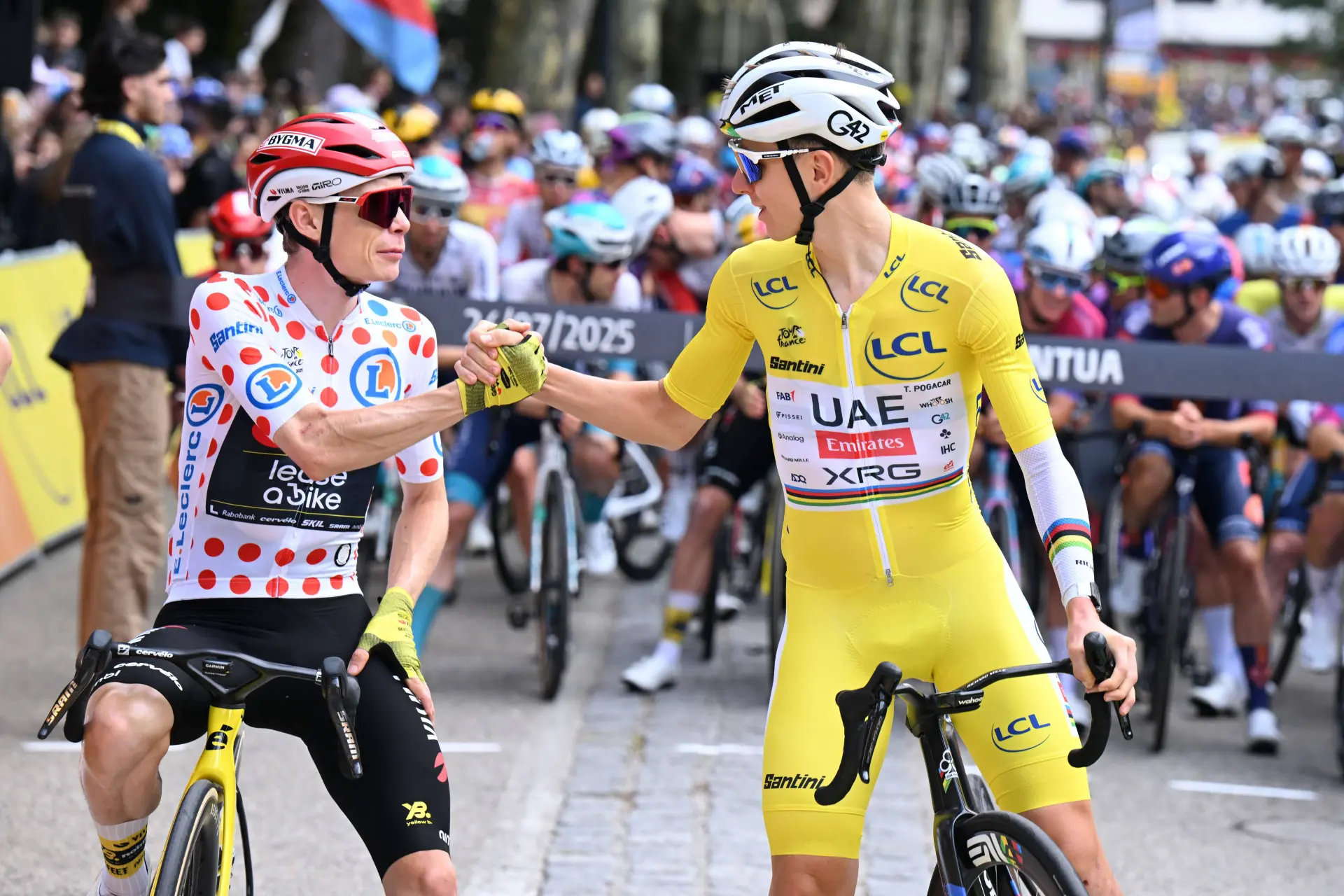
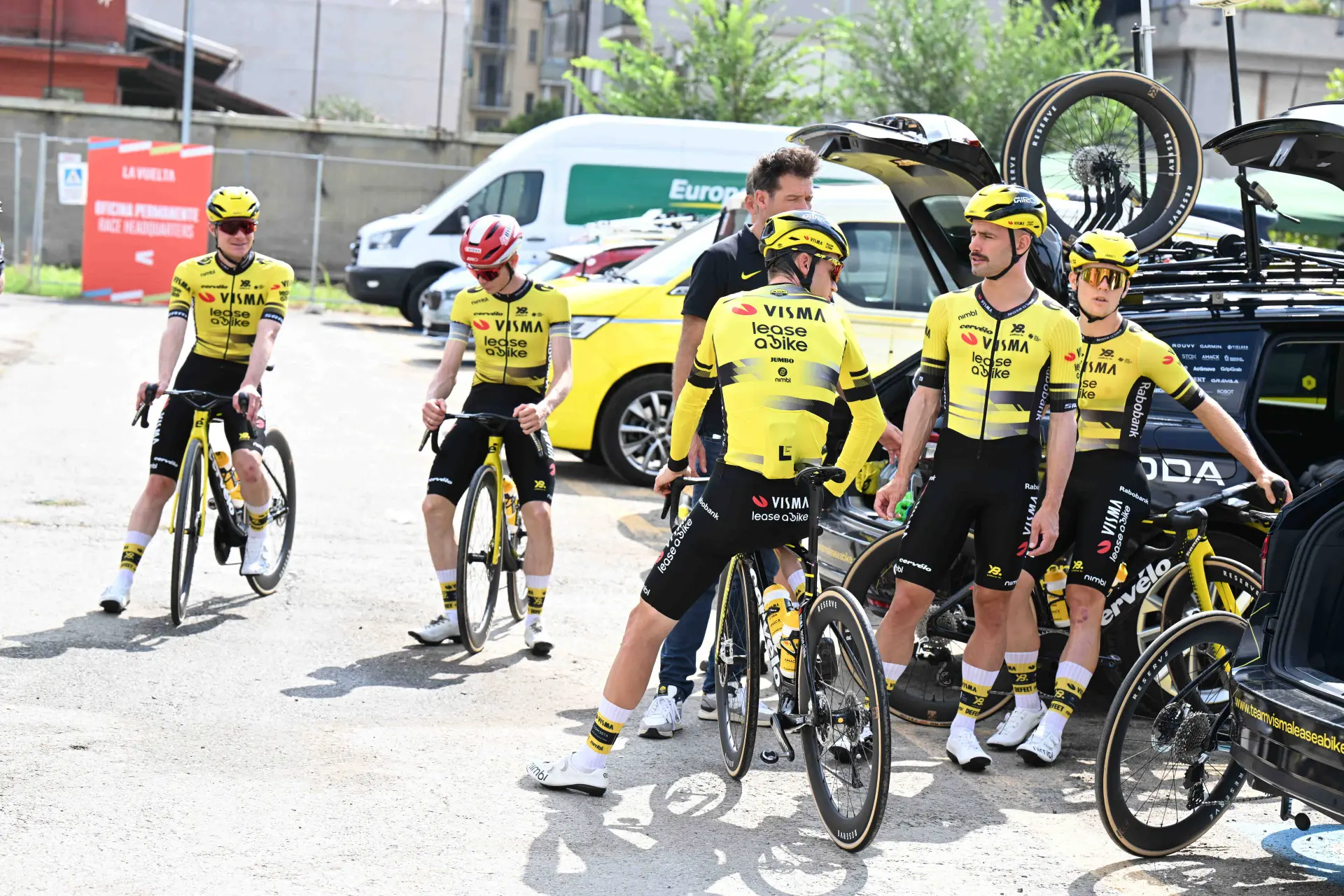
Among the key objectives of Nordhagen’s season are the Tour de Romandie and a projected debut at the Vuelta a Espana. In Spain, Visma are expected to focus on stage wins and jerseys, with experienced leaders already identified.
“We have a very strong team there,” Nordhagen said. “Stevie is also riding. We are approaching it openly. If I am in good form, there will also be good learning opportunities for me.”
At the same time, he was careful to underline the uncertainty that still surrounds any Grand Tour selection. “A lot can still happen before then,” he said. “The selection might also change. If you are not good, three weeks can become a real ordeal.”
If selected, Nordhagen expects freedom rather than pressure. “The first time riding for a classification will be tough,” he admitted. “Finishing somewhere between tenth and fifteenth would already be extremely good.”
That ambition comes with realism. “If you have one bad day, you can also change your goal during the race,” he said. “It is, above all, a great opportunity to discover a Grand Tour. I have freedom and no stress around it.”

Nordhagen in action
Three weeks as the next challenge
Nordhagen has been open about what he sees as the biggest unknown in his development. “My biggest challenge will be racing for three weeks in a row,” he said. “Last year I didn’t ride many long stage races.”
He pointed out that only the Tour de Romandie and the Tour of Guangxi offered him an extended WorldTour experience in 2025. “Those were the only WorldTour stage races longer than six days that I rode,” he explained.
Still, the preparation is familiar. “I do know the build-up to the Vuelta a little,” he said. “Last year, I was also at altitude for the Tour de l’Avenir. But I just take it day by day and see how it goes.”
Conditions, rather than expectations, are his focus. “Given the difficulty of the parcours and the heat, I simply need to make sure I am optimally prepared,” Nordhagen added.
Keeping the instinct to win
Alongside his WorldTour programme, Nordhagen remains part of Visma’s White Jersey Group, ensuring he continues to race for victories when opportunities arise.
“That’s part of staying in the game,” he said. “Statistics show that if you don’t win for a few years, you forget how to do it.”
If results do not come at the highest level, Visma have left space elsewhere. “If it doesn’t work at the top level, I still have a few smaller races on my calendar,” Nordhagen explained.
For now, he is not rushing to define where his ceiling lies. “Somewhere there is a limit,” he said. “I hope to get as close to it as possible. But I am very curious to see how this year goes.”

Kieran WoodDeputy Editor-in-Chief
Kieran Wood is a sports journalist based in Wales and has been active in journalism since 2022. He regularly contributes to DartsNews.com and CyclingUpToDate.com, where he covers professional cycling and darts. In cycling, his work includes liveblogs from major races, including the Tour de France, the Giro d’Italia, and La Vuelta a España, alongside race reports and analysis. He has also conducted interviews with professional riders.
His reporting spans the full racing calendar, from one-day classics to stage races, with a focus on accurate, real-time coverage and clear contextual analysis. For statistics, results, and historical context, he regularly uses resources such as ProCyclingStats. To support reporting on rider activity and training context where relevant, he also references Strava.
In his work, Kieran places strong emphasis on careful sourcing, editorial accuracy, and updating articles as new, verified information becomes available.
claps 2visitors 2
Just in
Popular news
Latest comments
- It is easy to celebrate those who won the grand tours and the monuments. and the world championships. What I notice more are the ones who were at the world tour and kept going on the pro tour level for that little bit longer, still wanting to ride after their bodies had aged, after their teams no longer needed them. It is good to see the domestiques. as well. Congratulations to all these folks on an impressive career, no matter the wins. Cycling is a team sport, and it’s the ones we don’t see much of that allow the leaders to stand out and win the accolades.RidesHills14-10-2026
- Biestrebos is a real sprinting talent. Initially it was thought that he'd be a classics domestíque but his sprinting has improved dramatically over the course of the year. He's the only thing going well with Picnic now and for that reason it is likely that he'll leave
 Rafionain-Glas14-10-2026
 - well this one definitely makes my STUPIDEST ARTICLES OF 2026 list. chapeau…OCexile14-10-2026
- Cyclocross is nothing without stars like MVDP, WVA, Pidcock... etc. Out of all cycling disciplines, road racing is the most popular discipline in professional cycling, especially in terms of global prestige, major-event audiences, and the historical status of its greatest riders. People that don't follow cycling as a sport have heard of Merckx, Hinault, Pantani, Armstrong, Remco, Vingegaard, MvDP, Van Aert, Pogačar etc. So if we're talking about professional cycling and the sport's most famous athletes, road racing is the clear number one. Road cycling's greatest champions are judged across such a wide scale. E.g. - Pogačar can win the Tour de France and then go after Paris–Roubaix and other prestigious one day races. These races also have a wide range of versatility: cobbles, gravel, punchy, hilly, TT. This versatility is a huge part of why road racing is No.1 in cycling. Maybe Sven Nys is a dutch cycling "legend"... but that's where it starts and ends. Ad acta.PogiSloFans14-10-2026
- “at some point those guys will turn their backs on OUR sport”? after dedicating so much of their lives to cyclocross and in mathieu’s case winning more world championships than anyone, it would seem to me like they’ve earned the right for it to be always be THEIR sport, too, even after they retire from it.OCexile14-10-2026
- It takes two to tango. Riders also have a say. Maybe they didn't see any opportunities on a stacked team such as Visma's? Who knows, but could be a multitude of reasons why deals fall through.Pogboom14-10-2026
- Eventually Pogi will get older and slower. Father Time will favor the young. The question is whether he can beat Pogi before Pogi decides to retire. You never know... Pogi may retire after winning paris-roubaix :)b3tlla14-10-2026
- i think he can continue to race for maybe another 2 years till he drops out of podium contention. With his TT and his follow the leader in the Mountains,he should not need too many teammates too.abstractengineer14-10-2026
- Aren't they still shopping around for a main sponsor for next year?wrsty14-10-2026
- How broke is visma now? wtf they cant even fight moviestar and decathlon for riders and lose both their mid targets based on their budget and they cant even get those? Crazy...:/miguel13-10-2026
Loading
Write a comment