Before epic return to the road, Pauline Ferrand-Prevot had a years-long battle with undiagnosed injury: "No one could find the cause..."
Cycling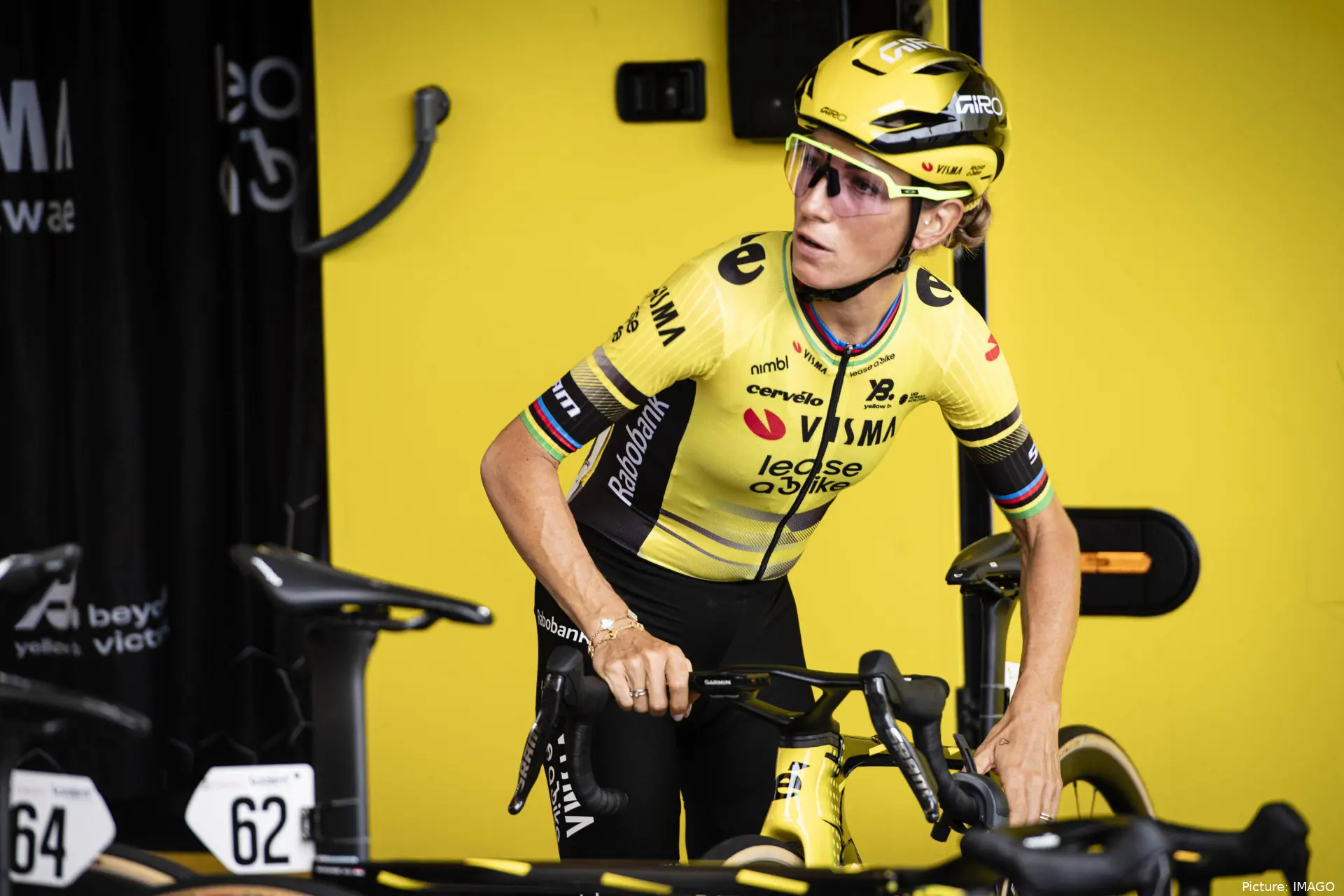
The smallest of injuries can spell disaster in pro cycling, a sport in which races are won or lost by mere seconds. Hence having an undiagnosed injury can be career-threatening at worst, and this was the case with Pauline Ferrand-Prévot. Although she is one of the very best in modern cycling, the veteran had several seasons where she was being hampered by something she didn't understand.
In 2017 and 2018 she was dealing with endofibrosis, which is the narrowing an an iliac artery - an injury more and more common to pro cyclists. She underwent two surgeries for it, at the start and end of 2019, and it proved to be a key moment in her career, even if off the bike. “Whenever I had to push beyond 70 percent of my maximum effort, I got a feeling of a ‘dead leg’, as if something was pressing on my thigh and foot,” she told L'Équipe. “During those four years I visited countless doctors and underwent many treatments, but none of them really worked.”
In the period of 2014/2015, she was briefly world champion on the road, cyclocross and mountain biking simultaneously. In 2016 she took a step back from the road, but her performance also started to suffer. It was only after her first surgery in 2019 that she got a hold of her best performances once again, winning the mountain bike world title - which she would defend successfully the next year.

Pauline Ferrand-Prévot mountain bike in the colours of France

A psychological battle until the diagnosis
The Frenchwoman's coach Barry Austin didn't know at the time what the issue was, but believed it was physical. However this was not the case with everyone in her circle. “No one could find the cause, so they concluded it must be psychological," he explains. "I told her: ‘I believe you'. In the end we found the cause by consulting doctors who were not cycling specialists. I went to doctors from other sports, because they have a more open perspective.”
That ultimately proved to be the solution, which ended up saving her career. She won the MTB worlds four times as well as winning the Olympic Games race in Paris; became Gravel World Champion and in 2025 made a glorious return to the road where she won Paris-Roubaix Femmes and the Tour de France Femmes, bringing glory to the French.
“In cycling, when several people say the same thing, you often immediately assume that must be the explanation. But when we met this doctor, a former rugby player, he acted as if he knew nothing about cycling. He focused on the injury, listened to the athlete and developed a plan. We were incredibly lucky," Austin concluded.


Rúben SilvaEditor-in-Chief
A founding contributor to CyclingUpToDate since its launch in January 2022, Ruben Silva has played a central role in shaping the site’s editorial direction and long-term growth. Before joining the project, he built his experience through independent blogging at Echelons Hub and by producing race previews for Ciclismo Internacional, developing a strong analytical voice rooted in daily engagement with professional cycling.
Beyond editorial work, he has been closely involved in the expansion and coordination of CyclingUpToDate’s wider network, helping establish and support sister platforms across multiple languages. This includes ongoing collaboration with CiclismoAlDia (Spanish), CiclismoAtual (Portuguese), WielrennenUpToDate (Dutch), and RadsportAktuell (German), contributing to a shared editorial vision and consistent international coverage.
He also helps oversee editorial governance across the network, setting standards for accuracy and consistency and coordinating updates or corrections when needed.
Originally from the Porto metropolitan area in Portugal, he holds a bachelor’s degree in Geography. His path into cycling journalism was shaped not through formal media training, but through independent reporting, community engagement, and sustained on-the-ground involvement in the sport.
Over the course of his career, he has conducted approximately 100 interviews across road cycling and cyclocross, ranging from one-to-one conversations and online formats to press conferences and on-site pre- and post-race coverage. His interviews include leading riders, team managers, and prominent figures within cycling media: Tadej Pogacar, Jonas Vingegaard, Mathieu van der Poel, Primoz Roglic, Wout van Aert, Joao Almeida and Tom Pidcock; managers like Patrick Lefevere and Joxean Matxin; and YouTube personality Bryan Kennedy (BKXC)...
Within 18 months of launch, he helped grow CyclingUpToDate’s English-language platform into one of the most-read cycling news websites, built entirely from the ground up. As both a professional journalist and lifelong cycling enthusiast, his focus remains on delivering accurate, timely, and well-contextualized coverage.
claps 3visitors 3
Just in

Popular news
Latest comments
- writing about yourself in third person ... please, at least have someone else from your staff author these self-coverage articles!Ketterechts25-11-2026
- Don’t forget Yates’s podium at 2023 TdF!Lozza25-11-2026
- It was stage 14 to Morzine that Carlos Rodriguez won in 2023, not Puy de Dome. And Kwiato actually won the previous stage himself to Grand Colombier!Lozza25-11-2026
- Go Pogi!! 🐐❤️Lozza25-11-2026
- They didn’t have or need “extraordinary information”. All they needed was for a French judge to sign off on the night-time testing for it to go ahead.Lozza25-11-2026
- If the sponsors voted for Primoz then you get him, otherwise not.flyer25-11-2026
- It sure can feel or seem that way but I wonder if the same amount of prodigious performances (compared to the others) would occur if no one was ever doping at all.flyer25-11-2026
- Given the similarity of two articles (published on I think the same date), I'm reusing (copy-n-pasting) my post from the twin: I've always thought the last day of each of the grand tours was problematic mostly in that the GC is considered completed before the race starts when that is not really true. There is some tension, but not desirable tension. What saves the awkward practice is the race finish is legit for those who participate - so it's not wholly different from the other stages. That neutralizations usually make good sense demonstrates their necessity so if that has to be the way to go I agree that the design plan for the neutralization should be completed before the race starts. This years end stage in the Vuelta had one of the best first half's I've seen in that many of the riders looked to be thoroughly enjoying themselves making it a joy to watch. But I think it was slightly closer to the exception rather than the rule.flyer25-11-2026
- Even I often win without being there at all, not even breaking a sweat. Beat that!flyer25-11-2026
- It is not about rest and peaking again - 5 weeks is not enough for that. It is about recovery while maintaining form. 4 weeks is easier for that. With a Giro-Vuelta, the 12 week break is enough to rest and then peak again. Not for the Tour
 Rafionain-Glas25-11-2026
Loading
Write a comment