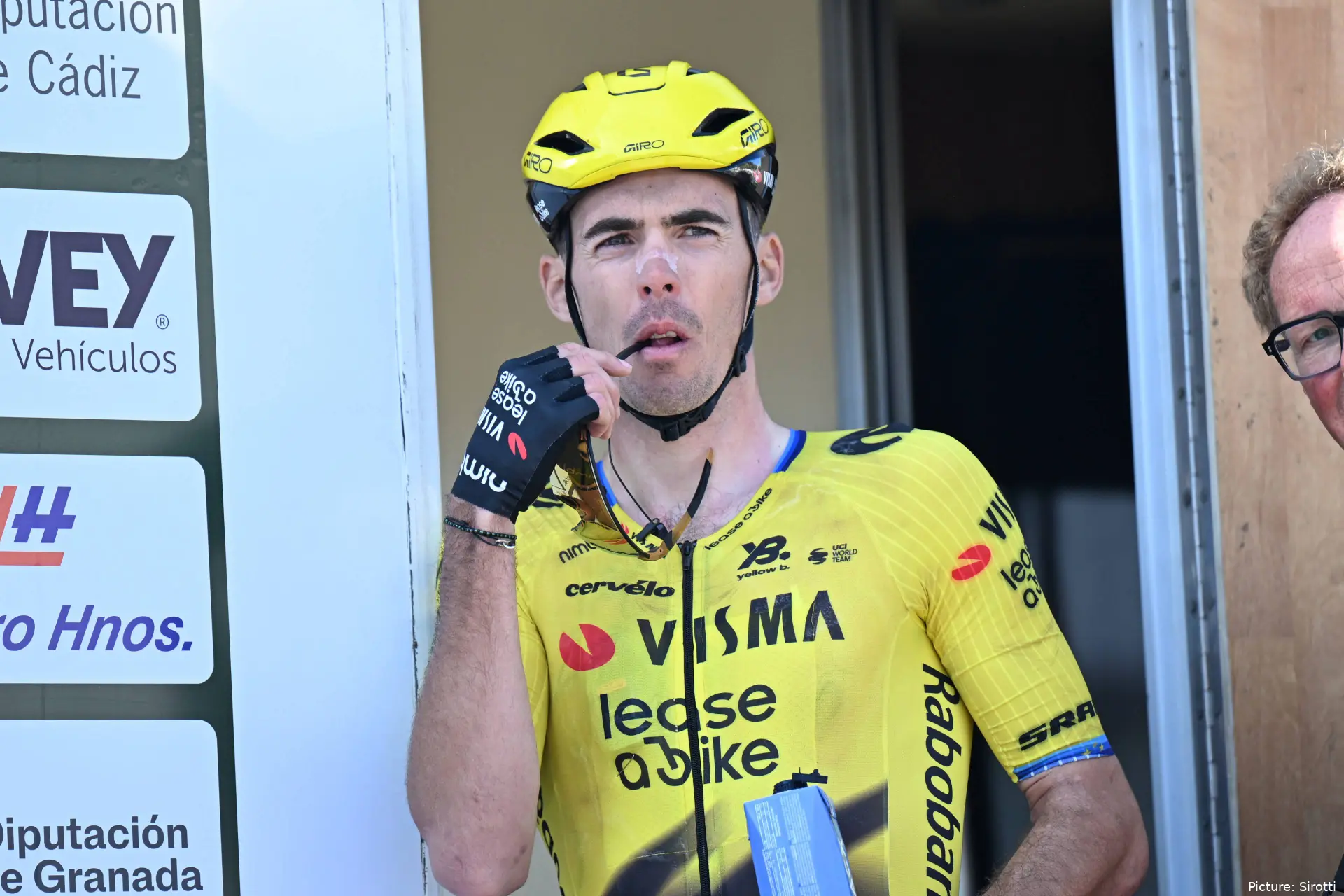
Christophe Laporte will not start Le Samyn on the very day Team Visma | Lease a Bike had hoped to turn the page on a disrupted opening to 2026.
Wout van Aert’s long-awaited return to racing was meant to reset the narrative. Instead, hours before the Belgian one-day race, the team confirmed via social media: “Unfortunately, Christophe Laporte will not be at the start of Le Samyn. He's not feeling 100% fit.”
It is not a dramatic withdrawal. There is no confirmed crash or serious injury. But in the context of Visma’s first two months of the season, it feels painfully familiar.
Another interruption on a key day
Laporte’s absence matters. The Frenchman is one of the team’s most reliable Classics operators, capable of both protecting Van Aert deep into a race and finishing strongly himself in selective sprints. On a cobbled course like Le Samyn, that depth is not a luxury. It is part of the structure.
Instead, Visma line up lighter than planned on a day already heavy with expectation.
Van Aert’s return alone carries significance. His winter was derailed by an ankle fracture and subsequent surgery, before illness forced him to miss Opening Weekend. Le Samyn was supposed to mark a clean restart. Now, even that comes with a caveat.
Read also
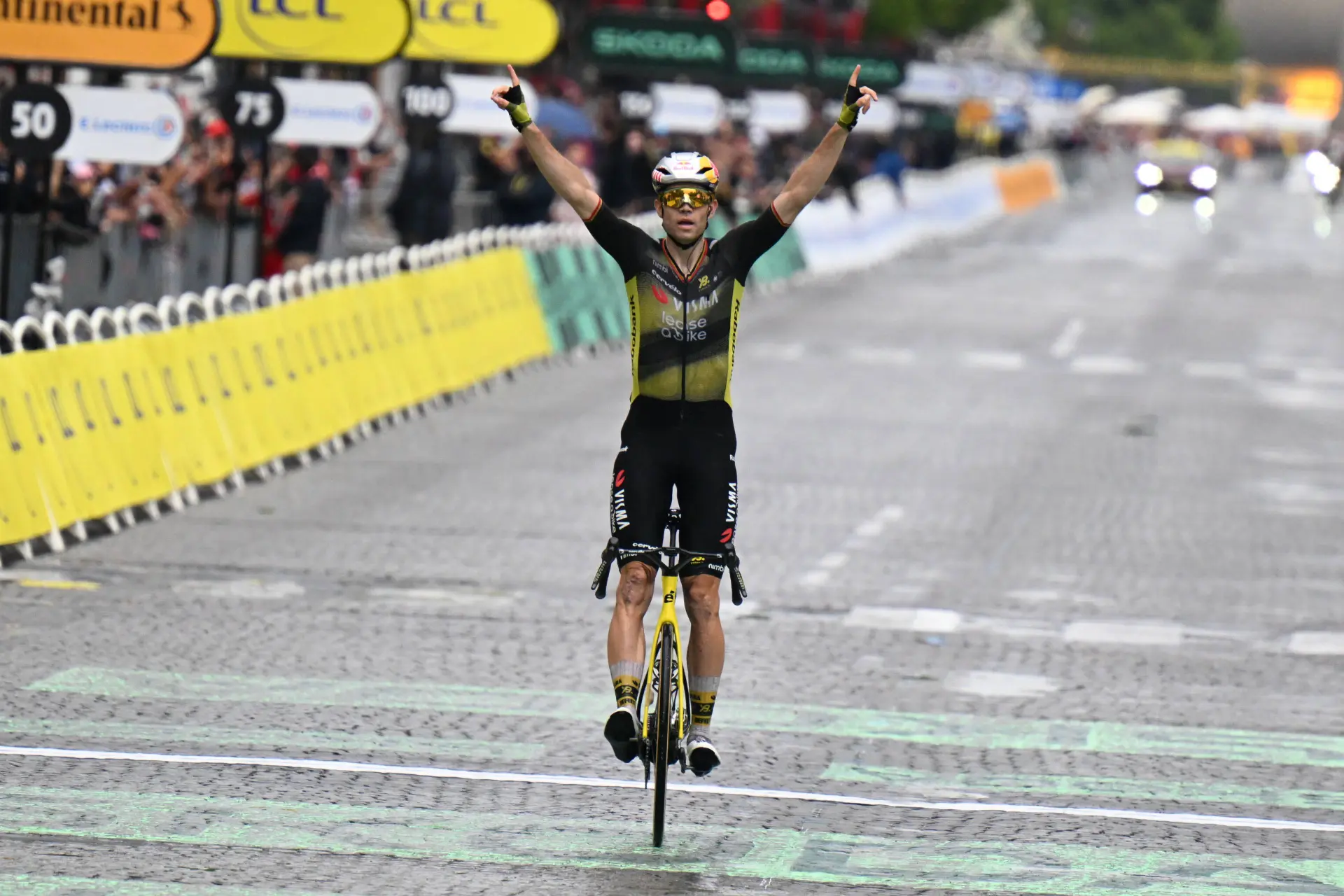
A season of poorly timed setbacks
Laporte’s late absence slots into a broader pattern that has shaped Visma’s early 2026 campaign.
Jonas Vingegaard saw his own build-up disrupted by a training crash in Spain and subsequent illness that delayed his season debut. Sepp Kuss was forced out of the Tour of Oman due to illness. Laporte himself abandoned at Ruta del Sol after a crash. Matthew Brennan crashed at Omloop Het Nieuwsblad before producing an immediate response at Kuurne Brussel Kuurne.
None of these incidents alone defines a season. Together, they have repeatedly broken momentum at key moments.

Christophe Laporte puts on the Yellow Jersey after winning stage 1 of the 2026 Vuelta a Andalucia
For a team that built its recent dominance on precision planning and collective strength, the timing has been particularly damaging. Leaders have struggled to string together uninterrupted preparation blocks. Supporting riders have missed key race days. Tactical cohesion has been tested earlier than expected.
Le Samyn was meant to be about Van Aert’s comeback. It still is. But once again, Visma arrived at a Belgian cobbled start line adjusting to circumstances rather than executing a clean plan.
In isolation, Laporte not feeling fully fit is minor. In the context of 2026 so far, it reinforces a narrative that refuses to go away.

Kieran WoodDeputy Editor-in-Chief
Kieran Wood is a sports journalist based in Wales and has been active in journalism since 2022. He regularly contributes to DartsNews.com and CyclingUpToDate.com, where he covers professional cycling and darts. In cycling, his work includes liveblogs from major races, including the Tour de France, the Giro d’Italia, and La Vuelta a España, alongside race reports and analysis. He has also conducted interviews with professional riders.
His reporting spans the full racing calendar, from one-day classics to stage races, with a focus on accurate, real-time coverage and clear contextual analysis. For statistics, results, and historical context, he regularly uses resources such as ProCyclingStats. To support reporting on rider activity and training context where relevant, he also references Strava.
In his work, Kieran places strong emphasis on careful sourcing, editorial accuracy, and updating articles as new, verified information becomes available.
claps 0visitors 0
Just in
Popular news
Latest comments
- Davide Piganzoli said: "Pogacar looked less brilliant at TDF than usual." We all see how stupid this comment is. What is happening to his brain cells? ... Hey Piganzoli, Tadej Pogačar’s record breaking ascent of Alpe d’Huez was one of the standout performances in the history of the Tour de France. Pantani's 1995 ascent stood for 31 years. Pogi went more than a minute faster. He accelerated near the foot of the climb, despite the leading breakaway being around three and a half minutes ahead. But in your delusional brain Pogi looked less brilliant???? .... Why don't you go find a corner and bang your head against a wall for about 10 minutes. Everyone is making fun of you.PogiSloFans16-10-2026
- MTB WC ? If he doesnt compete maybe allows MvDP to have a crack
 Davide16-10-2026
 - Jonas is declining now. A podium next year would be a good result for him.Renz16-10-2026
- unpredictability is not an issue. Most riders not named Pogi have that. The excuses are and the blaming teammates and other riders for insufficient support and blocking are. if weight is an issue get a nutritionist. If aircon is not working switch rooms. Position yourself or get your teammates and DS to keep reminding you of basic stuff if it is difficult to remember in a long race. Dont whine about other riders not working with you, use tactics yourself or get your DS to develop the tactics. Dont talk about noballs when you yourself have no ballsabstractengineer16-10-2026
- It’s worth remembering that cycling journalism has entered it’s “Shit-Stirring Hot Takes Winter” now in order to keep the clicks and views trickling in.wrsty16-10-2026
- Well that would be a major disappointment. The last two years are the first times I have bothered watching the last day. Maybe at worst it could be the 2nd last day but two classic finishes and then wompWaranga16-10-2026
- Vingegaard was the one showing signs of weakness. He was looking more likely to lose a podium spot or two than to make inroads on Tadej.Papijan16-10-2026
- Disagree with Ardennes, he has never done well there, not even a top 10. Giro Vuelta, avoid the stacked TDF where crashes can derail the rest of the season and even if he avoid that, at best a top 5 is possible. He is 31, no more time left for testing/trying.abstractengineer16-10-2026
- Respectfully disagree. He and the team will want to qualify the result at the Tour against TP, JV, and the other GT specialists who weren't in Spain. And remember, the team is looking for a new title sponsor. Or, at least a co-sponsor. So a run at the TDF would go a long way in securing that! As a fan of the team dating back to the Indurain days, I would love to see it. But I do not think that he can really take it to them in July. But I do think he will try. I do agree that he can do good rides, if not win, in Belgium.coachjulianx16-10-2026
- Kid, you just had to keep your mouth shut, now you opened it and it's too late, everyone knows you're dumb.elosanjos16-10-2026
Loading

🇧🇪 #LeSamyn Unfortunately, Christophe will not be at the start of Le Samyn. He's not feeling 100% fit.

Write a comment