"No, I’m not boring" - Brennan talks about the reason why he didn’t drink a single sip of beer in Kuurne
Cycling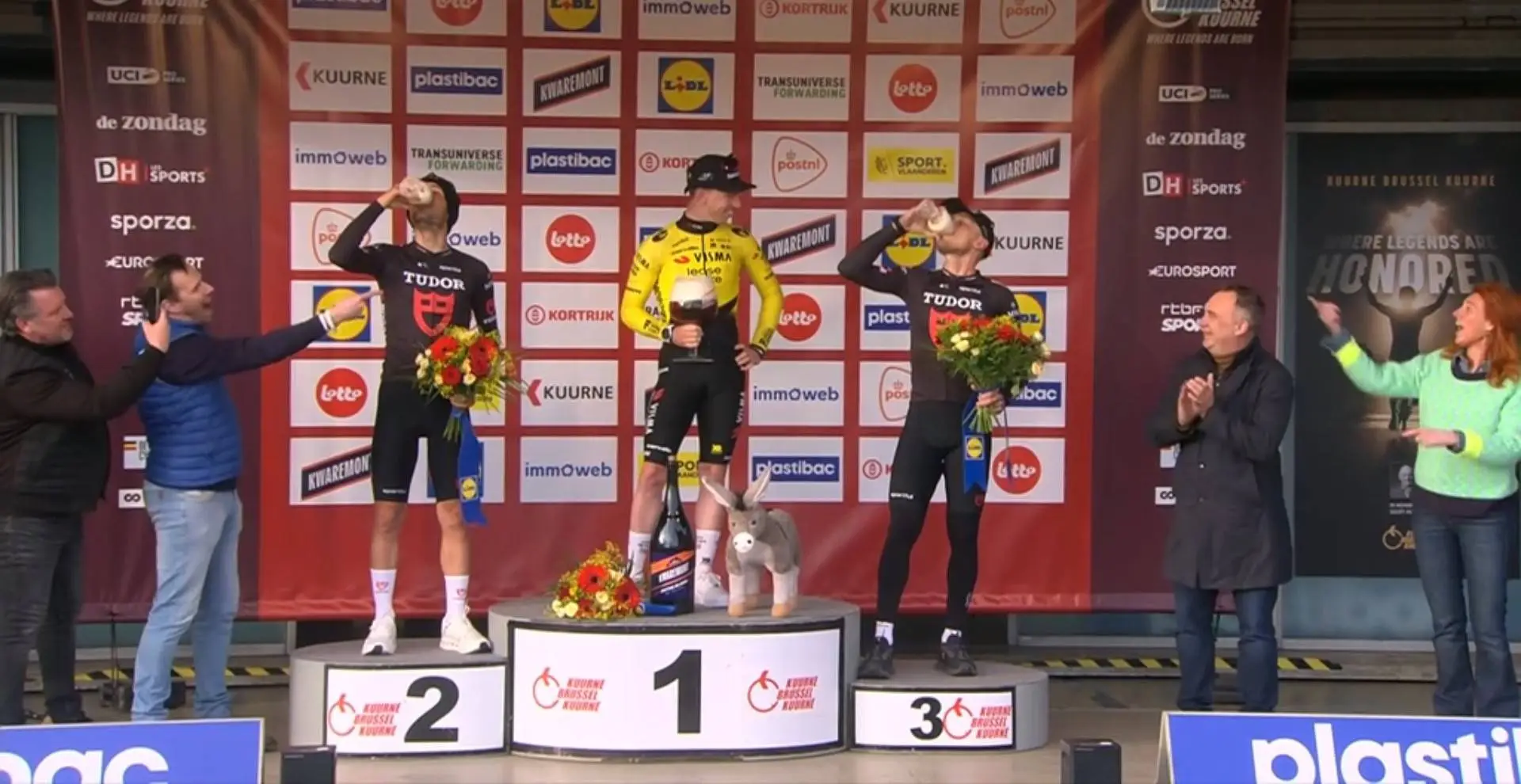
This weekend marked the start of the first Spring Classics on the road, with Omloop Het Nieuwsblad on Saturday and Kuurne – Bruxelles – Kuurne on Sunday, two races that traditionally open the cobbled season.
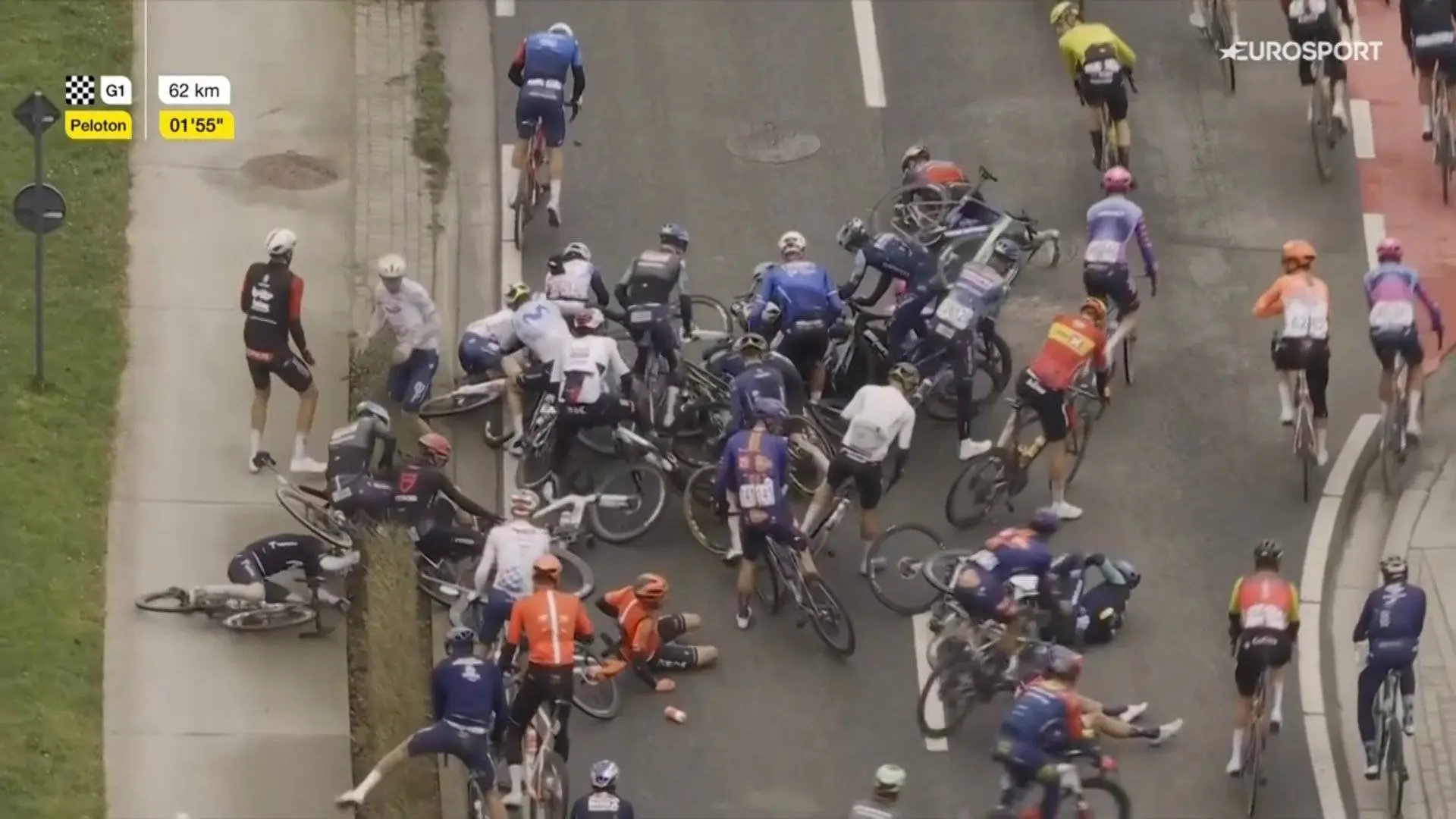
After a long and demanding day of around 195 kilometres, the race finishing in Kuurne delivered virtually all the typical ingredients of this phase of the calendar: crashes, strong crosswinds causing echelons, punctures and constant tension in the run-in to the decisive sectors. It was an intense, nervous and selective edition in which every moment had the potential to shape the outcome.
A race for sprinters
With a start list packed with sprinters and riders capable of animating the race if it split apart, several scenarios were on the table.
A bunch sprint was possible, but so too was a reduced-group finish after wind-induced splits. The puzzle could prove simple or complex, everything depended on the teams’ tactical reading, the form on display and the ability to anticipate key moments.
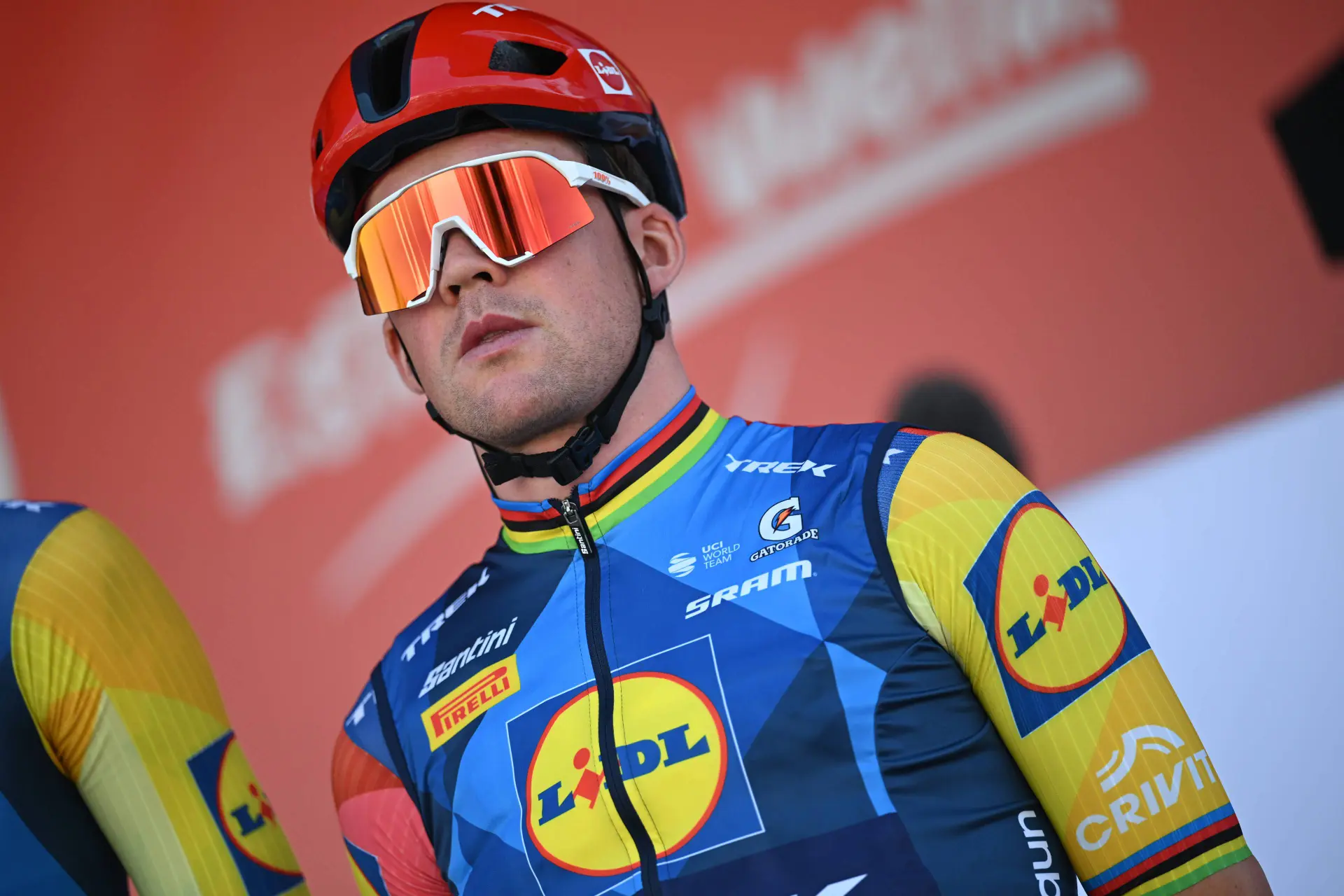
Team Visma | Lease a Bike were among the most active formations. Always alert when splits appeared in the peloton, they kept Christophe Laporte and Matthew Brennan well positioned at the front of the race. In the finale, they executed an effective lead-out that launched Brennan into the decisive sprint. The young Brit only had to accelerate in the final 100 metres to open a clear gap and seal an emphatic victory.
On the podium, Brennan was joined by two riders from Tudor Pro Cycling Team: Luca Mozzato, who turned 28 on February 15, and Matteo Trentin, the most experienced of the trio at 36.
Once the usual rituals were completed, with the presentation of the traditional flower bouquets and the symbolic donkey awarded to the winner, it was time for beer, a deeply rooted tradition in Belgian races. Mozzato and Trentin received a standard glass, while Brennan was handed a large beer goblet reserved for the winner.
Taking a sip is part of the protocol. The Italians followed tradition without hesitation, but Brennan merely looked at his fellow podium finishers. On social media and among some analysts, speculation began to circulate about possible rigidity within the Dutch setup, suggesting the rider might have been advised not to drink.

Matthew Brennan briefly led the Young Rider Classification at the 2026 Tour Down Under
Beer? The reason and the explanation!
The response came quickly. Speaking to Cycling Pro Net, Brennan clarified the situation: “No, I’m not boring. I’m celiac, so I can’t have gluten. And if I had that, then the season would be over for me. Which, yes, is a shame, because it’s always part of the moment. But unfortunately, I’d like to try to win more bike races this year.”
The victory at Kuurne – Bruxelles – Kuurne came just one day after the Brit had been involved in a crash at Omloop Het Nieuwsblad, adding an extra challenge to his recovery, already conditioned by a strict diet. “Yesterday I crashed quite hard,” he said. “I came to the start line today quite nervous about what was going to happen.”
Brennan does not hide his clear ambitions for the major Spring Classics. “That’s the ambition and that’s the development path we’d like to follow,” he said about his progression in the cobbled races.
The Classics campaign spans different regions, organisers and countries, and each race day brings new risks, including extra care regarding nutrition. The Brit was keen to highlight the role of the team structure in his growth, stressing that “they create the environment that I can use to build that.”
On a weekend that officially launched the Classics season, Kuurne–Brussels–Kuurne delivered more than just a winner. It confirmed Brennan’s emerging talent and underlined the collective strength of Team Visma | Lease a Bike.
Carlos Silva is a writer for CyclingUpToDate.com, where he contributes race reports, interviews, analysis pieces, and live coverage of the international cycling calendar. Holding a degree in Sports from the Jean Piaget Institute, he combines academic knowledge of performance, training, and competition with hands-on journalism experience in professional cycling.
Throughout his career, Carlos has conducted interviews with leading figures in the sport, including Alberto Contador, Joaquim Rodríguez, Óscar Pereiro, João Almeida, Isaac del Toro, Derek Gee, John Degenkolb and Geraint Thomas. These conversations reflect direct engagement with Grand Tour winners, Classics specialists, and emerging talents.
He has provided on-site coverage at major events ranging from the Vuelta a España to the Tour de France, alongside stage races such as Vuelta a Andalucía, Volta ao Algarve, Volta a Portugal and O Gran Camiño. Covering the mythical climbs of the Giro d'Italia remains one of his professional ambitions.
Carlos is responsible for liveblog coverage of all major WorldTour races and beyond, including the Tour de France, Giro d'Italia and Vuelta a España. His reporting integrates verified data from ProCyclingStats to ensure statistical accuracy, contextual depth, and analytical precision.
A lifelong cycling enthusiast, he approaches storytelling across written, photographic, and video formats with a focus on credibility, tactical insight, and informed race interpretation.
claps 3visitors 2
Just in

Popular news
Latest comments
- writing about yourself in third person ... please, at least have someone else from your staff author these self-coverage articles!Ketterechts25-11-2026
- Don’t forget Yates’s podium at 2023 TdF!Lozza25-11-2026
- It was stage 14 to Morzine that Carlos Rodriguez won in 2023, not Puy de Dome. And Kwiato actually won the previous stage himself to Grand Colombier!Lozza25-11-2026
- Go Pogi!! 🐐❤️Lozza25-11-2026
- They didn’t have or need “extraordinary information”. All they needed was for a French judge to sign off on the night-time testing for it to go ahead.Lozza25-11-2026
- If the sponsors voted for Primoz then you get him, otherwise not.flyer25-11-2026
- It sure can feel or seem that way but I wonder if the same amount of prodigious performances (compared to the others) would occur if no one was ever doping at all.flyer25-11-2026
- Given the similarity of two articles (published on I think the same date), I'm reusing (copy-n-pasting) my post from the twin: I've always thought the last day of each of the grand tours was problematic mostly in that the GC is considered completed before the race starts when that is not really true. There is some tension, but not desirable tension. What saves the awkward practice is the race finish is legit for those who participate - so it's not wholly different from the other stages. That neutralizations usually make good sense demonstrates their necessity so if that has to be the way to go I agree that the design plan for the neutralization should be completed before the race starts. This years end stage in the Vuelta had one of the best first half's I've seen in that many of the riders looked to be thoroughly enjoying themselves making it a joy to watch. But I think it was slightly closer to the exception rather than the rule.flyer25-11-2026
- Even I often win without being there at all, not even breaking a sweat. Beat that!flyer25-11-2026
- It is not about rest and peaking again - 5 weeks is not enough for that. It is about recovery while maintaining form. 4 weeks is easier for that. With a Giro-Vuelta, the 12 week break is enough to rest and then peak again. Not for the Tour
 Rafionain-Glas25-11-2026
Loading
3 Comments