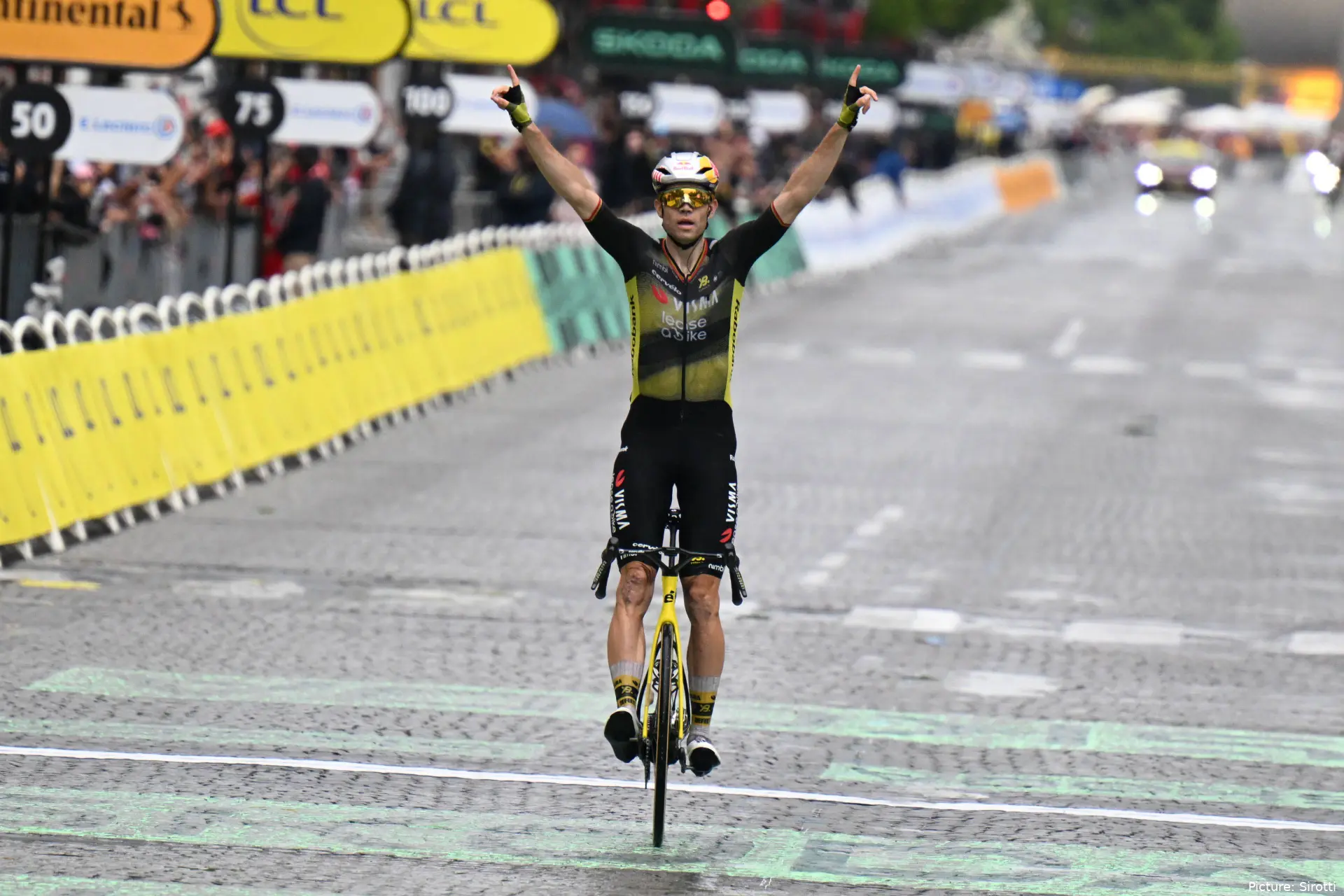
I keep debating with myself about where Wout van Aert stands
heading into 2026. Injured is probably the best way to describe his current
predicament, but he seems relatively upbeat in his recent interviews. When Van
Aert so positively about races like the Tour of Flanders and Paris-Roubaix, he
sounds like a rider who still believes, not one easing himself toward the exit.
This is now the third year in a row in which an injury has
bent his career arc. He crashed twice badly in 2024, spent much of 2025
rebuilding from those injuries, and now, in early 2026, he is again dealing
with the fallout from another crash, this time in cyclocross. He is 31 years
old, has not won a Monument in six years, and lives in the same era as a rival
whose palmarès is already historic. The question is no longer whether Van Aert
is great. Of course he is. The question is whether greatness, at this point,
can still translate into the wins that define careers.
“Always feeling at home”
He does not frame his situation in terms of decline, and
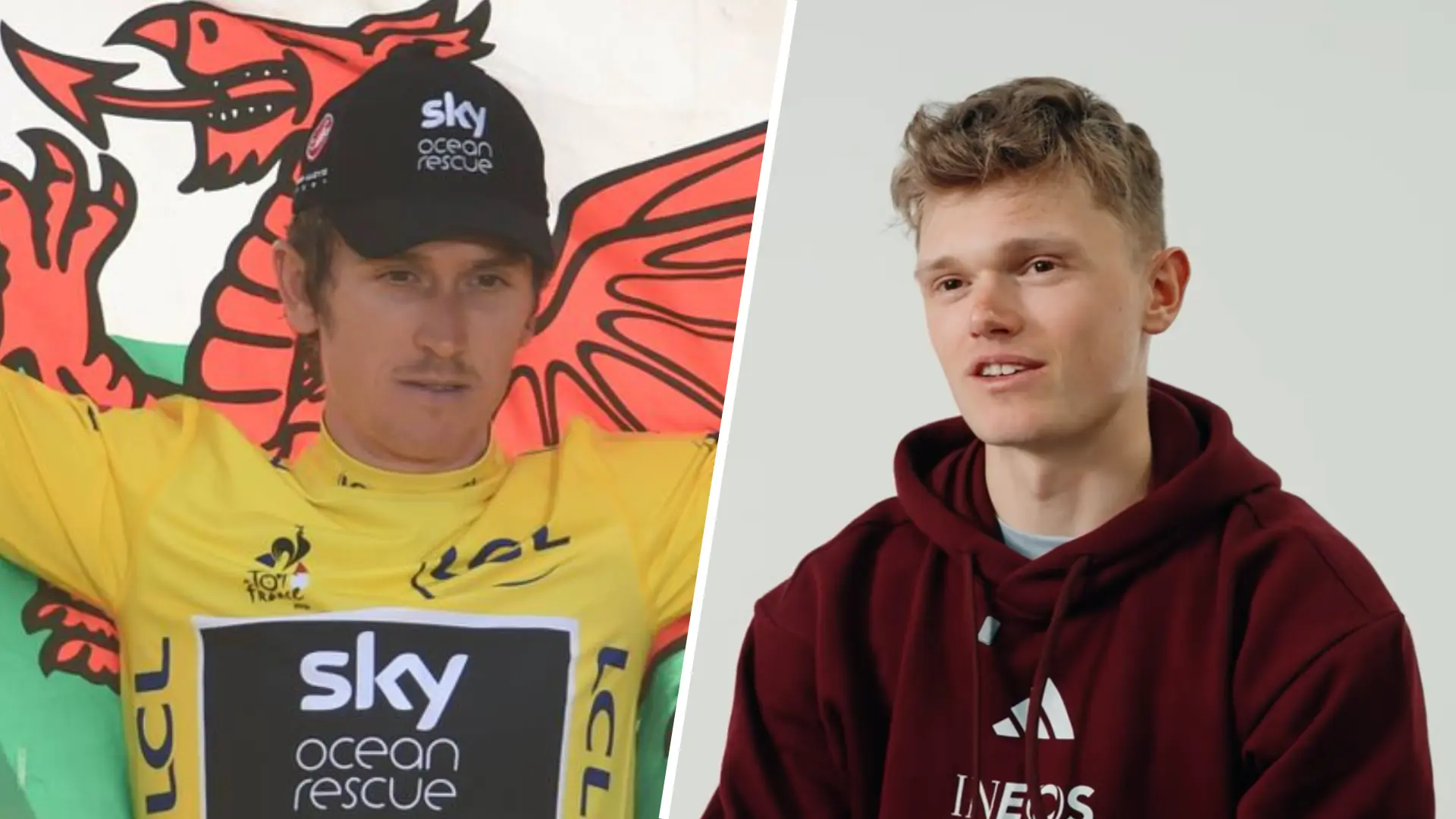
that matters. When asked to connect his own situation with Simon Yates’
retirement, he was blunt. “Yeah, I think it’s too easy to link these events to
each other, I would say.” He added context that often gets lost. “You can also
say I’ve been in this team for seven years now, and I’ve been a very happy
person, well supported, and always feeling at home. So, yeah, I don’t feel like
there’s putting more stress here or whatsoever.”
That is not the language of someone burned out or
disconnected. It is also not the language of denial. Van Aert has been careful
to resist big conclusions, especially when the conversation turns to
motivation.
“I think it’s still just a few riders where it did happen,
and there’s still also a lot of riders who are just living their dream life.”
Then he made it personal. “At least from a personal side, I’m always happy as a
kid when I’m back on the bike, even though it’s a hard period or something.”
Those words matter when weighing whether 2026 can still be a
year of redemption. Motivation is not his issue. The body is.
Read also

A complicated injury again…
The ankle injury he suffered in cyclocross is not minor, and
he has not tried to downplay it. “It’s a complicated injury. It’s a fracture
and also a ripped off ligament.” He did not sugar-coat the implications either.
“If I was a runner or anything else, I would be out for months.” That is a
sobering admission, and it feeds directly into the uncertainty hanging over his
spring. “Hopefully, as a cyclist, it will be good enough, but at this point I
cannot tell you.”
This is now familiar territory for Van Aert. He has become a
rider who repeatedly has to restart, recalibrate, and accept that perfect
preparation is a luxury he no longer enjoys. Even his own description of the
coming weeks is cautious.
“The first two weeks will be still a question mark.” When he
looks toward Omloop, Strade Bianche, and Milano-Sanremo, it is with an asterisk
attached. “Even now, even more with injury, will I be, like planned, in really
good shape already in Omloop, or am I still a bit on the back foot?”

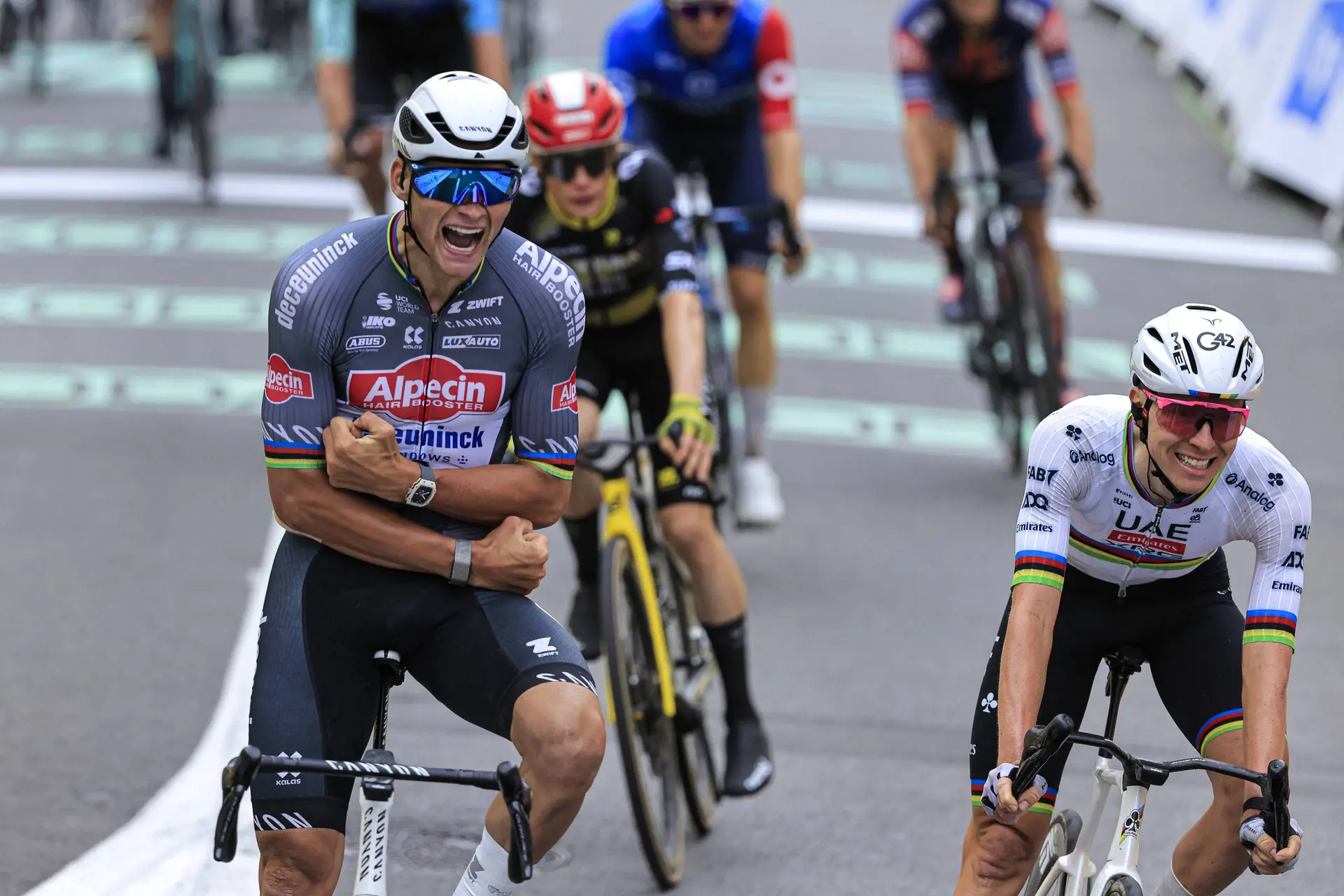
Wout van Aert leads Mathieu van der Poel in the snow at the 2026 Exact Cross Mol, before crashing once again
Feels exactly like it did this time last year doesn’t it!
And yet, there is evidence that the ceiling is still there.
In 2025, at the Giro d’Italia, he won an epic stage that reminded everyone how
few riders can do what he does when chaos and endurance collide. Later that
year, on stage 21 of the Tour de France, he dropped Tadej Pogacar on the final
stage and won in Paris.
Those are not the results of a rider fading into
irrelevance. Van Aert himself leans on moments like that. “These big moments…
they really help me to believe even if not everything is going well.” He did
not hesitate to say it plainly. “For example, now I’m still one of the best
bike riders in the world, and there will follow moments where I can show it
off.”
Belief, however, does not win Monuments on its own. The
classics landscape is brutal, and the competition is unforgiving. When asked to
name his main rivals, Van Aert did not flinch. “Yeah, Pogacar, Van der Poel and
Pedersen probably, yeah.” The subtext is obvious. Mathieu van der Poel looms
over every discussion about Van Aert’s legacy.
Read also
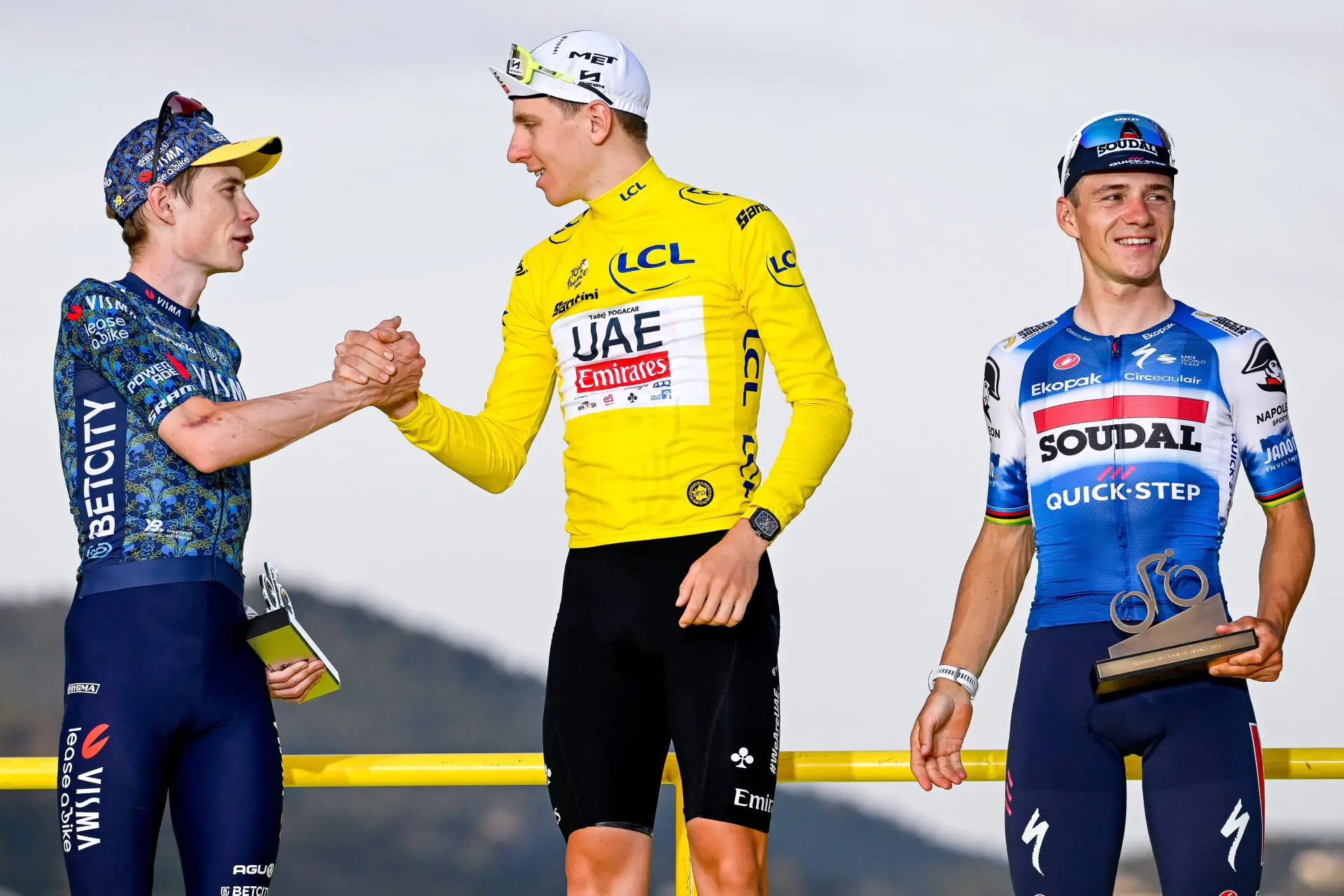
Van der Poel is on the verge of a record-equalling eighth
cyclocross world title and already owns eight Monuments as well as a rainbow
jersey on the road too. The contrast is bleak for the Belgian, and has been for
some time. Van Aert is often defined by what he has not won rather than what he
has. Even he acknowledges the imbalance. “It’s still there, but of course
Mathieu’s palmares is a bit bigger than mine.”
Van Aert does of course have a far lager palmares than Van
der Poel in grand tours, but for the duo from Belgium and the Netherlands, it
is the spring that really counts.
That rivalry, though, has always been more complex than a
simple scoreboard. “The rivalry has always been bigger for you guys… than for
us.” On the road, Van Aert is right: races rarely come down to just two riders.
But when history is written, numbers matter, and right now the numbers favour
Van der Poel heavily.
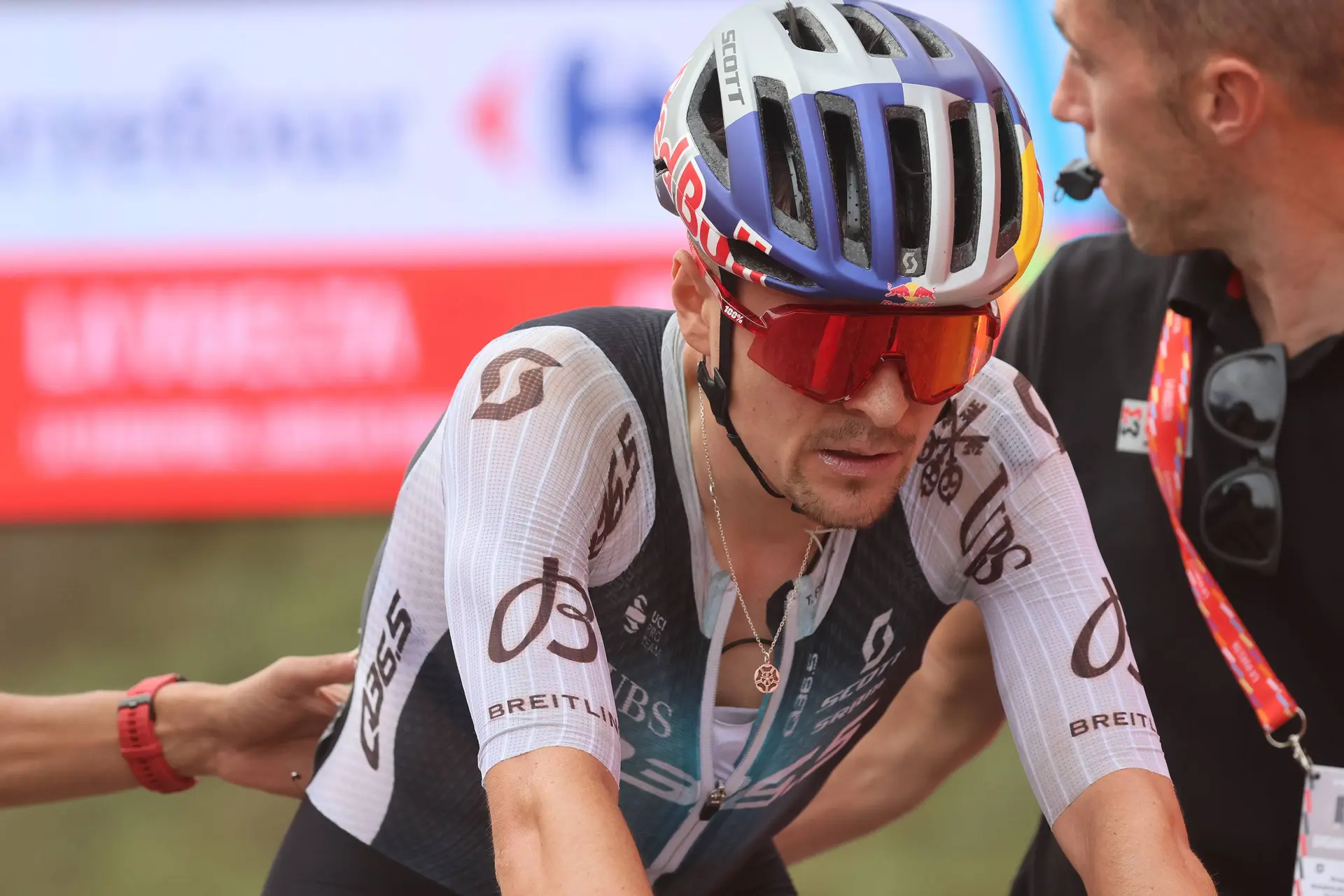
The emotional weight of near-misses still lingers. Asked
about Paris-Roubaix and the puncture on Carrefour de l’Arbre in 2023, when his nemesis
Van der Poel won for the first time, Van Aert did not hide from it. “Yeah, it
was a big disappointment.” Then, characteristically, he refused to dramatise
it. “I’m not really busy with lining up or making a list of what’s the biggest
disappointment.” The final sentence cut through the composure. “But that was
definitely a shit moment, yeah.”
Dreaming of Roubaix
Roubaix remains the axis around which much of this debate
turns. Van Aert’s description of the race explains why. “The last hour of the
race is almost more like a survival than a real race.” He called it “mythical”
and later said, without hesitation, “Arguably it’s the best race in the
calendar.” Riders do not talk like that about races they have given up on
winning.
There is also a tactical shift underway. His return to
Strade Bianche and Milano-Sanremo is not accidental. “That these are really
beautiful races that I don’t want to miss for the rest of my career.” He framed
it as unfinished business rather than nostalgia. “I always want to go back to a
traditional schedule where I am able to fight also for San Remo and Strade
Bianche.”
At the same time, he is honest about what has and has not
worked. “In 25, it’s fair to say that I was not showing something that I was so
much better than I was in the years when I did the full program in March.” That
admission matters. It suggests he is not stubbornly clinging to an idea that
has failed.
And there is certainly an argument that Van Aert is indeed
better suited to the Italian classics, rather than those closer to home.
So can he get back to the heights of 2022? The man that lit
up the Tour on countless occasions that summer? The answer depends on which
version of Van Aert shows up. If injuries continue to interrupt his build-up,
if recovery phases replace training blocks, then time will keep narrowing the
window. He admits as much when asked how long he can stay at the top. “As long
as I feel like I can be valuable… then I want to keep going.” That is not a
promise of dominance; it is a statement of intent.
Family life, age, and repeated crashes do take a toll, even
if he does not frame them that way. But there is another side. He is still
chasing goals, still talking about Flanders and Roubaix as live ambitions,
still winning stages on the biggest days. He is not finished.
Whether he wins another Monument in 2026 may come down to
timing as much as talent. A clean spring, even a slightly imperfect one, could
be enough if the race breaks right. A single puncture, a single missed training
block, will close the door again. In truth, for Van Aert to win, he will need a
perfect day, and Van der Poel and Pogacar will both have to suffer an off day. That
is the knife-edge he lives on now.
I do not think the heights of 2022 are unreachable. I do
think they are harder to reach than ever. Van Aert no longer has margin. What
he does have is clarity. He knows what he wants, he knows what hurts, and he
knows how little time is wasted on excuses. In a peloton this strong, how many
more historic chapters can he write?

Fin MajorCycling Journalist
Fin Major is a UK-based writer at CyclingUpToDate and has been part of the team since 2024. He is the site’s main writer for FAQs and evergreen explainers and has written around 2,000 pieces for the platform. Alongside this work, he focuses on in-depth analysis and covers the biggest races on the calendar, including the Tour de France, the Giro d’Italia, and La Vuelta a España, providing clear context around performance trends, tactics, and key storylines.
In his reporting, Fin uses reputable data sources such as ProCyclingStats for results, statistics, and historical context. He places strong emphasis on careful sourcing, editorial accuracy, and updating articles promptly when new, verified information becomes available. Outside of writing, Fin is an active cyclist, which supports his practical understanding of the sport and its demands.
claps 2visitors 2
Just in

Popular news
Latest comments
- He finished 2nd this year at the Tour. Pogacar crashed out of the Vuelta. If he had crashed out of the Tour, Remco would have won.acem8224-10-2026
- Lance never won a TdF, so not sure why he and Hincapie are listed here. I thought this was best domestiques for TdF winners.mij24-10-2026
- Pelizzaari is not Remco's domestiqueabstractengineer24-10-2026
- YetJumpyjohn24-10-2026
- Nibali got into the lead because he wanted the team car further forward in the caravan (I love this as a sign of tactical thinking). He solidified the lead on the rainy cobbles day when he was just brilliant, while other contenders crashed out on the wet roads. Strategic and skillful, yes, but the English roads weren’t as decisive as they might seem.RidesHills24-10-2026
- The Domedancy is the one designed for Seixas - anaerobic short climbs. Seixas isn't as good with the long climbs
 Rafionain-Glas24-10-2026
 - no i just type inivitable facts, nothing else. I wish UAE wasnt so damn good but hey the reality is they are. Visma on opposite direction crashing with no money and riders, coaches leaving mid contract ffs..i wish that wasnt the case but im not pretednig its not real when it is reality... RbH and Lidl i UAE cloesst opponents now thats clear. But if were real how can you stop that team with del toor and pogacar (greatest ever rider they made him) and you have mcnulty as a dom with (who would be captain in other teams and wins world and 10 more behind him..) history also says their the best team by far so what you want me to say? fake and be delusional and tell myself things? Its not a matter for praising anyone its a matter of beeing real nothing else, i wish visma for instance was better and like before but they cant buy any proper climbing guys cause their broke...heck they cant even keep their riders and coaches who flee mid contract what you want me to do lol.miguel24-10-2026
- Far as I recall, Nibali used the 2012 tdf UK stages to win it, most wanting to get them over with, cept he built his lead in them.. Armstrong's wrong, IF and it's an IF, the summers good in '27 like 26 then it'll be attritional.. if it's 'normal, then it'll be 50/50 on the weather, also the roads are VERY VERY narrow, very windng + on the 2nd steep short little climbs I know cause it goes thru my arse 👍
 leedorney24-10-2026
 - ❤️Lozza24-10-2026
- No, it's not about him crashing... he just won't win. Ad acta.PogiSloFans24-10-2026
Loading
Write a comment