The 2025 season will be remembered largely for
the commanding wins of Tadej Pogacar and Mathieu van der Poel. But, by no means
was this a predictable year, and there were many moments where the script broke
down entirely. In races usually shaped by hierarchy, reputation, and team
control, three results stood out because they overturned everything the sport
had come to expect.
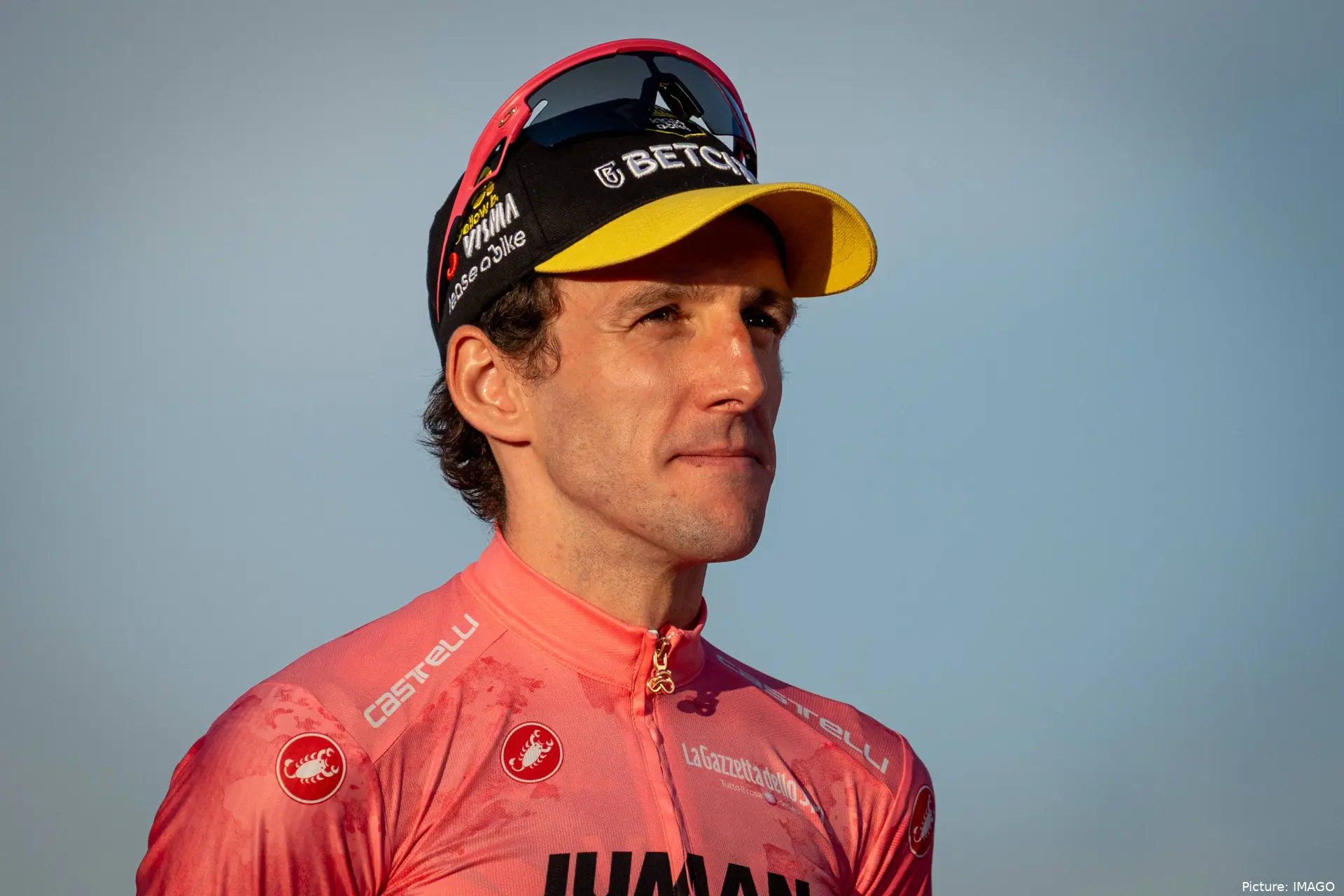
Simon Yates finally won the Giro d’Italia seven
years on from a heartbreaking collapse, and he redeemed himself on the very
climb that had once crippled him. Mattias Skjelmose defeated Tadej Pogacar and
Remco Evenepoel head-to-head at Amstel Gold, on terrain that should have
favoured neither hesitation nor surprise. And Neilson Powless dismantled Team
Visma | Lease a Bike at Dwars door Vlaanderen, beating Wout van Aert despite
being numerically overwhelmed.
None of these outcomes were accidents. Each
was the product of specific race dynamics, and each forced a reassessment of
assumptions that had guided modern men’s cycling. So, let’s remind ourselves of
3 wonderful surprises in the 2025 cycling calendar.
Simon Yates wins the Giro and banishes the 2018 demons

Simon Yates won the Giro d'Italia in dramatic fashion in 2025. @Sirotti
For Simon Yates, the Giro d’Italia had long
been the race that exposed his vulnerabilities. His spectacular collapse in
2018 became part of cycling’s collective memory, and every Giro start since was
filtered through that lens. By 2025, Yates was no longer viewed as a natural
three-week favourite. He was experienced, dangerous on the right terrain, and a
potential podium threat, but widely considered unlikely to win the Maglia rosa.
That perception is what made his overall
victory such a shock.
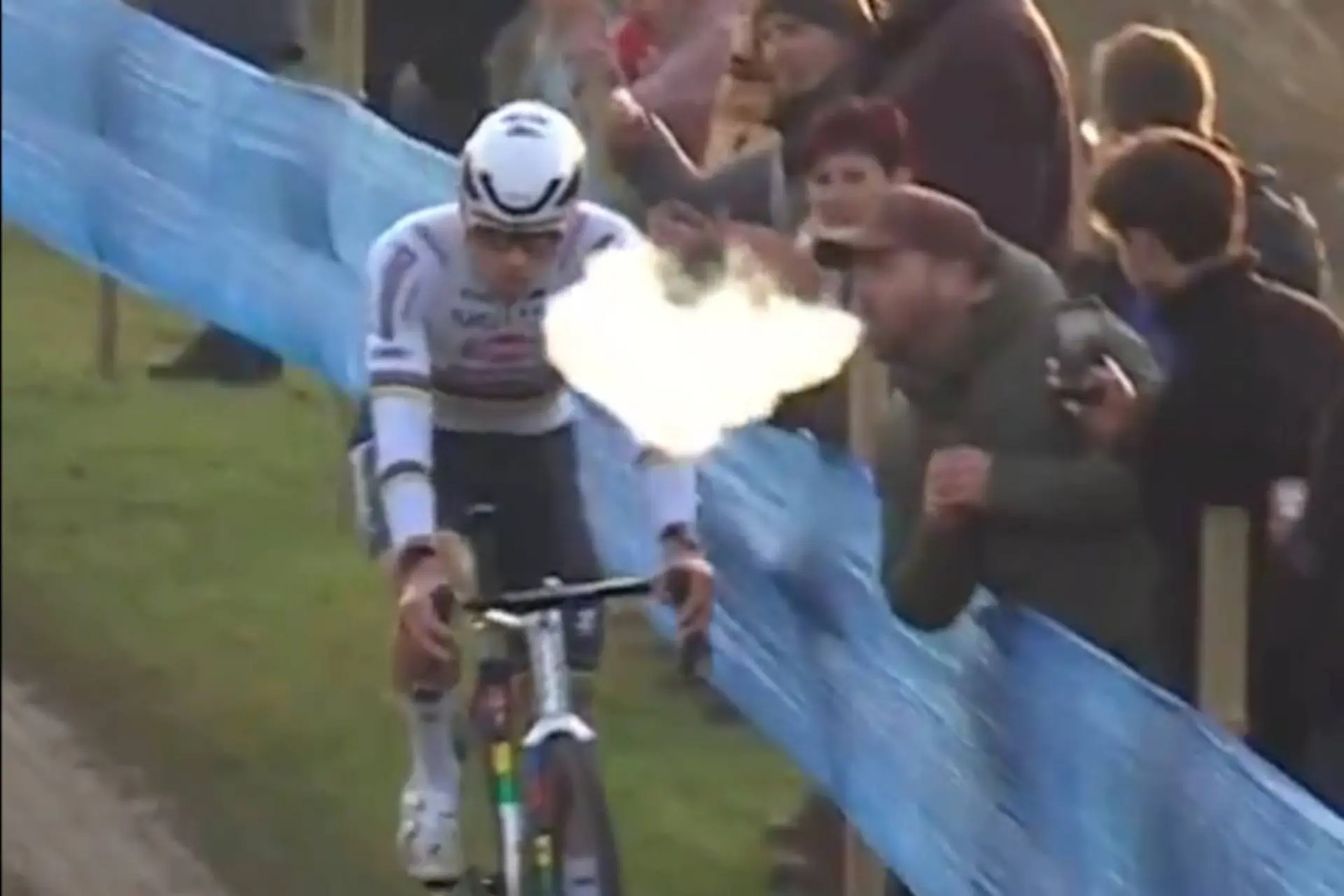
Rather than dominating the race early, Yates
rode a controlled and almost understated Giro. He avoided time losses in
moments where rivals overreached, stayed clear of chaos on transitional stages,
and never appeared tempted to force the issue prematurely. The key difference
from previous campaigns was restraint. Where earlier versions of Yates had
chased time aggressively, the 2025 version allowed the race to come to him.
Whilst pre-race favourites Primoz Roglic and
Juan Ayuso crashed out, and Isaac del Toro and Richard Carapaz focussed on each
other, Simon Yates lurked quietly in the shadows. The decisive stages came
late, when fatigue rather than ambition shaped outcomes. On the gravel of the Colle
delle Finestre, where he had imploded 7 years earlier, Yates came alive and
took advantage of Del Toro and Carapaz focussing too much on one another.
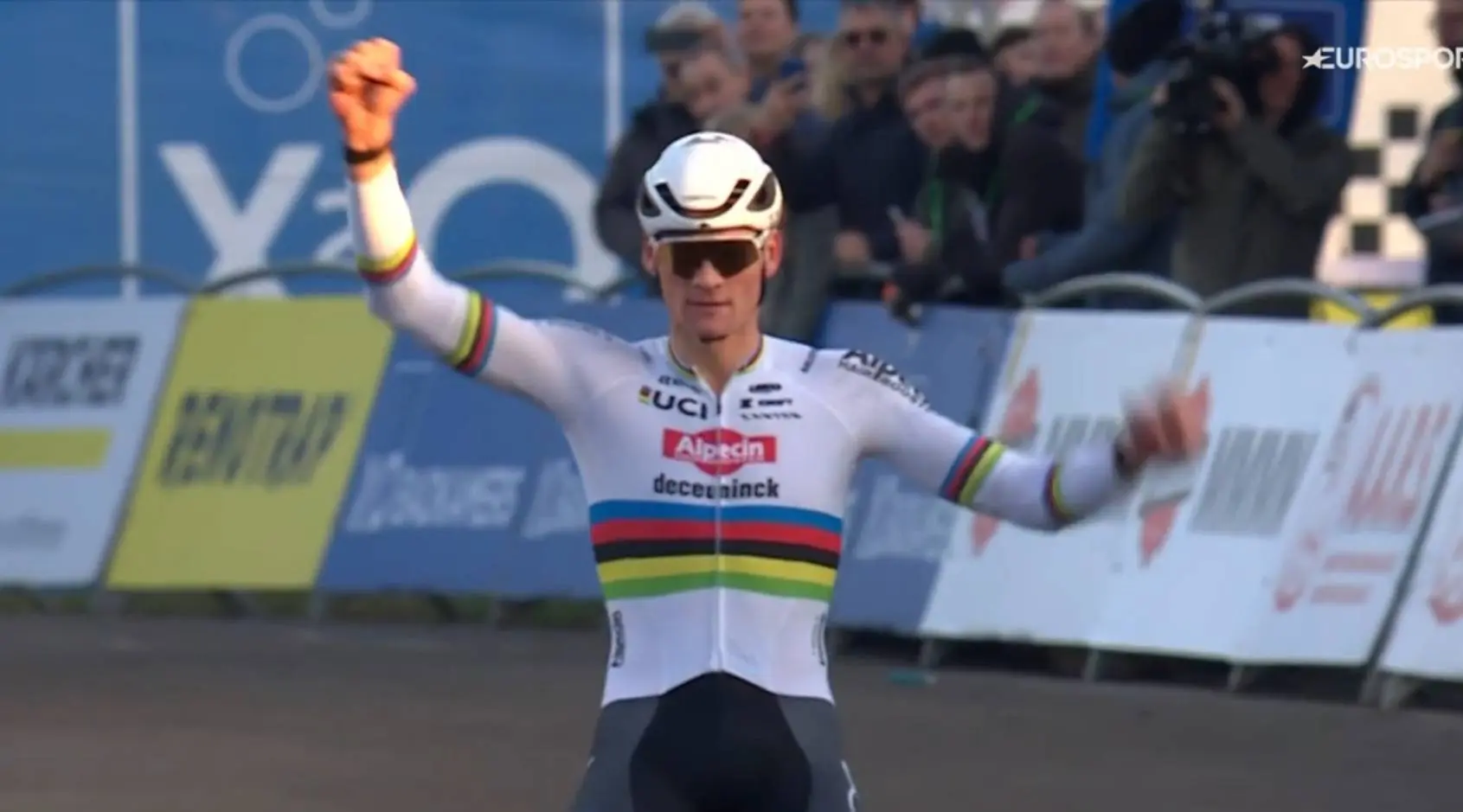
With Wout van Aert waiting for him at the top
of the climb, Yates rode away to an emotional redemption ride, and the pink
jersey that was no nearly his 7 years before. Winning the Giro this way, reframed
his career. It was an upset not because Yates lacked talent, but because few
believed he could still align his abilities with the Giro’s demands. In 2025,
he finally did.
Mattias Skjelmose stuns Amstel Gold by beating Pogacar and Evenepoel
The Amstel Gold Race has increasingly become a
playground for the sport’s most explosive superstars. Entering the 2025
edition, the narrative was simple: Tadej Pogacar versus Remco Evenepoel, with
the rest of the field expected to respond rather than dictate.
Mattias Skjelmose was not part of that
pre-race conversation.
What followed was one of the clearest tactical
upsets of the season. Instead of being dropped when the race fractured,
Skjelmose remained present at every key moment, and rode with EVenepoel back to
Pogacar’s wheel. When Pogacar and Evenepoel attempted to impose their usual
rhythm, aggressive accelerations designed to isolate rivals, Skjelmose matched
them through positioning rather than raw force.
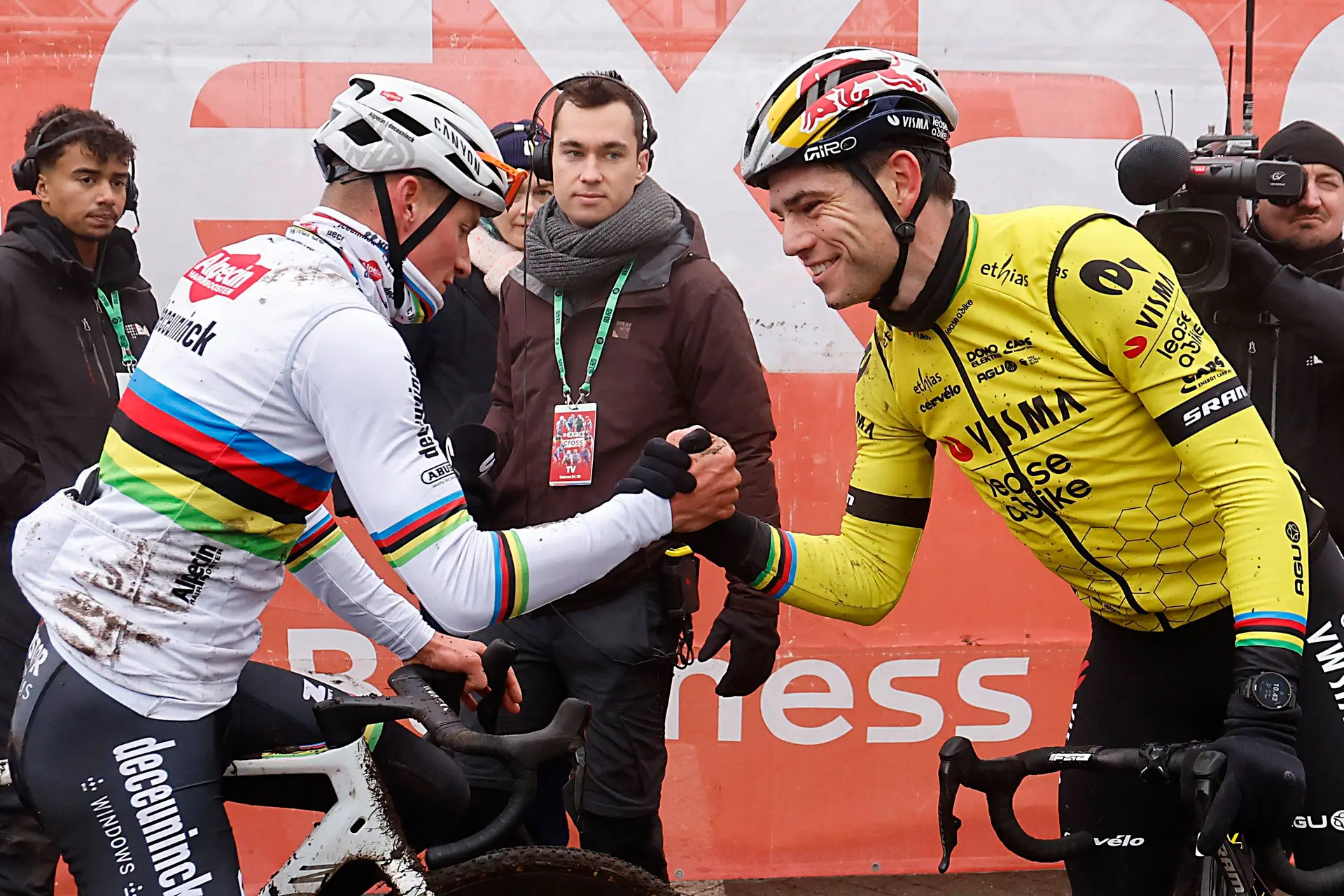
The crucial moment came down to the sprint.
The three riders were locked together, separated by mere centimetres, but to
everyone’s surprise it was Skjelmose of Lidl-Trek who outkicked the big boys, by
far the biggest win of his young career.
Winning Amstel over those two riders was
shocking precisely because it broke a familiar pattern. In recent seasons,
races featuring the likes of Pogacar and Evenepoel had been resolved through
direct confrontation. Skjelmose turned it into a contest of timing and
commitment instead. The result instantly elevated him from respected contender
to proven giant-killer, and demonstrated that even the sport’s most dominant
figures can be beaten when race dynamics shift against them.
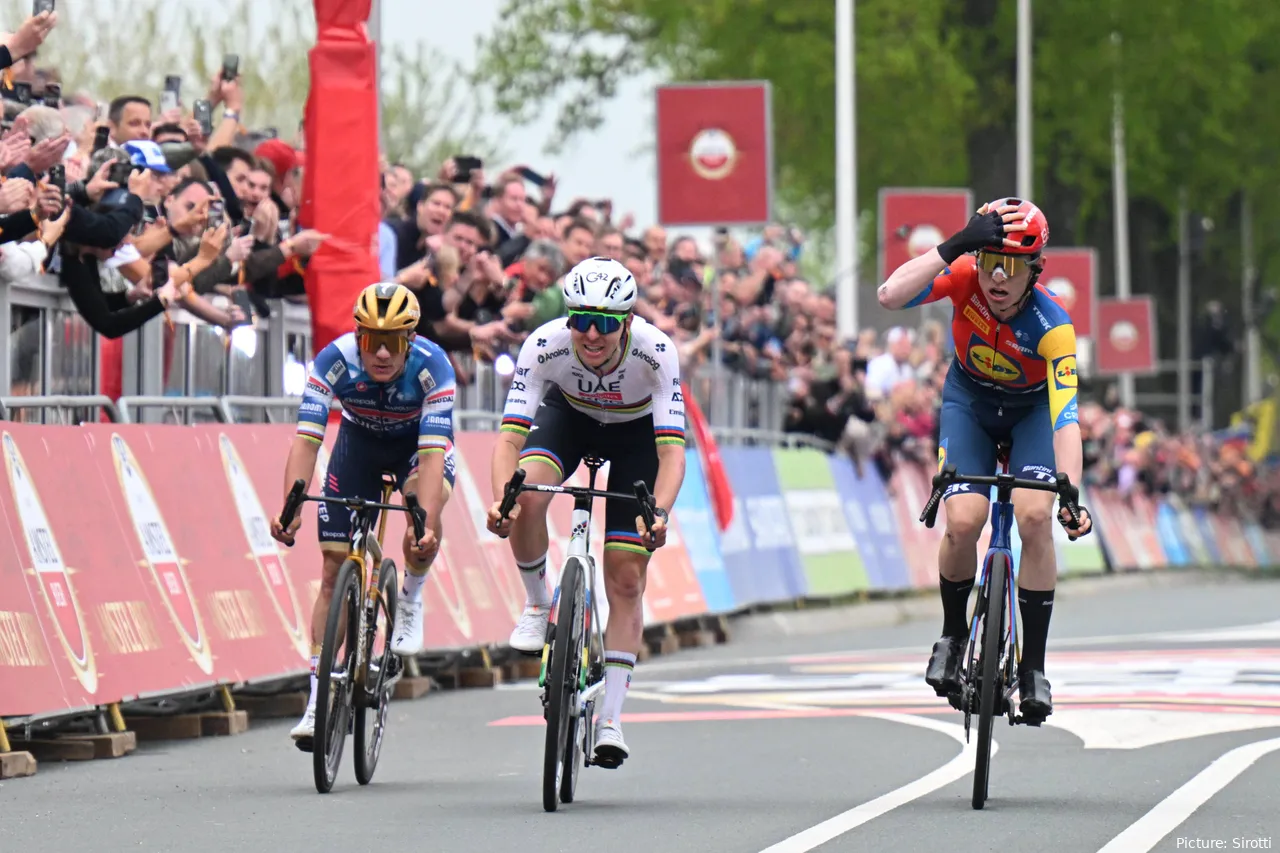
Skjelmose celebrates in disbelief after beating Pogacar and Evenepoel at Amstel Gold Race. @Sirotti
Neilson Powless dismantles Van Aert and Visma at Dwars door Vlaanderen
If Amstel Gold was a tactical upset, Dwars
door Vlaanderen was a strategic one. Team Visma | Lease a Bike entered the race
with numerical superiority and the presence of Wout van Aert, usually a
near-guarantee of control.
Neilson Powless was expected to survive, not
win.
Instead, Powless read the race perfectly. When
Visma attempted to use their numbers to wear down rivals, Powless resisted the
temptation to follow every move. He conserved energy, stayed clear of
unnecessary efforts, and positioned himself for the decisive phase rather than
reacting emotionally to team tactics.
When the race finally split, Powless committed
fully, forcing Visma into an uncomfortable position. Their numerical advantage
became a liability rather than a strength, as hesitation and internal marking
allowed Powless to simply hang on at the back. Soon, it became clear that Van
Aert and Visma were going to wait for the sprint, much to Powless delight.
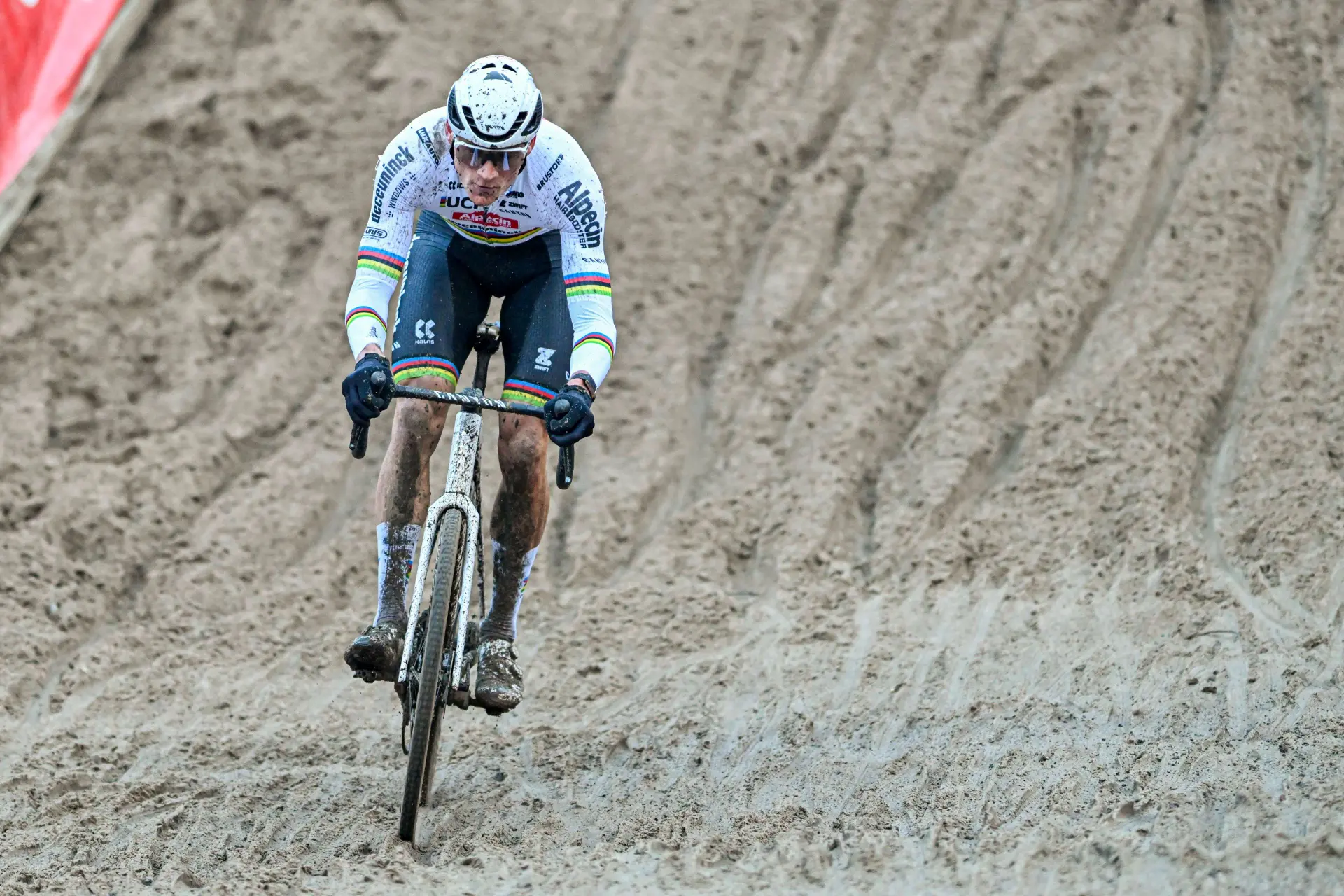
Beating van Aert in this context mattered. Van
Aert thrives in attritional races where control and depth decide outcomes.
Powless turned Dwars into a test of decisiveness instead, and passed it while
Visma hesitated.
For American cycling, it was one of the most
significant one-day victories in years. For the season as a whole, it was proof
that even the most organised teams can be undone when one rider reads the race
better than everyone else.
Taken together, these three moments reshaped
the story of 2025. They showed that cycling’s hierarchy is not as fixed as
recent seasons suggested, and that timing, patience, and commitment still
matter as much as raw dominance. Yates proved experience can still win Grand
Tours. Skjelmose showed that even the sport’s biggest stars can be
outmanoeuvred. Powless demonstrated that team strength means little if it isn’t
converted decisively.
What do you think will be the biggest upset of
the upcoming 2026 season?

Fin MajorCycling Journalist
Fin Major is a UK-based writer at CyclingUpToDate and has been part of the team since 2024. He is the site’s main writer for FAQs and evergreen explainers and has written around 2,000 pieces for the platform. Alongside this work, he focuses on in-depth analysis and covers the biggest races on the calendar, including the Tour de France, the Giro d’Italia, and La Vuelta a España, providing clear context around performance trends, tactics, and key storylines.
In his reporting, Fin uses reputable data sources such as ProCyclingStats for results, statistics, and historical context. He places strong emphasis on careful sourcing, editorial accuracy, and updating articles promptly when new, verified information becomes available. Outside of writing, Fin is an active cyclist, which supports his practical understanding of the sport and its demands.
claps 1visitors 1
Just in

Popular news
Latest comments
- He didn't even try to sprint all outvappaxbipmv18-10-2026
- Campenaerts looked like a rolling pumpkin with that all orange leaders skinsuit !frieders318-10-2026
- He can take his dumb a$$ politics somehwere else !frieders318-10-2026
- good to have her back. fingers crossed she‘ll be able to stay!Ketterechts17-10-2026
- A tenner and he wins the Tour next year, too 😂anonymouscyclist17-10-2026
- the answer is either stick to classics or GTs but not bothabstractengineer17-10-2026
- the exodus already stared with Ciccone. Already they were struggling with two sprinters, now there are three. Also Ganna will demand leadership. Gall is the most proven GC, Ayuso has the most potential. GC leadership for everybody will be impossible. Literally a UAE style mess without pogi.abstractengineer17-10-2026
- I raced as an amateur for 12 years, including six years on my country’s national road cycling team. I secured two national titles and competed in three World Championships plus more than 15 international stage races. At 23, we travelled to Italy for a training camp—or so I assumed. On a rest day, we watched a presentation about adopting a more “professional” training approach. It was crystal clear what “professional” meant. That moment first exposed me to this dilemma. After returning from Italy, I left cycling—at least at the competitive level I had known. Over the following two years, the whole team was caught doping. I hold that everyone is innocent until proven guilty. In my view, current stakeholders operate on a different scale, and the sums involved are vast. I am unsure whether any doping would ever be revealed. I try to stay positive and enjoy the show. My 2c.
 vannpelt17-10-2026
 - Fiver he wins 🤣
 leedorney17-10-2026
 - “…measures to reduce speeds.” Might as well shorten the race course to just 50km as well? ASO generates at minimum €300m a year and 30- 40% profit. Maybe stop being greedy and spend more of the profit to protect the riders instead.b3tlla17-10-2026
Loading
Write a comment