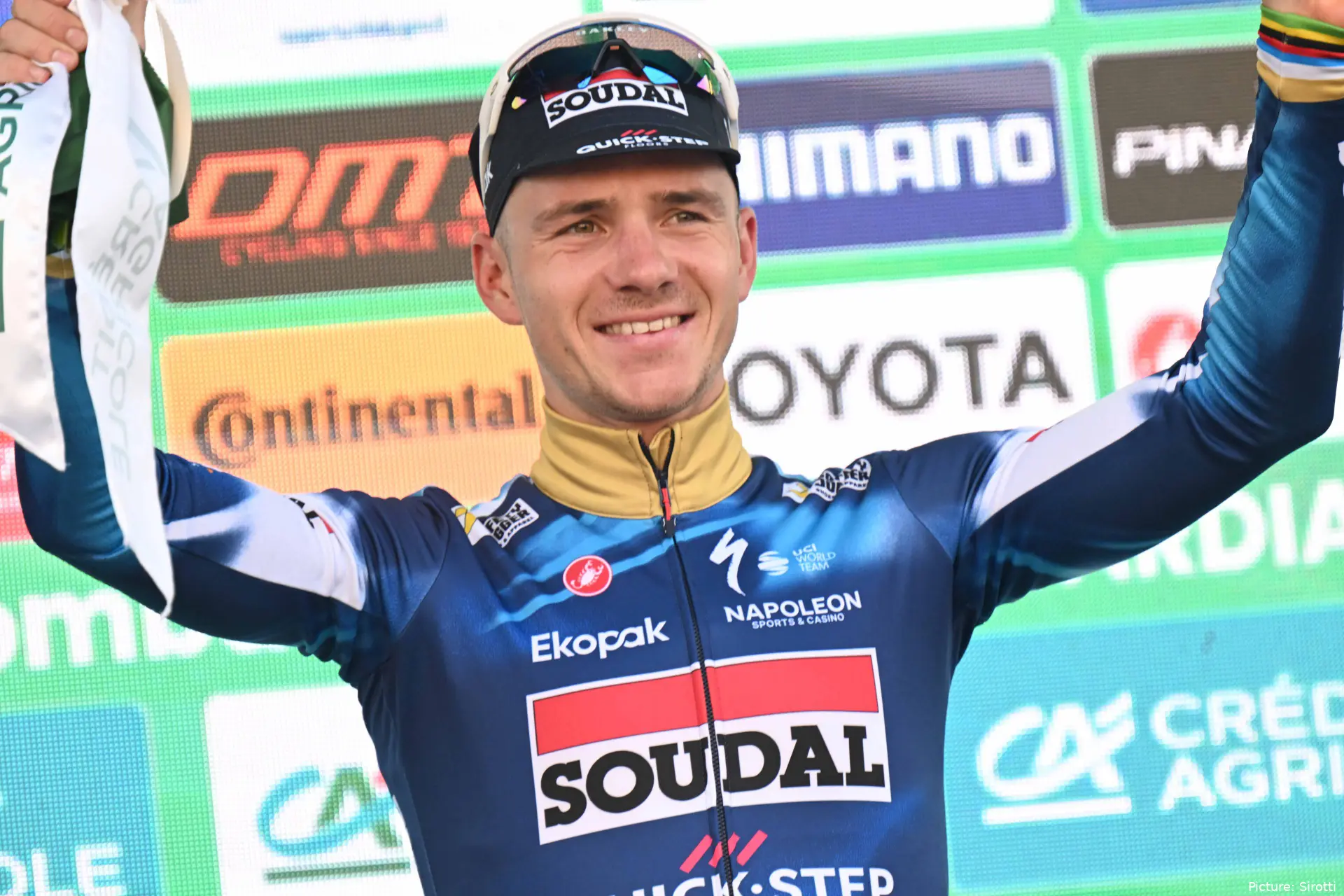
Remco Evenepoel signed off from Soudal – Quick-Step with
second place at Il Lombardia, the final race of his seven-year chapter in blue
and white. The 25-year-old departs the team he joined as a teenager in 2019
with a palmarès that reshaped its identity: from classics juggernaut to bona
fide Grand Tour operation. He leaves as a Vuelta a España winner, a three-time
world champion in the individual time trial and a one-time road race world
champion, a double Olympic champion, the white jersey and a podium finisher at
the 2024 Tour de France, and a two-time Monument winner.
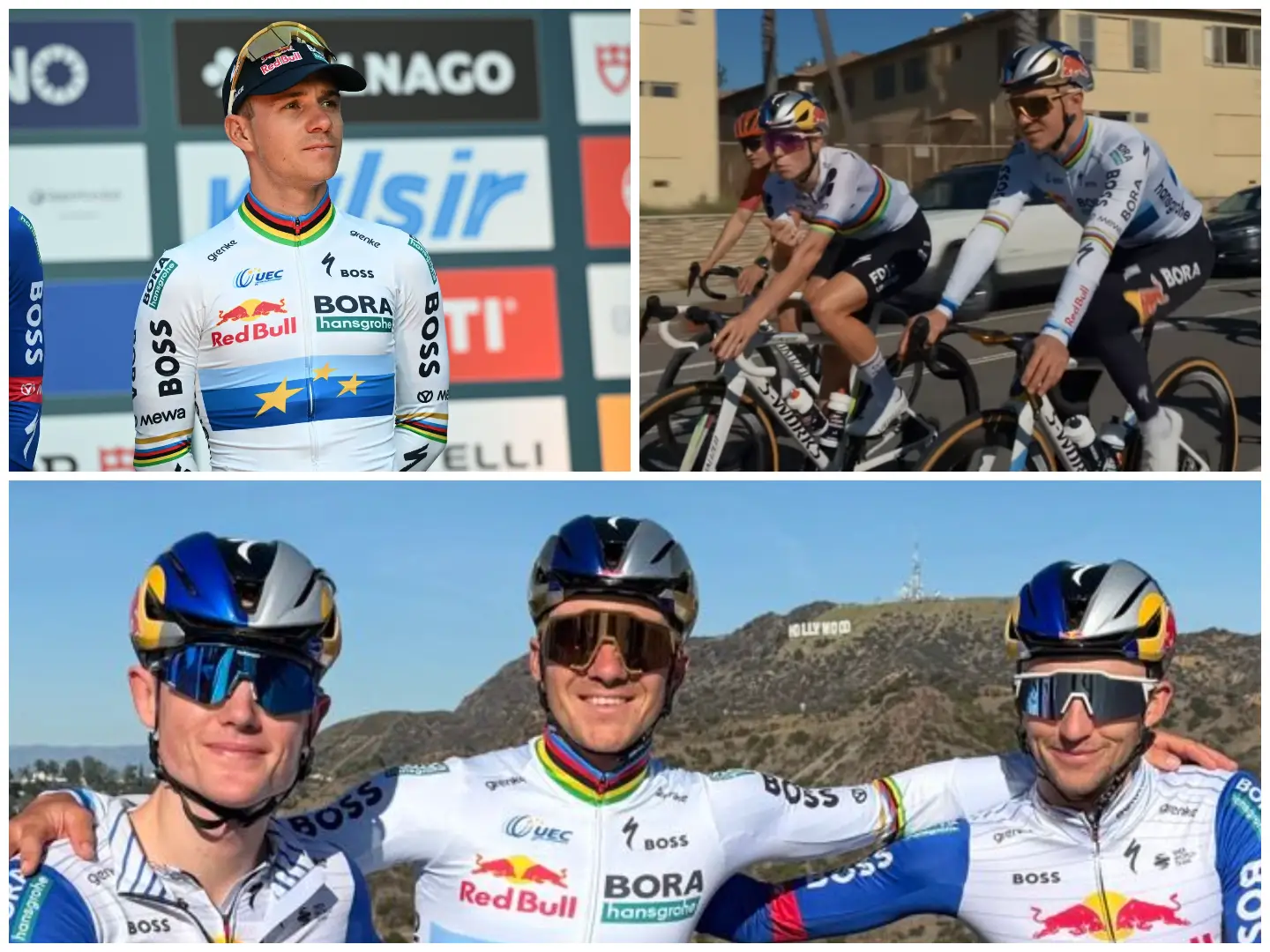
Next comes Red Bull – BORA – hansgrohe in 2026, where the
project is explicit: build a stronger GC structure around him to bridge the
remaining gap to Tadej Pogacar and Jonas Vingegaard.
Evenepoel’s last dance for Quick-Step was fitting of the
past seven years: ambitious from the gun, relentless when the road pitched up,
and ultimately in the slipstream of the man who has defined 2025. Pogacar’s
record fifth straight Lombardia win came by 1:48 over the Belgian, a result
that both underlined Remco’s durability at season’s end and crystallised the
scale of the task he is taking to Austria.
In the build-up he put it simply: “Can I beat Tadej? Why
not? Otherwise I wouldn’t be here.” The emotion afterwards was just as plain:
“Now it’s time for something new to start.”
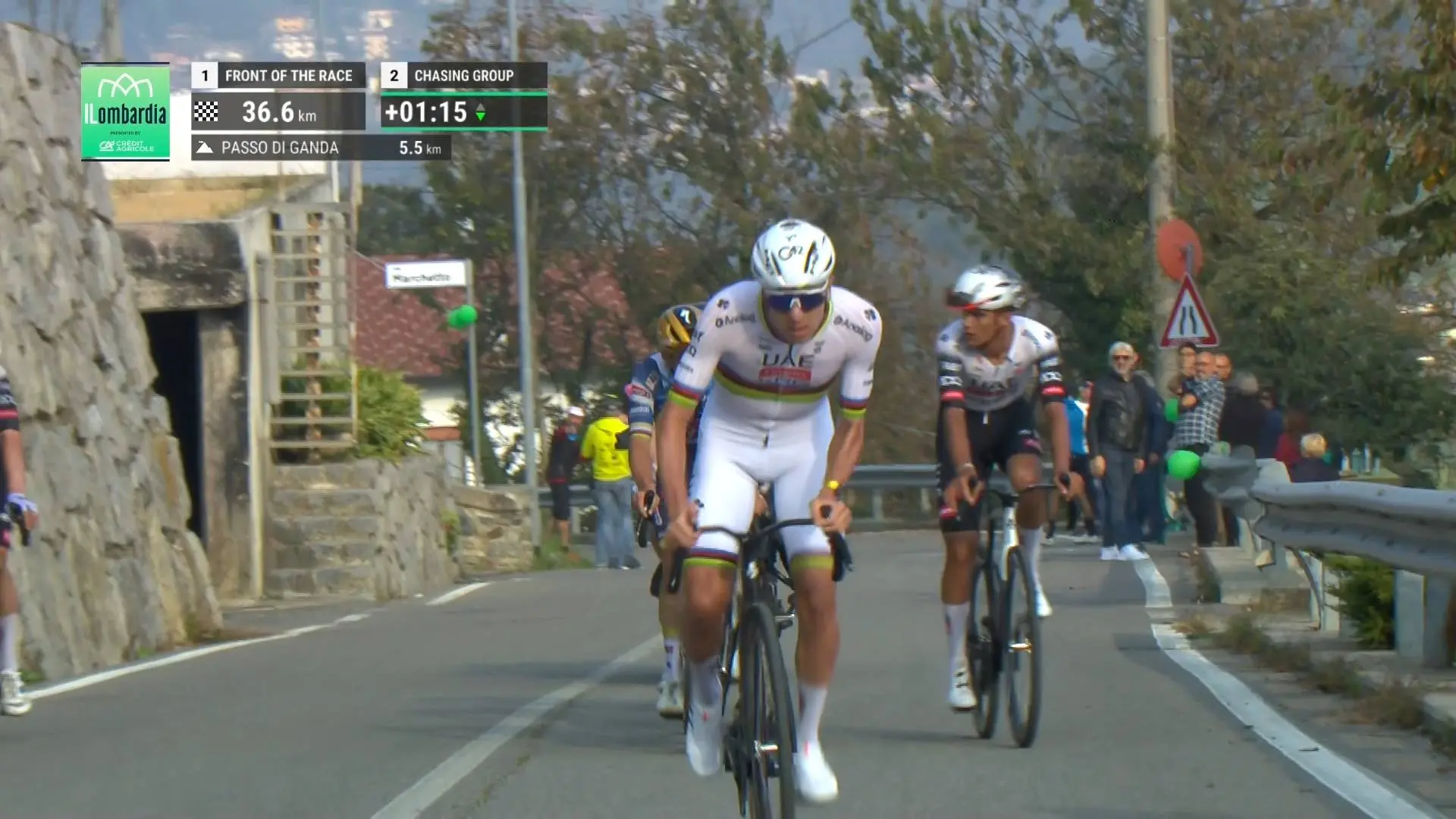
Across six full seasons, Evenepoel bent Quick-Step’s
competitive ideology. The early years were about audacity, long-range raids at
San Sebastián and week-long stage races, and there was the infamous Lombardy
crash in 2020 paused everything and forced a reset. The 2022
Liège–Bastogne–Liège win and Vuelta victory didn’t just refurbish his aura;
they rewired expectations inside a team historically calibrated for sprints and
cobbles.
The Tour de France in 2024 supplied the proof of concept: a
stage win in the first time trial, the white jersey throughout, and third
overall on debut, all while learning how to ride the third week against the
sport’s two reference points. The data points fill in the picture. Evenepoel
became world time-trial champion three years running (2023–2025) and added the
2022 road world title, he then made history in Paris by winning both Olympic
road events in 2024, the time trial and the road race. Layer on two editions of
Liège, multiple San Sebastián wins, and a string of stage race podiums, and you
have a rider who constantly forced Quick-Step to stretch beyond its comfort
zone.
Red Bull–BORA–hansgrohe offers a deeper climbing block,
alternative tactical levers in the high mountains, and the long-term runway to
tilt July in his favour. Although, Evenepoel will have to establish himself
ahead of Florian Lipowitz in the team rankings, given the young German was the
third place and white jersey winner at this year’s Tour.
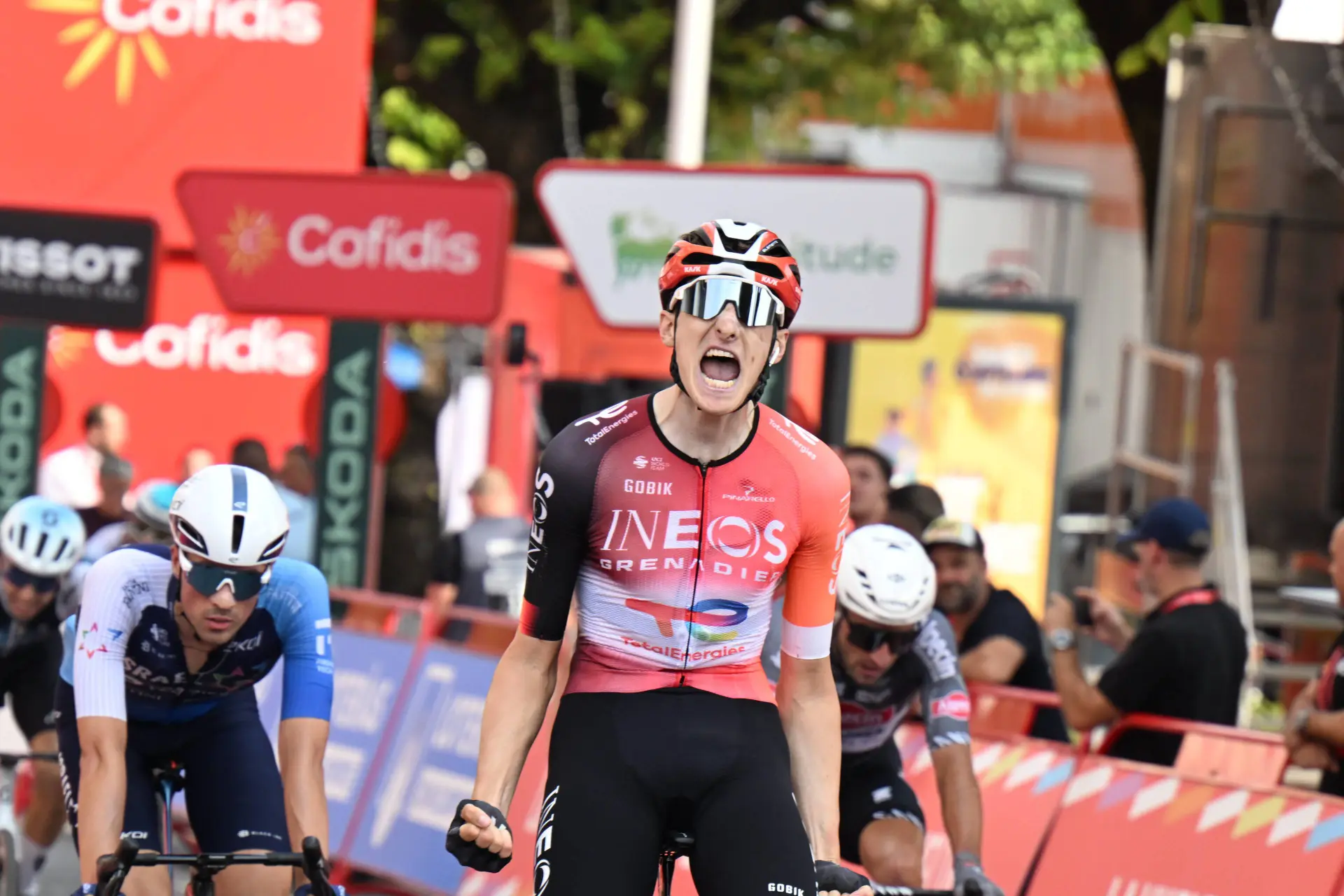
Evenepoel Quick-Step leaves with his competitive edge
intact, his ceiling still visible, and a clear view of the two riders he must
unseat. He departs Quick-Step as an era-defining figure who broadened what the
team could be; he joins Red Bull with the intention of broadening what he can
be. The next chapter starts exactly where the last one ended, on steep roads,
with audacious intent, and with Pogacar and Vingegaard up ahead.
Let’s dive in and look at five moments that defined
Evenepoel’s time in Soudal – Quick-Step colours.
Il Lombardia 2020 crash
The image is seared into modern cycling: a white-and-blue
comet over the Sormano guardrail and into the void. Evenepoel’s 2020 Lombardia
crash was more than a violent interruption, it was a genuine near death
experience. He went from irresistible prodigy to a rider forced into months of
convalescence, recalibration, and, crucially, re-entry.
The immediate
aftermath brought medical triage and unanswered questions: how would he
descend, how would he trust his instincts, and would his trademark aggression
survive the feedback loop of fear that such falls create? For Quick-Step, it
was a jolt that underlined the risk-reward calculus of backing a phenomenon who
races on a long fuse and lights it early.
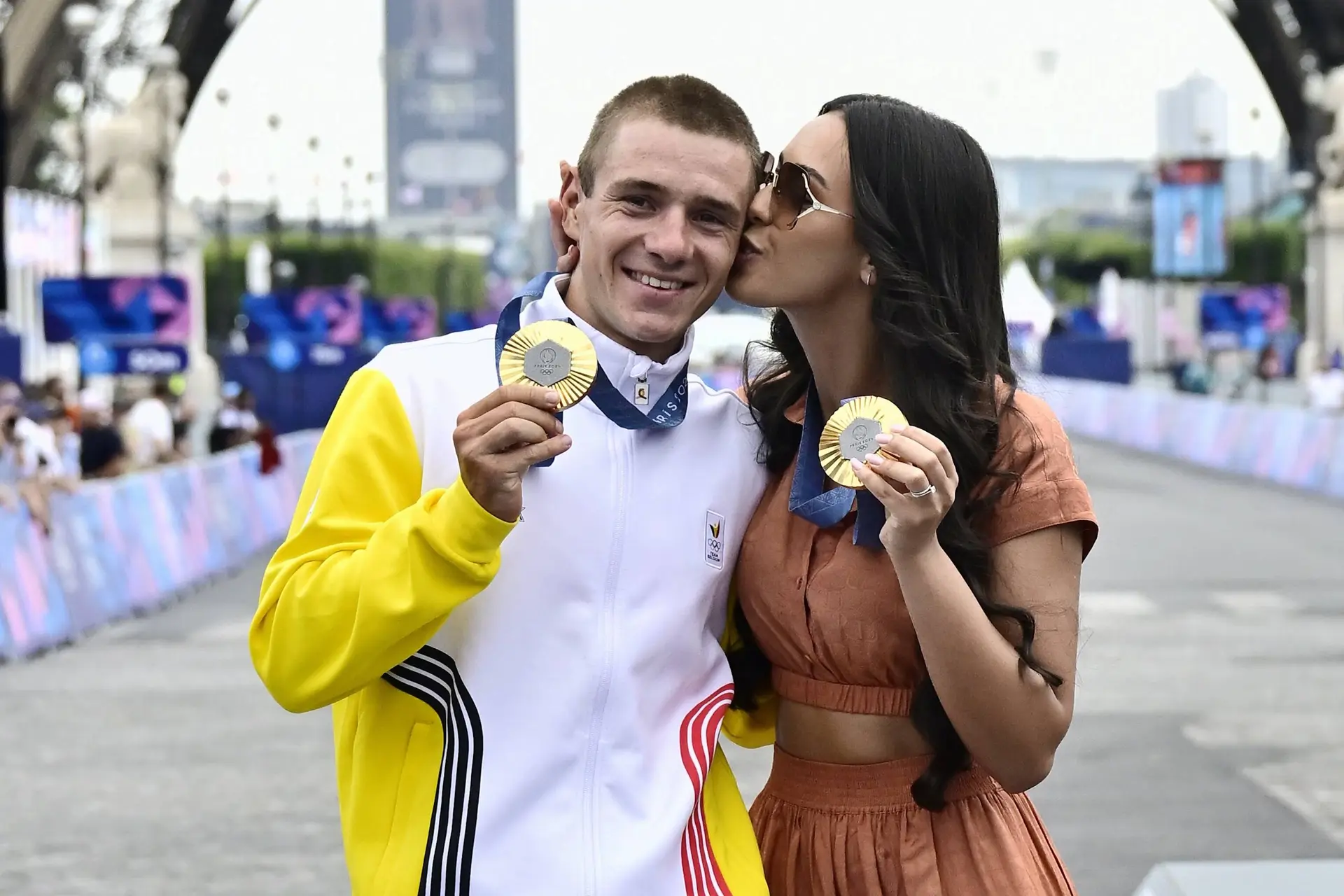
What followed was a cautious return, as Evnepoel spent much
of 2021 re-discovering his best legs. The crash did not rewrite his style, it
taught him when not to spend it. Two years later in Liège, he chose the right
moment to go alone. The line from the ravine to La Redoute runs straight
through the hard lessons of 2020, but Evenepoel was very lucky to ever ride his
bike again after that day in Lombardia in 2020.
Liège–Bastogne–Liège 2022 win
Liège in 2022 was the day Evenepoel showed just how good he
could be. With the race unsettled by misfortune behind, Evenepoel unleashed a
monstrous attack on La Redoute, cresting with daylight with the others left
trailing in his wake. The significance ran deeper than the finish photo. It
ended 11 years of Belgian longing at La Doyenne, gave Quick-Step a Monument in
a spring that desperately needed saving, and, most of all, exorcised the shadow
cast by 2020.
Liège affirmed he could dominate a six-hour race without the
guardrails of time checks or a team time-trial formation, he could win the race
on his own. It also shifted the internal politics of Quick-Step: from that day,
the programme pivoted around Evenepoel’s calendar, not just its cobbled DNA. In
retrospect, Liège was a prelude to the Vuelta, a proof that the pacing
discipline of a champion time triallist could stretch across the Ardennes and,
later, across Spain. The solo in Belgium was the rehearsal for what was to come
later in 2022.
Read also
Vuelta a España 2022 win
Spain was the experiment that became a statement. Quick-Step
arrived with a GC plan that had never quite worked for them, Evenepoel left
Madrid in red, and the team left with a new identity. Before the race, Primoz
Roglic was the firm favourite to win his fourth consecutive Vuelta title. But
soon, it became clear that Evenepoel was in the ascendency.
When the race wobbled, he contained his nerves and refused
to collapse. The final week saw him take control, and after Roglic crashed out
no one could come close to Evenepoel. Back home, the win rewired expectations
around Belgian GC riders and reoriented Quick-Step’s recruitment, training
camps, and mountain support towards July. It also changed the conversation
about Evenepoel himself: from a phenom who could blow races apart to a rider
who could keep one together for 21 days.
The Vuelta didn’t extinguish the questions about the Tour,
it made them more interesting. From that moment, cycling fans were desperate to
see Evenepoel take on Pogacar and Vingegaard in July.
Vuelta a España 2023
A year later the Vuelta gave him a different test: what to
do the day after the dream dies. When his GC bid imploded on the Tourmalet,
Evenepoel woke up to a new problem, how to race without the red jersey on the
horizon. The answer came in the only language that ever really fit him.
He took the next stage by the throat, launched early, and
rode alone to the line after dropping Bardet, converting disappointment into
purpose without theatrics. The manner of his win mattered too, with no sulking,
no hiding, just a tactical reset and a statement that a bad day was not an
identity. Inside Quick-Step, that ride preserved team morale, and showed that
Evenepoel could indeed pick up the pieces after a disaster.
Remember, Evenepoel was not even supposed to be at the
Vuelta in 2023, his main target had been the Giro. He was in the pink jersey at
the Giro, before a bout of COVID saw him forced to abandon. No, Evenepoel could
not take on the might of Visma with Vingegaard, Roglic, and Kuss at the Vuelta,
but he did show he could bounce back from setback mid race. Tour de France 2024
podium and debut stage win.
The first Tour is a sorting hat. In 2024, Evenepoel
discovered he belongs at the very pointy end. But like seemingly every grand
tour Evenepoel has entered, it was not a straight forward preparation.
Evenepoel crashed hard in the spring, and did not look at his very best at the
Dauphine in June. But, despite the setbacks, he delivered in July. He won the
stage 7 time trial in Gevrey-Chambertin, then rode three weeks with the kind of
maturity many had thought he lacked: measuring on the climbs, picking his battles,
not chasing ghosts.
The white jersey was banked before the finale in Nice, third
overall was exactly what he deserved. The gap to Pogacar and Vingegaard
remained, but the Belgian had shown that he could mix it with the top two. For
Quick-Step, this was vindication of a multi-year pivot: the staff hires, the
altitude blocks, the domestic engine room built to support Evenepoel in the
mountains.
Evenepoel was not able to follow up his 2024 Tour at the
2025 Tour. Despite a stage win, he was forced to abandon during the second
week, as his lack of off-season training due to his crash with a van caught up
with him. As Evenepoel heads to Red Bull for the winter, he has his work to do
to compete seriously with Pogacar and Vingegaard in grand tours. More important
than his new team, however, will be that Evenepoel has a drama free winter, and
a perfect preparation for next summer.
Second today, memories forever.🥈🔵
— Remco Evenepoel (@EvenepoelRemco) October 11, 2025
It’s hard to put today’s feeling into words because what a journey it has been. Grateful for every moment with this incredible team.🐺💙
Congrats to my friend @Pieter_Serry on an incredible career, it was an honor to ride together, enjoy your… pic.twitter.com/8CZZfhWvQL

Fin MajorCycling Journalist
Fin Major is a UK-based writer at CyclingUpToDate and has been part of the team since 2024. He is the site’s main writer for FAQs and evergreen explainers and has written around 2,000 pieces for the platform. Alongside this work, he focuses on in-depth analysis and covers the biggest races on the calendar, including the Tour de France, the Giro d’Italia, and La Vuelta a España, providing clear context around performance trends, tactics, and key storylines.
In his reporting, Fin uses reputable data sources such as ProCyclingStats for results, statistics, and historical context. He places strong emphasis on careful sourcing, editorial accuracy, and updating articles promptly when new, verified information becomes available. Outside of writing, Fin is an active cyclist, which supports his practical understanding of the sport and its demands.
claps 3visitors 3
Just in

Popular news
Latest comments
- Despite his crash, Jonas gave us some edge-of-seat stages in the first two weeks of the 2024 Tour, and even came back to beat Pog in one stage. In 2025 he said he felt like a new man and came out swinging. It's just this year that his challenge fizzled after Stage 1 and fans began to boo Tadej. It's more likely that ASO just can't face waiting two weeks for Jonas to launch his challenge next year.Hills3327-10-2026
- Bummed to see an Austrian guy not make it on what is nominally (ok ok not really) a German team. He didn't have a good 2026, and I hope that he finds his footing at Bardiani. They've got a long history of excellent coaching and development.RidesHills27-10-2026
- Subject to the top riders DNS DNF or sick/crash.abstractengineer27-10-2026
- Pogi has no challenger since 2024. Jonas is one level below, Remco has no balls, Sexias is too young. Whether ASO acknowledge or not is immaterialabstractengineer27-10-2026
- People keep referring to Pogačar and mountain-top finishes, and sure, he's succeeded on those often enough. Thing is, he succeeds on mountains, period. How often has he attacked on a climb, made time on the descent, and added time on the flat run in to the final? Often enough that they'd have to remove mountains for it not to be a Pogačar route. And then they'd have hills, and the guy who has won Flanders 3 times isn't going to suffer there, either. So if you remove those they have sprints and TTs, and last year he was mixing it up in a few sprints, as well. So, yeah, good luck folks. Let's see how he recovers before we make too many other claims. The seasons from 2024 to 2026 are three of the top 10 best cycling seasons ever (Merckx has something like 5 of the remaining), and I'm going to predict that 2027 is going to be up there with them.RidesHills27-10-2026
- The US has gone through a long convoluted process of defining how athletes can make money off their "Name, Image, and Likeness," and I see the point that Pederson and the other athletes are making here. Also, how very Mads Pederson to say, "Everyone has seen the somewhat tacky advertisements." You can almost see that sly smile on his face when he says it.RidesHills27-10-2026
- Vine coming from his background and then succeeding on a team full of superstars, so great. He's got solid wins (GC and TT), would be even more successful in the TT if he didn't live in the era of Ganna and Evenepoel, and seems to have a thing for the Vuelta. Aren't something like 1/3 of his wins there? (Checks procyclingstats - yes, 5 of the 14) Great guy, and I wish him all the success he can find!RidesHills27-10-2026
- Such a soft spot for Vine. To watch him come from the Zwift Academy to the levels he is at, now, is incredible. Always rooting for a Vine win.anonymouscyclist27-10-2026
- glad you're still making it happen!mij27-10-2026
- With the exception of Axel Laurence, the rest are in their 30's. My opinion is I think, perhaps, we're beginning to see the effects of younger riders coming into the pro ranks. I believe we're going to see those effects in the coming years. All teams are looking for the next Pogi, Jonas & Seixas. Of course, Seixas hasn't proved himself yet. He's just a kid. I believe he will though. Remco is a strange case. I believe if he can overcome being erratic, he should wn a few Tours, What do you guys think?Paggss27-10-2026
Loading
7 Comments