ANALYSIS | Remco Evenepoel has made cycling history - Where does he fit with past World Championships
Cycling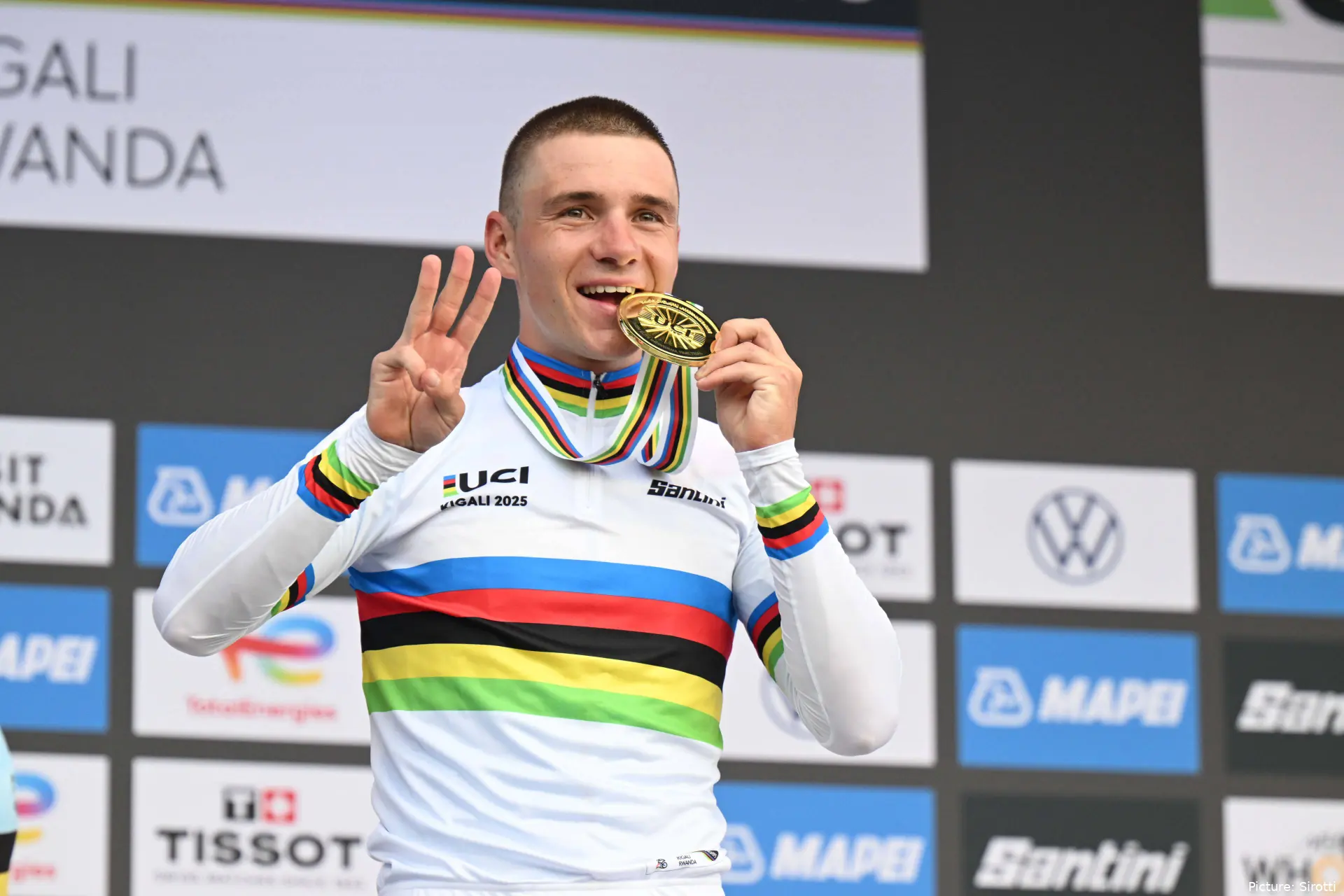
The cobbled climb of the Côte de Kimihurura, with the Kigali
Convention Centre looming above, provided the perfect theatre for arguably
Remco Evenepoel’s most impressive win of his career. On Sunday, the Belgian
defended his rainbow jersey in the elite men’s time trial at the World
Championships in Rwanda, winning the event for the third year in a row. The
result was emphatic in numbers and rich in symbolism too: Evenepoel caught
Tadej Pogacar on the road, reversing the humiliation of his Tour de France
collapse just two months ago, and crossed the line more than a minute clear of
his rivals. At just 25 years old, with three consecutive time trial world
titles and seven World Championship medals in total, Evenepoel has entered a
new realm, one that places him alongside, and perhaps on course to surpass, the
greatest time triallists in history.
How Evenepoel took the title again
The Kigali course was designed to test every facet of a
rider’s ability. At 40.6 kilometres with 680 metres of climbing, it was no drag
race. From the Côte de Nyanza’s 2.5 kilometres at six percent, to the long drag
back up the same hill at 3.5 percent, to the brutal Côte de Péage and the
cobbled sting of Kimihurura, it was terrain that appeared better suited to
Pogacar than to Evenepoel.
Yet it was the Belgian who thrived.
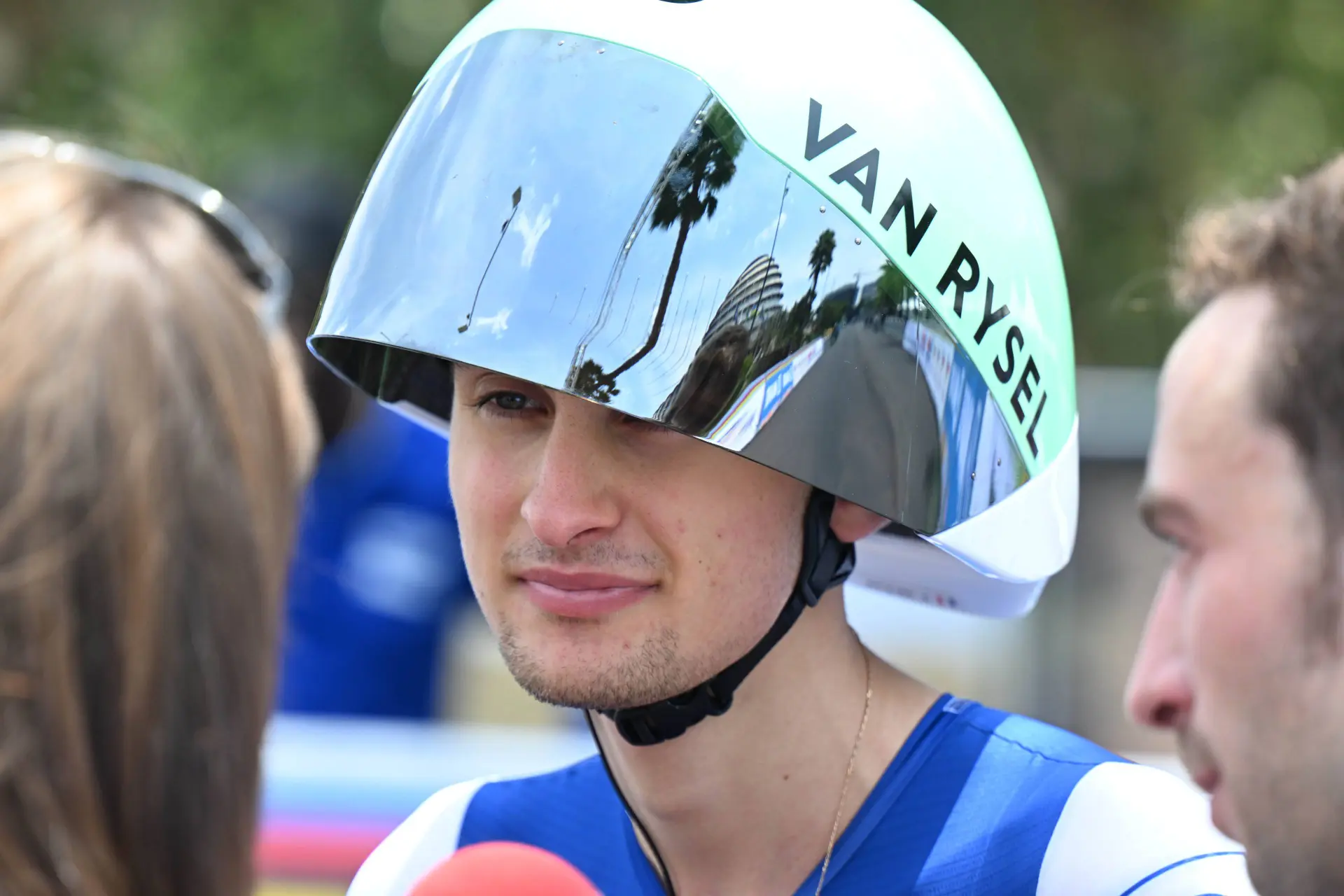
Starting last as defending champion, Evenepoel quickly set a
rhythm. By the first check he was already an incredible 40 seconds ahead of his
nearest rivals, but the most dramatic moment came in the closing kilometres.
Pogacar had set out two minutes and thirty seconds before him, yet with the
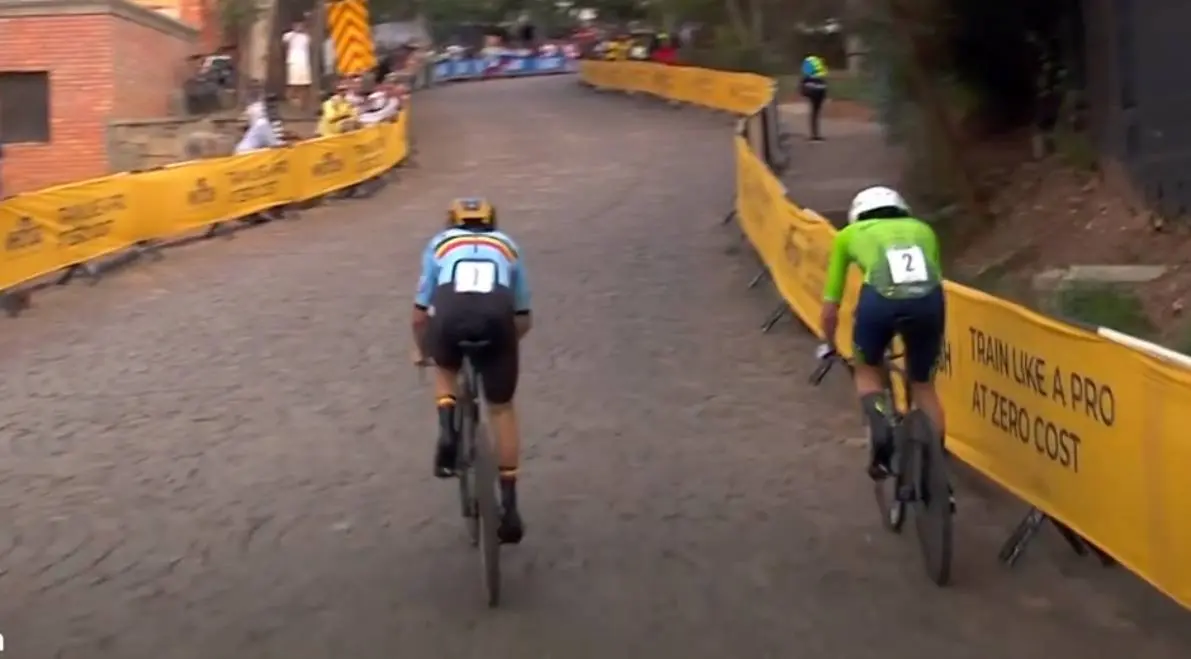
finish line in sight, Evenepoel reeled him in. On the cobblestones of
Kimihurura, in front of packed crowds, he powered past his Slovenian rival.
That’s right. Arguably the greatest rider we have ever seen,
passed on the course.
“I could see I was closing in on Tadej Pogacar, I just rode
as fast as I could,” Evenepoel said afterwards. His winning time of 49:46 was
the only effort under 50 minutes. Jay Vine took silver, 1:14 down, while Ilan
van Wilder completed the podium. Pogacar, stunned by being overtaken, was left
in fourth, one second off bronze. “It’s a hard one to swallow,” he admitted, on
what was also his 27th birthday.
Redemption after Peyragudes
The sight of Evenepoel catching Pogacar carried meaning that
went far beyond a simple time gap. Just two months earlier, on Stage 13 of the
Tour de France, Evenepoel had suffered the most humiliating moment of his
career. That day’s mountain time trial to Peyragudes, only 10.9 kilometres, but
with 645 metres of climbing and a brutal 13 percent final ramp, became one of
the Belgian’s darkest days. He imploded spectacularly, losing two minutes and
thirty-nine seconds to Pogacar, and was even overtaken on the road by Jonas
Vingegaard. Exhausted and destroyed by his time in the Pyrenees, the Belgian
abandoned the Tour the next day on the slopes of the Tourmalet.
In Kigali, the echoes were impossible to miss. The course
contained similar steep ramps and repeated climbs, and many expected Pogacar to
exploit them again, and many thought we would finally see Evenepoel beaten in
the time trial.
Instead, Evenepoel reversed the narrative. He did not crack
on the hills; he crushed them. Where Peyragudes had exposed him, Kimihurura
crowned him. The act of overtaking Pogacar, this time with himself as the
dominant force, was redemption, a demonstration that he had absorbed the
lessons of July and emerged stronger.
Read also
An all time great?
Evenepoel’s victory was not just emotional; it was
statistical confirmation of his standing among cycling’s all-time greats.
According to Cycling Statistics on X, he now has seven World Championship
medals across the road race and time trial, the same number as the legendary
Alejandro Valverde. The difference is in their balance: Valverde’s seven all
came in road races, while Evenepoel’s include six in the time trial and one in
the road race.
His medal tally is unprecedented for a rider who excels in
both disciplines. Of the select group with podiums in both events, Evenepoel
leads with seven, ahead of Miguel Indurain’s four and Wout van Aert’s three.
His collection consists of three TT golds, one silver, two bronzes, and the
2022 road race gold. No other rider in history has such a spread.
By winning in Kigali, Evenepoel also became the first rider
to claim rainbow jerseys in four consecutive seasons: road race gold in 2022,
time trial victories in 2023, 2024, and 2025.
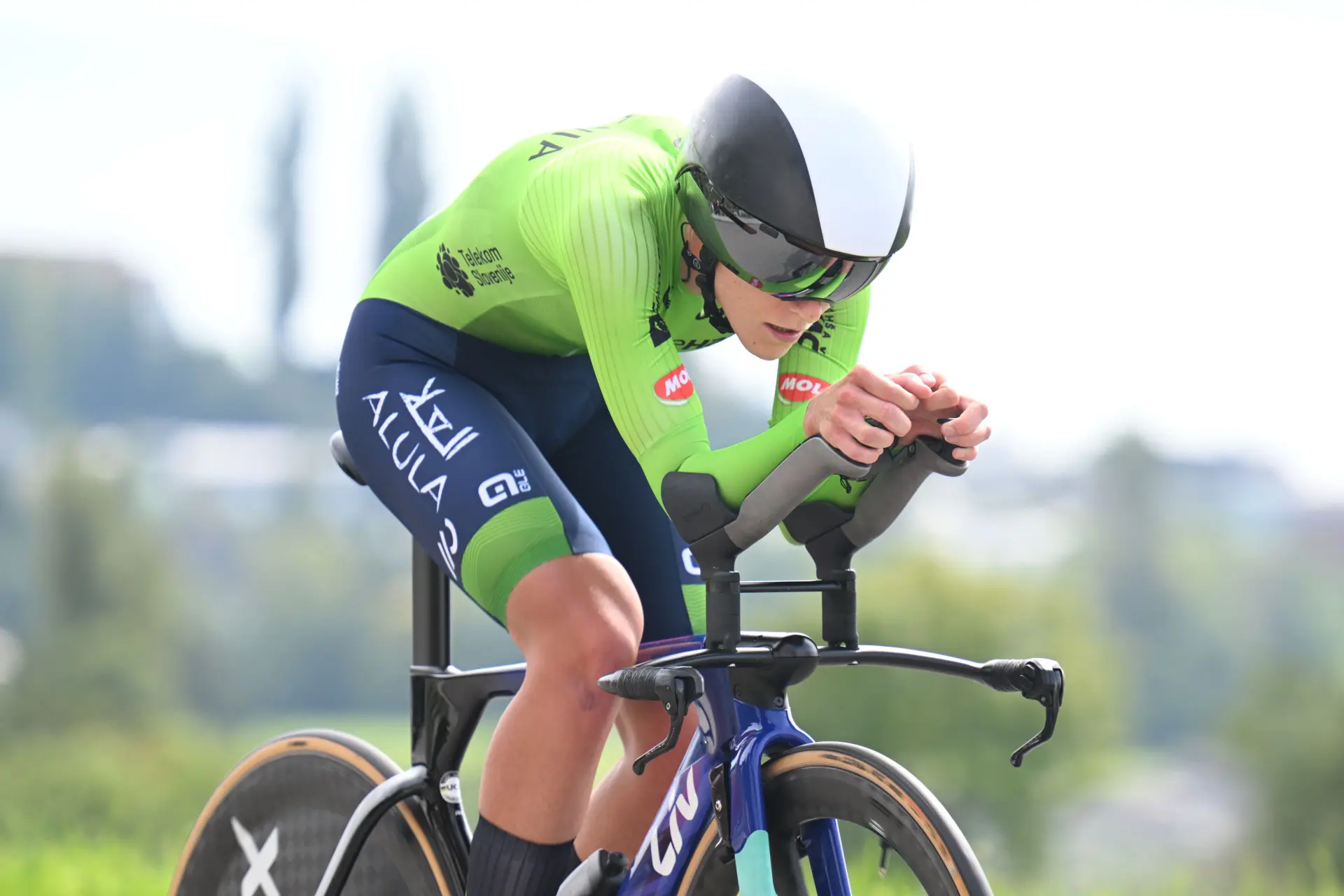
Within the time trial alone, his trajectory is equally
historic. With three golds and six total medals, he is now just one victory and
one podium away from equalling the all-time record of Fabian Cancellara and
Tony Martin, who each have four wins and seven medals. That he has reached this
stage at only 25 suggests the record is his for the taking.
For Pogacar, Kigali was an opportunity missed. He had
arrived as the reigning road race world champion and four-time Tour de France
winner, with two prior victories over Evenepoel in time trials, in Nice in 2024
and Peyragudes in 2025. Both of those wins came on climbing courses, and Kigali
seemed cut from the same cloth. Instead, he finished fourth, a second from the
podium, and endured the indignity of being overtaken on the road.
So where does Evenepoel stand now? His numbers demand
comparison with the legends. Fabian Cancellara and Tony Martin are the
benchmark, with four titles each, collected over long careers. Miguel Indurain
and Bradley Wiggins defined earlier eras, while Chris Boardman and Jan Ullrich
made their own marks.
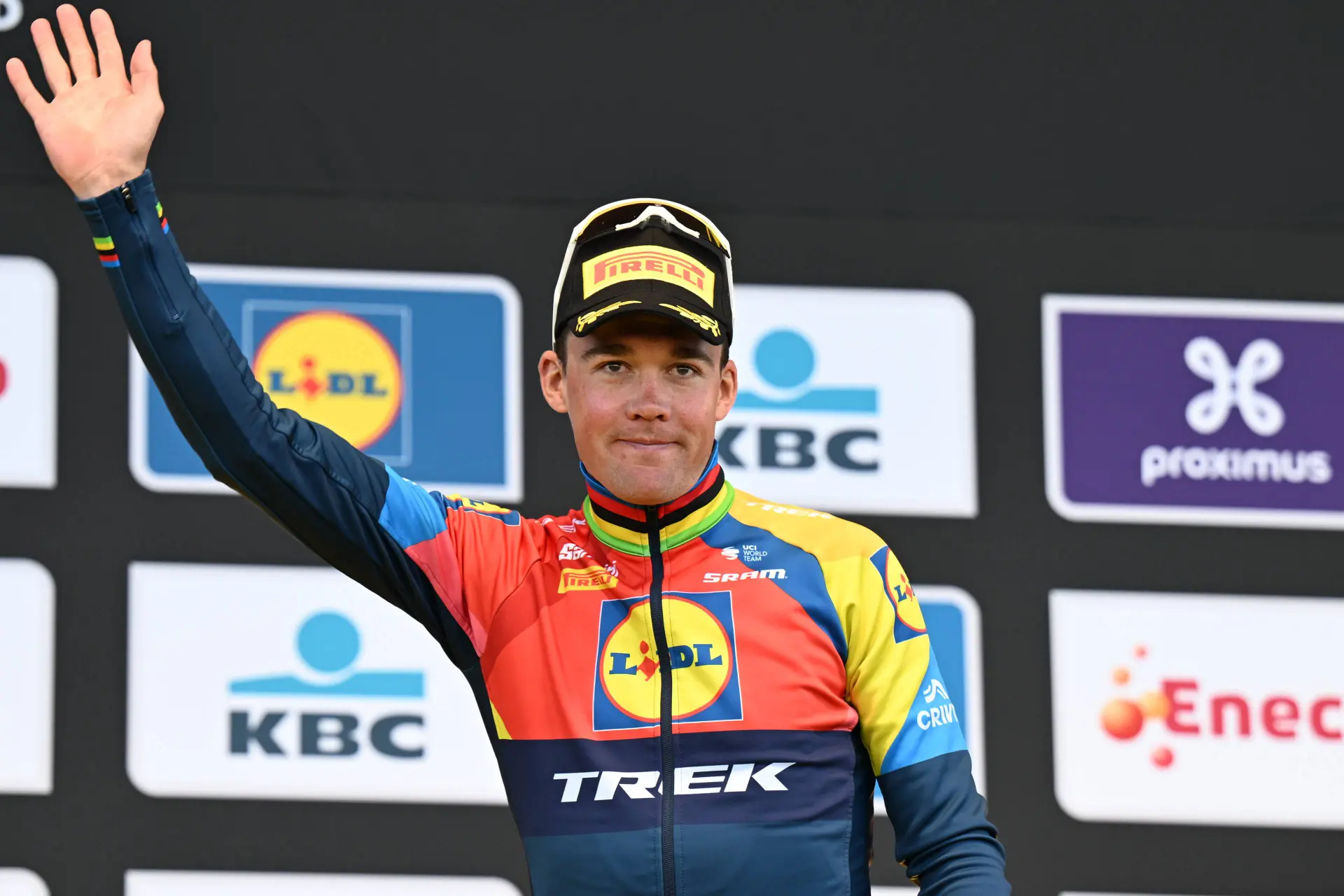
Evenepoel is not only closing on Cancellara and Martin’s
records, he is doing so far earlier in his career. At just 25, he has three
golds, six TT medals, seven Worlds medals overall, and a road race title to his
name. No rider has combined such range so quickly. Unlike Valverde, whose
Worlds legacy was built entirely in the road race, Evenepoel straddles both.
Unlike Martin, whose power dominated flat TTs, Evenepoel has now shown he can
master climbing-heavy ones too. And unlike Cancellara, who never won a road
race rainbow, Evenepoel has already done so.
It is this versatility, as much as his medal count, that
distinguishes him. He is not just a time trial great in waiting; he is a World
Championships great already.
The road race
Next weekend’s road race in Kigali offers another chance to
extend the tally. Evenepoel will not be favourite, Pogacar’s climbing supremacy
over 5,475 metres of vertical gain makes him the man to beat, but the Belgian
is already expected to contend for the podium. If he does, he will move clear
of Valverde’s shared record, becoming the most decorated rider in Worlds
history. And, judging by Sunday’s performance, Evenepoel will certainly be
Pogacar’s closest challenger next weekend. If Pogacar isn’t at his very best
next weekend, Evenepoel could dethrone him and take back the title he won in
2022.
Beyond that, the horizon is long. With Cancellara and
Martin’s time trial records within touching distance, Evenepoel is on track to
redefine the discipline. His youth ensures that, barring injury, he could
dominate for many more years to come.
Each victory from here strengthens not only his numbers but his narrative: a
rider who fell in Peyragudes, but rose in Kigali, who caught Pogacar on the
cobbles, and who has turned the rainbow jersey into his own.
HATTRICK!!🌈🥇🔥
— Remco Evenepoel (@EvenepoelRemco) September 21, 2025
Becoming World Champion ITT three times in a row feels unreal. 🤩💭
We've worked so hard towards the World Championships and I'm so proud to bring the Golden Medal and Rainbow Jersey home. 🇧🇪❤️
Focus on next week!!👀💪🏼 pic.twitter.com/gR0gXcKuoK

Fin MajorCycling Journalist
Fin Major is a UK-based writer at CyclingUpToDate and has been part of the team since 2024. He is the site’s main writer for FAQs and evergreen explainers and has written around 2,000 pieces for the platform. Alongside this work, he focuses on in-depth analysis and covers the biggest races on the calendar, including the Tour de France, the Giro d’Italia, and La Vuelta a España, providing clear context around performance trends, tactics, and key storylines.
In his reporting, Fin uses reputable data sources such as ProCyclingStats for results, statistics, and historical context. He places strong emphasis on careful sourcing, editorial accuracy, and updating articles promptly when new, verified information becomes available. Outside of writing, Fin is an active cyclist, which supports his practical understanding of the sport and its demands.
claps 0visitors 0
Just in

Popular news
Latest comments
- disrespectful thats a joke ...
 Davide20-10-2026
 - EF’s “island of misfit toys” squad is probably one of my favorites in the peloton. They are fun to watch, always trying stuff - they ride with heart and panache, and their kits are excellent.wrsty20-10-2026
- 'Children these days'... Wout, since the caveman learned to say "Ug", older generations have always said this about younger generations. Not every young rider is a cowboy. So what's to say that the fact that Poels was respectful meant that his peers were equally so?
 Rafionain-Glas19-10-2026
 - "...In a weakened field" Most definitely ! YAWN !frieders319-10-2026
- Noted. But I had to appease his fans.MajorPayne19-10-2026
- I wonder if he'll race Challenge MallorcaRafionain-Glas19-10-2026
- Head to head time-splits: Jay Vine vs Remco Evenepoel: 10.5 km - Vine lost 45 seconds to Evenepoel 34.2 km - Vine lost a further 1:10, and was caught in the vicinity of that checkpoint. Note: I remember Vine getting caught before the second checkpoint, and ProCyclingStats log supports that, however, the gap at the second checkpoint was less than 2 minutes. 45.4 km - Vine lost only 16 seconds Of course, Vine lost less time in the middle section than the early section, but at the final segment rate, he'd have lost 15 seconds in the opening section and and 34 seconds in the middle. It is possible that Vine paced himself very well but that seems unlikely. In comparison with Stefan Küng: Kung lost: 26 seconds at T1. A further 1:11 by T2. A further 40 seconds by the finish. Relative to Evenepoel, Küng did slow down by the end. Maxime Decomble: Lost 47 seconds at T1. A further 1:20 by T2. A further 26 seconds by the finish. Mikkel Bjerg: Lost 37 seconds at T1. A further 1:34 by T2. A further 46 seconds by the finish. It is not concrete evidence that Vine cheated though it certainly doesn't absolve him. However, watching the race, I am 100% sure that Vine did not pull over and follow a different line when Remco passed him. Remco pulled away quite quickly, but the gap did not balloon and Vine definitely got aero assistance.Rafionain-Glas19-10-2026
- That ship has sailed years agovappaxbipmv19-10-2026
- He doesn't have to. I'd be perfectly happy if he loses SB if he then wins everything elsevappaxbipmv19-10-2026
- Please don't put Remco in the same sentence as Tadej. It's disrespectful to Tadej. Please make a note of this.KissinKate19-10-2026
Loading
Write a comment