ANALYSIS - Jonas Vingegaard puts in his best climbing performance of 2026; Should Tadej Pogacar worry?
CyclingWednesday, 27 May 2026 at 10:36
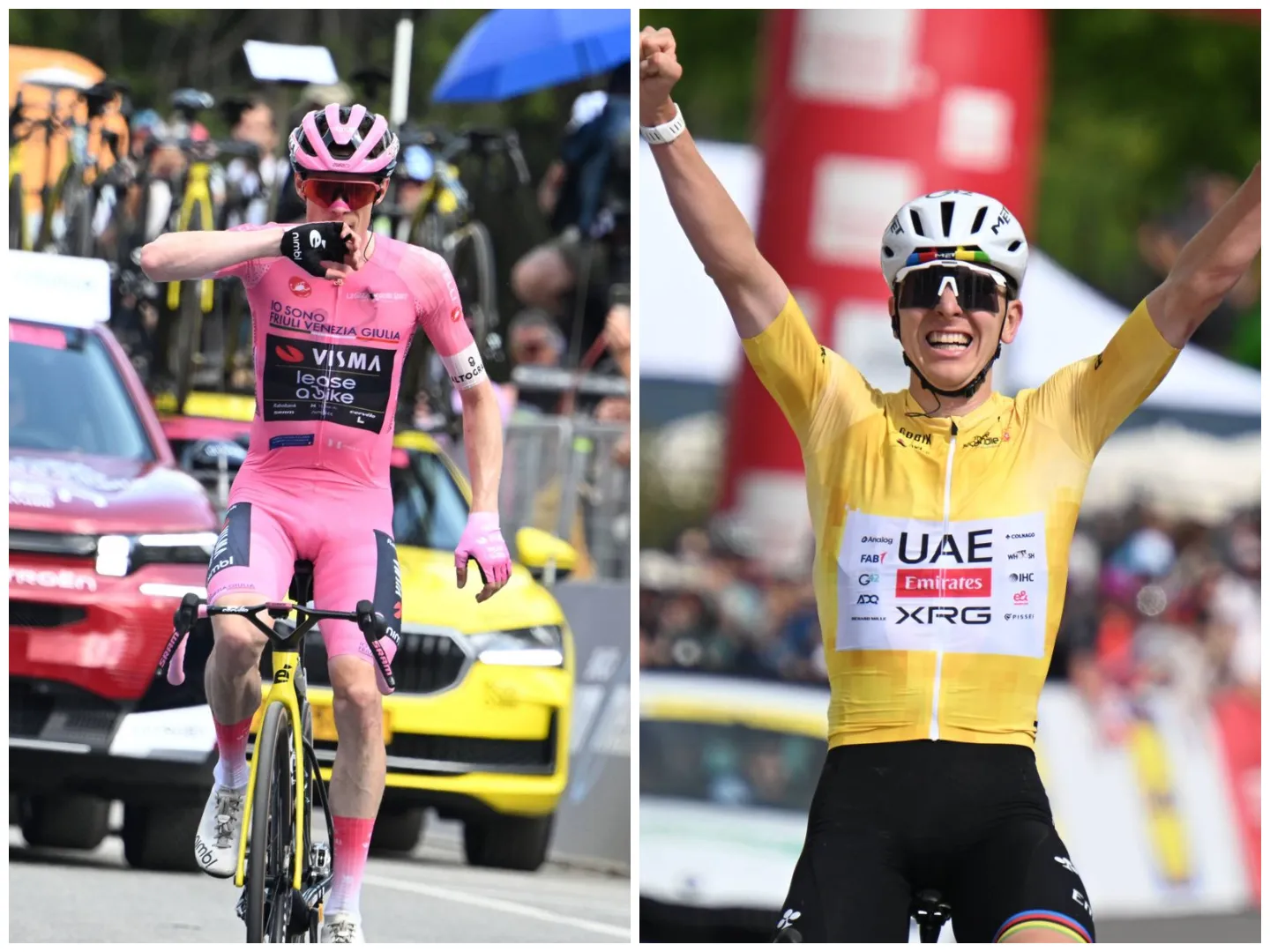
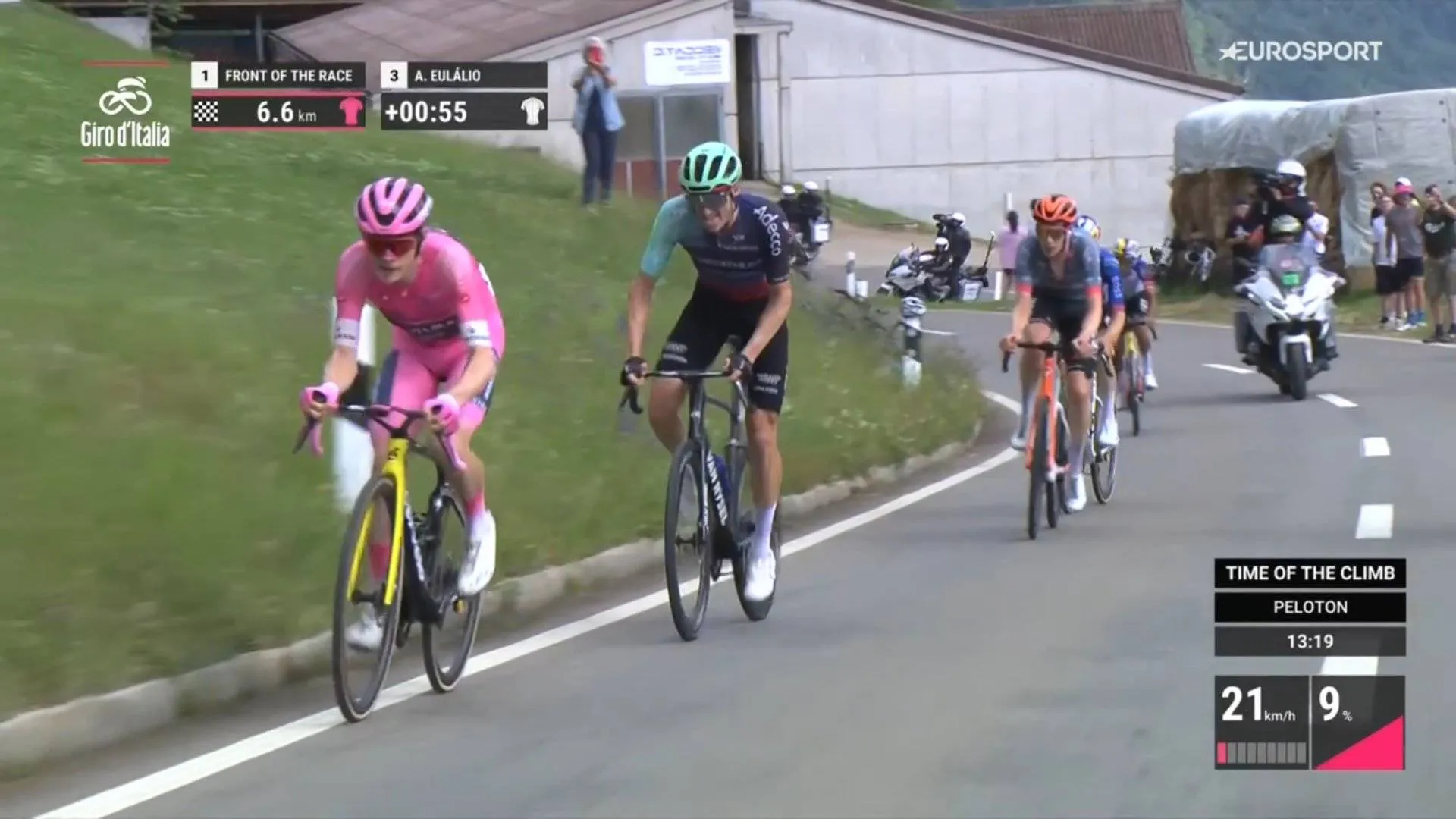
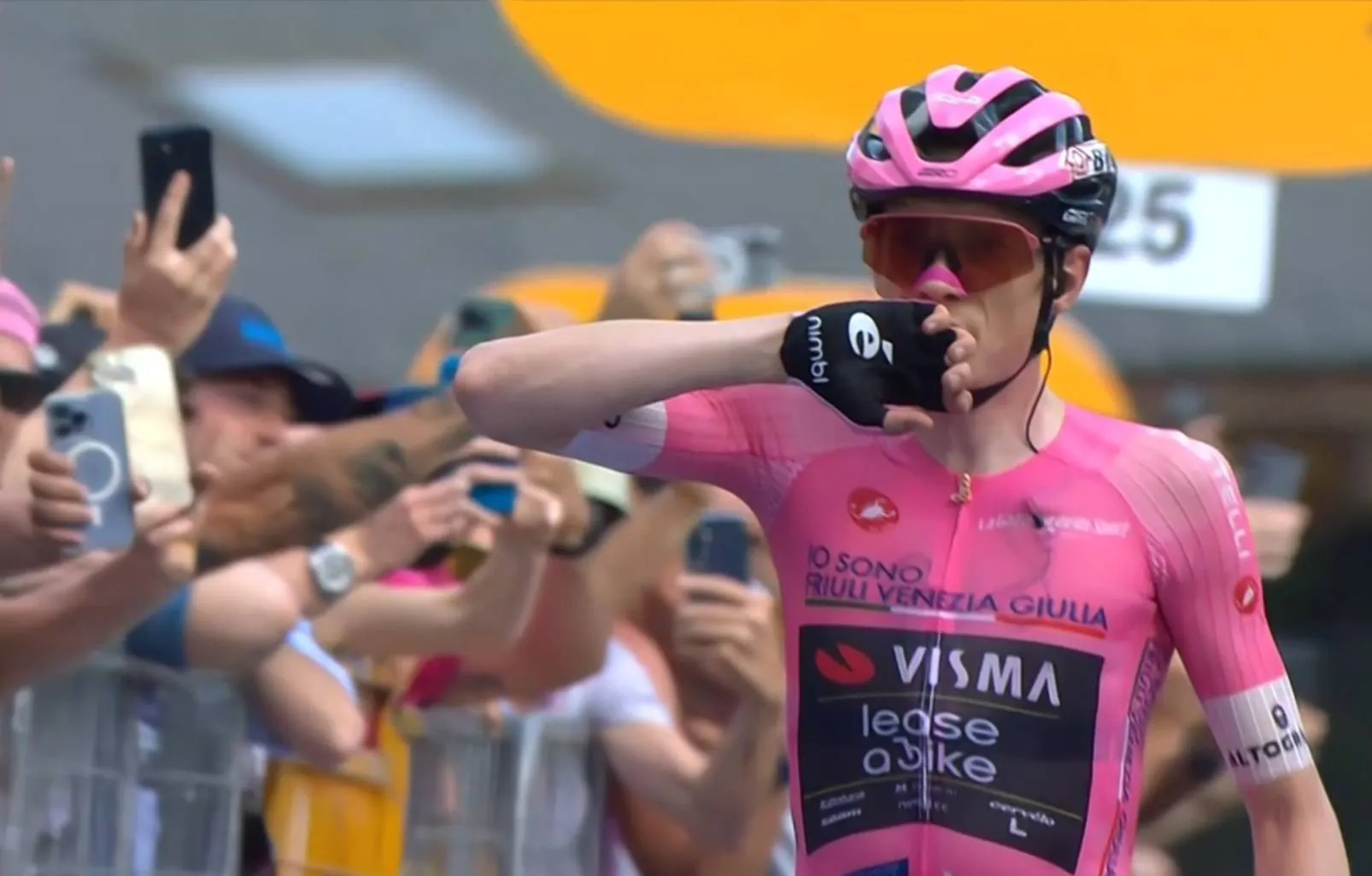
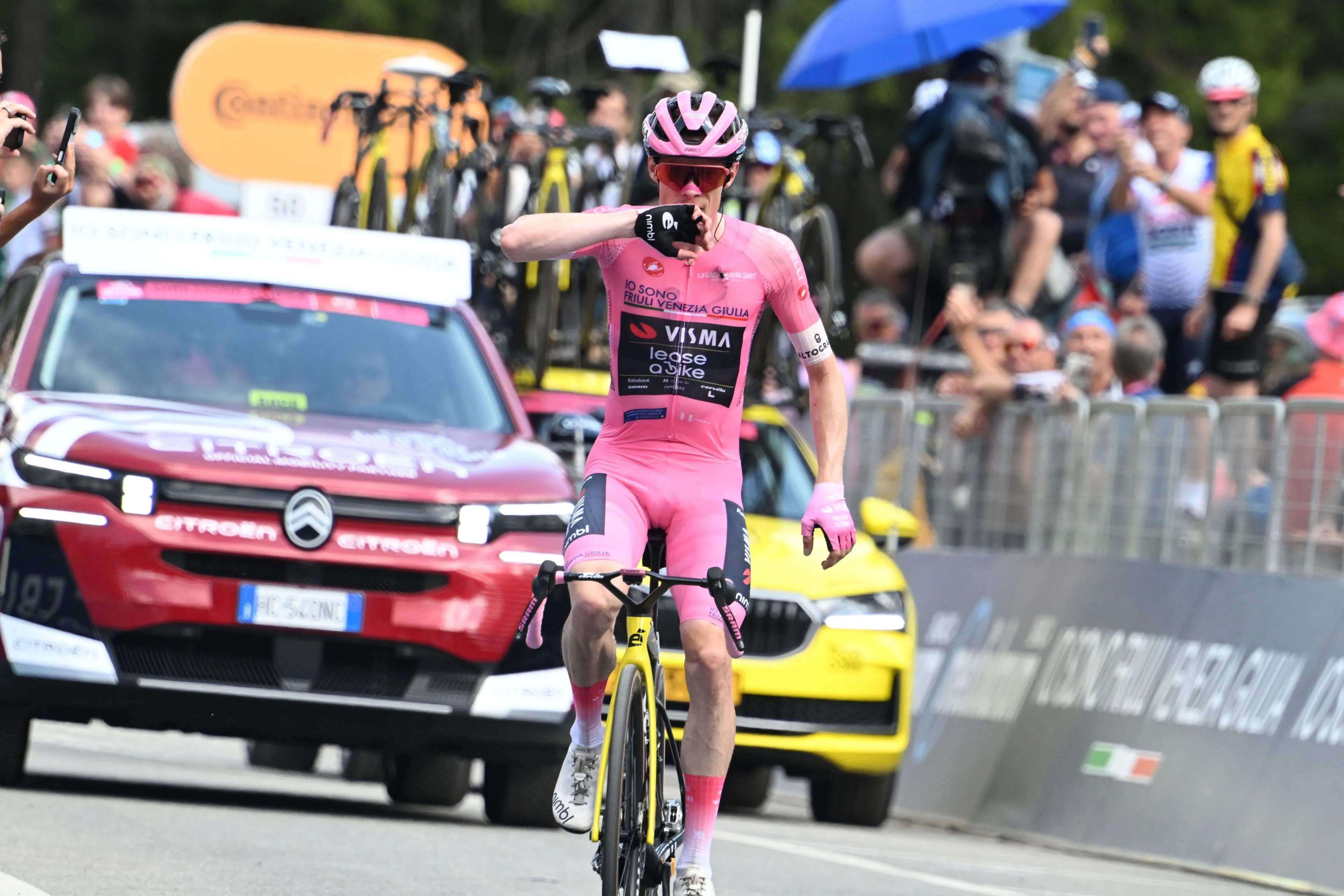
Stage 16 of the Giro d'Italia was perhaps the best sign Jonas Vingegaard's season needed at this point in time. The Team Visma | Lease a Bike rider put in a stellar effort to cement his lead in Carì; but for the first time this year, he put in a performance that may actually be an argument for him to potentially challenge Tadej Pogacar this summer at the Tour de France.
Whilst enough to lead the Giro d'Italia and be the dominator of the season's first Grand Tour, the Dane's first climbing performances were far from impressive, taking into consideration past performances and those of his rivals.
According to 'Na1chaca', an X user whose power output estimates have been proven quite accurate by Vingegaard himself in the past, Vingegaard rode Blockhaus at 6:35W/Kg for 37 minutes; Pila at 6:39W/Kg for 40 minutes and now at Carì: 6.77W/Kg for 30:50 minutes.
Read also
Putting numbers into context
Of course, these power outputs are not all executed in the same scenarios. The Blockhaus stage had 244 kilometers in length; the Valle d'Aosta had 133 but several categorized climbs; whilst this Tuesday's stage into Carì had only 113 kilometers on the menu. Despite this, almost 3000 meters of climbing, nowhere near an easy stage, also ridden at a strong pace all day long by Team Visma | Lease a Bike.
It was expected that Vingegaard would put out a higher power output on this climb taking into consideration it was slightly shorter, and perhaps the easiest of all three stages. However unlike the others, it already comes in the third week of the race - where fatigue has began affecting several riders.
Read also
How does the Carì climb compare to Pogacar and Vingegaard's previous Tour de France performances?
The best climbing performance in the sports history belongs to Pogacar, when he rode Plateau de Beille at 6.98W/Kg for 39:50 minutes. Vingegaard, on that day at the 2024 Tour de France, lost almost a minute to the Slovenian. However he put out 6.85W/Kg, an eye-watering performance in which he paced for his rival for several kilometers. The 2024 Tour saw Pogacar, Vingegaard and also Remco Evenepoel at the highest level any of them has reached at the Tour de France.
These values might be unreachable this summer, but none of the riders could reach for these numbers in 2025. At last year's Tour, Pogacar rode 6.74W/Kg for 35 minutes at Hautacam; whilst at Mont Ventoux - a flat stage until the final climb - Vingegaard rode 6.52W/Kg for 54 minutes.
The 2025 numbers are those that are most accurate to be compared with, as they represent the duo's most recent battles. Vingegaard's ascent to Carì was executed in a shorter stage and following a rest day, but if the estimates are accurate, the climbing level resembled for the first time the Dane's peak form during last summer.

Jonas Vingegaard is bound to win the 2026 Giro d'Italia; but can he aim for more?
Pogacar revving up his climbing engine in Spain
Tadej Pogacar will race the Tour de Suisse following his ongoing altitude camp in Sierra Nevada. The World Champion had a classics-focused spring, training the shorter and more explosive efforts whilst putting on weight in muscle that would help him win Milano-Sanremo; and come the closest he's ever been at winning Paris-Roubaix.
After his Liège-Bastogne-Liège triumph over Paul Seixas, Pogacar rode the Tour de Romandie. His admission was that he still had too much weight in Switzerland, with his climbing performances being far from his best.
On stage 1 he climbed Ovronnaz at 6.58W/Kg for 28 minutes; and the Jaunpass on stage 4 was climbed at 6.81W/Kg for 21 minutes. Arguably, Vingegaard's climbing level has been superior so far this year - but both riders should realistically reach their top level in time for the 2026 Tour.

Whilst victorious, Tadej Pogacar's climbing level at the 2026 Tour de Romandie did not impress
As Visma argued on multiple occasions, Vingegaard is more prone to reaching his best level on his second Grand Tour of the season. Furthermore as we've seen in 2024, Tadej Pogacar also reached a higher level at the Tour after winning the Giro d'Italia.
Racing a Grand Tour requires much more than just individual climbing performances, however Visma is showing they still have what it takes to be a quality rival for UAE Team Emirates - XRG. As Vingegaard prepares to certainly win his first Corsa Rosa, he will also take on the Tour with less pressure than all previous years.
claps 1visitors 1
Just in

Popular news
Latest comments
- TDF 2024 - Plateau de Beille - Pogi: W/k-6.88 ... Vinnie: W/k-6.71 TDF 2024 - Isola 2000 - Pogi: W/k-6.78 ... Vinnie: 6.35 TDF 2025 - Hautacam - Pogacar: W/k-6.75 ... Vingegaard: W/k-6.30 TDF 2025 - Peyragudes - Pogacar: W/k-7.35 ... Vingegaard: W/k-7.08marco-thomson27-05-2026
- Not really... Poga has it covered...Knickout27-05-2026
- agreed. he has won every mountain stage easily. he is pacing himself perfect for both the overall win and to be ready for the TdF. The scary thing is for the TdF, these are almost like training rides. If I was Tadej, I would be very nervous.mij27-05-2026
- There’s a premise here that must be challenged - that JV is riding his max on these giro climbs — why ride 7w/kg when 6 is plenty to put time into rivals?Crashjames27-05-2026
- the naMe changes but the nOnsense remains Unbroken.antipodeanpedalfan27-05-2026
- Vingegaard is good, there's no doubt about that. Arguably the third best GC rider today, but no one can convince me that if Seixas was at the Giro, that he would be in the lead in GC over Vingegaard after 16 stages. OK, Pogi is another dimension! Don't let yourselves be influenced by the media about the best Vingegaard ever. Numbers don't lie. He is currently below his Tour 2025 level and two levels below his 2024 Tour where he was destroyed by Pogacar. If anything unpredictable doesn't happen to Pogi, Vinnie will never win the 2026 Tour. He will even have fight with Seixas for 2nd place. TDF 2024 - Plateau de Beille - Pogi: W/k-6.88 ... Vinnie: W/k-6.71 TDF 2024 - Isola 2000 - Pogi: W/k-6.78 ... Vinnie: 6.35 TDF 2025 - Hautacam - Pogacar: W/k-6.75 ... Vingegaard: W/k-6.30 TDF 2025 - Peyragudes - Pogacar: W/k-7.35 ... Vingegaard: W/k-7.08marco-thomson27-05-2026
- The GC contest is only one part of the overall race though. I think it's been a great and unpredictable GT in terms of almost everything else. The first couple of days wiped out so many high prospects for stages, points contest, sprints - who knew what was going to happen next. It really threw the cat amongst the pigeons, and now look at the other jersey contests - the "sprint" jersey is a fascinating face-off between the Narvaez and Magnier - then you've got the KOM jersey with Ciccone throwing himself at the impossible task with verve and pluck, and the youth jersey showdown between the slowly-sinking-down-the-board Eulálio and Piganzole who on a blinder, but having to tread a very fine line between being a fantastic last man for Jonas and trying to rip the white jersey away. Sure, the GC winner might be all-but wrapped up, but the battle for 2nd to about 7th is completely open.antipodeanpedalfan27-05-2026
- There was never any doubt who would win the Giro this year. The only unknown was who is going to be on the podium on second and third place. Results in cycling these days are so predictable because there is a clear hierarchy between the cyclists. Seldom does anyone beat conventional wisdom. Is it good for cycling? I guess not.
 PogiFan2Day27-05-2026
 - Exactly. There is Pogi - chief alien Vingo, MvdP, and now Seixas - lesser aliens And then a bunch of merely talented human beings on the next tier Remco, WVA, Mads, IdT, etc.mobk27-05-2026
- thats a whatever ok.Davide26-05-2026
Loading
4 Comments