“A big mistake has been made trying to find the next Tadej Pogacar at all costs” – Matteo Trentin delivers stark warning to modern cycling
CyclingTuesday, 24 February 2026 at 14:45
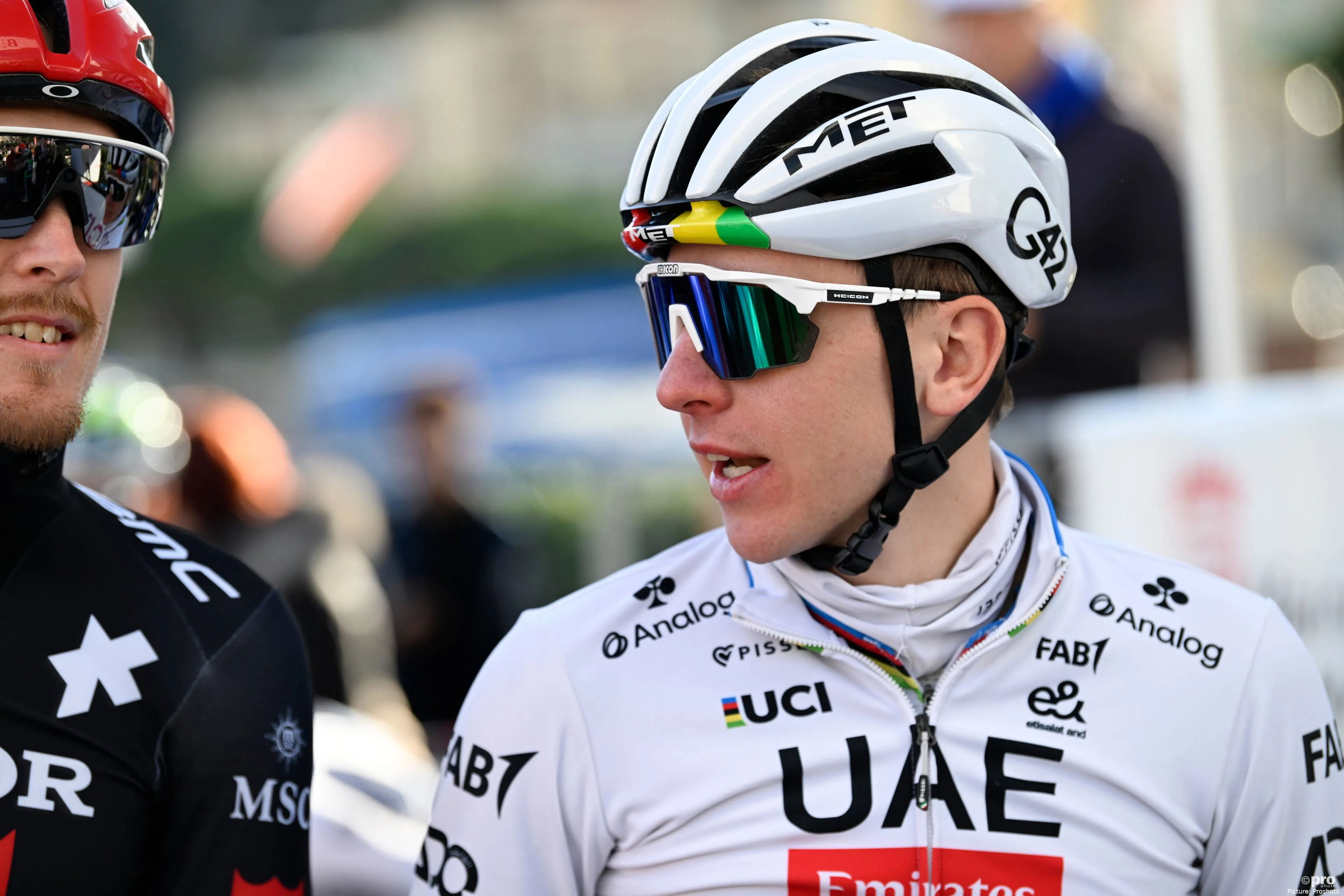
The rush to replicate cycling’s most extraordinary modern outlier may be costing the sport more than it realises. Former UAE Team Emirates road captain Matteo Trentin issued a pointed warning about the direction of elite development, arguing that the industry’s obsession with finding another Tadej Pogacar has already come at a price.
“I think in recent years a big mistake has been made trying to find the next Pogacar at all costs, and in doing so we’ve lost many talents,” Trentin analysed on the Bici Sport Podcast.
It is not the voice of an outsider. Trentin spent three seasons alongside Pogacar at UAE Team Emirates, operating as one of the senior figures within a squad built around the Slovenian’s rapid ascent. He saw firsthand what a generational phenomenon looks like from the inside. His point is not that Pogacar’s rise was premature or artificial. It is that it was exceptional.
The danger, in Trentin’s view, lies in treating the exception as the blueprint.
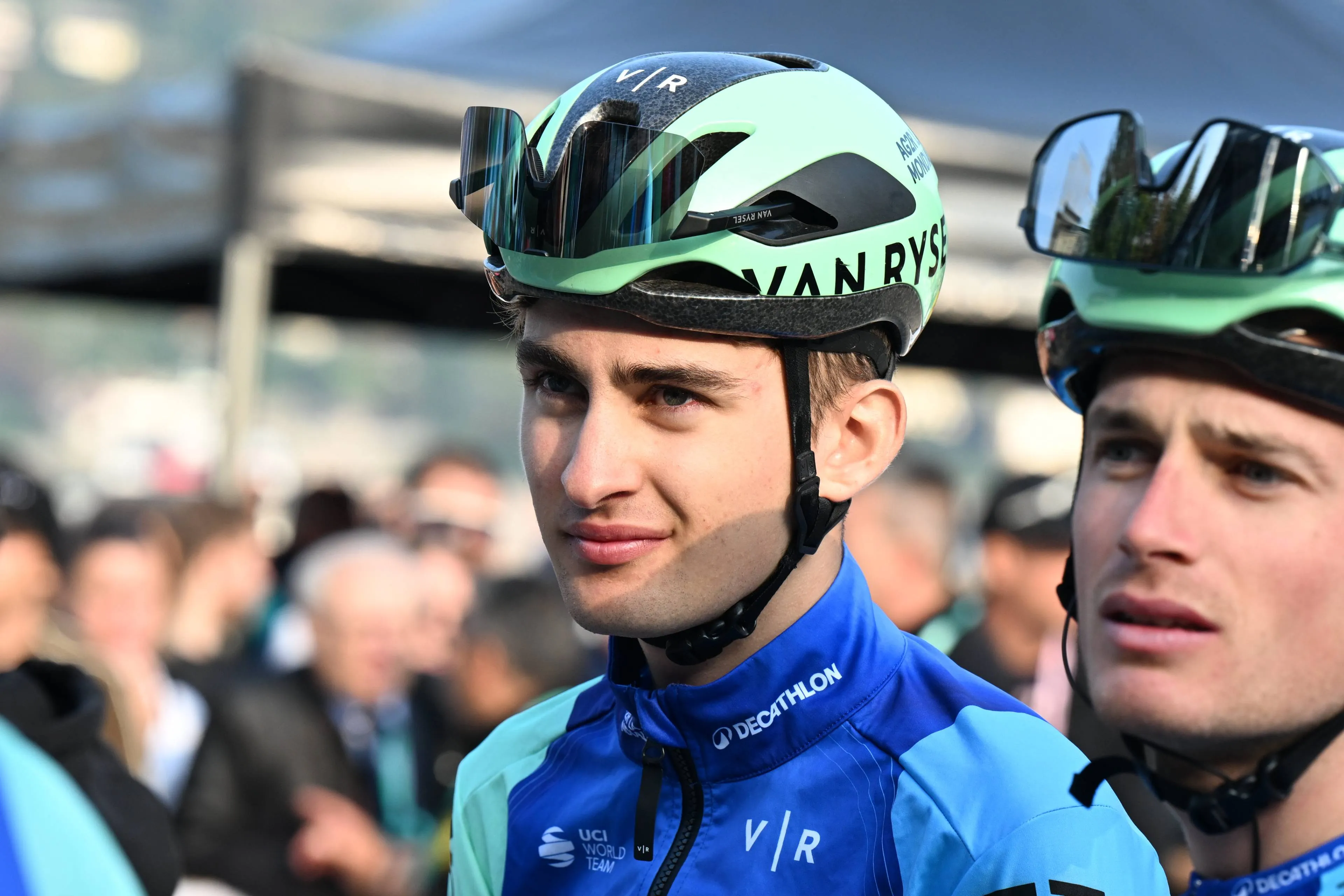
Physically ready is not mentally ready
“Just because someone is physically ready doesn’t mean they are mentally ready,” he continued.
That distinction sits at the heart of his argument. Pogacar’s early dominance, which included multiple Grand Tour triumphs before the age at which previous generations were still learning their trade, shifted expectations across the peloton. Teams now scout and sign younger. Results are demanded earlier. Comparisons arrive faster.
Turning professional in 2011, Trentin built his career gradually, winning stages in all three Grand Tours and claiming the European road race title in 2018 before transitioning into a road captain role at UAE. In that time, cycling’s margins tightened and its professional demands multiplied.
“The life of a professional requires a lot because you can do it from home, but that means you have to take care of your training, your nutrition, your rest, going to the airport to reach races. So many things that make the difference.”
The modern rider’s workload extends well beyond race day. Data analysis, strict fuelling protocols, year-round intensity and constant travel have become baseline expectations. For a 19-year-old stepping directly into that ecosystem under the label of “next Pogacar”, the psychological strain can match the physical.
When Trentin says the sport has “lost many talents”, he is pointing to those who may have been physically capable but not yet equipped for the totality of that life.
An outlier, not a template
Pogacar joined UAE Team Emirates in 2019 and rapidly became the team’s centre of gravity. By his early twenties, he had reshaped tactical norms and race calendars, winning across Grand Tours and Monuments with a freedom that felt almost untethered from precedent.
For teams, that kind of success naturally influences recruitment philosophy. If one rider can dominate at 21 or 22, why wait until 27?
Trentin’s warning suggests the answer is patience.
His critique does not diminish Pogacar’s achievements. Rather, it acknowledges their rarity. A generational talent can emerge organically. Attempting to manufacture one by accelerating every promising junior into leadership may produce as many casualties as champions.
The next Pogacar may arrive one day. Trentin’s point is that trying to force him into existence is the real mistake.
claps 2visitors 2
Just in


Popular news
Latest comments
- Sorry but Cian Uijtdebroeks is not one of the "most anticipated stars of the 2026 classics"mobk24-02-2026
- Agreed. Jonas is awesome, but he isn't moving ahead of Pogi on the list of greats any time soonmobk24-02-2026
- You have no idea when the next will arrive, it has nothing to do with logic and order. You can have another in 2 years, 200 or maybe never again. What’s more, Pog hasn’t actually set any comparable benchmarks (and unfortunately there are very few in road cycling), he’s just winning far more and easier against the competition than usual, that also depends on competition, era, race choices and outside factors. He’s just an incredibly broad rider, as far as road cycling can be considered to span a broad range which it actually doesn’t.Mistermaumau24-02-2026
- Lol delulu ItaliansAyrton24-02-2026
- Nobody is going to move ahead of Pogi even if he stops nowabstractengineer24-02-2026
- The next Pogacar or Merkcx will not arrive for the next 25 years. When you treat an outlier of an outlier as a normal this is bound to happen. Low weight, high training volume, high intensity, focused diet means they are going to burn out faster have disorders and discarded when not usefulabstractengineer24-02-2026
- Exactly. I double your comment.Mou-Cro-HR24-02-2026
- I met Plappy at the TDU this year - it was after the awards ceremony of the final stage and I watched the Jayco team leave their van and cycle off to somewhere in town (presumably for some food). They rode past me one by one and I congratulated each of them from maybe 3 metres away (there were barriers). Only Plappy responded with thanks. Seems like he is down to earth and hasn't let his WorldTour status get to his head. Not that the rest of the team were rude or anything though: Mauro Schmid was chatting to some teammates. Ben O'Connor was a way back and didn't say anything as he had to catch up to his teammates.Pogboom24-02-2026
- Amen Matteo! Such nonsense going around about this rider and that rider. I am glad some common sense from someone who is not only an ex -teammate, but a person who knows! There is so much jealousy and envy going on in the peleton ( by so called pundits ), can't we take a step back an appreciate a triple generational talent in Pogi! Most of us will never see this again in our lifetime.
 QPSQUANTUM24-02-2026
 - How many winter Olympic medals? Even per population?Mistermaumau24-02-2026
Loading
4 Comments