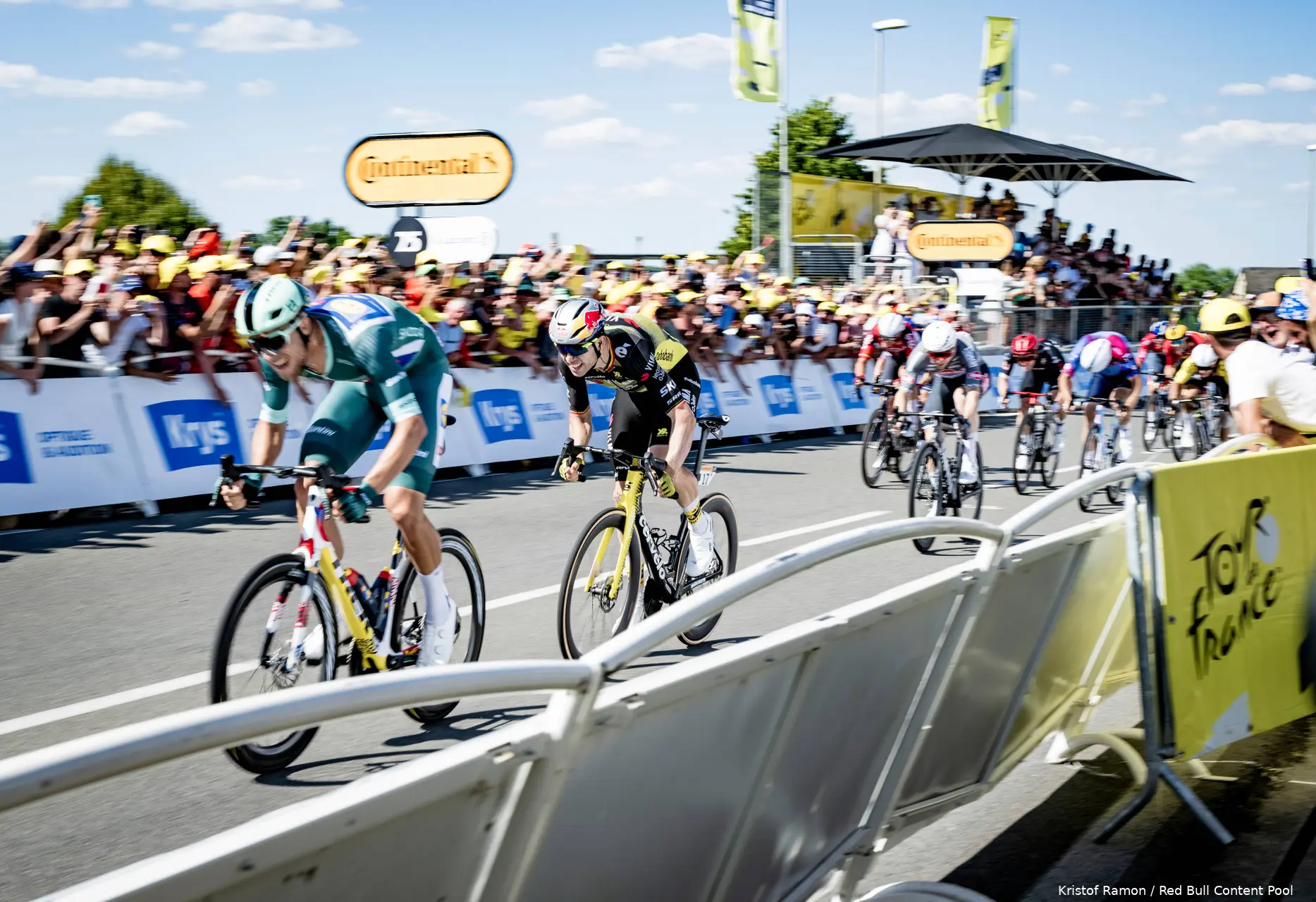
For half a century, the Tour de France has narrowly avoided the most dangerous extreme heat scenarios. But that margin is shrinking. A new international study warns that rising temperatures across Europe are steadily pushing cycling’s biggest race towards its safety limits.
The research, published in Scientific Reports, was led by the Institut de Recherche pour le Développement (IRD) as part of the European TipESM project, in collaboration with the London School of Hygiene & Tropical Medicine (LSHTM) and Barcelona’s ISGlobal. Scientists examined meteorological data from 50 editions of the Tour between 1974 and 2023 to assess the level of heat stress riders have faced.
Their conclusion is stark: the risk has increased consistently, with the past decade accounting for the highest number of extreme heat episodes recorded during the race. Although the Tour has so far avoided exceeding the maximum health risk threshold, in several cases it has done so by only a matter of days, and even fractions of a degree.
“In a way, we can say it is an extremely lucky race, but with heatwaves breaking records more and more frequently, it is only a matter of time before the Tour encounters a day of extreme heat stress that tests existing safety protocols,” said Ivana Cvijanovic, IRD researcher and lead author of the study.
She highlighted how some host cities have repeatedly come close to dangerous levels. “Paris, for example, has crossed the high heat risk threshold five times in July, four of them since 2014. Other cities have experienced many extreme heat days in July, but fortunately not during a Tour stage.”
The analysis identifies several vulnerable regions. In south-west France, areas near Toulouse (29.7°C in 2020), Pau (28.8°C in 2019) and Bordeaux (30.1°C in 2019) recorded concerning figures. In the south-east, locations around Nimes (30°C in 2020) and Perpignan also stood out. Further north, Paris (28.8°C in 2019) and Lyon are increasingly nearing the high-risk threshold, emerging as new hotspots.
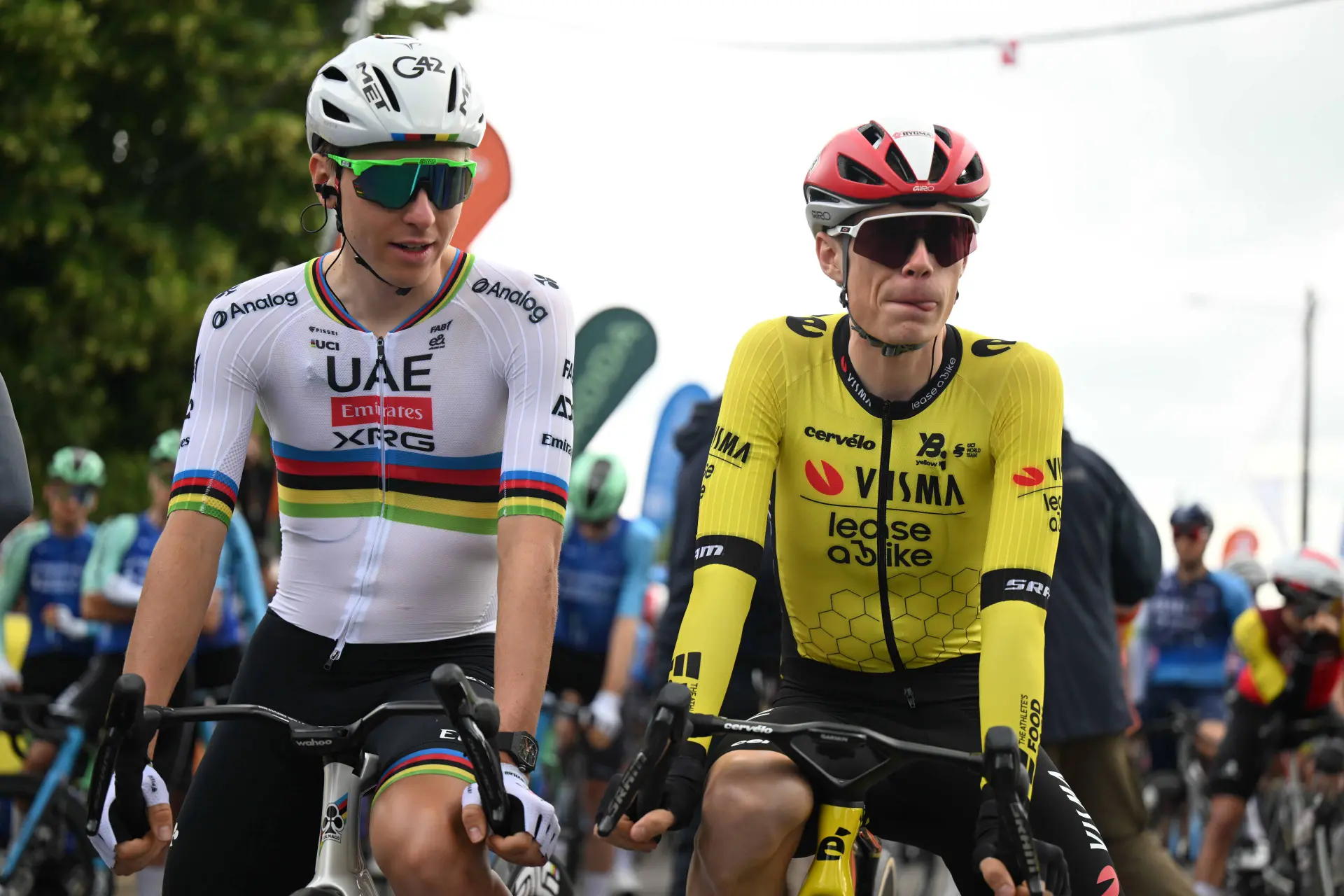
High mountains not immune to rising temperatures
By contrast, high mountain stages have historically remained within lower or moderate heat risk ranges. Iconic climbs such as the Col du Tourmalet and Alpe d’Huez have generally offered more benign conditions. However, researchers stress that even these stages are not immune to the broader warming trend.
To measure heat impact, the team used the WBGT (Wet Bulb Globe Temperature) index, which combines temperature, humidity, solar radiation and wind. They compared results with the UCI protocol, which classifies values above 28°C WBGT as high risk. The study found that mornings remain the safest time of day, while elevated heat stress can extend well into the afternoon.
Beyond cycling, the researchers say their findings should act as a warning for summer sport across Europe. Extreme heat affects not only performance but also poses a serious health risk. If current climate trends continue, organisers may need to reconsider race calendars, stage timings and medical protocols to adapt to increasingly demanding conditions.


Kieran WoodDeputy Editor-in-Chief
Kieran Wood is a sports journalist based in Wales and has been active in journalism since 2022. He regularly contributes to DartsNews.com and CyclingUpToDate.com, where he covers professional cycling and darts. In cycling, his work includes liveblogs from major races, including the Tour de France, the Giro d’Italia, and La Vuelta a España, alongside race reports and analysis. He has also conducted interviews with professional riders.
His reporting spans the full racing calendar, from one-day classics to stage races, with a focus on accurate, real-time coverage and clear contextual analysis. For statistics, results, and historical context, he regularly uses resources such as ProCyclingStats. To support reporting on rider activity and training context where relevant, he also references Strava.
In his work, Kieran places strong emphasis on careful sourcing, editorial accuracy, and updating articles as new, verified information becomes available.
claps 1visitors 1
Just in



Popular news

Latest comments
- He didn't even try to sprint all outvappaxbipmv18-10-2026
- Campenaerts looked like a rolling pumpkin with that all orange leaders skinsuit !frieders318-10-2026
- He can take his dumb a$$ politics somehwere else !frieders318-10-2026
- good to have her back. fingers crossed she‘ll be able to stay!Ketterechts17-10-2026
- A tenner and he wins the Tour next year, too 😂anonymouscyclist17-10-2026
- the answer is either stick to classics or GTs but not bothabstractengineer17-10-2026
- the exodus already stared with Ciccone. Already they were struggling with two sprinters, now there are three. Also Ganna will demand leadership. Gall is the most proven GC, Ayuso has the most potential. GC leadership for everybody will be impossible. Literally a UAE style mess without pogi.abstractengineer17-10-2026
- I raced as an amateur for 12 years, including six years on my country’s national road cycling team. I secured two national titles and competed in three World Championships plus more than 15 international stage races. At 23, we travelled to Italy for a training camp—or so I assumed. On a rest day, we watched a presentation about adopting a more “professional” training approach. It was crystal clear what “professional” meant. That moment first exposed me to this dilemma. After returning from Italy, I left cycling—at least at the competitive level I had known. Over the following two years, the whole team was caught doping. I hold that everyone is innocent until proven guilty. In my view, current stakeholders operate on a different scale, and the sums involved are vast. I am unsure whether any doping would ever be revealed. I try to stay positive and enjoy the show. My 2c.
 vannpelt17-10-2026
 - Fiver he wins 🤣
 leedorney17-10-2026
 - “…measures to reduce speeds.” Might as well shorten the race course to just 50km as well? ASO generates at minimum €300m a year and 30- 40% profit. Maybe stop being greedy and spend more of the profit to protect the riders instead.b3tlla17-10-2026
Loading
2 Comments