"You can see how much experience Julian has, that helped me a lot" – Paul Seixas credits Alaphilippe with helping his breakthrough ride at Kigali World Championships
Cycling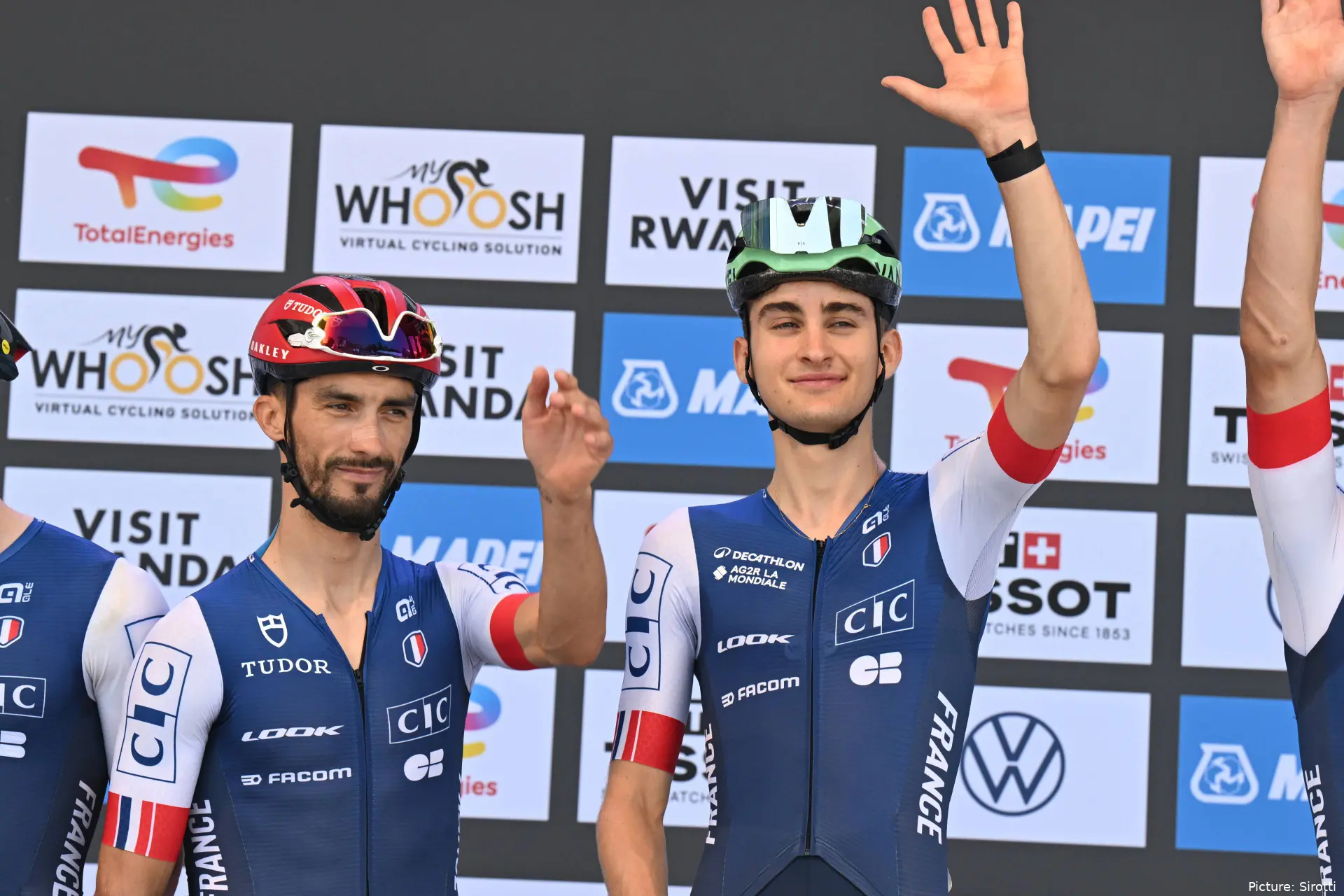
Paul Seixas’ debut at the elite men’s World Championship road race in Kigali may have ended with a 13th-place finish, but the French teenager’s performance has marked him out as one of the most promising young riders in the peloton.
Ahead of the European Championships in Drôme-Ardèche, Seixas reflected on the lessons learned in Rwanda and the influence of veteran leader Julian Alaphilippe in shaping his first World Championship experience.
“The mindset you need for a Championship is crucial,” Seixas said in a recent interview with L'Equipe. “Julian is really a unifier, and you can see how much experience he has. That helped me a lot to tackle this Championship with real motivation.”
Seixas’ comments underline how the presence of a seasoned leader can accelerate the development of young talent. In Kigali, the 19-year-old Frenchman finished 40 seconds ahead of compatriot Pavel Sivakov and was the best-placed French rider, despite missing out on a top-10 placing. “I think that cohesion gives everyone confidence,” Seixas explained. “Julian’s attitude really helps the group take shape and stay tight-knit.”
Enduring the Toughest Race of His Career
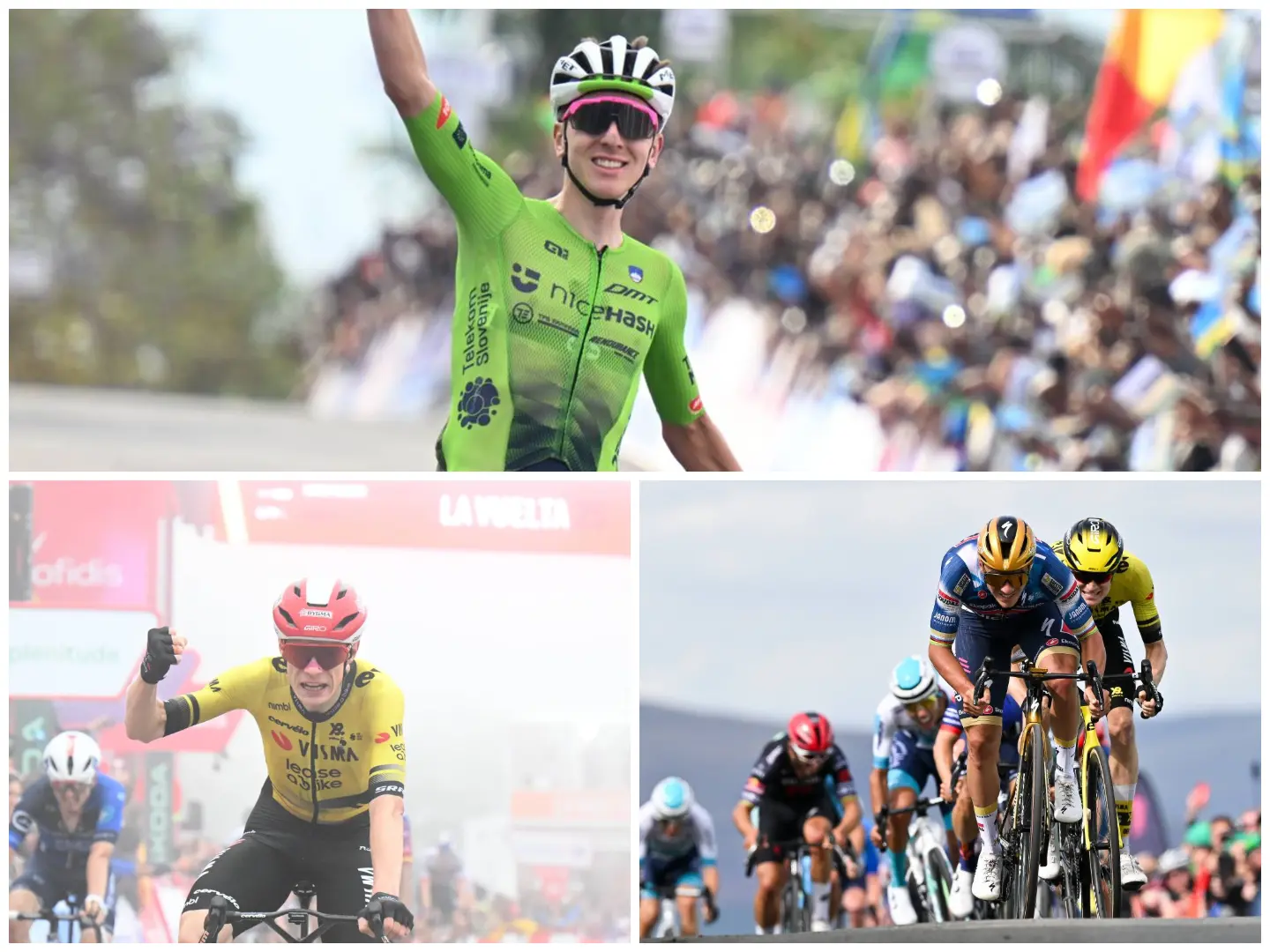
The Kigali World Championships were relentless. Seixas faced punishing climbs, cobbled sections, and an unyielding elite peloton. He even attempted to join an early breakaway 240 kilometres from the finish, a bold move in line with the French team’s offensive strategy. “It was the plan to be aggressive from the start,” Seixas said. “Maybe I could have done a bit better, but with ‘ifs’, you can rewrite the whole world. The most important thing is that I learned a lot and did my share of the work.”
Finishing one of the hardest World Championships in history left a lasting impression. “At a certain point, it’s all in your head — you stop thinking in terms of kilometres and just hang on to the end,” he said. “When Pavel and I found ourselves together, we knew we were the last two French riders left and had to fight to reward the work that the others had done. That gives you a boost of energy and makes you feel you can’t give up.”

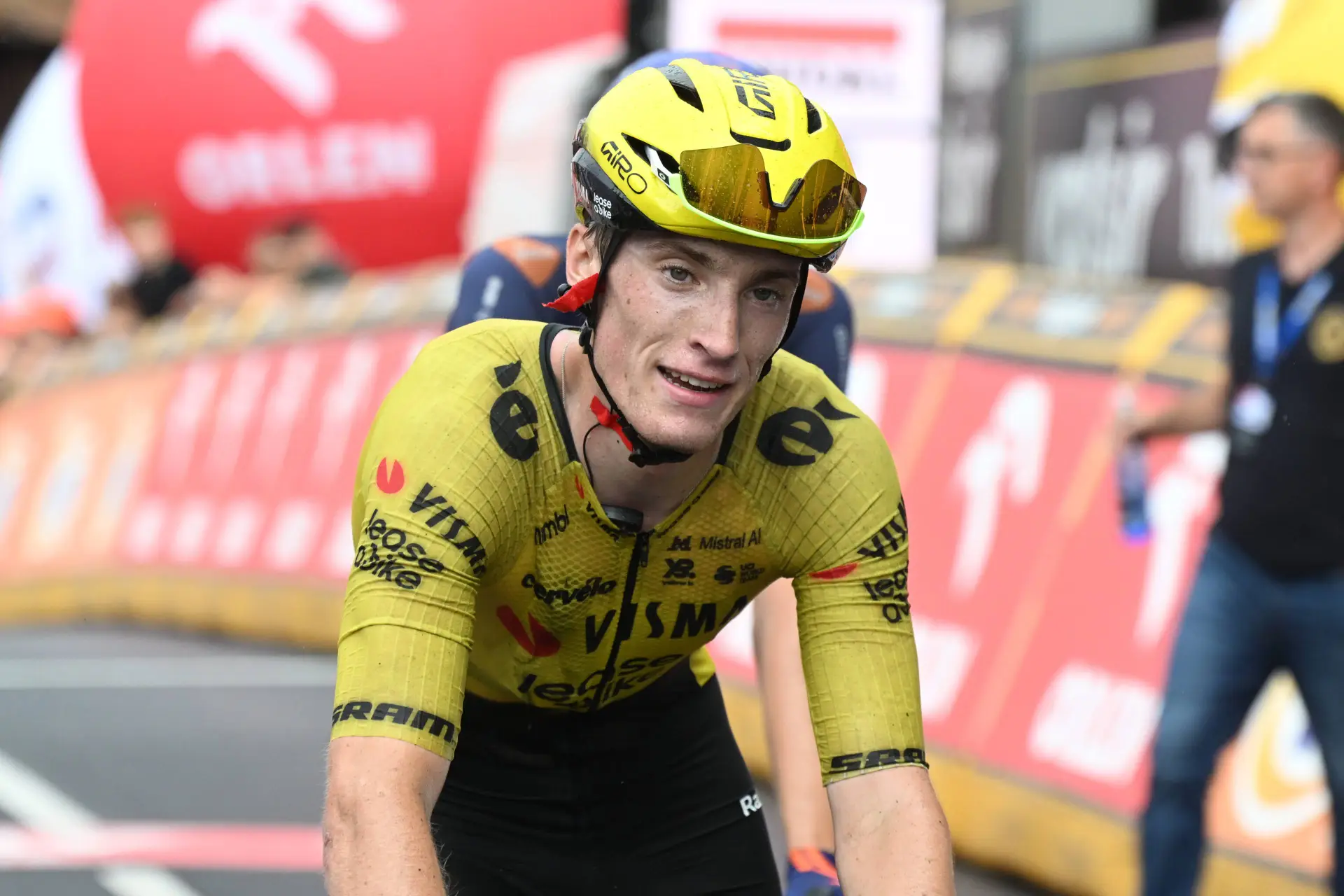
Seixas in action in Kigali
Balancing Stage Races and One-Day Events
Looking ahead, Seixas wants to combine stage racing and one-day races. “I feel I can handle both formats quite well, and I’d like to keep that balance,” he said. “Of course, there will be times when I’ll need to focus more on stage racing. I’m aware of that.”
The experience gained in Kigali — handling extreme physical demands, tactical decisions, and the mental strain of a World Championship — has clearly left its mark. Seixas’ ability to endure and support his team while performing at a high level suggests a rider whose career is set for rapid development, with Alaphilippe’s guidance proving an invaluable part of that early journey.
Kieran WoodDeputy Editor-in-Chief
Kieran Wood is a sports journalist based in Wales and has been active in journalism since 2022. He regularly contributes to DartsNews.com and CyclingUpToDate.com, where he covers professional cycling and darts. In cycling, his work includes liveblogs from major races, including the Tour de France, the Giro d’Italia, and La Vuelta a España, alongside race reports and analysis. He has also conducted interviews with professional riders.
His reporting spans the full racing calendar, from one-day classics to stage races, with a focus on accurate, real-time coverage and clear contextual analysis. For statistics, results, and historical context, he regularly uses resources such as ProCyclingStats. To support reporting on rider activity and training context where relevant, he also references Strava.
In his work, Kieran places strong emphasis on careful sourcing, editorial accuracy, and updating articles as new, verified information becomes available.
claps 7visitors 3
Just in

Popular news
Latest comments
- FYI. Pogi made his World Tour debut at the TDU in 2019. I remember it well because someone said watch out for Pogi as he did a good time up Corkscrew during training. Who would have thought he'd end up as the GOAT.Santiago25-10-2026
- FYI. Pogi's first World Tour race was at the TDU in 2019. I remember it well because someone said watch out for Pogi as he did a good time up Corkscrew during training. Who would have thought he end up as the GOAT.Santiago25-10-2026
- 50 million isnt low. But if you hire super domestiques for a million and 3rd rung leaders for 3-5 million, natural you dont have money left not the results expected. Most monuments and TDF are out of reach due to Pogi. But there were a promising 2nd rung leaders on the market and they went for broke to get Onley and Kevin. I put their entire troubles due to mismanagementabstractengineer25-10-2026
- I think it’s becoming clear that cycling got way ahead of itself for a few reasons and is now coming to the realisation that some rider salaries just exploded without justification and it snowballed until sponsors started pulling money out because THEY did not see any return on increased costs. Cycling is still a dying sport (that never moved out of the niche family) and will remain so if it doesn’t embrace and promote new ventures or manage to attract new markets. Even within cycling, fans are basically compartimentalised, (almost nobody here follows track for example), and the multiplication of possibilities hasn’t grown the sport, it has just split it into a larger number of smaller branches. If it weren’t for nation state sponsors (far too numerous already) other teams would never have (had to resort to) raised bigger budgets that are now leading to sponsor abandonment. That’s the difference between long-term steady growth and financial doping, the latter can also just blow up in your face. I will venture to wager that apart from one or two exceptional cases, rider salaries will no longer go up and are quite likely to actually drop over the next decade.Jumpyjohn25-10-2026
- You know you can post all this on idlprocycling too with your account(s) don’t you? There’s a whole bunch more articles and people there to inform.Jumpyjohn25-10-2026
- That’s the kind of word my foreign grandma would have rendered fashionable again, like flabbergasted (at her time) ;-) Perhaps he should get a pro to fill out his papers and pack his bag too, customs have become keen on controlling anyone from the balkans.Jumpyjohn25-10-2026
- Alternatively, just call Rod StewardJumpyjohn25-10-2026
- I will be in Adelaide in a shot if Pogi comes to the Tour Down Under. Fingers and toes crossed that this will eventuate, he has just got to remember to stay aware of kangaroo’s, as Jay Vine can attest to. Though can’t be any worse than some of the passionate fans in EuropeSearider25-10-2026
- "The Spaniard also highlighted Florian Lipowitz, third in the recent World Championship time trial, as a rider to watch as he continues to gain experience." Please stop the AI slop
 Rafionain-Glas24-10-2026
 - I think it's great! Now there's a real reason forcing the people-who-don't-fix-the-potholes to fix the potholes... or notRafionain-Glas24-10-2026
Loading
Write a comment