“What surprises is the timing. That’s obviously not optimal” – Questions raised as Visma hit by second sudden 2026 exit as Vingegaard coach follows Simon Yates
Cycling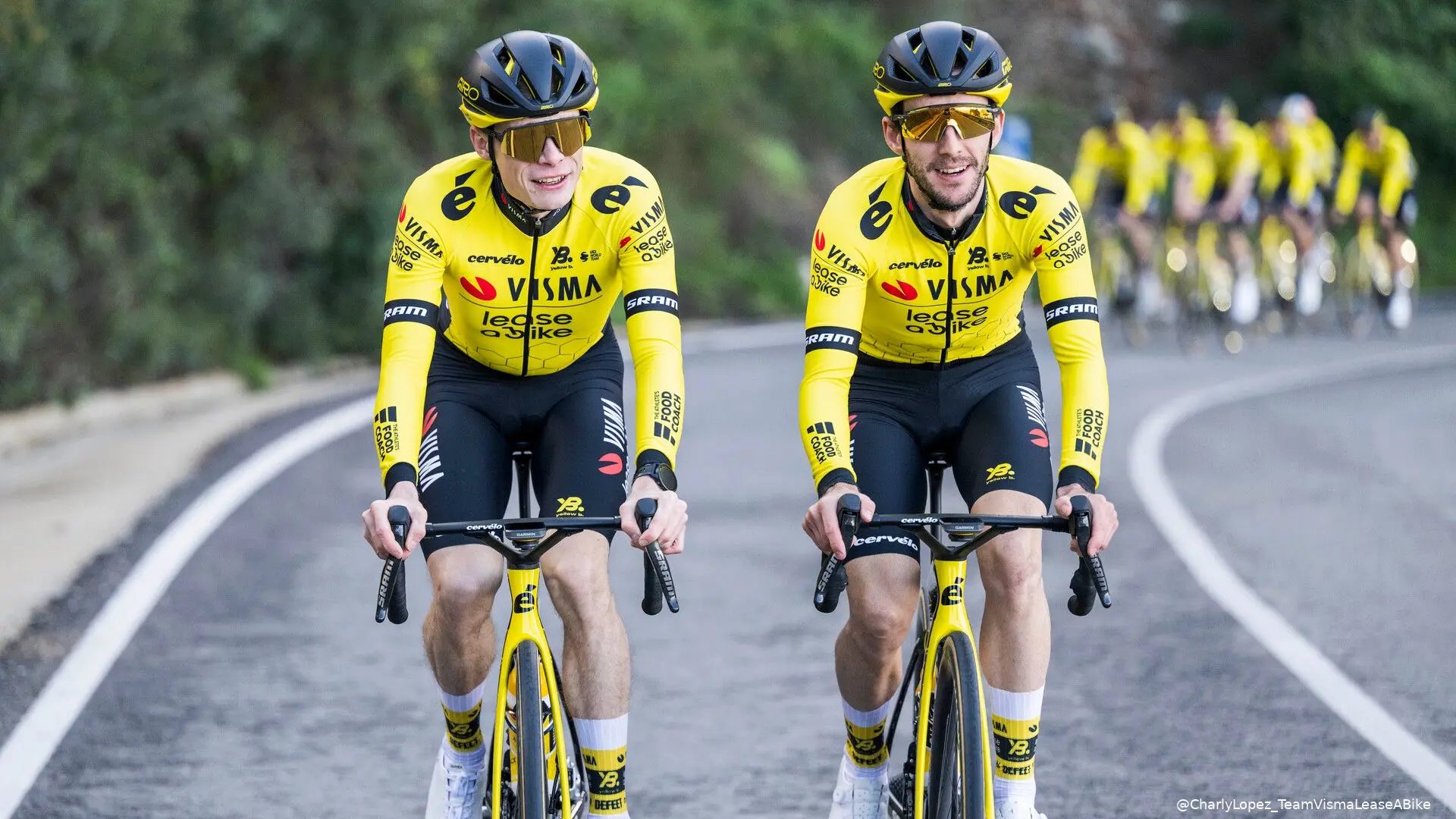
Timing, rather than intent, is what has drawn attention to the latest sudden departure at Team Visma | Lease a Bike.
That was the reaction of former Danish national coach Anders Lund after it emerged that long-time performance coach Tim Heemskerk has stepped away from the team with immediate effect, just weeks into the new season and before Jonas Vingegaard has even started racing.
“What surprises me a little is the timing,” Lund said in conversation with Eurosport. “We’ve only just started a new season, and Jonas hasn’t even ridden his first race yet. That’s obviously not optimal.”
Heemskerk had worked closely with Vingegaard for eight years, following him from young prospect through to double Tour de France winner. According to Lund, that long-established relationship makes the moment of change stand out more than the decision itself.
“The lines in the training plans have already been drawn, and a lot has been fixed,” he said. “Ideally, you finish a season and then start something new afterwards.”

Two sudden exits, one early-season pattern
Heemskerk’s departure is not the first abrupt change Visma has had to absorb in the opening weeks of 2026.
In early January, Simon Yates announced his immediate retirement from professional cycling, despite having completed winter training camps and taken part in pre-season promotion with the team. That decision arrived without warning and after plans for the season were already in place.
One exit came from the rider roster, the other from the performance staff. Both were immediate. Both landed after preparation had been completed. And both affect a team whose approach is built on long-term planning and stability.
Lund did not draw a direct line between the two events. But his emphasis on timing underlines why the Heemskerk decision has prompted discussion beyond the staff change itself.

Yates retired after a 2025 season that brought a Giro d'Italia GC win
Continuity, but with no reset point
Lund stressed that the situation does not automatically spell trouble for Vingegaard. According to reports, Mathieu Heijboer is expected to take on a more direct role in the Dane’s training, someone Lund believes offers continuity rather than rupture.
“Mathieu has worked closely with Jonas before and has been part of his inner circle,” Lund said. “So I don’t think Jonas is worried. A coaching change can also bring new energy and inspiration.”
Even so, Lund returned to the practical reality of daily work between rider and coach. “The hardest part is the daily feedback and adjustments,” he explained. “Training programmes are made for ideal scenarios, but reality is crashes, illness and bad legs. That shared understanding has to be built, and that takes time.”
For Vingegaard, the start of 2026 has already included a training crash, illness, a delayed season debut and now two sudden departures within his team environment, one on the bike and one off it. Each change stands on its own. Together, they have arrived in a period of the season when change is usually least expected.
“It’s not optimal,” Lund said. “But it doesn’t have to be catastrophic either.”


Kieran WoodDeputy Editor-in-Chief
Kieran Wood is a sports journalist based in Wales and has been active in journalism since 2022. He regularly contributes to DartsNews.com and CyclingUpToDate.com, where he covers professional cycling and darts. In cycling, his work includes liveblogs from major races, including the Tour de France, the Giro d’Italia, and La Vuelta a España, alongside race reports and analysis. He has also conducted interviews with professional riders.
His reporting spans the full racing calendar, from one-day classics to stage races, with a focus on accurate, real-time coverage and clear contextual analysis. For statistics, results, and historical context, he regularly uses resources such as ProCyclingStats. To support reporting on rider activity and training context where relevant, he also references Strava.
In his work, Kieran places strong emphasis on careful sourcing, editorial accuracy, and updating articles as new, verified information becomes available.
claps 1visitors 1
Just in
Popular news
Latest comments
- i think he can continue to race for maybe another 2 years till he drops out of podium contention. With his TT and his follow the leader in the Mountains,he should not need too many teammates too.abstractengineer14-10-2026
- Aren't they still shopping around for a main sponsor for next year?wrsty14-10-2026
- How broke is visma now? wtf they cant even fight moviestar and decathlon for riders and lose both their mid targets based on their budget and they cant even get those? Crazy...:/miguel13-10-2026
- TT But he won by a minute so he could have cut down on some of it
 Rafionain-Glas13-10-2026
 - weight is measurable. power is measurable. So why didn't he prepare that way from the TDF if he wanted to beat Pogi and after Pogi wasn't going to be there, to win.abstractengineer13-10-2026
- I hope Thibau and Tibor don't do the sameRafionain-Glas13-10-2026
- Seixas is exactly what I would like Pogi to be mentally and in his statements. Both come across as shy and who don't talk much but with Seixas, you can see that he enjoys success, that it boosts his ego, unlike Pogačar who seems to feel increasingly uncomfortable the more he wins. He's won so many times, people are saying he's boring. The french media hate him for winning so much, the french cycling fans are booing him... etc. etc. But remember one thing, Seixas will never physically reach Pogi's level. He's excellent, but he isn't at that level nor will ever be. His talking to the media, his relationship with people is already at a high level.PogiSloFans13-10-2026
- Paul Seixas is now the second-best rider in the world.megasmacky13-10-2026
- When will they start dropping Pogi? Oh yeah, when Pogi reaches 40+ years, that's when young cyclists will start dropping him. But until then... eat your hearts out and cry. Pogi will remain the G.O.A.T. for years to come. Capish?PogiSloFans13-10-2026
- I figure he would have found out how to outsprint Paul and take the win, maybe. He's 28 now but I would say he's right at the peak of his powers. It was great race though, Paul showed me something different about himself.awp13-10-2026
Loading

Performance coach Tim Heemskerk leaves Team Visma | Lease a Bike Heemskerk held the role of performance coach within the team and was part of the performance staff led by Mathieu Heijboer. Read more here: teamvismaleaseabike.com/news/news/perf…

Write a comment