"What do you mean you raced the Tour de France?" – New documentary sheds light on forgotten women’s Tour de France that disappeared in 2009
Cycling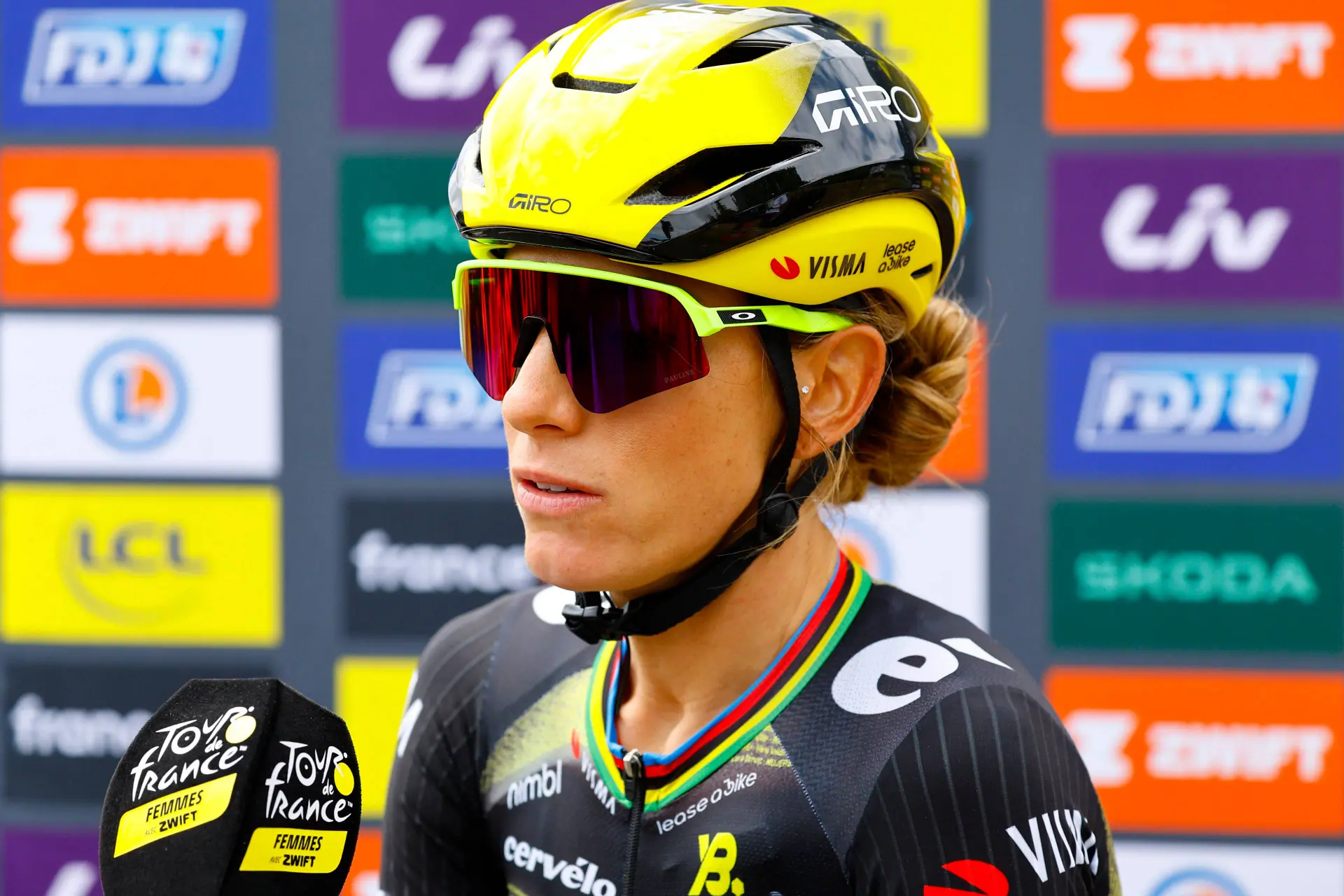
The 2025 Tour de France Femmes may go down as the most
significant edition yet, not just for the racing that it produced. The main
headline was that Pauline Ferrand-Prevot made history by becoming the first
French cyclist, male or female, to win any Tour de France title since 1989.
Already the holder of world titles in four different disciplines and an Olympic
gold medal, her victory cemented her as one of cycling’s all-time greats. But
alongside the celebration of her win, a new documentary, Breakaway Femmes,
brought long-overdue attention to the turbulent, often forgotten history of the
original women’s Tour de France.
The modern Tour de France Femmes is only in its fourth year
since its 2022 revival, yet women’s stage racing in France stretches back
decades. From 1984 to 2009, there were versions of the event, known variously
as the Tour de France Féminin, Tour of the EEC Women, Tour Cycliste Féminin,
and Grande Boucle Féminine Internationale. Despite lasting more than two
decades, the event faded so far from public memory that many people are stunned
to learn it ever existed.
“What do you mean you raced the Tour de France?” is a
question many riders from that first era have been asked repeatedly. Mandy
Jones, who won the UCI Road World Championships road race in 1982, recalled in Breakaway
Femmes: “If you then speak to somebody and say, oh by the way, we rode it in
the eighties. What do you mean you rode it in the eighties? Yeah, there was a
women’s Tour de France. Well, I didn't know that.”
For director Eleanor Sharpe, the project uncovered stories
that had been locked away for decades. “It was just such a huge part of their
lives, and they just really weren’t able to talk about it,” Sharpe said to Cycling Weekly. “It
was almost like they’d been in a war together. I don't know why they couldn't
talk about it, but they didn't. They all felt that way. They just didn't feel
like they had the permission to tell their story.”
Read also
Sharpe herself was stunned by the lack of public awareness.
“I’ve watched the Tour de France for years…but it really surprised me that I
hadn’t heard of [the women’s Tour], and when I talked to other people about it,
no one else had heard about it either.”
One pivotal moment in her research came by chance. “We were
interviewing Trish, and during her interview she just casually mentioned that
she’d been the general manager of the Great Britain women’s Tour de France team
in the 80s.” That Trish was Trish Liggett, wife of long-time cycling
commentator Phil Liggett, whose connection to the race had gone largely
unmentioned in public.
Sharpe went to great lengths to find as many former
competitors as possible, spanning continents. “We had the race booklets that
some of the riders had hung onto, and it had the names of the Chinese riders in
them, but we had no idea whether they were spelled correctly, because even with
the European riders, the race booklets tended to misspell and mangle all their
names. Anyway, we found this Chinese company that facilitates film shoots for
international crews in China, and they were able to track down these women,
which was amazing.”
The decision to include the Chinese riders wasn’t only about
completing the roster. “I really thought it was important to include the
Chinese riders. I mean, partly because it's just such an interesting story with
them coming over from a communist country, but also I was quite aware that I
was telling the story of feminism, but it was a particular version of feminism.
It was a white, fairly affluent, middle class feminism. So I was kind of quite
consciously aware of that. I knew that if we could find these women, their
story would be quite different, them coming from quite different backgrounds
and different motivations.”
Not all riders in the story were easy to portray. “You
really do need a couple of characters for the rough edges, definitely. And
Jeannie Longo was this ball of rough edges. But she’s also an incredibly
important rider. And it would have been a completely different film if we
hadn't been able to get her in the film.”
Longo’s presence in the film also reignited an old point of
contention. Before Ferrand-Prevot’s 2025 triumph, Longo was the last French
rider to win the yellow jersey. She voiced her frustration to L’Équipe: "I
was a bit depressed just now listening to the commentary on France Info. It was
said that she might become the first French winner of the Tour since Bernard
Hinault (in 1985). While I won again in 1989 (after having already won in 1987
and 1988).” She added, “Yes, I even have the impression that we're being walked
over...”
For Sharpe, the interviews were a revelation. “What struck
me when I spoke to all of them was how grateful they all were that I was taking
an interest,” she said. “When I reached out to them, it was the first time, I
think, in 30 plus years, that they'd really gotten the chance to talk.
“And it was like opening a floodplain, all they wanted to do
was talk. I felt like I should be the one who was feeling grateful, you know,
having the privilege to talk to them. When we started making this film, the
Tour de France Femmes hadn't come back, so when I initially contacted them,
they were still very much in the wilderness and no one was interested, and they
didn't know that all the race would ever come back.”
While the film reopens the past, the present-day race is
thriving. The 2025 edition was not only historic in terms of its winner but
also its audience. The nine-stage event, which concluded nearly two weeks ago,
drew an average of 2.7 million viewers per stage, more than half a million
higher than last year’s numbers. That translated to a 31.6% audience share.
Broadcasters produced over 25 hours of live coverage across France 2, France 3,
and the france.tv digital platform, reflecting a level of commitment to women’s
cycling not seen in decades.
The renewed visibility of the race raises questions about
how and why the original women’s Tour disappeared from mainstream
consciousness. The reasons are complex: lack of consistent sponsorship,
strained relations with the men’s event organisers, and a media landscape that
rarely treated women’s cycling as a serious professional sport. For those who
raced between 1984 and 2009, the absence of acknowledgment has been as painful
as the disappearance itself, and it is only natural that they feel hard done by
the lack of recognition.
The riders Sharpe spoke were warriors who not only battled
the brutal course, but also financial hardship, and in some cases, outright
hostility from those who didn’t believe a women’s Tour should exist. Yet, as
the modern race gains momentum, their stories offer a reminder that the
struggle for recognition in women’s sport is cyclical.
Read also
Ferrand-Prevot’s win may inspire a new generation, but it
also highlights the debt owed to those who came before her. As Longo’s comments
suggest, recognition for past champions remains incomplete. At the same time,
the swelling audience for the current race suggests that women’s cycling, given
the platform and resources, can command the same passion and viewership as the
men’s event in the coming years
If Breakaway Femmes succeeds, it will help ensure they
aren’t forgotten again. The hope is that future generations will never have to
ask, “What do you mean you raced the Tour de France?” because the answer will
be common knowledge, not a rediscovered secret.

Fin MajorCycling Journalist
Fin Major is a UK-based writer at CyclingUpToDate and has been part of the team since 2024. He is the site’s main writer for FAQs and evergreen explainers and has written around 2,000 pieces for the platform. Alongside this work, he focuses on in-depth analysis and covers the biggest races on the calendar, including the Tour de France, the Giro d’Italia, and La Vuelta a España, providing clear context around performance trends, tactics, and key storylines.
In his reporting, Fin uses reputable data sources such as ProCyclingStats for results, statistics, and historical context. He places strong emphasis on careful sourcing, editorial accuracy, and updating articles promptly when new, verified information becomes available. Outside of writing, Fin is an active cyclist, which supports his practical understanding of the sport and its demands.
claps 7visitors 7
Just in
Popular news
Latest comments
- I’m sorry but generally the coverage on your site is first class but this incident highlights something I just don’t get with cycling journalism. This accident should never have been allowed to happen, it comes uncomfortably close to the Finlay Tarling tragedy and two other incidents took place within days of this. I checked all of the cycling websites and you all put out basically the same story. Pidcock gave journalists the perfect opening to blow this sky high, what has the UCI got to say? What is Adam Hansen doing? What do the organisers say? Nothing, you all trot out the same easy quotes taken from Pidcocks interview after the race but do nothing to follow it up. I see it time and time again, journalists taking the easy way out but being outraged when it happens again as it surely will. Riders can’t do this but journalists should be independent and should be able to raise these uncomfortable questions but cyclinguptodate and every other on line publication prefer to take the easy way out. That’s the real tragedy here.Paul53108-10-2026
- Happy to help :-)Mistermaumau08-10-2026
- Well, ok but, it’s also a structural, team, budgeting, direction and all sorts of other issueMistermaumau08-10-2026
- I wouldn’t call it an analogy but maybe his criticism is a little unfair. On the other hand, the fact Cicco made a public affair out of it despite having received all the explanations and proof makes me feel he now deserves being criticised for not accepting there is nothing to discuss.Mistermaumau08-10-2026
- Much as I like him (one of my favourites), I do want to attract a little attention to the coincidence of his recent performances in the current context. Not the first time a rider improves noticeably when there’s a job interview to prepare. In the same lighthearted humour of his, i hope the UCI will let him wear it at home as the rules quite strictly state you can only wear it during participation in the discipline you won in, and we all know how capable they are of interpreting rule interpretation ;-) Also, if it’s going to be retirement (please not), I wouldn’t call that an agreement as somebody will probably feel they didn’t get what they wanted.Mistermaumau08-10-2026
- Agreed. There used to be a team willing to pay though. I take all these figures (that vary enormously according to who is publishing) with handfuls of salt. We don’t know how salaries are treated (especially between a UK employer and Andorran resident), we don’t know how numbers are derived and from where, if deductions have been taken into consideration, etc. but if he returns to Colombia, he’s going to need quite a bit in protection money.Mistermaumau08-10-2026
- And another one gone, another one gone, another one bites the dust. Ah gonna get you too…Mistermaumau08-10-2026
- Top marks RidesHills. A great post that sums up exactly Egan Bernals situation.Cyclingsbestfan08-10-2026
- Thanks for pointing out that typo. Now ammended.Prorodsandstuff08-10-2026
- Great signing by Uno-X. Hope he develops and can get som great results.
 Vikingrider08-10-2026
Loading
2 Comments