“You’re a professional cyclist. Weight does matter” - Former Vuelta winner criticises Demi Vollering’s post-Tour comments on body image in cycling
Cycling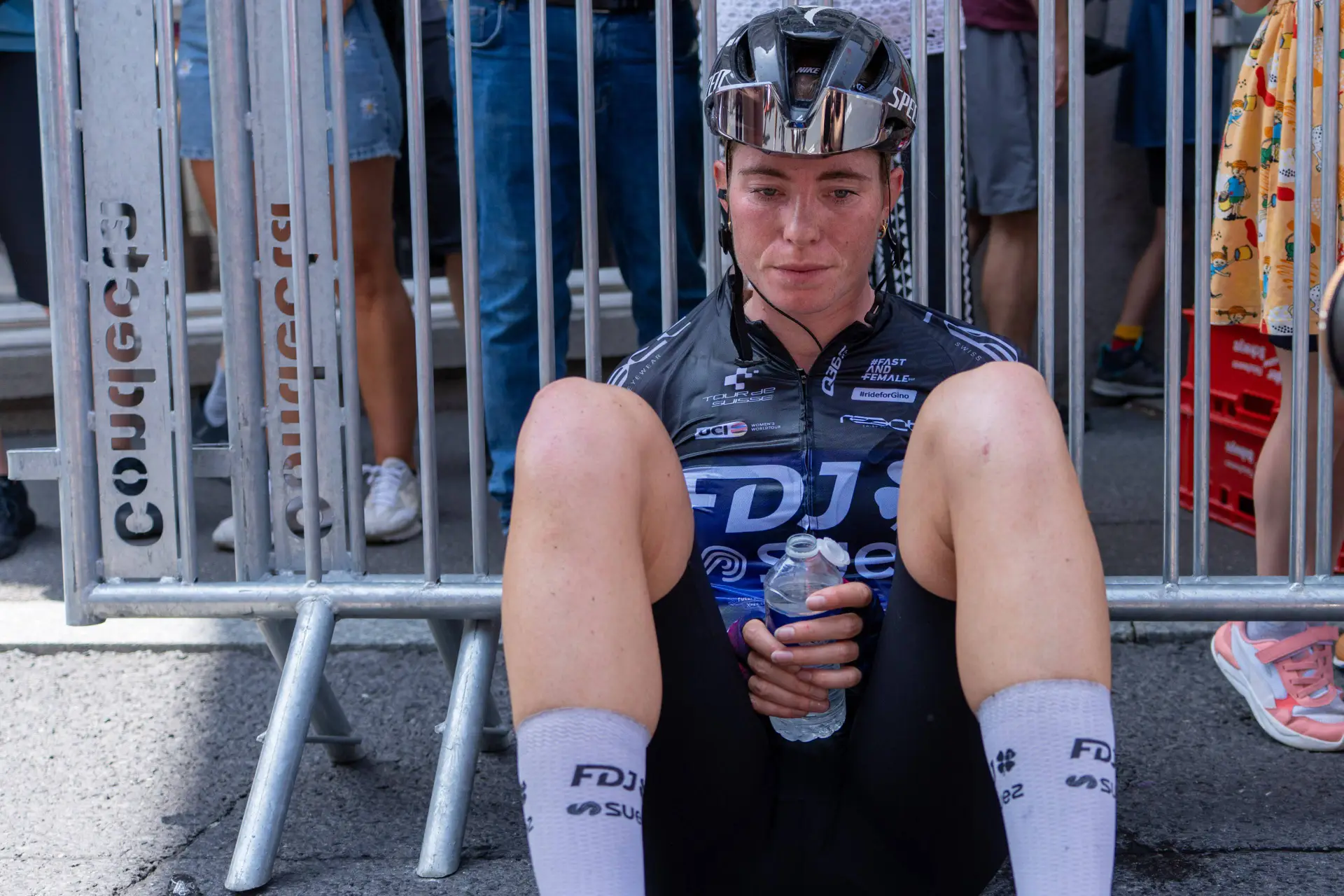
In the days following her defeat at the 2025 Tour de France Femmes, Demi Vollering made headlines not just for finishing runner-up, but for the tone she struck in addressing the media scrutiny around her weight. In a lengthy Instagram post, the former Tour champion sought to reframe the discussion, prioritising health over kilograms, and pushing back against what she characterised as an unhealthy fixation on body weight in elite sport.
But former Vuelta a Espana winner turned cycling analyst Chris Horner isn’t convinced. In a characteristically forthright edition of his YouTube channel analysis, Horner dissected Vollering’s performance on Stage 9, the final mountain test of the race, and took issue with what he perceived as a disconnect between Vollering’s post-race narrative and the tactical and physiological realities of elite-level cycling.
“You’re a professional cyclist. Weight is always going to be a factor,” Horner said. “If you’re not going to have watts per kilo better than the rider next to you, then you better have tactics better than the rider next to you. Otherwise, you have zero chance of winning.”
Vollering’s post-Tour message
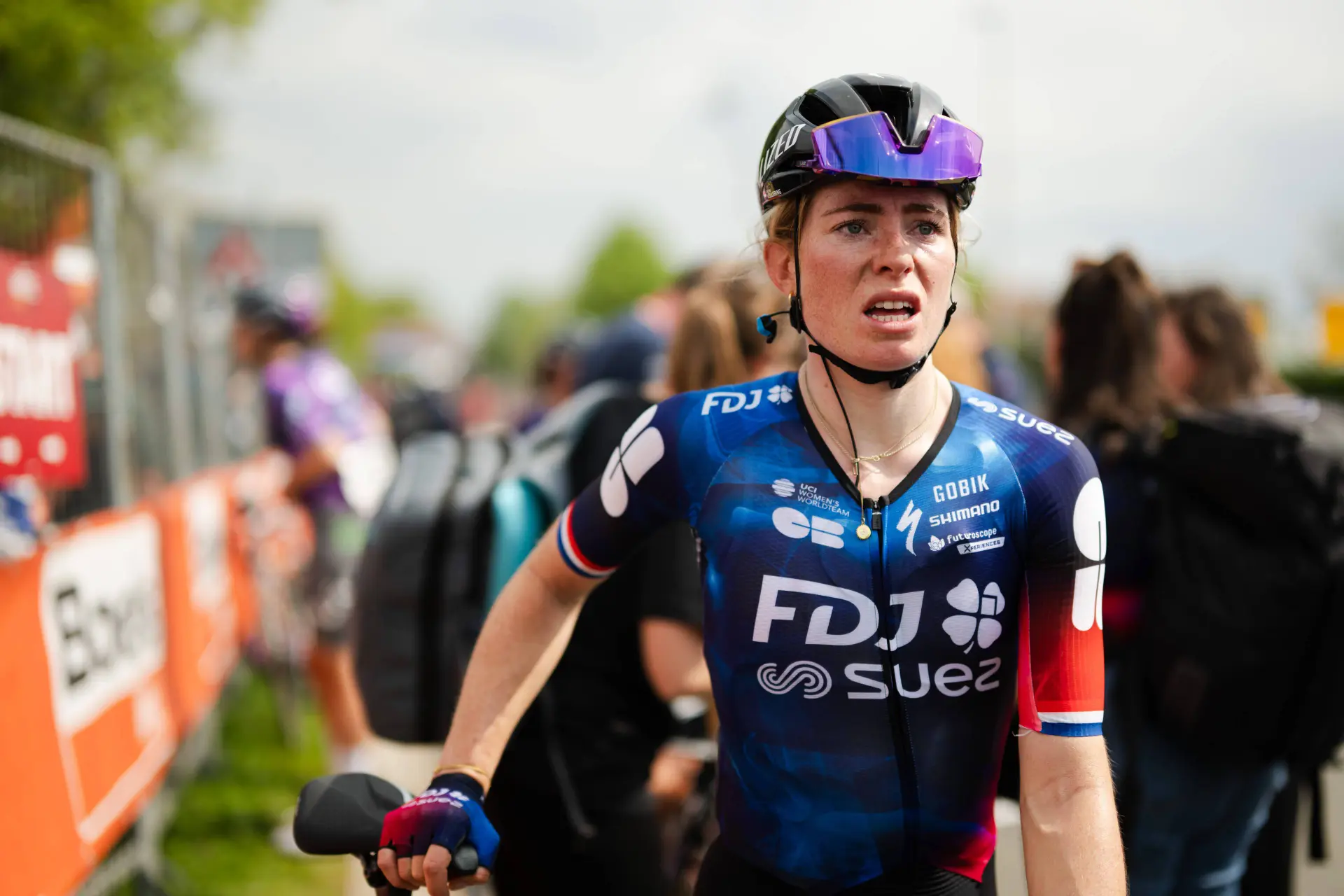
Vollering’s social media post — shared several days after the Tour concluded — offered a heartfelt and thoughtful reflection on the pressures faced by female athletes. In it, she acknowledged the volume of post-race media attention directed at her body weight, and made clear that for her, the priority would always be long-term health over short-term performance gains.
“I’m not built to be the lightest rider in the peloton. And I don’t want to force my body to become something it’s not,” she wrote. “We did everything we could to arrive at the Tour in the best possible shape — for me… Losing weight is not the ultimate solution.”
She also pointed to the influence of elite athletes on younger generations: “Because young girls are watching us. They notice what we say — and what we don’t… The risk is real… disordered thinking can grow quietly and stay hidden for a long time.”
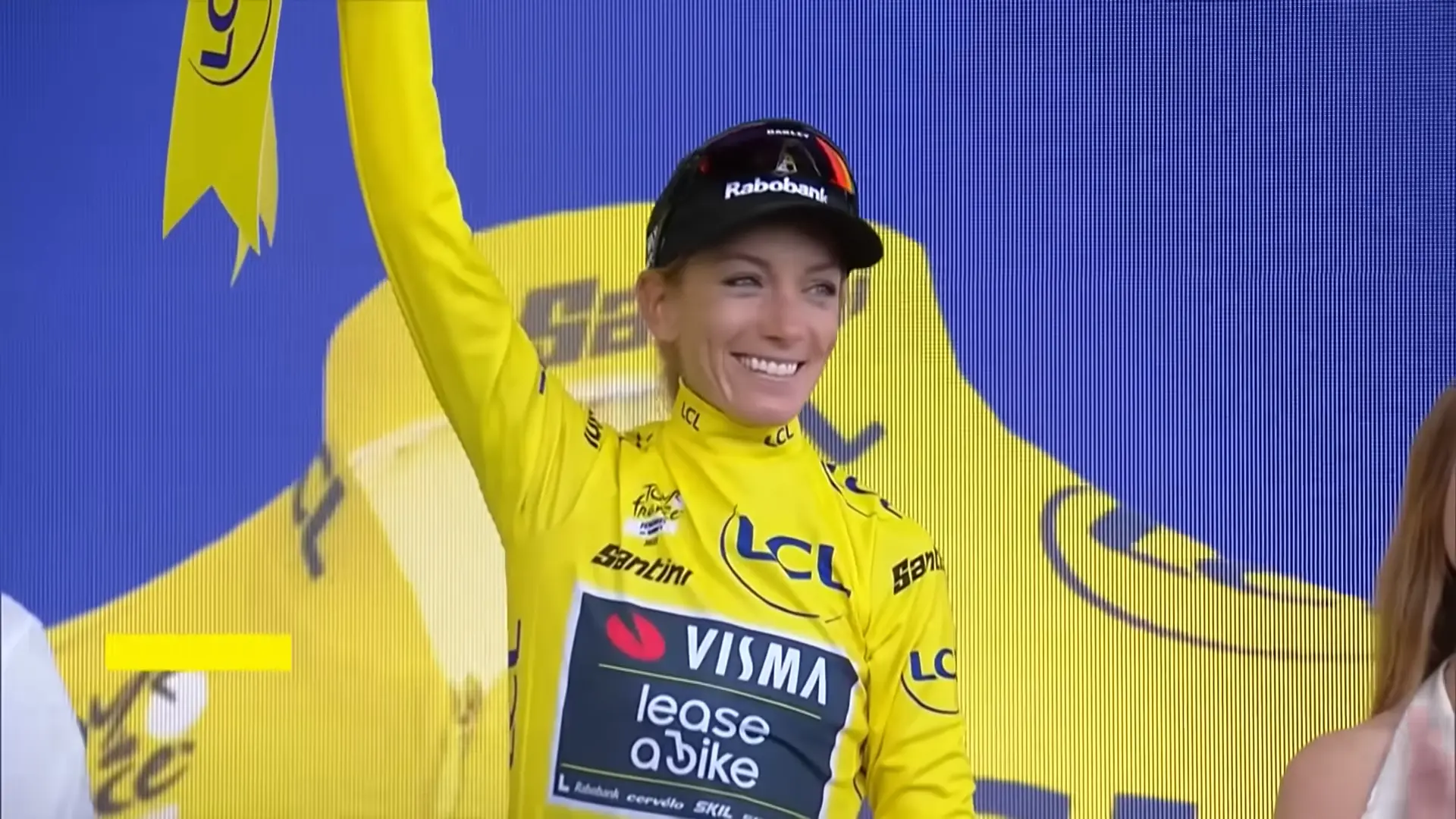
The post has been widely praised across the sport for its maturity and candour, particularly given the delicate balance female athletes often must strike between performance, health, and public expectation. But Horner, while not dismissing the sentiment, saw it as out of step with the tactical errors he believes defined Vollering’s race — and her inability to match eventual winner Pauline Ferrand-Prévot on raw physical performance.

Vollering was a distant 2nd behind Ferrand-Prevot in France
“You went 0 for 2”: Horner’s critique
Much of Horner’s criticism centred on Stage 9, a brutal 125km route featuring three classified climbs and a steep drag to the finish. Vollering’s FDJ–Suez squad rode aggressively, with Juliette Labous and Evita Muzic setting pace for much of the day while Ferrand-Prévot remained isolated in the yellow jersey.
Yet despite this apparent numerical advantage, Horner argues that FDJ’s tactics effectively handed the race to Ferrand-Prévot.
“You had the yellow jersey isolated for 80% of the stage, and no one took advantage,” Horner said. “Juliette Labous was riding on the front, pulling the yellow jersey. Demi Vollering pulled her all the way to the finish.”
Horner was particularly scathing about the missed opportunity to force Ferrand-Prévot onto the front, or to isolate her under pressure by launching repeated attacks. “If Demi Vollering is not at her optimal watts per kilo, you do not want to go one-on-one against Ferrand-Prévot,” he said. “Instead, you want to get her working. Get her covering attacks. But what happened? She sat back there like she was having a coconut Snickers, getting a free ride.”
The debate around weight, performance, and responsibility
Horner acknowledged the complexity of weight in professional cycling — but made no bones about its significance. “Yes, the way you get to race weight is important. Health is important. But let’s not pretend it’s not a performance factor. It is.”
He recounted his own experience riding for FDJ in the late 1990s, describing how his directeur sportif could detect even a half-kilo gain, despite winter jackets and layers. “That’s just the reality of racing in the European peloton,” he said.
Still, Vollering’s message resonates in a sport where stories of disordered eating, underfueling, and long-term health consequences have increasingly come to light — particularly in the women’s peloton. While Horner’s analysis focuses on tactical and physiological shortcomings, Vollering’s post aims to broaden the conversation to include athlete welfare and the message sent to future generations.
Ultimately, the debate comes down to the balance between realism and responsibility. Vollering insists that there is no single path to success in the sport. Horner, meanwhile, sees Stage 9 as a textbook case of a rider losing out because they didn’t get either of the two most critical elements — power-to-weight and tactics — right.
Both views can be true. What’s clear is that Vollering’s words — and Horner’s response — have sparked a conversation that goes far beyond a single stage or a single Tour.

Kieran WoodDeputy Editor-in-Chief
Kieran Wood is a sports journalist based in Wales and has been active in journalism since 2022. He regularly contributes to DartsNews.com and CyclingUpToDate.com, where he covers professional cycling and darts. In cycling, his work includes liveblogs from major races, including the Tour de France, the Giro d’Italia, and La Vuelta a España, alongside race reports and analysis. He has also conducted interviews with professional riders.
His reporting spans the full racing calendar, from one-day classics to stage races, with a focus on accurate, real-time coverage and clear contextual analysis. For statistics, results, and historical context, he regularly uses resources such as ProCyclingStats. To support reporting on rider activity and training context where relevant, he also references Strava.
In his work, Kieran places strong emphasis on careful sourcing, editorial accuracy, and updating articles as new, verified information becomes available.
claps 13visitors 12
Just in
Popular news

Latest comments
- Remco will go to the TDF and will request Lipo not to be there. Guilio will do the Giro but will share leadership with Lipo. Karma will strike Remco and he will flop in the TDFabstractengineer28-11-2026
- Lidl Trek is like a person who has eaten more than their stomach can accommodate and now its about to burstabstractengineer28-11-2026
- The debate on doping is the most contentious issue. I can't say for sure. Perhaps they are perhaps their not. I tend to look at the human side. Given the microscopic focus on doping, I imagine it is impossible to keep it quiet. In the movie 'Goodfellas' Robert Di Niro quotes 'The only way three people can keep a secret is if two of them are dead' Too many folks involved is pro cycling.Paggss28-11-2026
- Look at the Worlds in Montreal that Merckx won in 1974: 70 starters, 18 finishers. The 2026 Worlds that McNulty won had 184 starters, 60 finishers. Different eras, different race dynamics.
 ScottG28-11-2026
- Stage 5 also passes through Giulio's hometown of Camerino
 Rafionain-Glas28-11-2026
- If he tries that it may be too much. Just do the classics Giro and the WCabstractengineer28-11-2026
- I love this crop of US riders these days. A bunch of hard men who love to race.Occam28-11-2026
- Crazy, I thought all the riders were clean. Realize that Tejada is a second tier climber at a GT, never left in the front group. But 7w/kg is totally normal, y'all.Occam28-11-2026
- It's funny. Read the comments here and it's the same stuff they said about Lance, Ulrich, Pantanai, etc. Training, nutrition, altitude tents. Noooo waaaay could it be PED's. Remember, these guys are turning 7w/kg for 30 minutes. It used to be 6 was the gold standard and what you needed to win a tour. Also recall that every single rider in history that could turn a top TT and climb with the best was doping. Every single one. Really, Froome came out of nowhere to dominate the TdF? Totes.Occam28-11-2026
- Also, Pedersen doesn't win that TdF stage without Simmons working for him in the break. What a silly contention that Mads won that on his own. Simmons has been an excellent teammate on that team.Occam28-11-2026
Loading
24 Comments