“We have to go to gas stations for ice” - Extreme heat at the Tour de France forces teams to take drastic measures
Cycling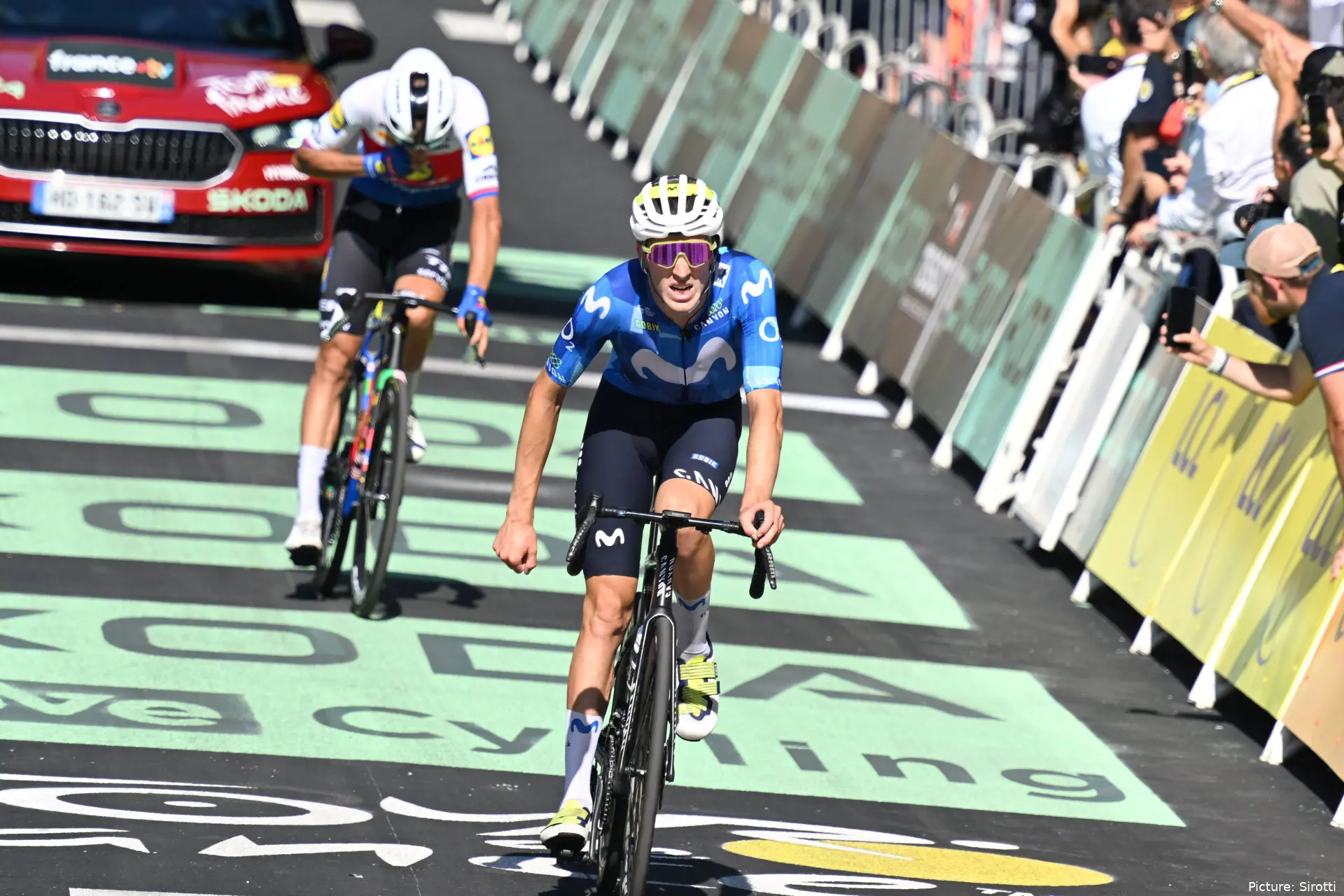
Scorching temperatures have become one of the main protagonists of the Tour de France. Beyond the difficulty of the route, teams are fighting a constant battle to keep riders hydrated and stop the heat from taking a toll in the race. For Movistar Team, the logistics required to counter the high temperatures are as demanding as the competition itself.
José Joaquín Rojas, the Spanish squad’s sports director, outlined the complexity of managing each stage when the mercury soars. The Murcian admitted that water and ice consumption is so high that, at times, the team car itself runs out of supplies during the stage.
“Many times in the car we run out of bottles, out of ice, you have to call for more, stop at a petrol station. It’s very hard to manage for a team in the heat, and especially for the riders,” Rojas said, underlining the scale of the daily challenge.
The numbers speak for themselves. As he told Eurosport, Movistar Team burns through around 250 water bottles and close to 100 kilograms of ice in a single day of racing, a figure that shows how far the heat shapes the team’s strategy and organisation.
Rojas also detailed how scientific preparation has become key to minimising the effects of extreme temperatures.
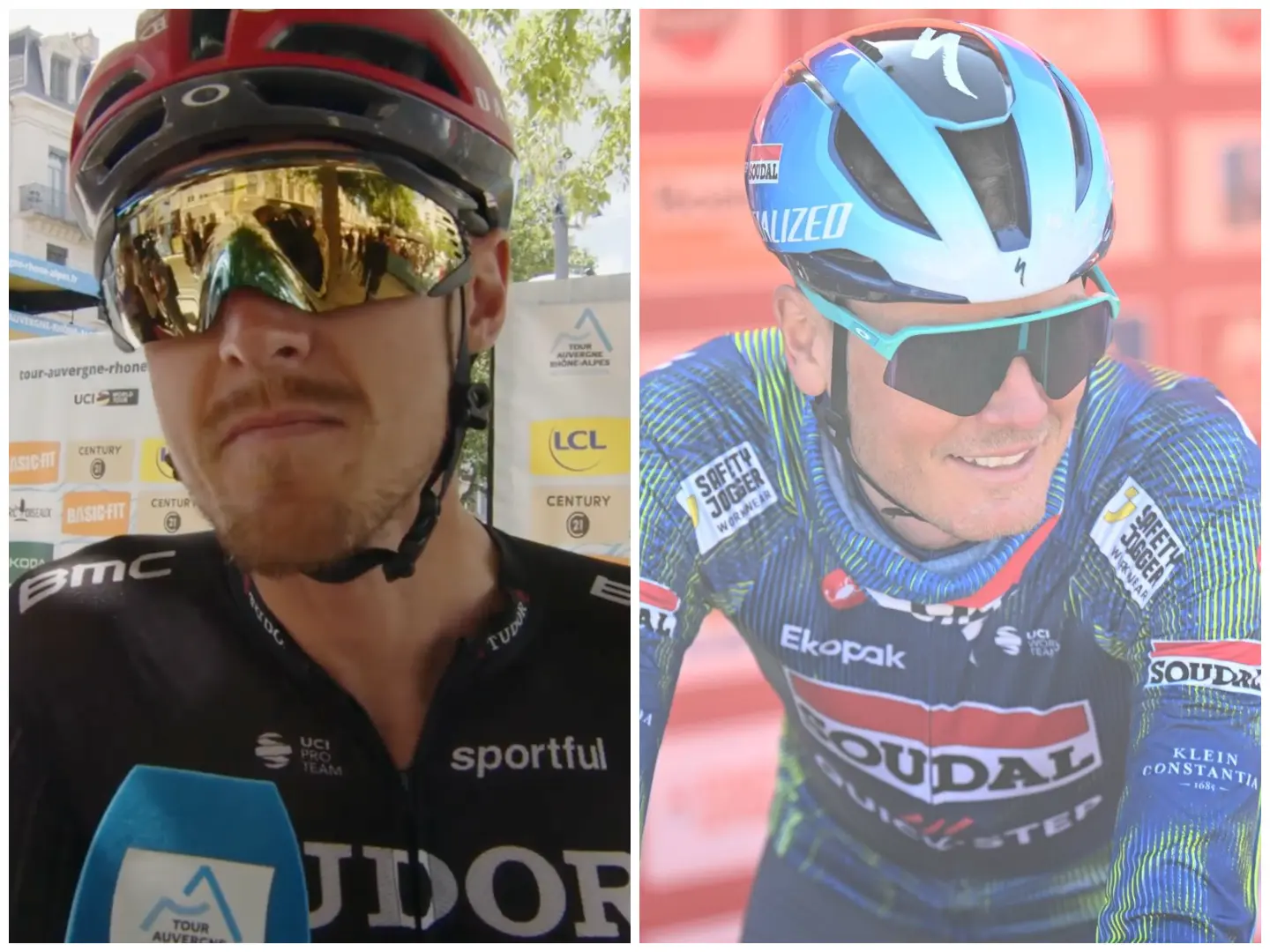
The need for ice at Tour de France
“In the end, with all the specialists we have, with the nutritionists and the doctors, they have a temperature sensor on the body and the aim is always to stay as low as possible, although they’re almost always at 38 or 39 degrees,” he explained.
To keep riders within safe parameters, ice is indispensable. “A lot of ice to bring the temperature down, lots of water over the top. They’re always kind of soaked, as if they were in a pool, trying to survive the heat,” the former pro added.
None of this logistics would be possible without significant manpower. Rojas put the number of staff needed to hand up bidons during a stage at around 25, though he admits it’s never enough.

García Pierna in a Tour de France stage
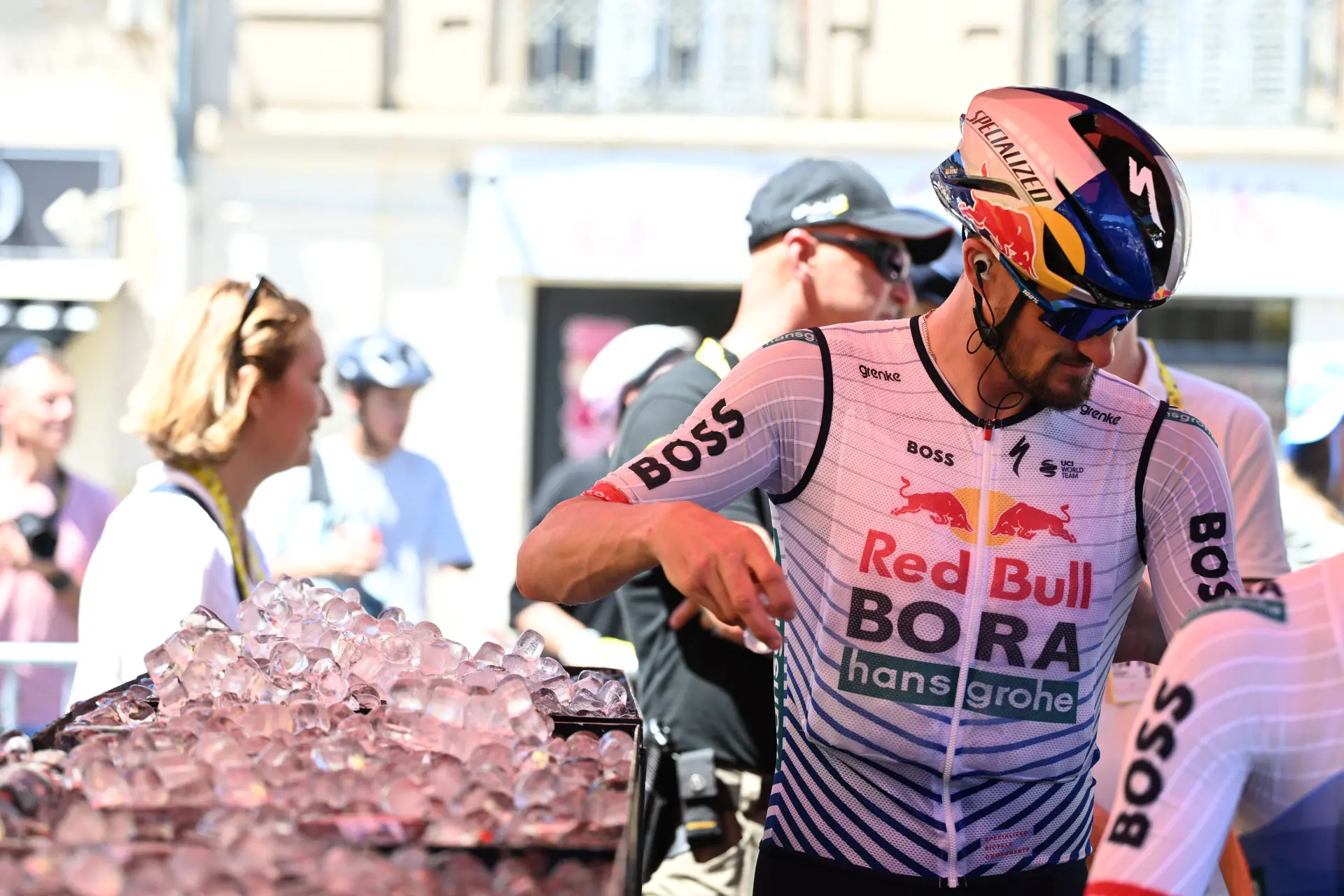
Movistar Team’s work at the Tour
“Approximately 25 people to hand out bidons, and I always need more people. Everyone gives bidons, even the manager, even the boss; if someone almost comes as a visitor, we get them a licence so they can help.
"Because you need a licence to hand up bidons. Everyone is necessary because, in the end, it’s vital that the boys are at full gas,” he concluded.
Rojas’s words show that, in the modern Tour de France, gaining time doesn’t only depend on the legs. Behind every stage lies a huge logistical and scientific effort so riders can perform at their limit even when the heat pushes the body to the edge.
Gavin QuinnCycling Journalist
Gavin Quinn is a cycling journalist and ultra-distance cyclist with a BA in Journalism from Dublin City University. Formerly the Press & Communications Officer for Cycling Ireland, Gavin has worked inside the national team at the World Championships and has reported for the Irish Mirror, Mirror UK, and The42.
His expertise is backed by elite-level access, having interviewed stars like Sam Bennett and Ben Healy, as well as immense personal endurance. In 2025, he completed a 12,000km solo cycle from Ireland to Vietnam, following a 4,600km tour across Europe. From the cobbles of Paris-Roubaix to the gradients of the Tourmalet, Gavin’s writing focuses on the "romance and brutality" of the sport. Having visited 50+ countries, he brings a global, cultural perspective to his coverage of the pro peloton for CyclingUpToDate.
claps 0visitors 0
Just in
Popular news
Latest comments
- sounds positive news for Lidl-Trek...still dirty on them for not resigning Lucinda Brand and why they arent all in with sponsorship of the Baloise team in 'cross.
 Davide26-10-2026
 - yeah your point about accidents happening in a chain of events, not a single event, is key. no police or barriers at a crossing. a car gets on the road. a trailing cyclist doesn't have an escort. no radio and GPS is being used to track stragglers. and tragedy. break one thing in the chain and it could be accident avertedmij26-10-2026
- The doctors called the concussion severe, even at the scene of the accident, because that is the term for it. The concussion protocol is the best they can do right now, with further research being done. It makes sense for Tadej's concussion to be severe because the freak circumstances lead to twisting of his head (and body) as he fell at high speed. Look at reports on the Toronto research published in early 2025 for starters, with images of the brain showing the effects that persist after symptoms clear up. Btw if Tadej had ridden the EC and fallen, he could have suffered more serious injury to the spine as the vertebra would not have been fully healed. Also serious consequences if he had hit his head. Don't know why you are so keen to downplay the impacts.Hills3326-10-2026
- Complete bullshit headline. The best thing this website can do is commit suicide.Renz26-10-2026
- If he wants to retire, he can spend a couple of non intensive low key seasons at UNO-X for lower salary as well.abstractengineer26-10-2026
- we need facts about these accidents and see the stats about these facts to find what can be done and what cannot be done. That is the job of the UCI. This has been done in many industries, Airlines, and Spacecrafts. Once teh UCI sets the rules, then the organizers can decide upfront whether or not they want to hold the race or not. UCI also needs to make the rules applicable to all stakeholders including riders and staff about what to do and not do, for safety. Parachutes are the safest to exit a jet fighter/bomber but none are provided on a passenger aircraft. most safety mechanisms are not viable on a spacecraft. in industries most accidents are the result of a chain of events, a single link not happening will not cause that accident. all these things are thoroughly investigated. inspite of all the safeguards, accidents happen and will happen, because humans remain inherently flawed but following rules/procedures minimize the risk and stats, not an individual accidentabstractengineer26-10-2026
- yeah total joke. It isn't at all attributed to MVDP, but you would never know it looking at the headlinemij26-10-2026
- there are no races, we gotta talk about something! The clickbait works, look at how many comments are here. I see these inane comments and can't hold my tongue. To compare Tadej's injuries to the others is an insult to all.mij26-10-2026
- exactly, it isn't even close. Tadej had a broken collarbone, standard issue cyclist break. he had a stable fracture at C7. since it was a stable fracture, it is no more serious than a broken wrist, in particular after it heels. And he had a concussion. the concussion itself will not hold him back at all. C7 is at the neck/shoulders, it won't affect his flexibility for a TT bike at all. the list of injuries for Froome, Bernal and Jonas are so much more extensive.mij26-10-2026
- he didn't break his back. he had a stable fracture at C7mij26-10-2026
Loading
Write a comment