“We have a lot of cards to be offensive” - Kevin Vauquelin relishes INEOS firepower as Tour de France GC bid begins in Barcelona
Cycling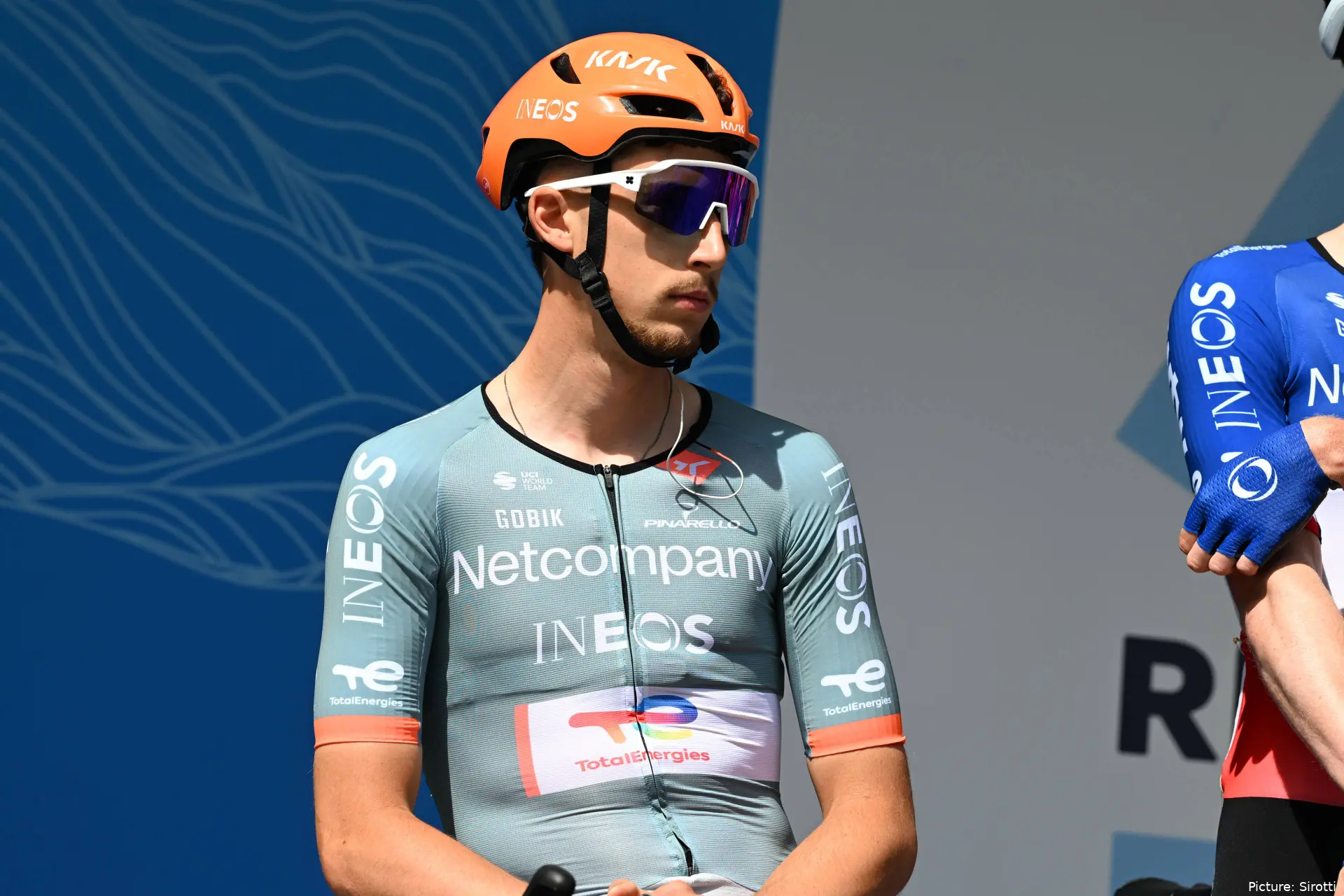
Kevin Vauquelin already knows what it takes to ride deep into the Tour de France general classification battle. Last year, he finished seventh overall with Arkéa B&B Hotels, doing so without the collective strength now surrounding him at Netcompany INEOS.
This time, the context is very different. Vauquelin starts the Tour inside an INEOS team built around power, versatility and an opening test in Barcelona that could immediately shape the race.
After Oscar Onley’s late withdrawal and Carlos Rodriguez’s omission from the final eight, the Frenchman is one of the clearest routes through which INEOS can keep a general classification presence alive.
Thymen Arensman finished fourth at the Giro d’Italia and won two mountain stages at last year’s Tour, Egan Bernal brings Grand Tour-winning pedigree, and Filippo Ganna, Josh Tarling, Tobias Foss and Michal Kwiatkowski give INEOS one of the strongest engine rooms in the race. For Vauquelin, that is the biggest difference from twelve months ago.
Vauquelin sees a different kind of support
Speaking at Netcompany INEOS’ pre-Tour press conference, Vauquelin admitted the change in surroundings is obvious. “It’s true that it’s really quite different,” the Frenchman said, according to Cyclism’Actu. “Compared with previous years, we have a team that is very solid on paper.”
That solidity matters immediately. The 2026 Tour opens with a team time trial through Barcelona, an exercise in which INEOS have invested heavily and one that suits the final shape of their selection. Ganna, Tarling and Foss are all elite time-trial engines, while Kwiatkowski adds experience and control on a stage that could create early gaps before the race has settled.
Vauquelin did not hide how much attention the team has given to the opener. “Especially with a start in Barcelona with a team time trial. We are really impatient to be able to show ourselves. The team has put a lot of resources into that,” he said.
Without Onley, INEOS no longer have the clear leader they expected to bring. With Rodriguez also absent, the opening TTT offers Vauquelin, Arensman and Bernal a chance to start from strength rather than wait for the mountains to rescue the race.

Kevin Vauquelin during the time trial at the 2026 Itzulia Basque Country
From Arkéa outsider to INEOS GC card
Vauquelin’s seventh place last year changes how his 2026 Tour will be viewed. He is no longer simply a French rider arriving with ambition and freedom. He has already produced a top-10 overall result at the biggest race in cycling, and he now has a team capable of influencing the race before the first summit finish.
That does not remove every question. His final approach to the Tour was interrupted by illness after the Tour Auvergne-Rhone-Alpes, and INEOS will only know once the race starts how quickly he can settle into three weeks at full intensity. But his own message was not defensive.
“And then, as I have been able to do in previous years, day by day, we will do the first week properly,” he said. “And I think we have a lot of cards to be offensive and really play on defence.”
The cards are obvious from the selection. Vauquelin can be protected if the race opens well for him. Arensman can move in the mountains. Bernal brings experience and timing. Ganna and Tarling can shape the early time-trial narrative. Godon and Kwiatkowski give the team options when stages become harder to control.

Barcelona can reset INEOS’ Tour
The opening stage carries extra weight because of what happened before the race. Onley’s absence took away the rider who had been expected to carry the team’s new GC project. Rodriguez’s omission removed another rider with proven Tour top-10 consistency. Vauquelin’s presence, Arensman’s Giro form and the time-trial strength around them have become the alternative.
A strong ride in Barcelona would immediately change the tone. It would put INEOS into the race before the first mountain has even appeared, give their GC options a cleaner start, and reward a selection shaped around horsepower as much as climbing.
Vauquelin’s 2025 Tour showed he can survive near the front of the general classification for three weeks. His 2026 Tour begins with a very different kind of test: whether INEOS’ firepower can give him the platform that Arkéa B&B Hotels never could.

Kieran WoodDeputy Editor-in-Chief
Kieran Wood is a sports journalist based in Wales and has been active in journalism since 2022. He regularly contributes to DartsNews.com and CyclingUpToDate.com, where he covers professional cycling and darts. In cycling, his work includes liveblogs from major races, including the Tour de France, the Giro d’Italia, and La Vuelta a España, alongside race reports and analysis. He has also conducted interviews with professional riders.
His reporting spans the full racing calendar, from one-day classics to stage races, with a focus on accurate, real-time coverage and clear contextual analysis. For statistics, results, and historical context, he regularly uses resources such as ProCyclingStats. To support reporting on rider activity and training context where relevant, he also references Strava.
In his work, Kieran places strong emphasis on careful sourcing, editorial accuracy, and updating articles as new, verified information becomes available.
claps 0visitors 0
Just in
Popular news
Latest comments
- Yea 'won' is loosely used here in my comment.frieders312-10-2026
- I'm betting PogiFanBoy has many candles he lights on his Pogi shrine every night! Not sure how much room there'd be for Seixas candles.frieders312-10-2026
- If it would shut you up for a season I'm all for anything to make that happen!frieders312-10-2026
- And you have a reason for this claim of 3/4? You know this for a fact? Or it is your ego once again making assumptions? As usual, so much ego about this tiny little comments section, so little insight about the actual cyclingRidesHills12-10-2026
- I disagree with these experts, because the comparison isn't valid yet. Seixas is exciting as hell to watch, but so was Pogačar at this stage in his career. Seixas just finished his second season, and to me, it's not about age, it's about season, so the age of 20 isn't the important thing. All his 8 wins are in this second season, with the Itzulia Basque Country GC plus La Flêche Wallonne and Il Lombardia, and his second places to Pogačar are notable. In comparison, though, Pogačar was set up as a GC rider in his first two seasons, and won the Volta ao Algarve and Amgen California tours in his first year (8 wins), plus the aggressive podium at the Vuelta that announced him as the climber he was, before winning the Volta a la Communitat Valencia and the Tour de France in his second year (another 9 wins). That he has ended up as the dominant monuments winner of his era (better than van der Poel?! my god) was nobody's prediction, but had Alaphilippe's move not disrupted the entire sprint at the delayed Liége race that year, who knows what we might have noticed a little earlier. Point being, their first two seasons on the world tour don't align with each other perfectly, and Pogačar's statistics are better. This should be no surprise. Pogačar has one main rival during classics season, and nobody ever mentions the other, and then the other rival during grand tour season, when everyone forgets the first (van der Poel and Vingegaard, obviously). Will Seixas compete with him equally in both classics and tours, in future years? The cycling fan in me hopes so! Right now, the show is amazing, better when they are on the same circuit, and Seixas is still young. A hand off across the generations will happen someday, to someone. But, I am pretty sure Pogačar would have ended up with the Vuelta, Worlds, and Lombardia had he not crashed at the Vuelta, but he crashed, and such is life, and maybe he returns in full force and maybe not. That's cycling, either way. It's fabulous to have the show, that's for sure.RidesHills12-10-2026
- Paul will still be figuring out what his capabilities are in 2027 as he continues to mature. He is learning. He has raced the entire year with respect to other riders but yesterday he rode with no respect and with anger in his legs. When Tadej won the 2020 Tour he was one day shy of his 22nd birthday. Paul has the potential to be the future star of cycling in a few years time and is on the same trajectory as Tadej. I'd like to see him race the Giro this next year and try to win it. I think he could do it.awp12-10-2026
- oh boy, you're gargling with french balls now?? pogi going to be jealous.whkman11-10-2026
- Well if UAE the best team in history comes knocking their the only team in the world who can get Seixas. Seixas will become incredible there. Lets see if he stays at decathlon or goes to UAE.miguel11-10-2026
- Ahem, stage 16 of the 2025 Giro
 Rafionain-Glas11-10-2026
 - Can we get a comment from the UCI on this. The silence from Aigle is deafening! Come on cycling journalists , start annoying them to get a comment please.Paul53111-10-2026
Loading
Write a comment