Walter Godefroot, 10-time Tour de France stage winner and iconic Telekom manager, passes away at 82
Cycling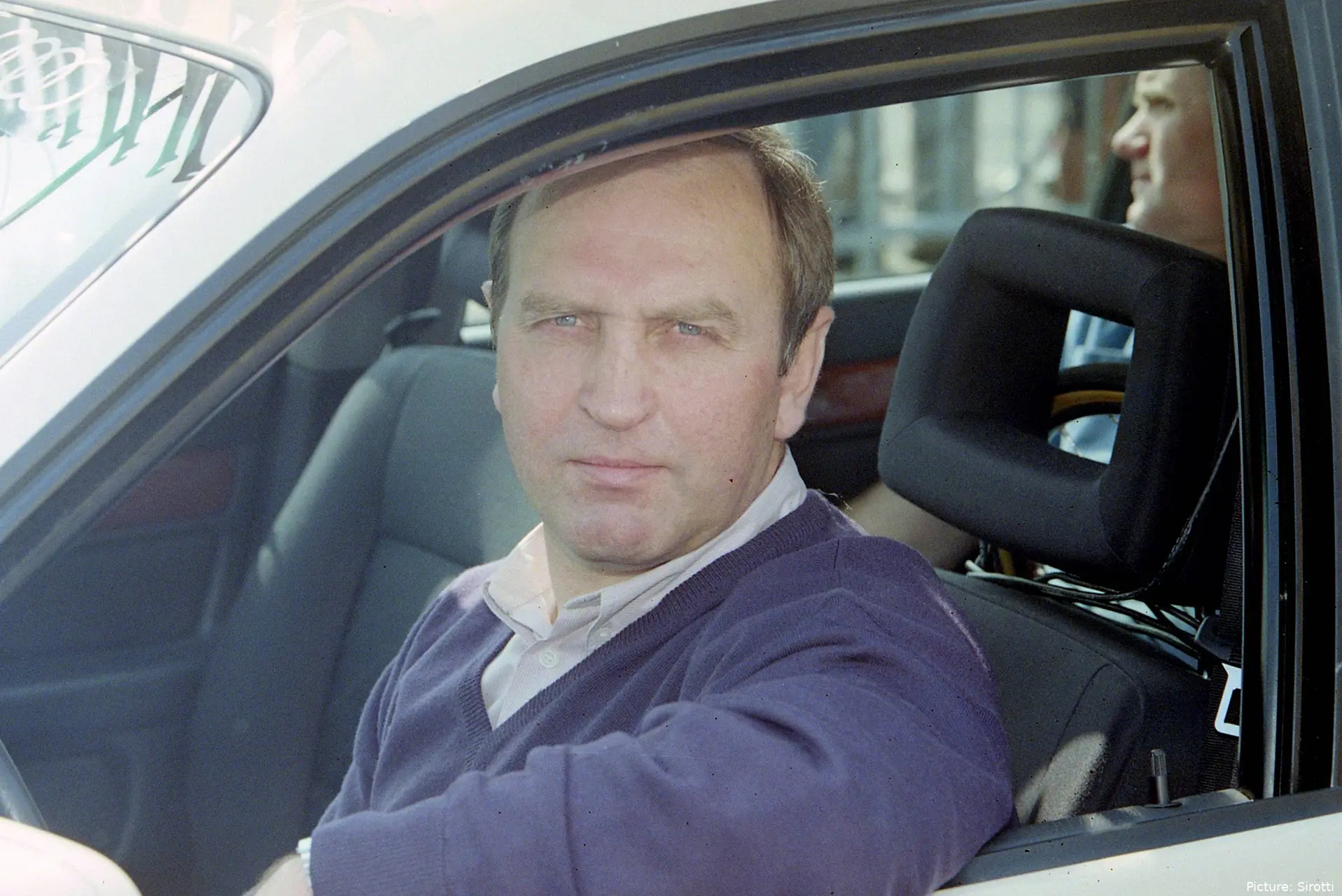
Belgium cycling is in mourning again. Just nine months after the passing of Rik Van Looy, the country now bids farewell to Walter Godefroot, who has died at the age of 82. Both a fierce competitor and a shrewd tactician, Godefroot’s influence spanned generations — first as a prolific Classics rider, then as one of the most successful and influential team managers of the modern era.
Born on July 2, 1943, Walter Godefroot announced himself to the cycling world with a bronze medal in the road race at the 1964 Tokyo Olympics. He turned professional the following year and made an immediate impact by winning the Belgian national championship, besting none other than Eddy Merckx — then a rising star himself.
From that moment on, Godefroot and Merckx would be locked in an unspoken rivalry. While Merckx’s shadow loomed large over that golden era, Godefroot carved out a palmarès that stood tall in its own right. He built his success on sheer power, tactical intelligence, and a deep love for the toughest races.
He conquered three of cycling’s five Monuments: Liège–Bastogne–Liège (1967), Paris–Roubaix (1969), and the Tour of Flanders twice (1968, 1978) — the latter coming at the remarkable age of 35. He also claimed 10 Tour de France stage victories, won the green points jersey in 1970, and stood atop the podium at Gent–Wevelgem (1968) and Bordeaux–Paris (1969, 1976). He sprinted, he suffered, and above all, he won — frequently and fiercely.
Read also
Architect of Dominance at Telekom
After retiring in 1979, Godefroot briefly stepped away from cycling, opening a bike shop with his wife in Deurle. But the sport’s gravitational pull proved too strong. He transitioned into team management, learning the ropes at Capri Sonne alongside a young Patrick Lefevere.
It was at Team Telekom, however, where Godefroot truly reshaped modern cycling. Taking over in 1991, he transformed the modest German outfit into a global powerhouse. Under his leadership, Telekom won the Tour de France twice — first with Bjarne Riis in 1996, then Jan Ullrich in 1997 — and became synonymous with elite cycling in the 1990s and early 2000s.
Yet this golden era came with a shadow. Telekom was later revealed to be deeply embedded in cycling’s widespread EPO era, and while many riders eventually spoke out, Godefroot remained mostly silent, his lips sealed even as books were written and confessions aired.
In recent years, Godefroot lived a more private life, gradually withdrawing from the public eye. But the legacy of Walter Godefroot is undeniable: a rider who stood tall in the age of Merckx, a tactician who built empires, and a man whose life mirrored the sport he loved — demanding, uncompromising, and at times, controversial.
Walter Godefroot – Career Highlights
As a Rider:
- Tour of Flanders: 2× (1968, 1978)
- Paris–Roubaix: 1× (1969)
- Liège–Bastogne–Liège: 1× (1967)
- Gent–Wevelgem: 1× (1968)
- Tour de France: 10 stage wins, Points Classification (1970)
- Vuelta a España: 2 stage wins
- Giro d’Italia: 1 stage win
- Belgian National Champion: 2× (1965, 1972)
As a Manager:
- Tour de France Wins: 1996 (Riis), 1997 (Ullrich)
- Vuelta a España Wins: 1999 (Ullrich), 2006 (Vinokourov)
- Monument Wins: Ronde van Vlaanderen 2004 (Wesemann) Liège–Bastogne–Liège 2005 (Vinokourov) Milan–Sanremo 1997, 1998, 2000, 2001 (Zabel)
- Ronde van Vlaanderen 2004 (Wesemann)
- Liège–Bastogne–Liège 2005 (Vinokourov)
- Milan–Sanremo 1997, 1998, 2000, 2001 (Zabel)
🏆 L'immense palmarès du regretté Walter Godefroot 🇧🇪
— Cyclisme Belge 🇧🇪 (@LeCyclismebelge) September 1, 2025
61 victoires dont :
🇨🇵 10x étapes du Tour de France
🇧🇪 2x Tour des Flandres
🇪🇦 2x étapes de la Vuelta
🇮🇹 1x étape du Giro
🇨🇵 Paris-Roubaix
🇧🇪 Liège-Bastogne-Liège
🇧🇪 Gand Wevelgem
🇧🇪 2x Champion de Belgique (2x devant Merckx) pic.twitter.com/O3sLUy6L6S

Kieran WoodDeputy Editor-in-Chief
Kieran Wood is a sports journalist based in Wales and has been active in journalism since 2022. He regularly contributes to DartsNews.com and CyclingUpToDate.com, where he covers professional cycling and darts. In cycling, his work includes liveblogs from major races, including the Tour de France, the Giro d’Italia, and La Vuelta a España, alongside race reports and analysis. He has also conducted interviews with professional riders.
His reporting spans the full racing calendar, from one-day classics to stage races, with a focus on accurate, real-time coverage and clear contextual analysis. For statistics, results, and historical context, he regularly uses resources such as ProCyclingStats. To support reporting on rider activity and training context where relevant, he also references Strava.
In his work, Kieran places strong emphasis on careful sourcing, editorial accuracy, and updating articles as new, verified information becomes available.
claps 5visitors 1
Just in

Popular news
Latest comments
- Predictable, sure! But boring??? OMG! Was Mike Tyson predictable and boring in his prime? Air Jordan? Schumacher or Senna? OMG!!!MajorPayne19-10-2026
- how it is "We’ve taken another big step forward for next year" he just lost in lombardia to a 20 year old, and two 30+ year olds. and not even top 10 for WCRR.abstractengineer19-10-2026
- This is similar to Lebron. first he said i need to consult my family , my daughter, need respectable money blah blah blah and then dont care about family , dont care about money, only onion rings, am off to Philly, very very far from family. Off season should be with family more, no?abstractengineer19-10-2026
- I hope he comes back strong for a proper battle with Tadejmij19-10-2026
- congrats to a great career and good retirement.mij19-10-2026
- Any artificial product should be reported.Any team that doesn't should be stripped of wins and fined.I know that this level of transparency does not and will never exist.All anyone can do is continue to test riders on a regular and surprise basis.If the test comes back clean then all any of us can assume is the rider is clean.
 Brucegel19-10-2026
 - Also, it's supposed to be hard to gain an advantage from drafting off Remco because he is so aero.Hills3319-10-2026
- How would stats back it up? You realise tactics involved could mean Vine saved his legs for a faster finish? Some riders can choose to go all out and fade later in the ride, others can hold steady state the whole way, and others can have a reserved start and power up later in the ride. You can't judge just by the stats unless you have power data to be able to prove Vine is riding faster even though he is putting out the same or less power (suggesting drafting). I'm sure the stats prove that Vine didn't cheat because UCI would monitor the stats to make sure this exact scenario doesn't happen (and disqualify them for drafting if the stats proved it).Pogboom19-10-2026
- Only one person would say such a thing here. Sorry to burst your bubble but I’m afraid that window of opportunity has now closed. You can beat some of the people all of the time and all of the people some of the time but you can’t beat all of the people all of the time.Jumpyjohn19-10-2026
- Both prizes are actually pathetic, almost amateur like, not even covering the cost of participatingJumpyjohn19-10-2026
Loading
Write a comment