UCI defend late Paris-Roubaix tyre system ban after Visma criticism over “level playing field”
Cycling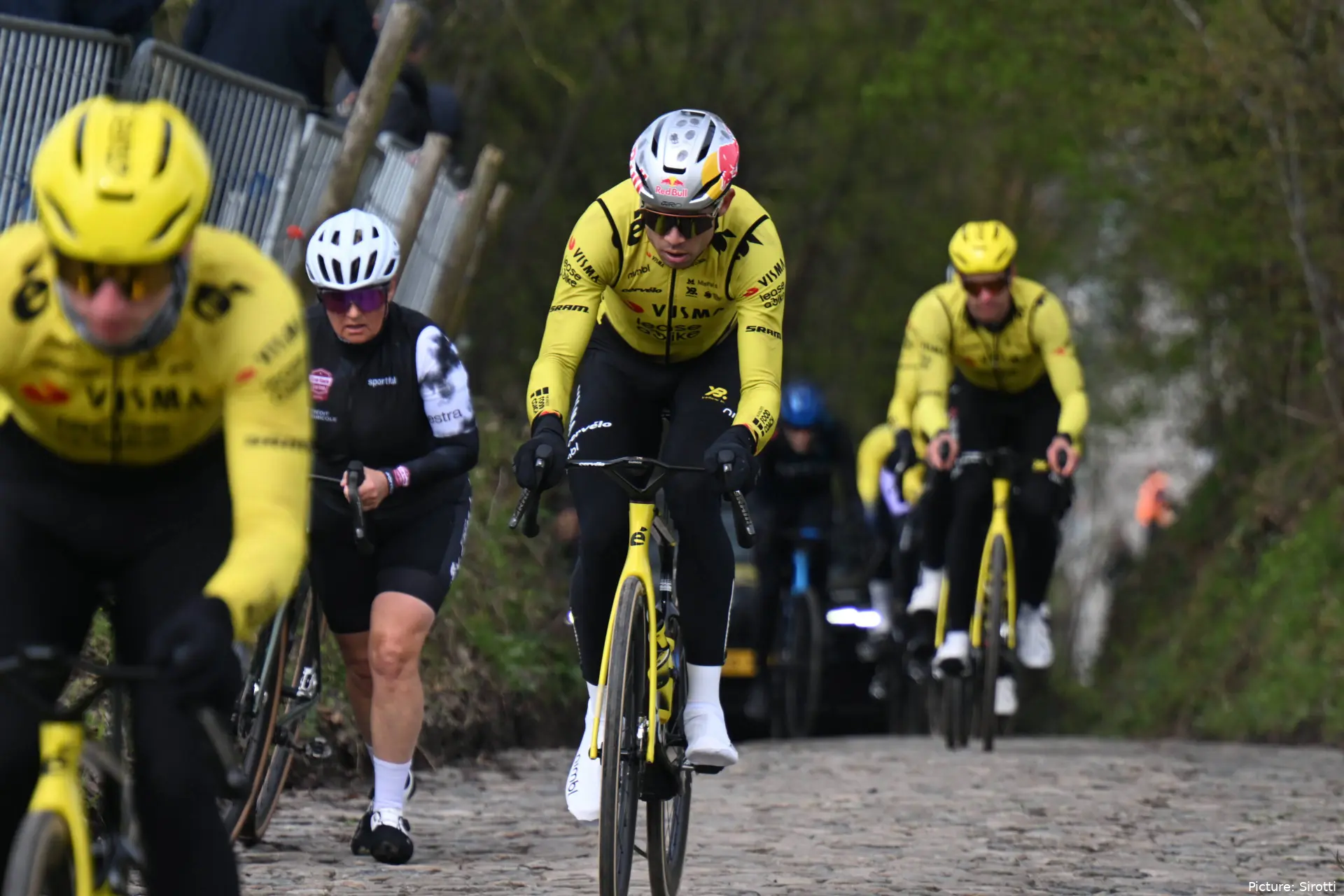
The UCI have responded to criticism from Team Visma | Lease a Bike over their late decision to ban adjustable tyre pressure systems ahead of Paris-Roubaix, defending the move as necessary to protect a “level playing field” within the peloton.
The ruling, which removes Visma’s Gravaa system from use just days before the race, had already drawn a sharp reaction from within the team. Head of Performance Mathieu Heijboer questioned both the timing and the explanation, describing it as “a vague story” and pointing to the lack of any prior intervention. “There was also no prior warning. In fact, we still used it at GP Denain.”
At the centre of the dispute is a system designed specifically for the demands of Paris-Roubaix, allowing riders to adjust tyre pressure mid-race to balance grip on the cobbles with speed on the road.
In a Monument where equipment choices can shape the outcome as much as physical strength, its removal is not a marginal detail.
UCI defend decision on fairness grounds
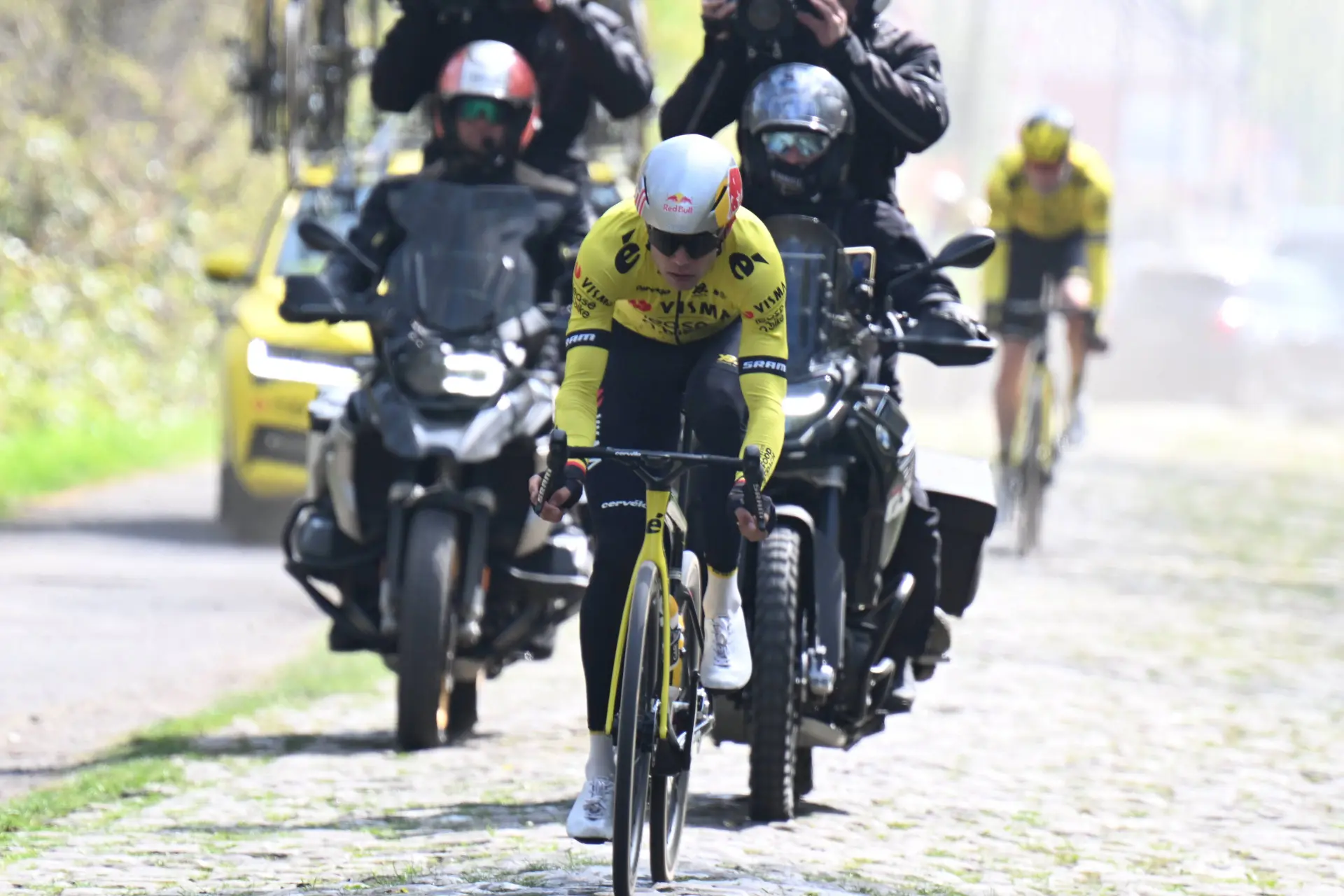
In a response provided to Domestique, the UCI set out its reasoning, pointing to the principle that performance-enhancing technology must be accessible across the peloton. The governing body argued that with only one team currently using the system, it represented a “significant advantage”, particularly in a race like Paris-Roubaix where technical factors can be decisive.
The UCI also pointed to the status of Gravaa, the company behind the system, which filed for bankruptcy earlier this year. Following several weeks of analysis, it was concluded that the product could no longer be considered commercially available under its regulations, a requirement for use in competition.
On that basis, teams, manufacturers and the AIGCP were informed on 25 March that the system would not be authorised for use for the remainder of the 2026 season.
Frustration remains over timing and interpretation
That explanation provides clarity on the governing body’s position, but does not address the concerns already raised within Visma over how and when the decision was made.
Beyond the technical argument, the timing has been central to the team’s reaction, coming just days before one of the most equipment-sensitive races on the calendar. That context fed into a pointed remark from Heijboer, who suggested: “That is, of course, no coincidence.”
There is also no suggestion that the team will take risks in defiance of the ruling. “That’s a risk we are obviously not going to take,” he said, with penalties ranging up to disqualification. But the impact is still clear. Asked directly whether it affects Wout van Aert’s chances, Heijboer’s response was brief: “Yes.”
A debate that will not end on the cobbles
The UCI may now have publicly defended its decision, but the disagreement it has triggered is unlikely to end with Paris-Roubaix itself.
At its core sits a question that extends beyond a single race: how to define accessibility in a sport where technological development continues to accelerate. For the UCI, the line is drawn at availability across the peloton. For Visma, the interpretation remains open to challenge.
With that gap now clearly exposed, what began as a late pre-Roubaix ruling is already shaping into a broader debate over how cycling balances innovation against fairness.

Kieran WoodDeputy Editor-in-Chief
Kieran Wood is a sports journalist based in Wales and has been active in journalism since 2022. He regularly contributes to DartsNews.com and CyclingUpToDate.com, where he covers professional cycling and darts. In cycling, his work includes liveblogs from major races, including the Tour de France, the Giro d’Italia, and La Vuelta a España, alongside race reports and analysis. He has also conducted interviews with professional riders.
His reporting spans the full racing calendar, from one-day classics to stage races, with a focus on accurate, real-time coverage and clear contextual analysis. For statistics, results, and historical context, he regularly uses resources such as ProCyclingStats. To support reporting on rider activity and training context where relevant, he also references Strava.
In his work, Kieran places strong emphasis on careful sourcing, editorial accuracy, and updating articles as new, verified information becomes available.
claps 1visitors 1
Just in
Popular news
Latest comments
- yes for sure, there will be more chances for him at Euro than Lombardia. I wonder if that emotion wasn't also because he knows he has now been eclipsed by a younger rider w/o his goals being checked off. At least when Seixas over takes Tadej someday, Tadej will have accomplished his major goals. He still has Roubaix left, but Seixas isn't a threat there. And he should find a year to get Vuelta. Remco now is behind at least 2 riders w/o ever having won a Tour, one monument to his name, and the next few World Championships are not Remco friendly. I would still take Remco's wins though!!!mij12-10-2026
- Remco was at 100%. He raced as expected: 15th best on the climbs and then best in the sprint of the chasing group. Exactly what he did at Liège-Bastogne-Liège, where he was on similar form. His win in Amstel was comparable to Quebec or the Euros
 Rafionain-Glas12-10-2026
 - "inside the tent pissing out" is an idiom based on a quote from President Lyndon Johnson. Not sure if you're saying you don't understand the term. The full phrase is "it's probably better to have him inside the tent pissing out, than outside the tent pissing in."wrsty12-10-2026
- Pissing out?? Who is forcing them? They can follow Ayuso's example. And they can be leaders on another team. Ayuso's example again. :)MajorPayne12-10-2026
- Hmm it's an interesting take with certain disclaimers e.g. comparing them at the same age (Pogi wasn't given chances so early in his career so we will never know), the level of the competitors in the race or tour (really hard to compare, as you would be looking at multiple competitors, let alone comparing just Seixas vs Pogi). In any case, Seixas' future certainly looks very bright, especially as he has the advantage of youth, access to new scientific knowledge/methods that weren't around when Pogi started, and most importantly has Pogi as an extremely good example to aspire to (e.g. copying training methods, nutrition, tactics, race craft, etc., to list just a few...).Pogboom12-10-2026
- > He’s so much better than Pogacar was at 20 years old It does not mean NOTHING. What is important how long you can be at the top. Most of the best riders are (really) good for 4-5 years (Alaphilippe, Sagan), of course outside this window you can win stages etc. but forget about GC winner in main tours. Talents like Pogacar (in case of GC) or MvdP (monuments or CX - 15 years being on top!!!) are rarity. It might be that if you start being good fast, you end up being good still young.averagecyclist12-10-2026
- Winning Il Lombardia would surely mean much more to Remco than to Seixas, after his crash there and then second places where he was far ahead of the rest but still far behind Pog, and had to blink away tears at the finish. Wonder if he will ever have such a good chance again.Hills3312-10-2026
- Yeah him, Del Toro for sure - not that they all pan out, but then how can you tell what someone was going to be capable of if they never got to be an out-and-out leader? Either way, their squad has a lot of riders who could be leaders at other teams but they are safely inside the tent now, pissing out.wrsty12-10-2026
- "removing any barriers to their golden goose" What barriers? Ayuso maybe? :) :) :)MajorPayne12-10-2026
- And let's not forget, Tadej Pogačar won his first Tour de France eating pizza, drinking beer and playing Playstation. This kept goinig on for another two years and when he lost the Tour 2X to Jonas, things dramaticaly changed. Today Pogi is a "killing machine." In 2024, in the Tours rest day, Pogi said: "If I compare the year 2019 to what we're doing today, we were real amatuers." ... That is the difference between Pogi and Seixas. Seixas immediately got professional help and advice, he knows exactly what he wants and is already at a very high level. So, the paths of Pogi and Seixas weren't the same.PogiSloFans12-10-2026
Loading
Write a comment