“This is no coincidence” - UCI controversially impose last-minute ban on Visma’s tyre pressure system pre-Paris-Roubaix as team DS fumes at decision
Cycling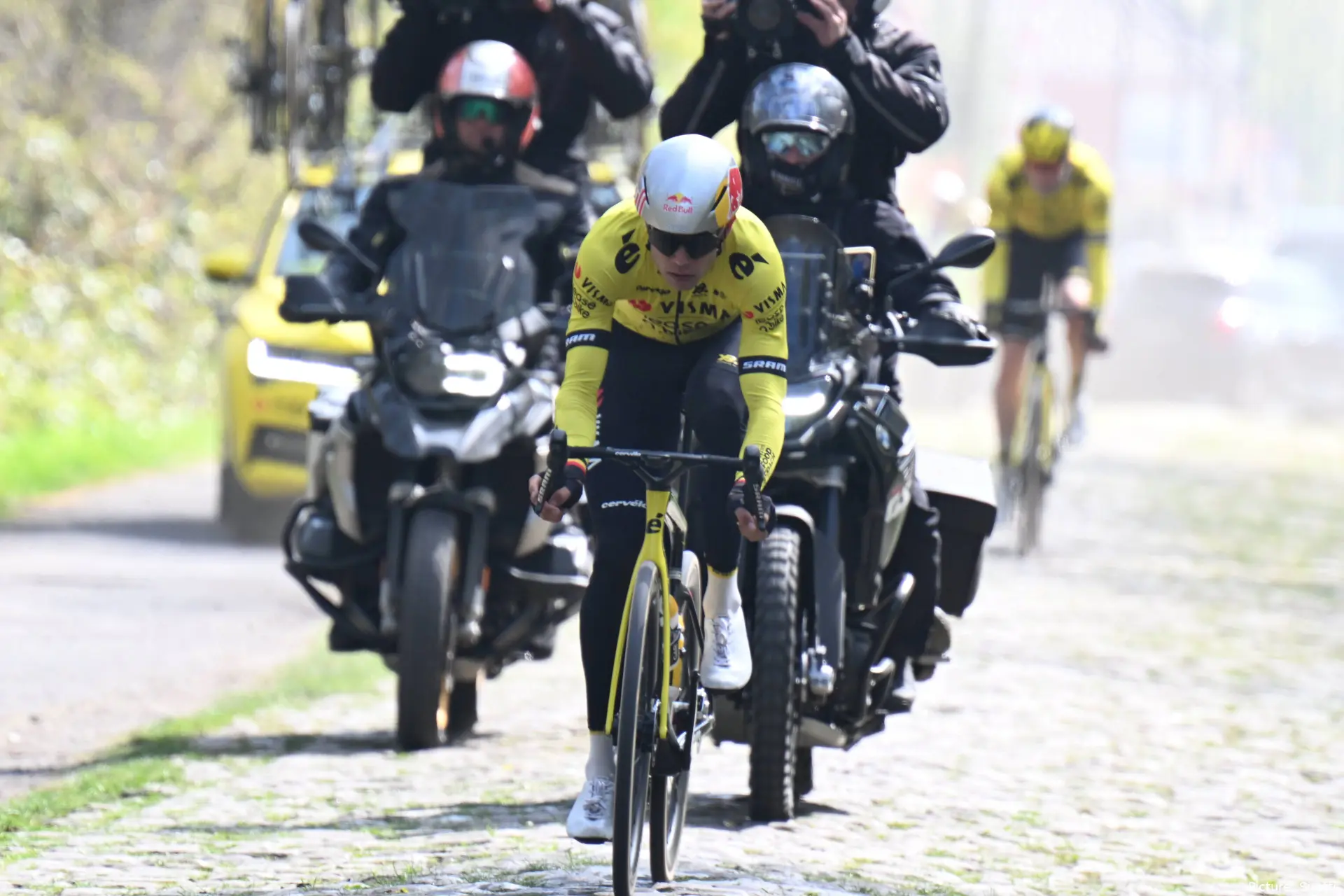
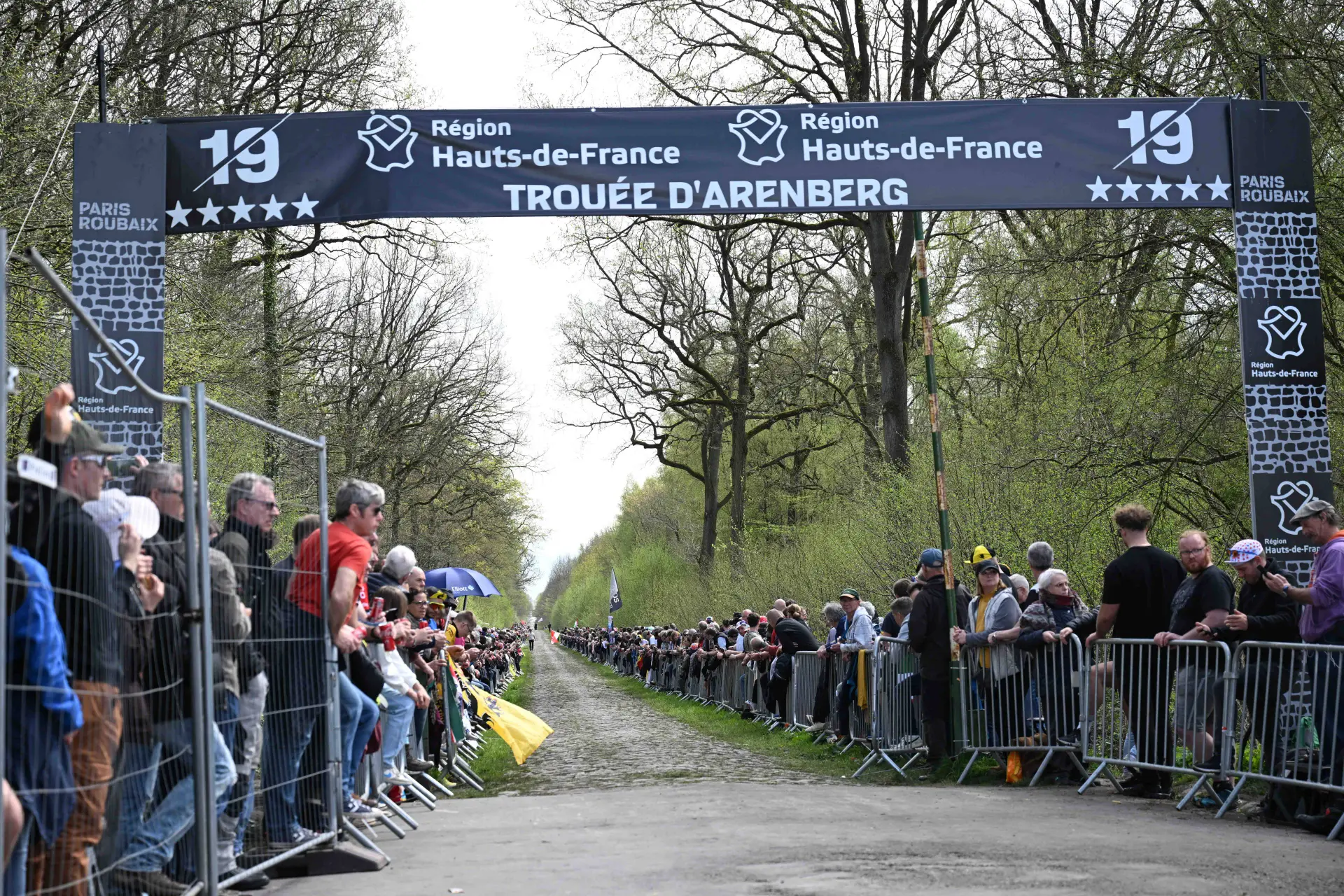
Paris-Roubaix is a race decided by margins. Over more than 50 kilometres of cobbles, the difference between winning and losing is often not strength alone, but how well a rider and their equipment can survive the chaos.
That is what makes the UCI’s late decision to ban Visma’s tyre pressure system so significant. Just days before the 2026 edition, one of the few tools designed specifically for the unique demands of the Hell of the North has been taken off the table.
A system built for Roubaix’s demands
Unlike other Monuments, Paris-Roubaix forces riders to constantly transition between smooth tarmac and some of the most brutal road surfaces in professional cycling. Managing tyre pressure across those changes is a long-standing challenge.
Visma’s system offered a solution. Riders could adjust pressure while racing, lowering it for grip and comfort on the pavé, then increasing it again for speed on the road sections. In a race where positioning, punctures and bike handling can decide everything, that flexibility had clear value. And in 2026, it may have mattered more than ever.
With tighter early sectors and less recovery time between cobbled stretches, this year’s route is expected to place even greater stress on equipment from the opening phases of the race.
Late intervention from the UCI
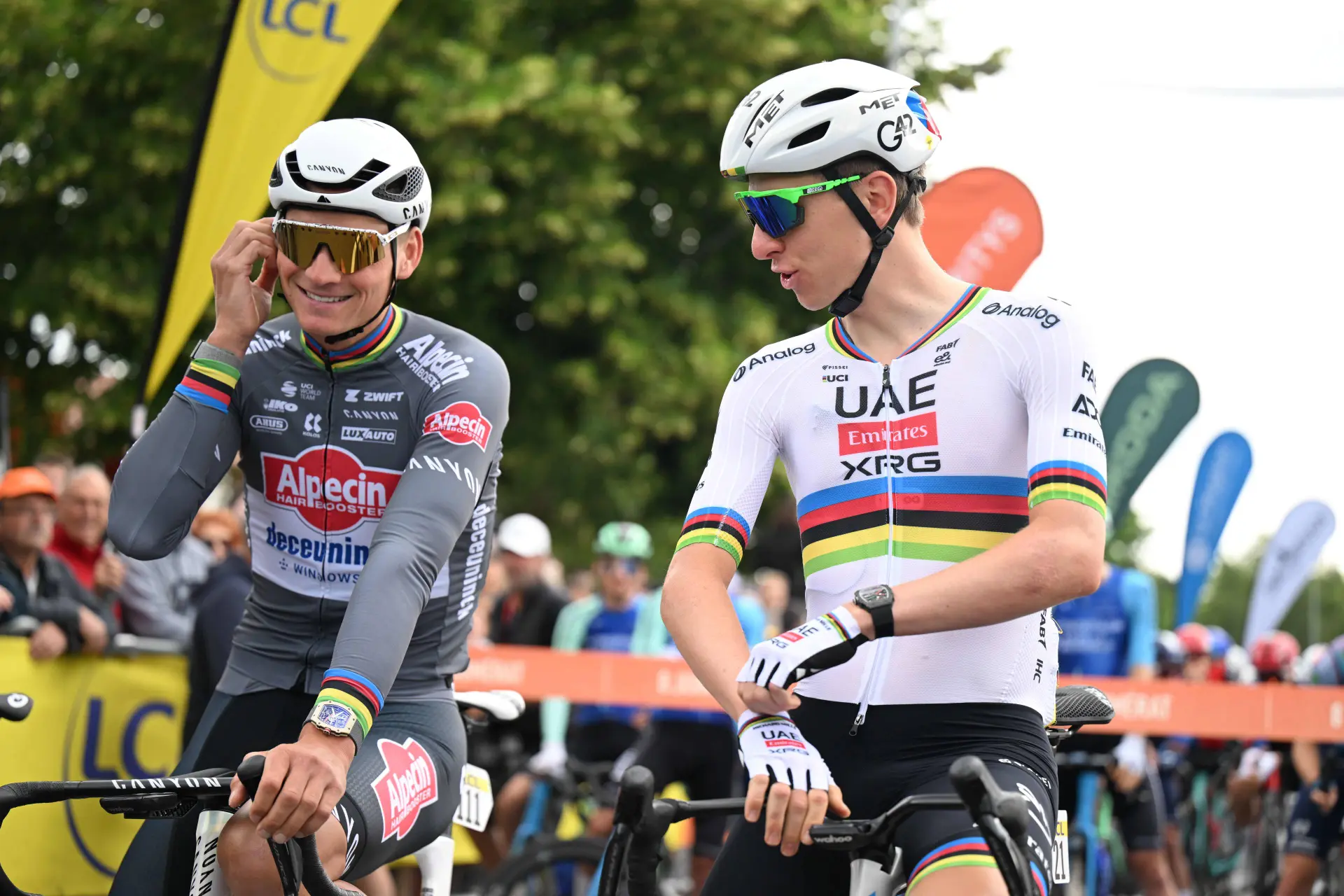
Despite being used in competition, the system will not be seen on Sunday. “We received a letter two weeks ago stating that the system is banned until the end of the season,” said Mathieu Heijboer, Head of Performance at Team Visma | Lease a Bike, speaking on the In De Waaier podcast.
The UCI’s reasoning centres on commercial availability rules, with the governing body questioning whether the system meets the requirement after the company behind it filed for bankruptcy earlier this year.
“A vague story” and no warning
For Visma, the explanation has not brought clarity. “A vague story.”
The system has since returned to the market following a restart of the company, while its use in recent races had raised no concerns. “There was also no prior warning. In fact, we still used it at GP Denain.”
That lack of notice is what sharpens the sense of frustration within the team.
“This is no coincidence”
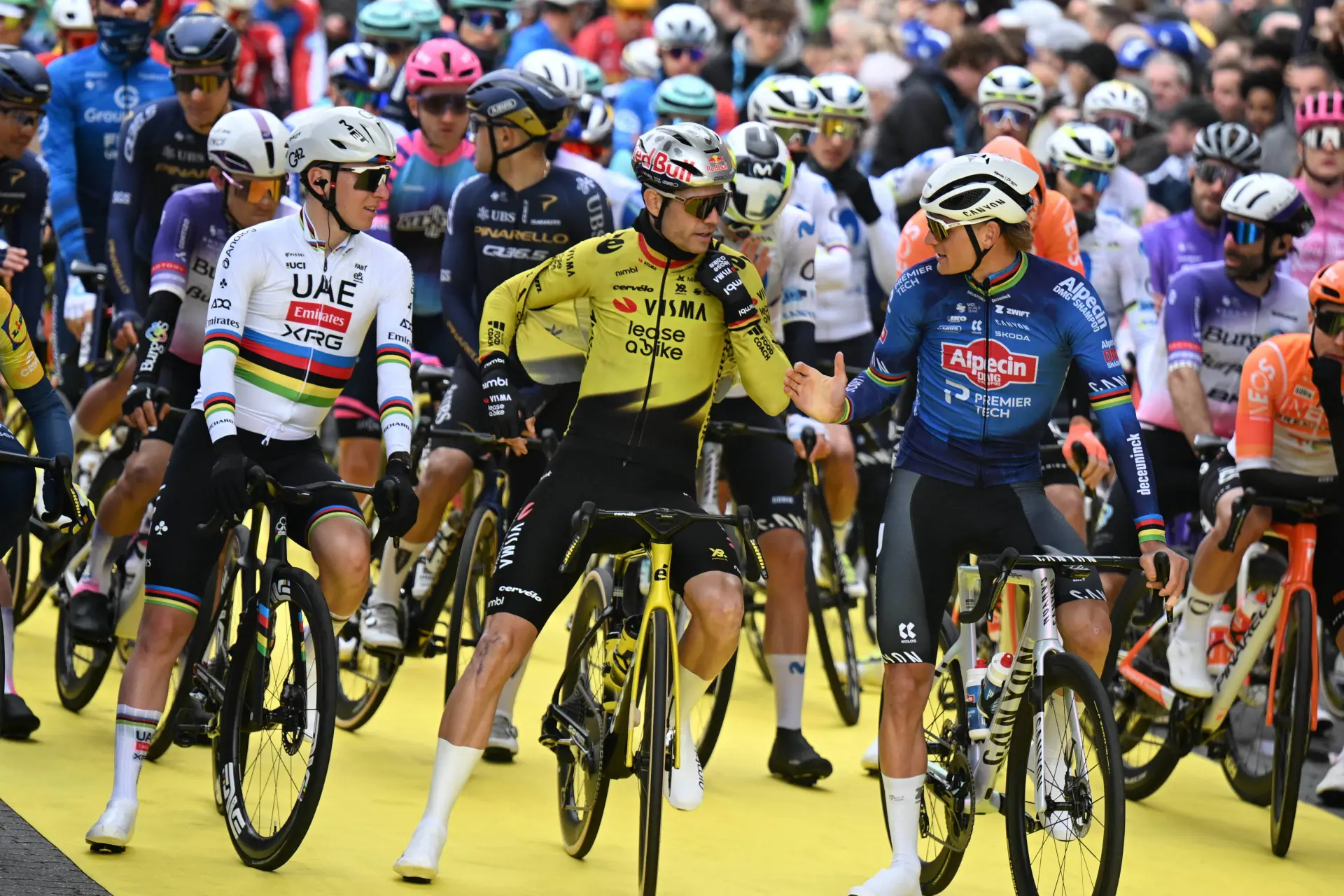
Paris-Roubaix is uniquely sensitive to equipment decisions, and the timing of the ruling has not gone unnoticed. “That is, of course, no coincidence.”
With penalties ranging from warnings to disqualification, there is no room for risk. “That’s a risk we are obviously not going to take.”
For Wout van Aert, the impact is immediate. The Belgian remains in pursuit of a first Paris-Roubaix title, and in a race where small advantages can define the outcome, the removal of a system designed specifically for the cobbles is not insignificant.
Asked directly whether it affects his chances, Heijboer was clear. “Yes.”

Wout van Aert at the 2026 Tour of Flanders
One less variable in a race built on chaos
Paris-Roubaix rarely follows expectation. Mechanical issues, positioning and sheer unpredictability shape the outcome as much as raw power. This year, however, one variable has been removed before the race has even begun.
In a Monument defined by uncertainty, that alone could prove decisive.

Kieran WoodDeputy Editor-in-Chief
Kieran Wood is a sports journalist based in Wales and has been active in journalism since 2022. He regularly contributes to DartsNews.com and CyclingUpToDate.com, where he covers professional cycling and darts. In cycling, his work includes liveblogs from major races, including the Tour de France, the Giro d’Italia, and La Vuelta a España, alongside race reports and analysis. He has also conducted interviews with professional riders.
His reporting spans the full racing calendar, from one-day classics to stage races, with a focus on accurate, real-time coverage and clear contextual analysis. For statistics, results, and historical context, he regularly uses resources such as ProCyclingStats. To support reporting on rider activity and training context where relevant, he also references Strava.
In his work, Kieran places strong emphasis on careful sourcing, editorial accuracy, and updating articles as new, verified information becomes available.
claps 12visitors 7
Just in
Popular news
Latest comments
- Well, this is a mass exodus if I ever saw one...anonymouscyclist09-10-2026
- @Jumpyjohn I believe it is because of Lombardia, at least that is what Remco stated during an interview after his Euro Road win.anonymouscyclist09-10-2026
- Not much need to get that jersey when he's got the world championship jersey to wear for another year.Vpotts09-10-2026
- Where it got him?MajorPayne09-10-2026
- It’s very simple, there is almost no money in cycling journalism (none of us pays anything here and probably very little elsewhere). People are getting paid for clicks and likes for far more “fun” viewing than reading articles so websites like these are left to share “syndicated” material and do hypothetical reporting and interviews, like asking questions without getting answers. I don’t think we should be blaming messengers, let’s think a little deeper, also about our own role and choices.Jumpyjohn09-10-2026
- I see you corrected the error but can you now please tell us how it affects your conclusion, which for me was the most important part. You said (at 1300) a much faster “shutter” speed would be needed or solve certain issues. Now that we’re at 13000, what is your opinion, is that fast enough or should technology invest further for even more precision so we’ll never ever have joint medals again but far more losers questioning results. I was extremely disappointed with FIFA’s announcements of being able to prove they made a correct call when awarding or not a penalty/goal (can’t remember which way it went) in the case of inside the ball technology that supposedly could have measured whether the ball did or didn’t touch a players hair which would have altered the result. My reasoning, if the tech is THAT precise, then it would permanently be giving false signals at random moments as the ball encountered obstacles such as flies, mosquitoes, droplets, leaves, larger loose particles, etc. and nobody would be in a position to distinguish properly. Of course, maybe it was hyperbole (funny people get the pronunciation right, funny also if they don’t)) or a reporting/editing mistake but nobody seems to have clicked, perhaps because a certain overturned card took away all the attention?Jumpyjohn09-10-2026
- I also hope Primož takes Lombardia, but I think it won't happen. Just because Primož became the EU champion in the ITT, without any strong competition, doesn't mean that much. In Lombardia the competition will be too strong for him.PogiSloFans09-10-2026
- I hope he takes Lombardia. It will be interesting to see him with Remco - guaranteed Primoz doesn't work for him.mij09-10-2026
- Maybe Net Company INEOS should be signing Roglic. Feels like they have been mostly irrelevant since G hung up the shoes. At least they would have someone who is there or there abouts on GC.MASnell09-10-2026
- Maybe Net Company INEOS should be signing Roglic. Feels like they have been mostly irrelevant since G hung up the shoes. At least they would have someone who is there or there abouts on GC.MASnell09-10-2026
Loading
5 Comments