"Today, Tadej Pogacar is the greatest, but he also has the strongest team" - Italian legend highlights UAE edge over rivals ahead of Tour of Flanders 2026
CyclingSaturday, 04 April 2026 at 13:00
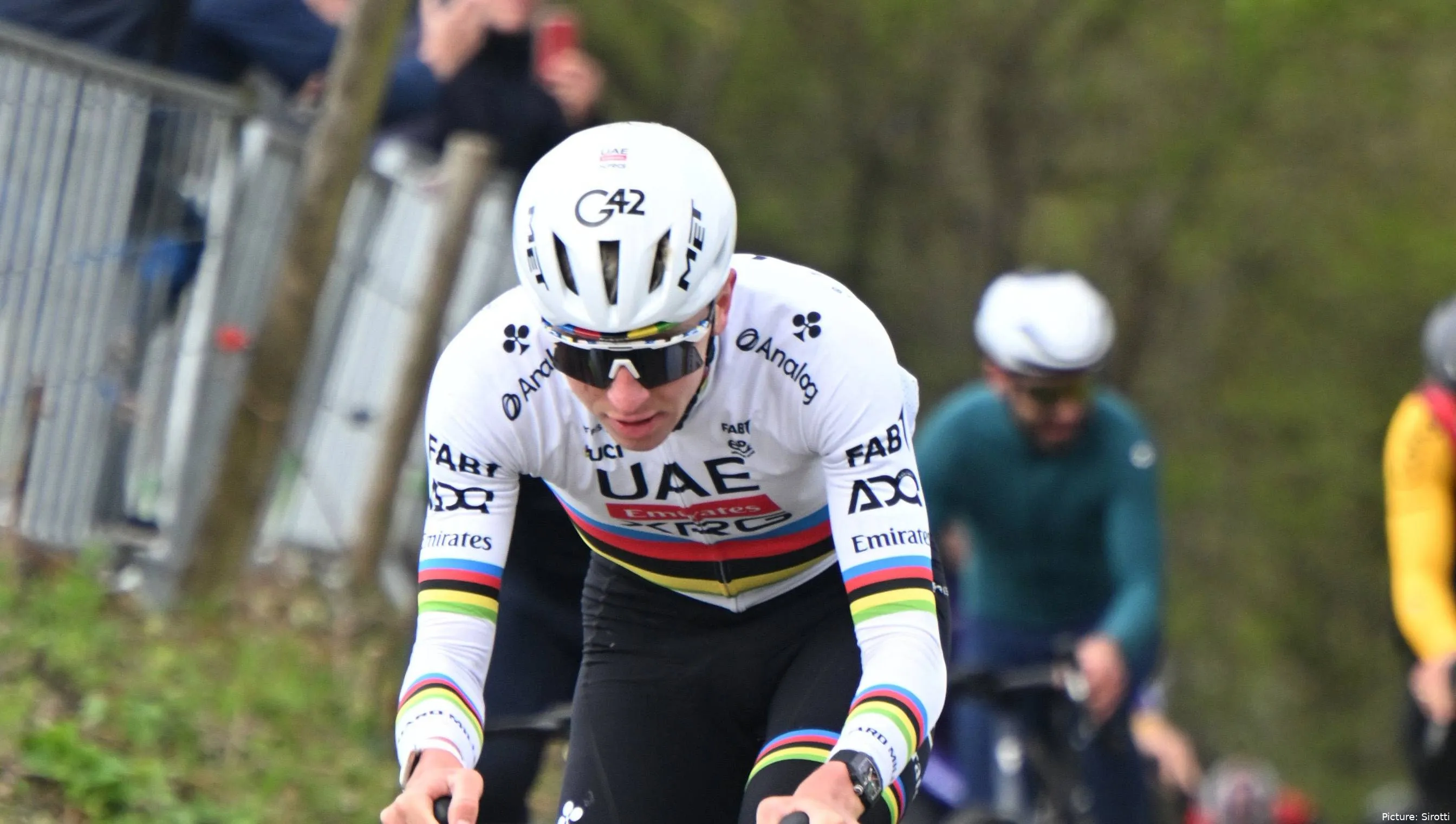
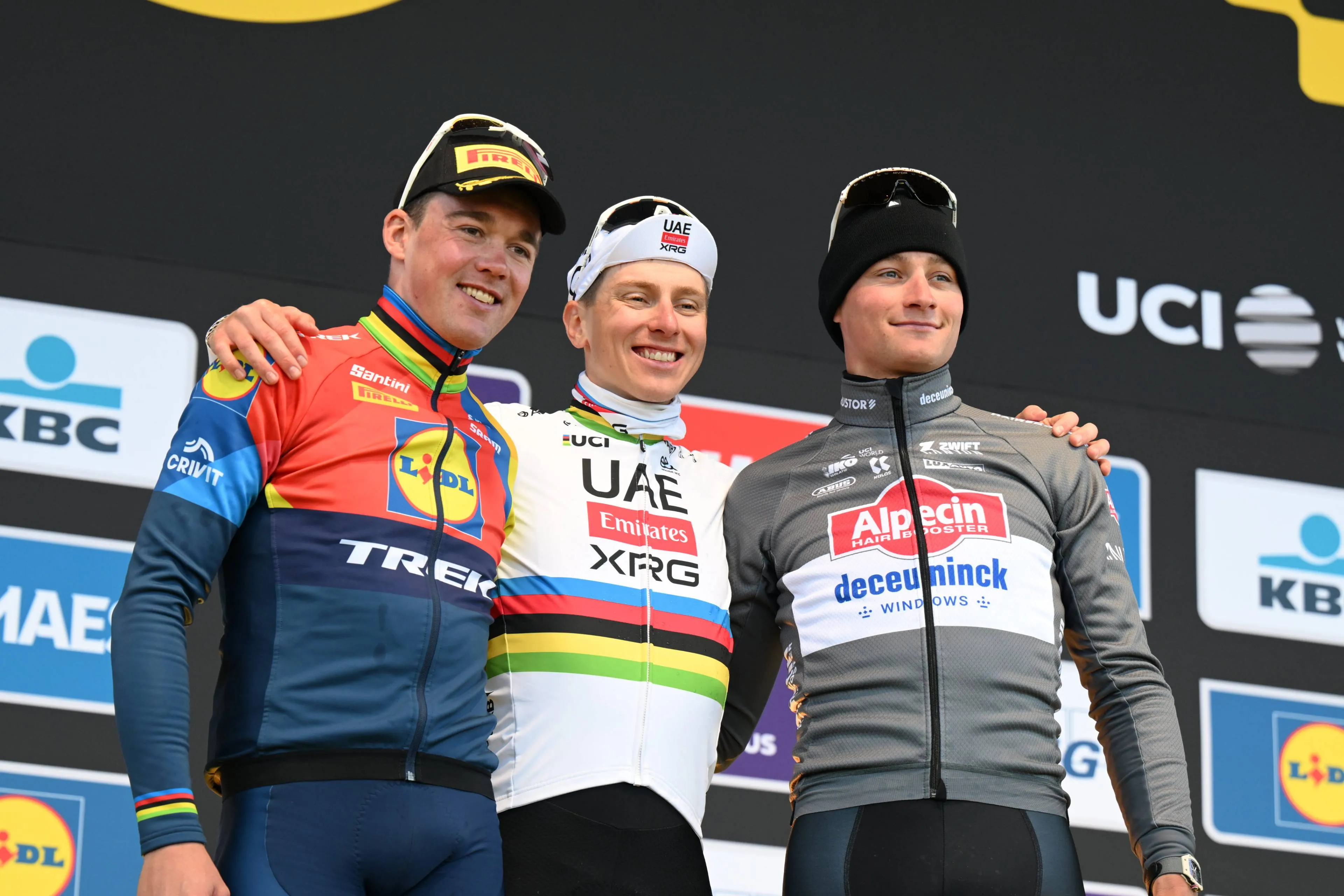
The discussion around Tadej Pogacar’s standing in the modern peloton often centres on his individual brilliance, but Italian cycling legend Gianni Bugno sees a more decisive factor behind that dominance heading into the 2026 Tour of Flanders.
The 1994 Tour of Flanders winner pointed not only to Pogacar’s level, but to the collective strength around him as the element that truly separates him from his rivals on the cobbles.
“Today, he is the greatest, but he also has the strongest team. UAE Team Emirates - XRG has no comparison," Bugno says in conversation with AS. "It is difficult to compete with them. Pogacar’s rivals do not have the same strength behind them. He can shape any race however he wants.”
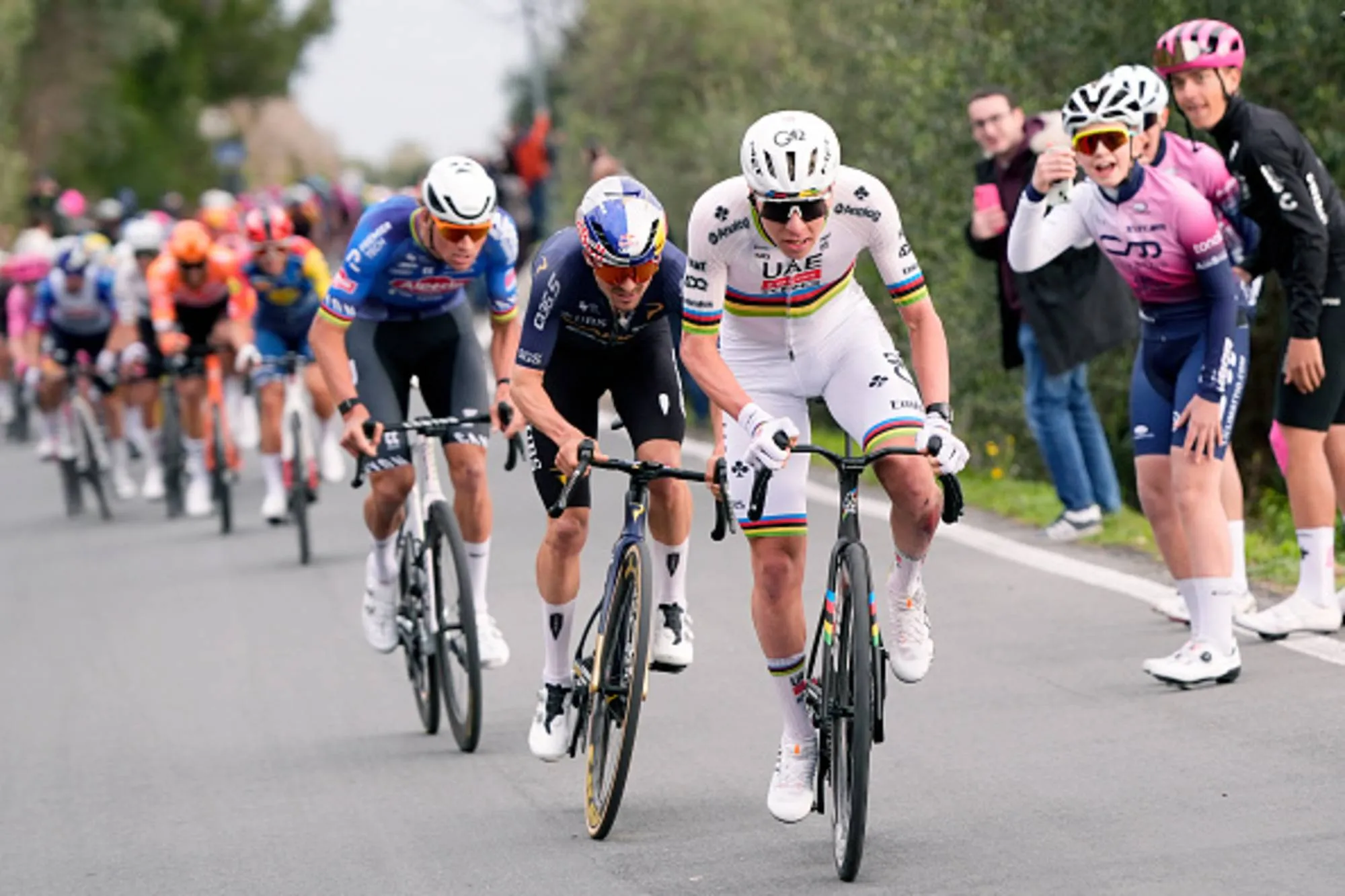
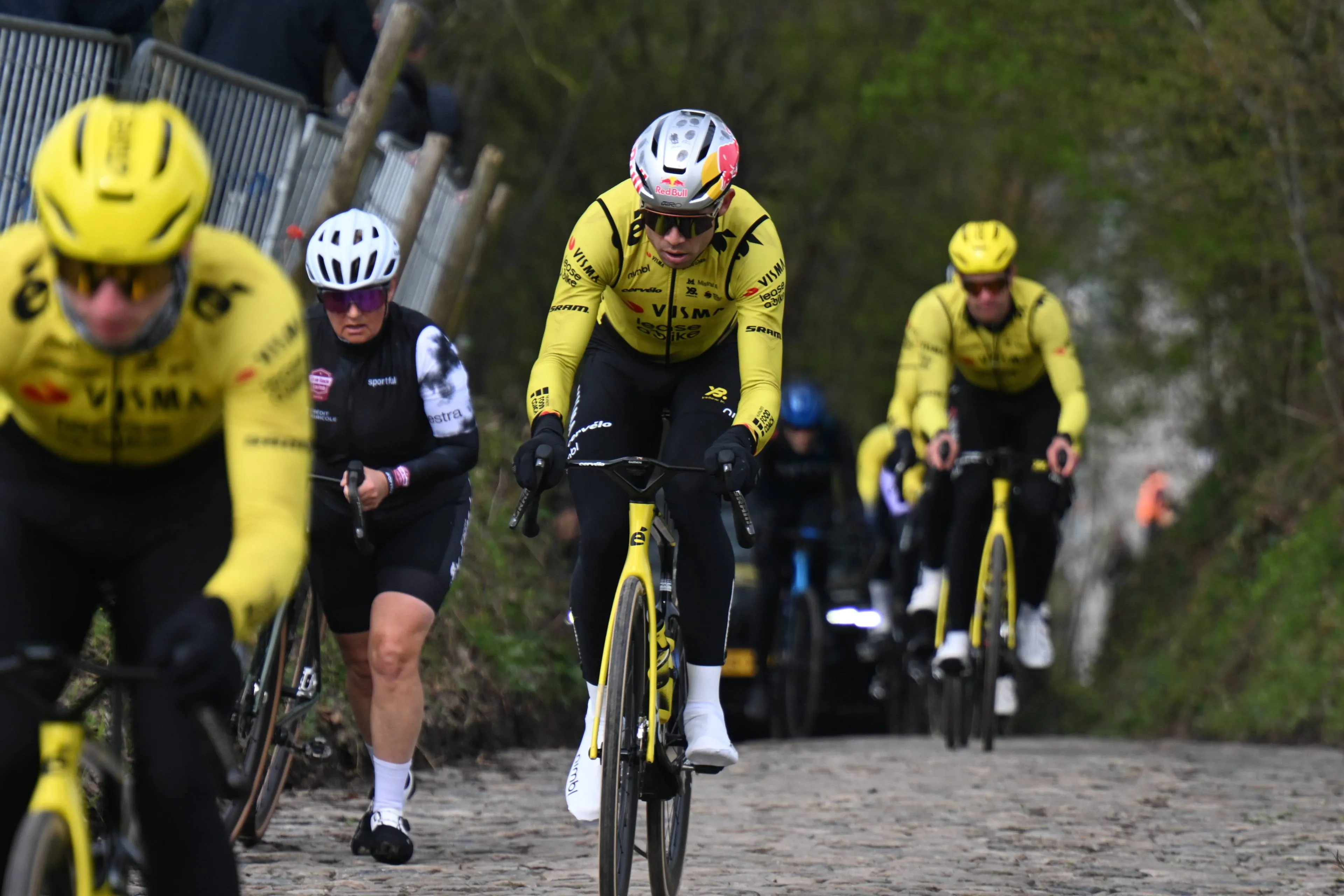
That assessment reframes the expected battle in Flanders. While Mathieu van der Poel and Wout van Aert remain the most obvious challengers on this terrain, Bugno’s view suggests the gap is not simply down to legs, but to how the race can be controlled long before the decisive climbs.
Team strength shaping the race
In recent editions, the Tour of Flanders has often been reduced to moments on the Oude Kwaremont and Paterberg, but the route to those points is increasingly dictated by depth and positioning across the full 278 kilometres.
For Bugno, that is where Pogacar’s advantage becomes most apparent. With UAE Team Emirates - XRG able to impose structure early and sustain pressure deep into the race, the Slovenian is rarely forced to respond in isolation.
That dynamic contrasts with riders such as Van der Poel and Van Aert, who, despite their own strength, have more frequently found themselves navigating decisive phases without the same level of collective backing.
Bugno’s wider view of the race reflects that imbalance, even as he acknowledges the quality across the field. “This time the number one favourite is Tadej Pogacar, although watch out for Van der Poel. We will also have to see how Van Aert is… and Remco Evenepoel, who is riding it for the first time. He could surprise, because I think the nature of this race suits his characteristics.”
A race shaped beyond individual strength
That does not diminish Pogacar’s individual standing in Bugno’s eyes. If anything, it reinforces it, placing him at the centre of a race that can be bent to his strengths in multiple ways. “There are not several favourites, but just one. Truly, he has no rivals. He is a fantastic cyclist.”
He also pointed to Pogacar’s recent performances as further evidence of the gap he has opened. “Did you see his superiority at San Remo or Strade Bianche? It will be extremely difficult.”
Even so, the presence of Van der Poel, Van Aert and the debuting Evenepoel ensures that Flanders will not be defined by one scenario alone. The question is not only who has the strongest legs, but who can navigate a race increasingly shaped by collective control as much as individual moments.
Bugno’s reading offers a clear shift in emphasis. Pogacar may stand at the top of the sport on his own merits, but in a race like the Tour of Flanders, it is the strength of the team around him that could prove decisive in turning that status into victory.
claps 0visitors 0
Just in
Popular news
Latest comments
- Agreed. Like WvA, well loved in the peloton and by the fans. The odds are slim but seeing him take PR (next weekend) or one day, MSR, would be incredible.anonymouscyclist04-04-2026
- He is @mou55981652 on Twitter, and quite infamous for his cruel and nasty comments towards: Ayuso, Vingegaard, Remco, and Almeida (for the time being, anyone who doesn’t bow down to Pog gets added to his list). He calls Ayuso a Rat, Vingegaard a Fish, and has a myriad of names for Remco. I reckon ‘Capish’ is also his most used word on Twitter, too. He blocks anyone on Twitter who disagrees with him. I used to enjoy reading the comment section on this site, some long term users make some really valid points and it’s great to get involved in the discussions. But now, most comment sections are filled with more abuse from Mou, and people (quite rightly) standing up for themselves or their opinion after they’re told they’re ‘fools’ or that their ‘IQ’ is lower than Mou’s, or as he occasionally calls himself ‘Daddy’. I have no time for his abuse, and I really hope he doesn’t dissuade others from making comments and voicing their opinions on the article, as it’s great to read other people’s opinionsanonymouscyclist04-04-2026
- The UAE is lucky that Pogacar is a humble man and money is not a priority for him. Imagine if Remco had these results, he would demand a minimum of 20 million per year, and he would be completely right to do so.Mou-Cro-HR04-04-2026
- Mads is such a winner.mij04-04-2026
- Alberto Contador praises Tadej Pogacar as more dominant than even Eddy Merckx. He said: “We are watching the best rider in history. Pogacar will find it almost impossible to match Merckxes number of victories, especially because it is a different sport now. But in terms of dominance over his rivals, I think he may already be superior. Pogacar’s ability to dictate races across different terrains and formats has created a different kind of authority, one that shapes how races unfold from the moment he lines up. I enjoy the rivalry with Van der Poel and the overall dominance of Pogacar. That's why we are watching the best rider in history. He limits the chances of other teams whenever he starts a race. For teams, it will not be good, but for the new riders coming through, it is positive that they get to know a mega idol, a rider who will push beyond the limits of cycling and become one of the greatest athletes in history, not just in cycling but in sport overall.” So, my Pogi haters, you have to undesrstand, that Pogacar’s dominance may not mirror past eras in terms of sheer numbers, but in how he controls and reshapes races, it is already forcing comparisons that place him alongside, and in some respects beyond, the sport’s most iconic figure. Ad acta.Mou-Cro-HR04-04-2026
- Pssst Pogi haters, Alberto Contador praises Tadej Pogacar as more dominant than even Eddy Merckx. He said: “We are watching the best rider in history. Pogacar will find it almost impossible to match Merckxes number of victories, especially because it is a different sport now. But in terms of dominance over his rivals, I think he may already be superior. Pogacar’s ability to dictate races across different terrains and formats has created a different kind of authority, one that shapes how races unfold from the moment he lines up. I enjoy the rivalry with Van der Poel and the overall dominance of Pogacar. That's why we are watching the best rider in history. He limits the chances of other teams whenever he starts a race. For teams, it will not be good, but for the new riders coming through, it is positive that they get to know a mega idol, a rider who will push beyond the limits of cycling and become one of the greatest athletes in history, not just in cycling but in sport overall.” So, my Pogi haters, you have to undesrstand, that Pogacar’s dominance may not mirror past eras in terms of sheer numbers, but in how he controls and reshapes races, it is already forcing comparisons that place him alongside, and in some respects beyond, the sport’s most iconic figure. Ad acta.Mou-Cro-HR04-04-2026
- Mathieu, Wout, Mads and many others are also great because they accept the results as a matter of fact rather than make excuses.mij04-04-2026
- happy for the women for this evolution. their races are as compelling as the men’s in many cases, with big personalities. hope it continues.mij04-04-2026
- If fans would be as critical with their own lives…. No wonder the world is turning into a shytholeMistermaumau04-04-2026
- Lucky for the others then. Imagine once he conquers his demons.Mistermaumau04-04-2026
Loading
1 Comments