"Lying is dangerous" - Patrick Lefevere warns Remco Evenepoel as media storm around Tour of Flanders debut continues
Cycling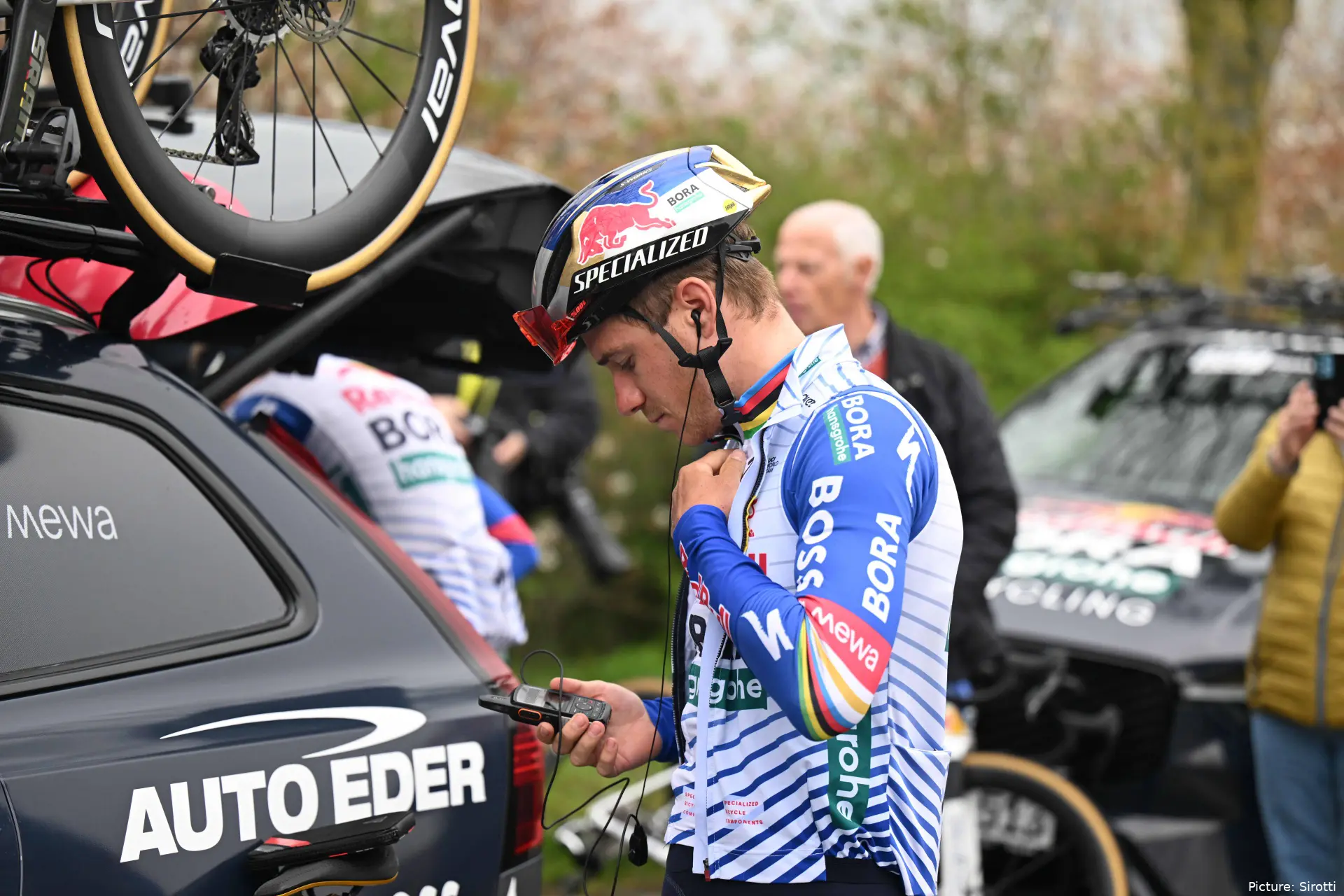
Patrick Lefevere has escalated the growing tension around Remco Evenepoel’s long awaited Tour of Flanders debut, questioning how the announcement was handled and warning of the consequences of misleading the media.
Writing in his column for Het Nieuwsblad, the former Soudal - Quick-Step manager took aim at the communication from Evenepoel and his new team, Red Bull - BORA - hansgrohe, in the days leading up to the confirmation.
“I don’t want to be too harsh about it, but you have to be careful about lying to journalists. I’ve never done it, and certainly not as blatantly as Evenepoel and his team have in recent months, weeks and even days. There used to be a kind of code of honour that you didn’t deceive each other too much. Lying is dangerous. There are journalists with long memories and a thin skin.”
Those remarks land in the wake of a confused buildup to the announcement, where reports of Evenepoel’s participation were dismissed by the team before being confirmed just hours later. The episode drew a pointed reaction from journalist Daniel Benson, who criticised the handling directly. “Yeah, not sure why someone from the team management had to flat-out tell me something that wasn’t true this morning. Not appreciated. Just say no comment,” the respected reporter reacted on social media.
That moment has fed into a broader narrative that has quickly developed into a public disagreement over Evenepoel’s relationship with Flanders itself, and why it has taken until 2026 for him to appear at the race.
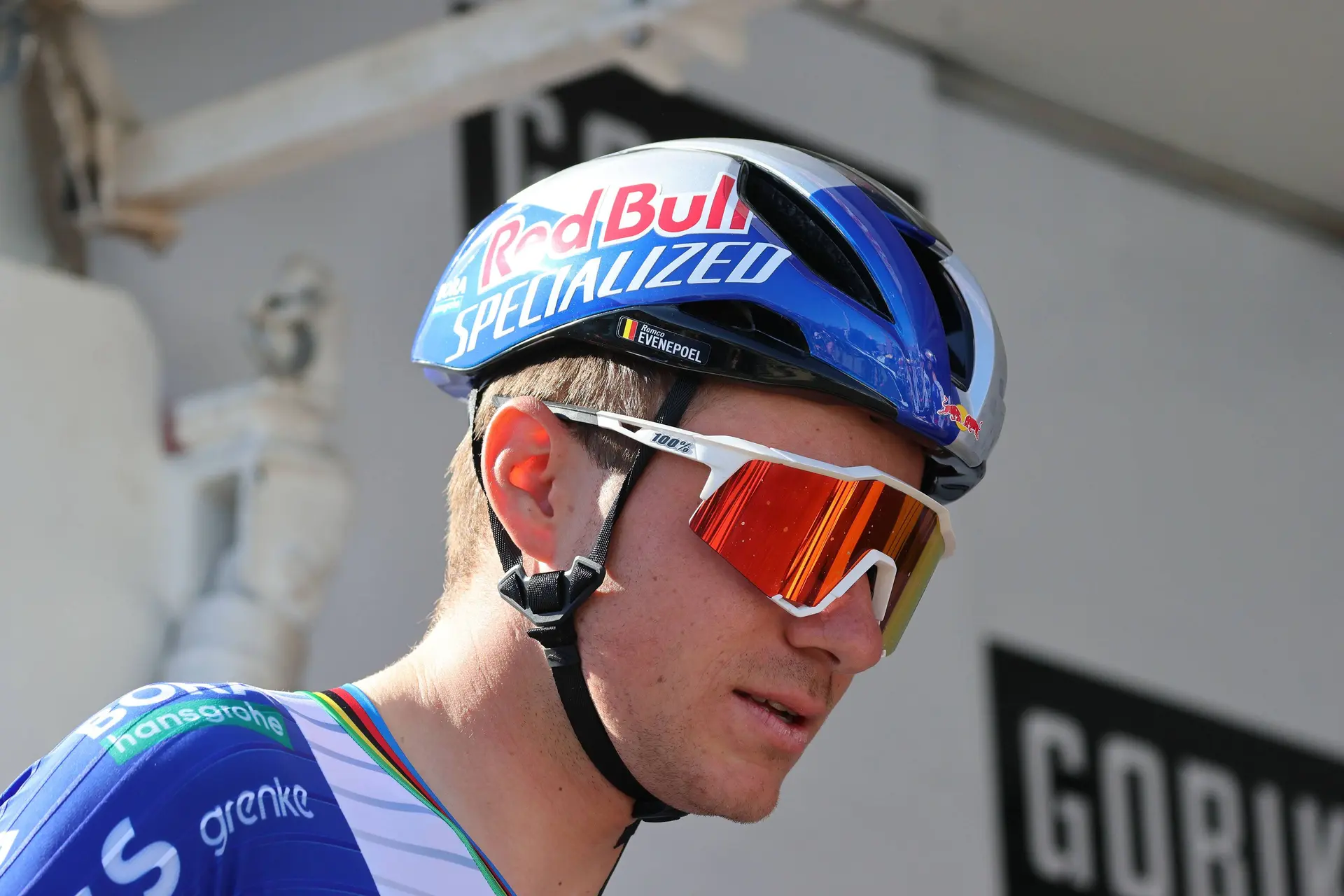
Disagreement over the past adds fuel to the present
Earlier this week, Lefevere suggested the absence had been down to Evenepoel’s own reluctance during his time at Soudal - Quick-Step. “I told him for years that he should ride Flanders, but back then he didn’t want to.”
Evenepoel has pushed back on that version of events, offering a direct contradiction. “That was always blocked.”
Lefevere has now responded again, insisting the situation was not so clear-cut. “I always thought he simply didn’t want to, but Remco assures me – even this week by text message – that it was our coaches who put a veto on it. I’m not necessarily disputing that, but let’s be clear: in those years, Remco had the final say within the team. If he had really wanted it, Milano-Sanremo and the Tour of Flanders would have been on his programme.”
The exchange has shifted what might have been a straightforward debut into a more layered story, where the focus has moved beyond the race itself to how it has been framed in the days leading up to it.

Remco Evenepoel during stage 5 of the 2026 Volta a Catalunya
Still a contender despite the noise
Amid the criticism, Lefevere has also been clear that Evenepoel’s presence in the race is not without merit, even if it comes without the same grounding on the cobbles as some of his rivals. “Fighting for position and riding on cobbles will never be his speciality. Just because you ride up a wet Koppenberg on a recon doesn’t suddenly make you a specialist in the race.”
Yet he also pointed to the possibility of a different kind of race scenario, one that could suit Evenepoel far more than a traditional, tightly controlled edition. “But there are also scenarios where the Tour of Flanders is not a race about positioning and fighting for space. Who still remembers how Philippe Gilbert won? As a team, we set up a move that turned it into a natural selection almost from the start. In that kind of Tour of Flanders, Evenepoel is always in contention.”
With the race approaching, the debate around Evenepoel’s participation has already taken on a life of its own. Lefevere’s warning adds another layer, ensuring that attention will remain as much on the narrative around the start line as on what unfolds once the racing begins.
Kieran WoodDeputy Editor-in-Chief
Kieran Wood is a sports journalist based in Wales and has been active in journalism since 2022. He regularly contributes to DartsNews.com and CyclingUpToDate.com, where he covers professional cycling and darts. In cycling, his work includes liveblogs from major races, including the Tour de France, the Giro d’Italia, and La Vuelta a España, alongside race reports and analysis. He has also conducted interviews with professional riders.
His reporting spans the full racing calendar, from one-day classics to stage races, with a focus on accurate, real-time coverage and clear contextual analysis. For statistics, results, and historical context, he regularly uses resources such as ProCyclingStats. To support reporting on rider activity and training context where relevant, he also references Strava.
In his work, Kieran places strong emphasis on careful sourcing, editorial accuracy, and updating articles as new, verified information becomes available.
claps 4visitors 2
Just in

Popular news
Latest comments
- FYI. Pogi made his World Tour debut at the TDU in 2019. I remember it well because someone said watch out for Pogi as he did a good time up Corkscrew during training. Who would have thought he'd end up as the GOAT.Santiago25-10-2026
- FYI. Pogi's first World Tour race was at the TDU in 2019. I remember it well because someone said watch out for Pogi as he did a good time up Corkscrew during training. Who would have thought he end up as the GOAT.Santiago25-10-2026
- 50 million isnt low. But if you hire super domestiques for a million and 3rd rung leaders for 3-5 million, natural you dont have money left not the results expected. Most monuments and TDF are out of reach due to Pogi. But there were a promising 2nd rung leaders on the market and they went for broke to get Onley and Kevin. I put their entire troubles due to mismanagementabstractengineer25-10-2026
- I think it’s becoming clear that cycling got way ahead of itself for a few reasons and is now coming to the realisation that some rider salaries just exploded without justification and it snowballed until sponsors started pulling money out because THEY did not see any return on increased costs. Cycling is still a dying sport (that never moved out of the niche family) and will remain so if it doesn’t embrace and promote new ventures or manage to attract new markets. Even within cycling, fans are basically compartimentalised, (almost nobody here follows track for example), and the multiplication of possibilities hasn’t grown the sport, it has just split it into a larger number of smaller branches. If it weren’t for nation state sponsors (far too numerous already) other teams would never have (had to resort to) raised bigger budgets that are now leading to sponsor abandonment. That’s the difference between long-term steady growth and financial doping, the latter can also just blow up in your face. I will venture to wager that apart from one or two exceptional cases, rider salaries will no longer go up and are quite likely to actually drop over the next decade.Jumpyjohn25-10-2026
- You know you can post all this on idlprocycling too with your account(s) don’t you? There’s a whole bunch more articles and people there to inform.Jumpyjohn25-10-2026
- That’s the kind of word my foreign grandma would have rendered fashionable again, like flabbergasted (at her time) ;-) Perhaps he should get a pro to fill out his papers and pack his bag too, customs have become keen on controlling anyone from the balkans.Jumpyjohn25-10-2026
- Alternatively, just call Rod StewardJumpyjohn25-10-2026
- I will be in Adelaide in a shot if Pogi comes to the Tour Down Under. Fingers and toes crossed that this will eventuate, he has just got to remember to stay aware of kangaroo’s, as Jay Vine can attest to. Though can’t be any worse than some of the passionate fans in EuropeSearider25-10-2026
- "The Spaniard also highlighted Florian Lipowitz, third in the recent World Championship time trial, as a rider to watch as he continues to gain experience." Please stop the AI slop
 Rafionain-Glas24-10-2026
 - I think it's great! Now there's a real reason forcing the people-who-don't-fix-the-potholes to fix the potholes... or notRafionain-Glas24-10-2026
Loading
Write a comment