"There is no point pushing through it" - Decathlon explain why Paul Seixas was pulled out of Auvergne on the final day
CyclingMonday, 15 June 2026 at 11:30
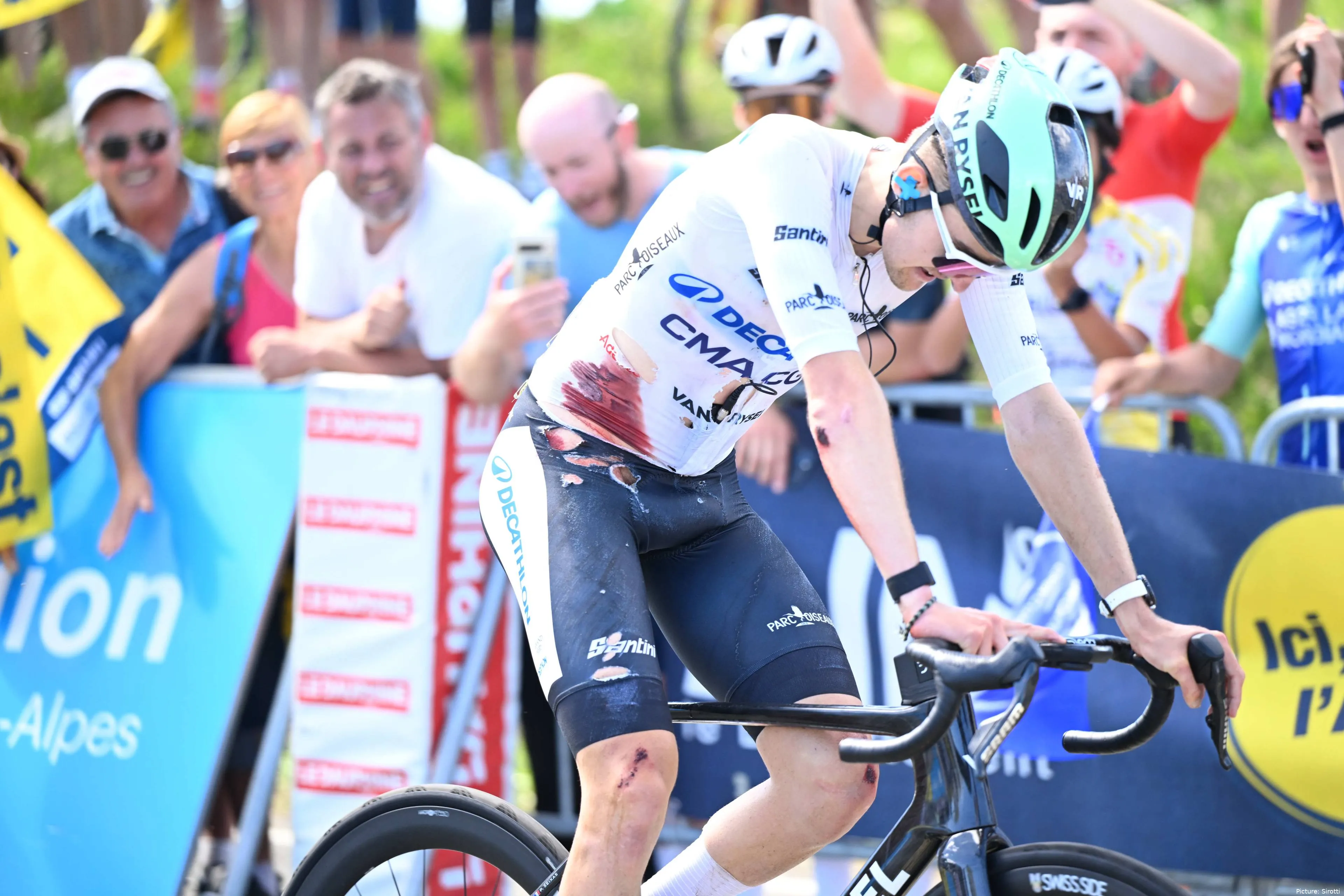
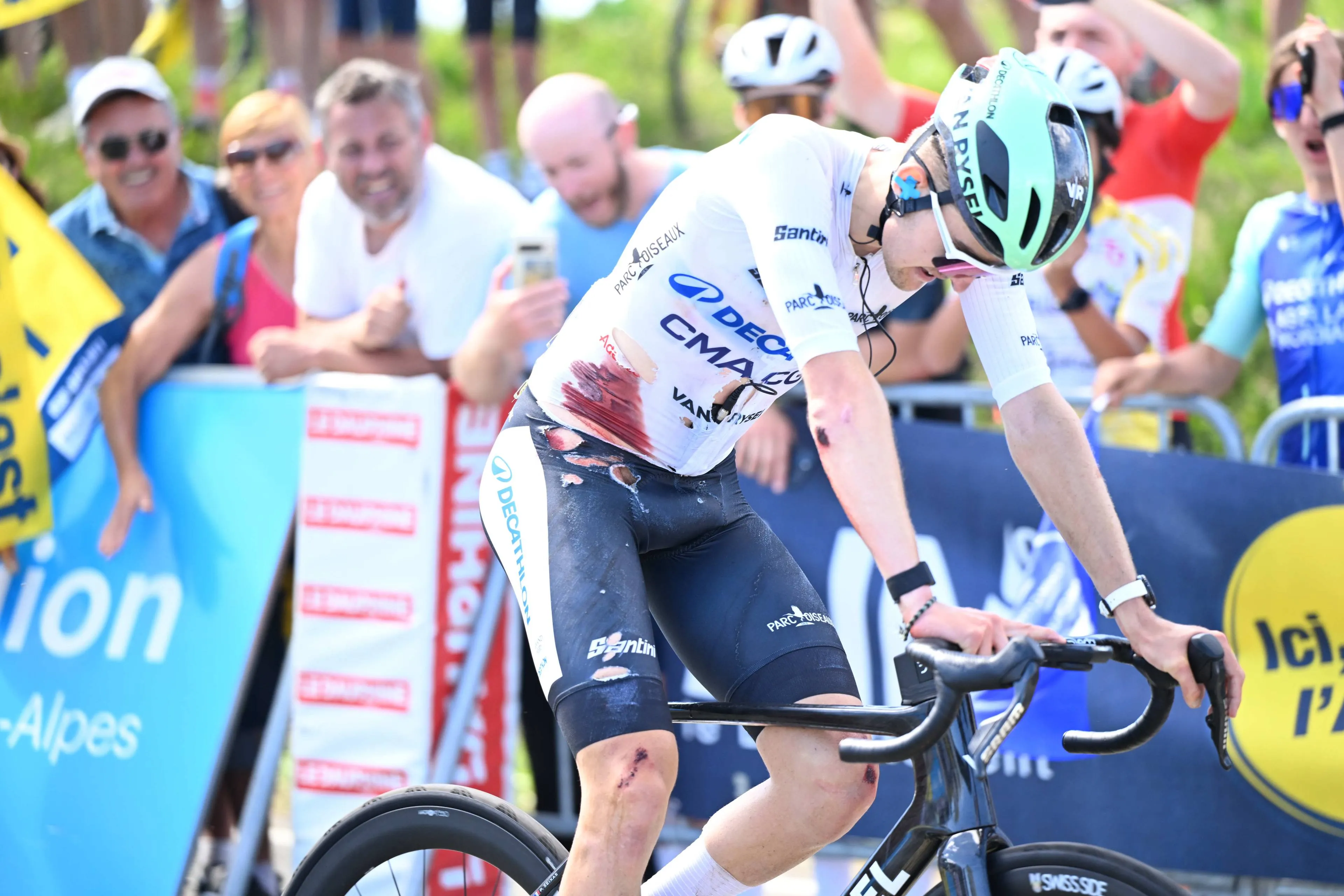
In what was his final race day before the Tour de France, Paul Seixas abandoned the Tour Auvergne-Rhône-Alpes. The Frenchman had a far from ideal end to his preparation race ahead of the Tour, but it shouldn't jeopardize his preparation towards it.
Decathlon takes experience from Seixas' mishap
On stage 7, Seixas crashed at high-speed during a descent, one which he took the fault for, having taken too many risks. He did not suffer fractures, but abrasions all over his knees, elbows and torso area. He was able to finish the stage, even returning to the peloton before finishing on the Top10 at the mythical Grand Colombier.
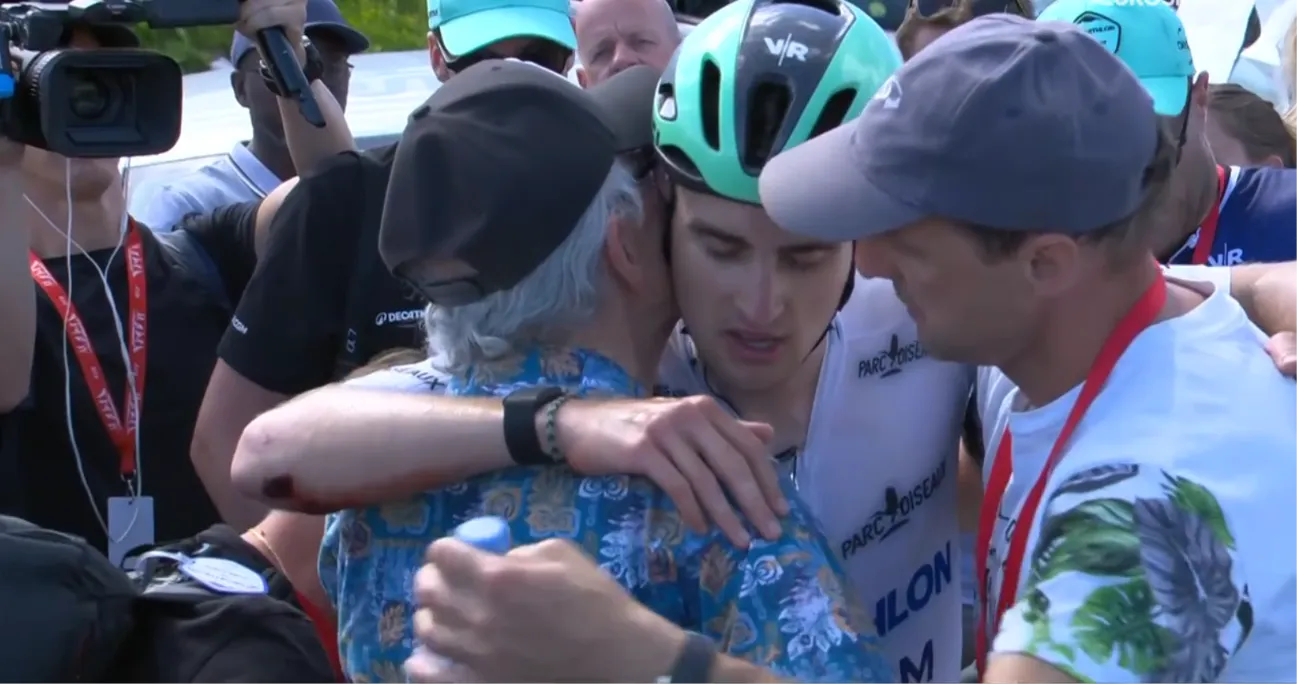
At the finish line, there were dramatic scenes as he struggled through, but the man who wore the white jersey looked ready to take on the final day of the race. However overnight, Seixas struggled with his wounds, and at the start of stage 8 he was in a much different situation.
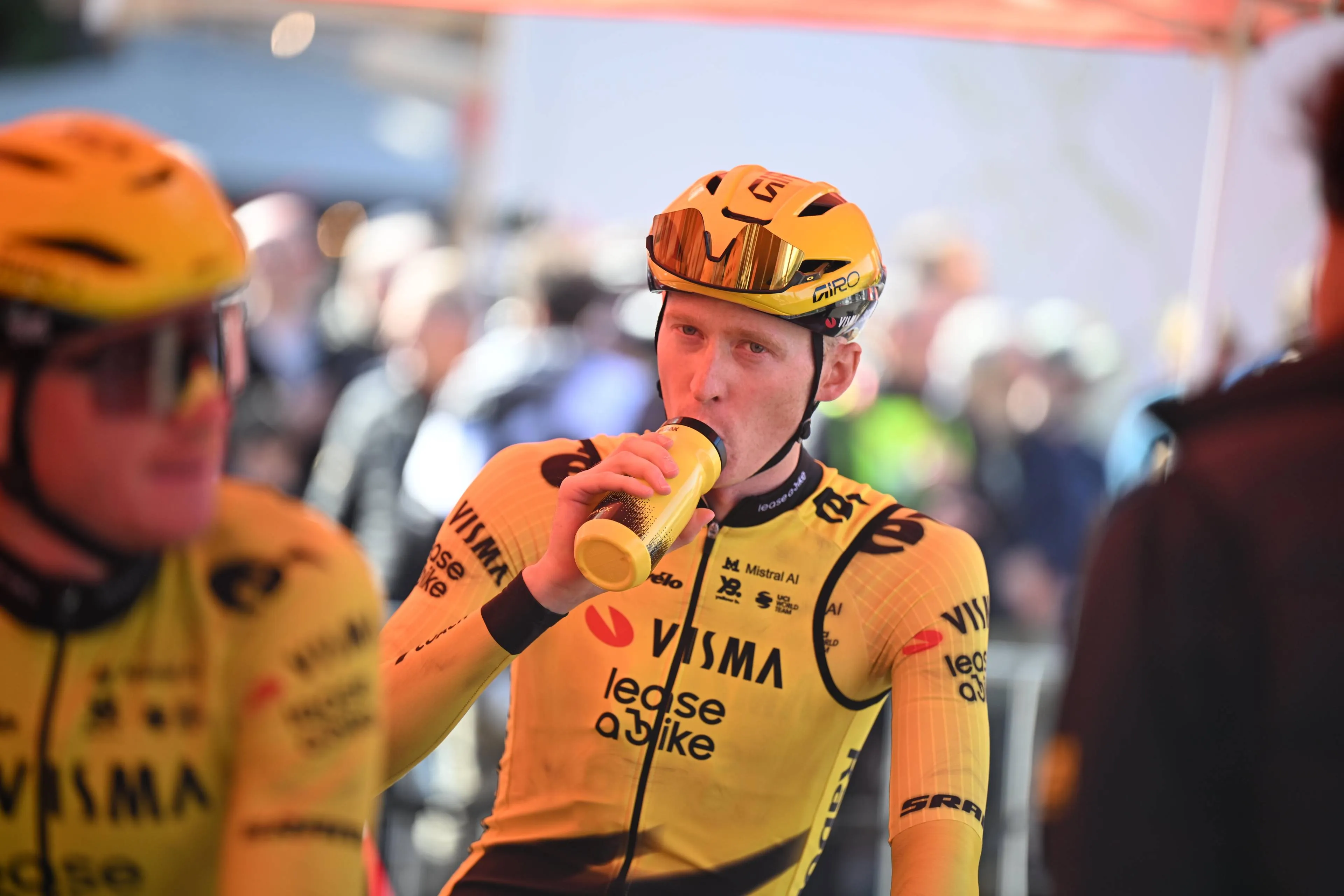
“He was very motivated last night, but this morning things were obviously different," teammate Aurélien Paret-Peintre said in a post-race interview with CyclingPro.net. "It is normal not to feel good after a crash like that, and there is no point pushing through it.”
Over the opening kilometers of the stage Seixas struggled in the peloton, and perhaps going downhill these difficulties were more evident, due to the injuries that he also suffered in his hands the day before.
It would be a big risk, for not much gain for the French team and its leader. The decision was made to withdraw from the race. “His main objectives are still three weeks to a month away, so there was no point taking any risks. He needs to rest and allow the wounds to heal as quickly as possible," Paret-Peintre added.
On stage 7, the team had to overcome a 4-minute deficit over the peloton, and a 60-kilometer long pursuit through the mountains put all of the team's domestiques to the test. The efficiency in which they caught back up to the peloton, with a lot of work from Paret-Peintre himself, can be valuable at the Tour de France.
At the Tour, all time of race situations can unravel, and whilst they want to avoid it, Decathlon has gained experience with what was a very meaningful setback. “We have still learned a great deal this week. What happened yesterday also strengthened the team’s bond on the bike.”
Read also
No risks taken ahead of Tour de France
Team doctor Jacky Maillot has provided further insight into the decision to end Seixas' race in the Alps in a post shared on the team's social media:
"A crash like the one sustained on Saturday, at around 70 km/h, is very costly in terms of energy expenditure, and he will need a few days of rest before resuming his preparation for the Tour de France."
"On top of that, the various wounds on his hands and elbows made it difficult for him to handle his bike properly. The main instruction was not to take any risks at all," he concluded.
But all signs point towards a set of injuries that won't come in the way of his preparation too much. After a large block of training and a difficult eight-day race, all riders present would already require a few days to recover. Without fractures, he should be able to resume his regular training schedule, two and a half weeks out from the Grand Depart.
claps 1visitors 1
Just in
Popular news
Latest comments
- will he have a chance to ride for himself or only in support of Ayuso? this team should go for stages.mij15-06-2026
- There was no Jonas, Remco, etc at this race. IDT is crazy good, but let’s see him do it in the TdF.mij15-06-2026
- he is going nowhere. I don’t understand how he gets so much press. he seems to be a malcontent and cares only for himself.mij15-06-2026
- Signing guys like Onley who have had one solid tour and thinking they’re the next thing is very risky. this team is going nowhere. UAE, Visma - the class of the peloton - are doing it with homegrown stars and carefully picked signings.mij15-06-2026
- They seriously need to forget about GC and just go for stage wins.Pedalmasher15-06-2026
- I do love the French teams . No idea of tactics unless another French rider up the road they will chase him down esp if on rival French team 🤣🤣🤣🥰paultryan200215-06-2026
- Nothing to do with being stupid or understanding, it’s just pointless to them, like soccer. In athletics all they’d watch is the 100m and the relay where they could have the chance of chanting U S A after. 800m is already too long for their attention spanMistermaumau15-06-2026
- Doesn’t seem much of an alien to me. He himself has also said, let’s take advantage while we still can in reference to Seixas.Mistermaumau15-06-2026
- That's an interesting way to put it... but there's no doubt that UAE have got Almeida and Torito's roles swapped. After Almeida's 2025 season they wanted to continue with him as leader for the races without Pogačar. Meanwhile for del Toro's development doing a Tour is best. But it's been the opposite
 Rafionain-Glas15-06-2026
 - Hey moemoe...ooops sorry...hey maumau, it's not about being too foreign for them... they're just too stupid to understand it. Their main sport is american fake wrestling and UFC blood sport. Many of Trumps fans say they also like basketball, but they don't like the fact that it's dominated by the black players. Oh, I hate America so much, although I was born there.Ante-Ustashe15-06-2026
Loading
1 Comments