“The UK has always welcomed the Tour with passion and pride” – Christian Prudhomme on bringing the Tour de France back to Britain in 2027
Cycling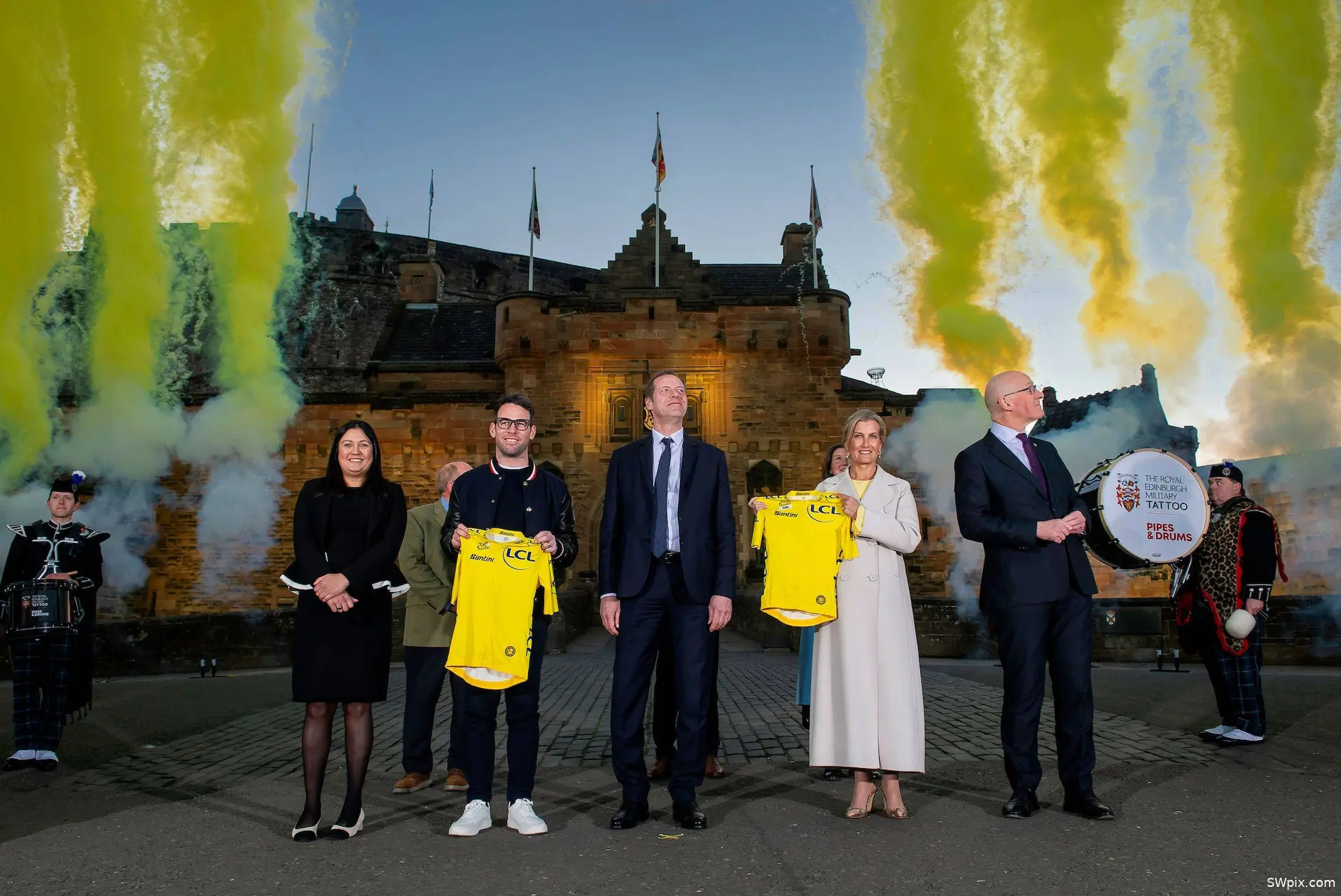
The Tour de France does not hand out Grand Departs lightly. When Christian Prudhomme talks about “passion and pride”, he is not just flattering a host nation. He is justifying why the biggest race in cycling is willing to begin on British roads again, and this time with Scotland opening the show and Wales closing it.
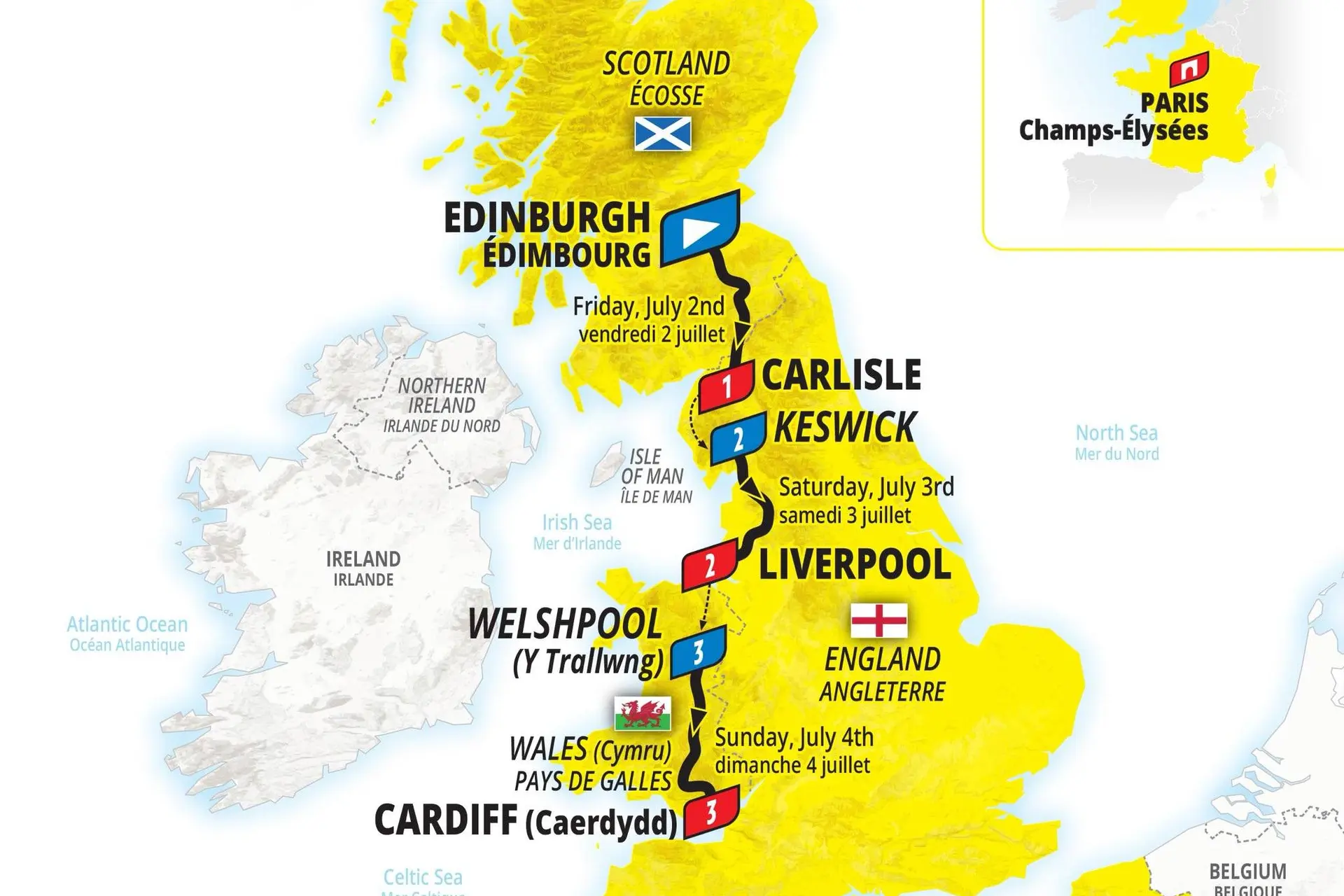
The men’s Tour de France will start in Edinburgh on Friday, 2 July 2027, heading first to Carlisle, then Keswick to Liverpool, before finishing the UK leg from Welshpool to Cardiff. It is a route that crosses borders, identities and political narratives as much as it does terrain.
For the Tour’s director, the decision is about more than logistics. It is about how a country receives the race, how it understands it, and what kind of stage it can offer. Christian Prudhomme said in the route announcement: “The UK has always welcomed the Tour with passion and pride, and the route details we are revealing today reflect the beauty and diversity of Britain’s terrain. Bringing both Grand Departs here is a testament to the strength of our partnership with British Cycling and the enthusiasm of the UK.”
That sentence does a lot of work. It frames Britain not as a bidder that simply paid for the Tour, but as a partner that has earned trust through past editions and through crowds, landscapes and atmosphere. It also makes clear that ASO sees Britain as a place that can deliver spectacle, not just a start line.
The 2027 route leans heavily into that idea. Edinburgh’s historic centre launches the race. The Scottish Borders and the Eildon Hills give the opening day its shape. The Lake District and Pennines provide drama on stage two. Then Wales gets the final word, with eight categorised climbs between Welshpool and Cardiff, including the Rhigos and Caerffili in the finale.
This is not a token foreign start. It is three days designed to look good on television, test the peloton early and show off landscapes that sell a story to a global audience.
Read also
Scotland opens the stage
For Scotland, the opening stage is being sold as more than a sporting event. It is being framed as a statement.
First Minister John Swinney said: “The Tour de France starting in Edinburgh will be a moment of real national significance and a powerful endorsement of Scotland’s ability to deliver on the biggest international stages. I am delighted that the historic streets of our capital and the beautiful landscapes of Scotland will be at the heart of this iconic sporting event, one that will be watched by millions of fans on the route and around the world.”
Swinney’s language is about validation. Hosting the Tour is presented as proof that Scotland belongs on the biggest stages, not just in sport but in global visibility. The Tour becomes a symbol of competence, ambition and international relevance.
That matters because Grand Departs are not just races. They are shop windows. For Scotland, being the opening act means owning the first images the world sees of the 2027 Tour.

Tadej Pogacar, Jonas Vingegaard and Florian Lipowitz stood on the podium of the 2025 Tour de France
Wales closes the UK chapter
Wales gets the final day of the British story, and that too is being framed politically as well as sporting.
First Minister Eluned Morgan said: “Wales is proud to host a stage of the Tour de France Grand Depart for the first time in 2027, which will be a fantastic opportunity to showcase our stunning landscapes at one of the world’s biggest sporting events. Hosting the final UK stage of the men’s race will raise Wales’ profile as a world-class destination for cyclists and other visitors, while inspiring more people to get active and deliver lasting benefits for Wales.”
For Wales, the Tour is about visibility and identity. The final British stage is not just a race day, but a chance to be seen, remembered and associated with challenge and beauty. The heavy climbing into Cardiff is not accidental. It fits the narrative of toughness, landscape and distinctiveness that Wales wants to project.
One race, three narratives
Put together, these quotes show three different ways of talking about the same thing.
Prudhomme talks about trust, partnership and spectacle. The Tour comes to Britain because Britain makes the Tour look and feel right. Swinney talks about recognition. Scotland hosting the start is proof of status on the world stage. Morgan talks about projection. Wales hosting the final UK stage is about showing who Wales is to a global audience.
For cycling fans, the racing will be the main story: early hills, nervous bunches, time gaps and yellow jersey battles before the race even reaches France. But behind that is a quieter truth. The Tour is not just choosing roads. It is choosing stories to tell about the places it visits.
In 2027, those stories will begin in Scotland, pass through England, and end in Wales. And if Prudhomme is right about “passion and pride”, Britain is being trusted once again to make the Tour feel like the Tour.

Kieran WoodDeputy Editor-in-Chief
Kieran Wood is a sports journalist based in Wales and has been active in journalism since 2022. He regularly contributes to DartsNews.com and CyclingUpToDate.com, where he covers professional cycling and darts. In cycling, his work includes liveblogs from major races, including the Tour de France, the Giro d’Italia, and La Vuelta a España, alongside race reports and analysis. He has also conducted interviews with professional riders.
His reporting spans the full racing calendar, from one-day classics to stage races, with a focus on accurate, real-time coverage and clear contextual analysis. For statistics, results, and historical context, he regularly uses resources such as ProCyclingStats. To support reporting on rider activity and training context where relevant, he also references Strava.
In his work, Kieran places strong emphasis on careful sourcing, editorial accuracy, and updating articles as new, verified information becomes available.
claps 0visitors 0
Just in
Popular news

Latest comments
- Bernal won the Tour because his attack stuck after Thomas’s was reeled in, and then they ended the stage due to the landslide - a deserved win, but contingent on many things. He won the Giro with quality and skill. And then, like so often happens for the cruelest of reasons, his injuries left him an incomplete version of his former self. He’s had a great career, what a great GC rider (8 of his 23 wins are GC, including 2 grand tours and 2 of the 7 major GC races), but already was struggling after COVID. I wish him the best, and if he retires, he should retire with pride for a career well done!RidesHills07-10-2026
- Roglič? In an interview he’ll continue to be hilariously dry about his goals, emphasize that he’s still having fun, and keep churning along until he doesn’t want to do this anymore. “Ah, you know, 100 wins would be nice, but eh - it’s just a number. I have fun, you know?” I can almost hear him saying those words. He’s not heading for low rank races to get the wins, he continues to race the major races (and I suspect would have won the Vuelta again were it not for that awful accident and that disgusting purple leg right before racing began).RidesHills07-10-2026
- BTW the list of classics you gave from PCS is participation, not winning
 Rafionain-Glas07-10-2026
 - Yes, though we saw that last week already.Jumpyjohn07-10-2026
- Or that riders get out in time.Jumpyjohn07-10-2026
- Hope he doesn’t stick with it just for that, would hate to see him exhibiting any has been footballer behaviour.Jumpyjohn07-10-2026
- Yep, that’s about it, couldn’t imagine someone wouldn’t get that.Jumpyjohn07-10-2026
- Time for your meds I thinkJumpyjohn07-10-2026
- No surprise here. Nice the oldies are having success, not the first discipline where you expect age to be an advantageJumpyjohn07-10-2026
- Any idea why Remco wasn’t there, Lombardia?Jumpyjohn07-10-2026
Loading
Write a comment