The secret to Tadej Pogacar's success? "Good friend" Jasper Philipsen sees clear answer: "Despite all his success he keeps his feet on the ground"
Cycling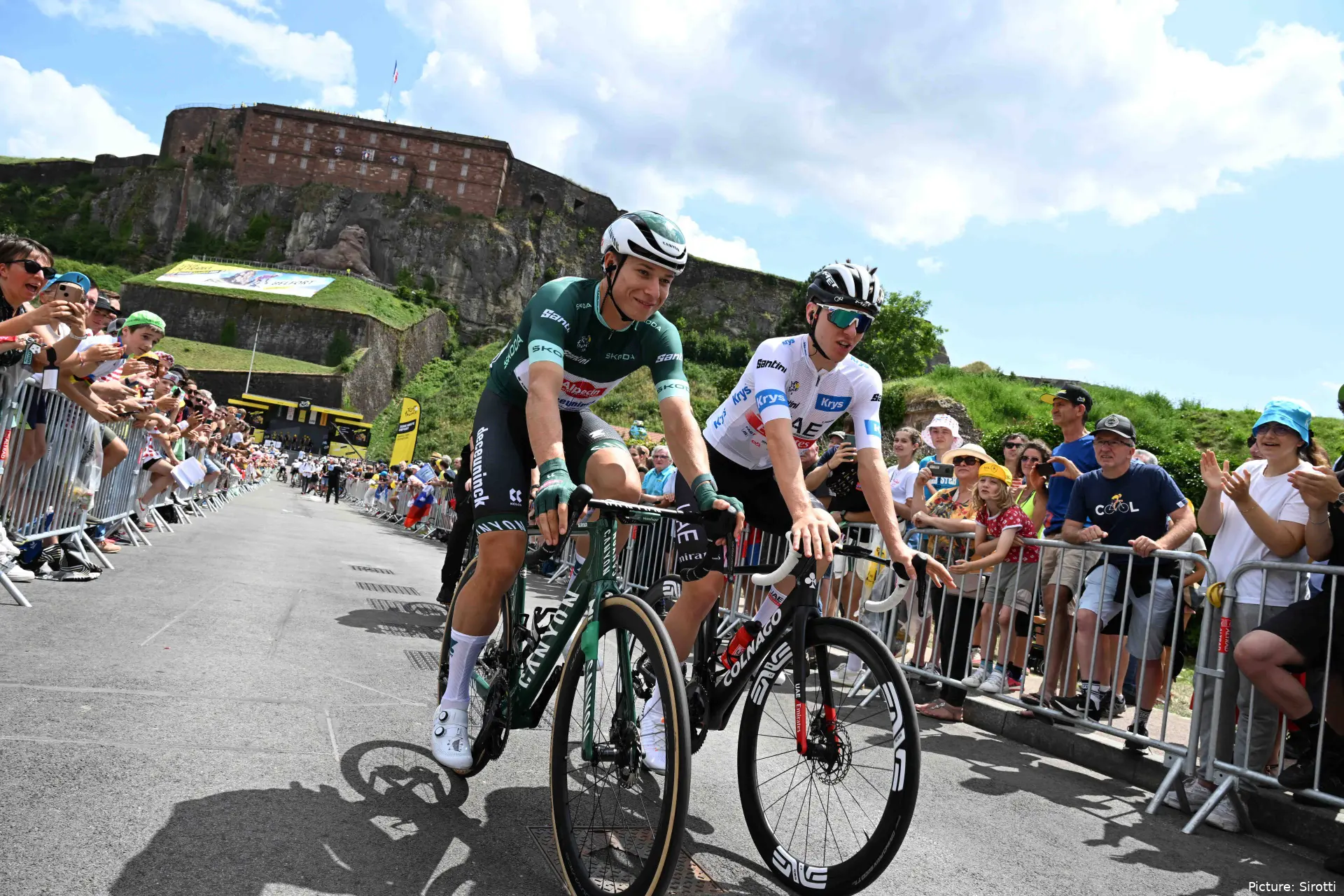
Jasper Philipsen has offered a revealing insight into what he believes truly sets Tadej Pogacar apart from every other rider in the modern peloton — and it has nothing to do with watts, trophies or rainbow jerseys.
Speaking in conversation with La Gazzetta dello Sport, the Belgian sprinter said the world champion’s dominance is rooted in something much simpler: his ability to remain a normal guy despite the stardom that surrounds him.
Philipsen describes Pogacar as one of his closest friends in the bunch and says the Slovenian’s attitude is unlike anything he has ever seen.
“Tadej is a friend, it’s always a pleasure to see him and to chat,” he told Gazzetta. “We see each other rarely during the year because we have different schedules. I’m not an expert in cycling history, but I don’t think that anyone like him has ever existed.”
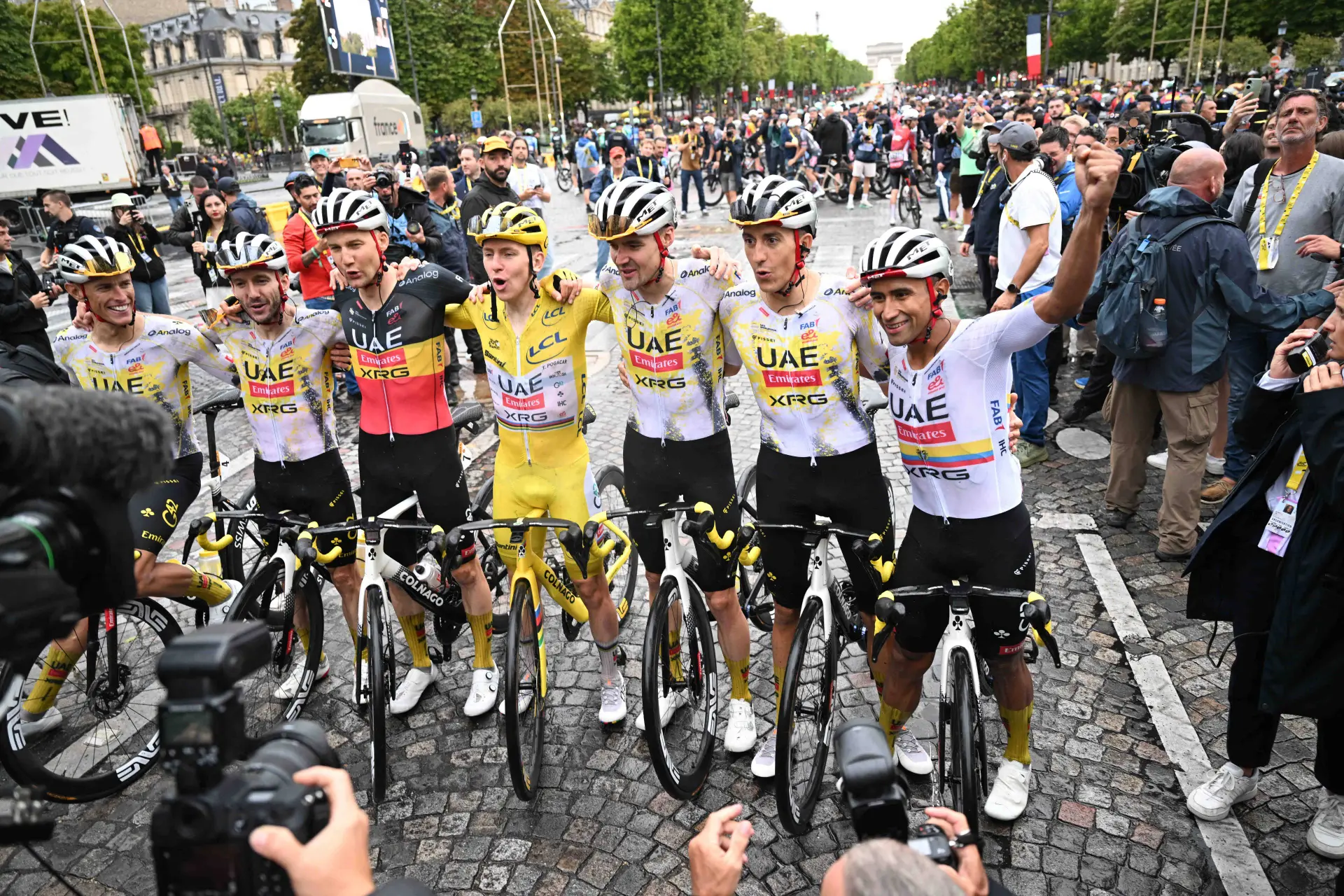
Grounded greatness fuels Pogacar’s aura, Philipsen says
While Pogacar’s results command awe — Tour titles, world championships, monument wins — Philipsen believes the real story lies in how unaffected he remains by it all. “I think everyone sees him as a god of this sport, even though I know him as a very normal guy,” he said. “His strength lies in the fact that despite all his success he keeps his feet on the ground and enjoys life.”
That humility, Philipsen suggests, is as much a competitive weapon as his ability to dominate Grand Tours. It shapes how he moves through the peloton, how he interacts with rivals, and even how he handles pressure when expectations spiral beyond anyone else’s.
A friendship that offers a rare window into cycling’s biggest star
Philipsen’s perspective carries weight precisely because it comes from inside Pogacar’s small circle of genuine friends in the peloton — riders who see him away from the podiums, cameras and headlines. His comments to La Gazzetta dello Sport offer a reminder that Pogacar’s dominance is built on more than numbers and results; it’s underpinned by an attitude that refuses to let success distort who he is.
And in a sport where pressure, scrutiny and expectation can consume even the most gifted talents, Philipsen believes that Pogacar’s ability to stay grounded may be the single most important reason he continues to sit apart from the rest.
For Philipsen, that quality is not just rare — it is unprecedented. And from someone who spends so much of the season racing against him, Philipsen's message is clear: cycling has never seen a champion quite like Pogacar.

Kieran WoodDeputy Editor-in-Chief
Kieran Wood is a sports journalist based in Wales and has been active in journalism since 2022. He regularly contributes to DartsNews.com and CyclingUpToDate.com, where he covers professional cycling and darts. In cycling, his work includes liveblogs from major races, including the Tour de France, the Giro d’Italia, and La Vuelta a España, alongside race reports and analysis. He has also conducted interviews with professional riders.
His reporting spans the full racing calendar, from one-day classics to stage races, with a focus on accurate, real-time coverage and clear contextual analysis. For statistics, results, and historical context, he regularly uses resources such as ProCyclingStats. To support reporting on rider activity and training context where relevant, he also references Strava.
In his work, Kieran places strong emphasis on careful sourcing, editorial accuracy, and updating articles as new, verified information becomes available.
claps 4visitors 4
Just in
Popular news
Latest comments
- Maga redneck... shush... capish?PogiSloFans02-10-2026
- My god are you a fool, are you an american redneck? Pogi can't ever get a mental slap. He's the G.O.A.T., he's constantly beating Remco in every race (except the TT)... and he's not even racing in Slovenia. Capish?PogiSloFans02-10-2026
- I think it's unlikely, even with a lot of Slovenian racing. Pogačar wants to win the Tour and has unfinished Vuelta business
 Rafionain-Glas02-10-2026
 - You're just a stalker fanboy !frieders302-10-2026
- Why was this race so much harder than the elite one?Rafionain-Glas02-10-2026
- I don't think McNulty in rainbow will be the same as Vallieres or Conca. He's a bigger riderRafionain-Glas02-10-2026
- An exact repeat of Vollering last year!Rafionain-Glas02-10-2026
- Gautherat is such a nice pickup and his age. UAE never miss their the best in history by a mile and just continue to dominate year after year winning UCI yearly. Gonne keep dominating i assume their just so insanely good at picking young riders, developing them and they also have most money and never miss on buys. Dominating along time already and will for another long time i assume.miguel02-10-2026
- No he woudn't... Pogi loves us, we are his compatriots... capish?PogiSloFans02-10-2026
- UAE should also buy out Seixas from Decathlon, as Pogi's domestique, for 5 million euros per year. That would be a real eruption...a sudden, powerful release of emotion from the French :))PogiSloFans02-10-2026
Loading
1 Comments