Tadej Pogacar is the new record-holder on the Col du Tourmalet - But many more have broken the previous top time
Cycling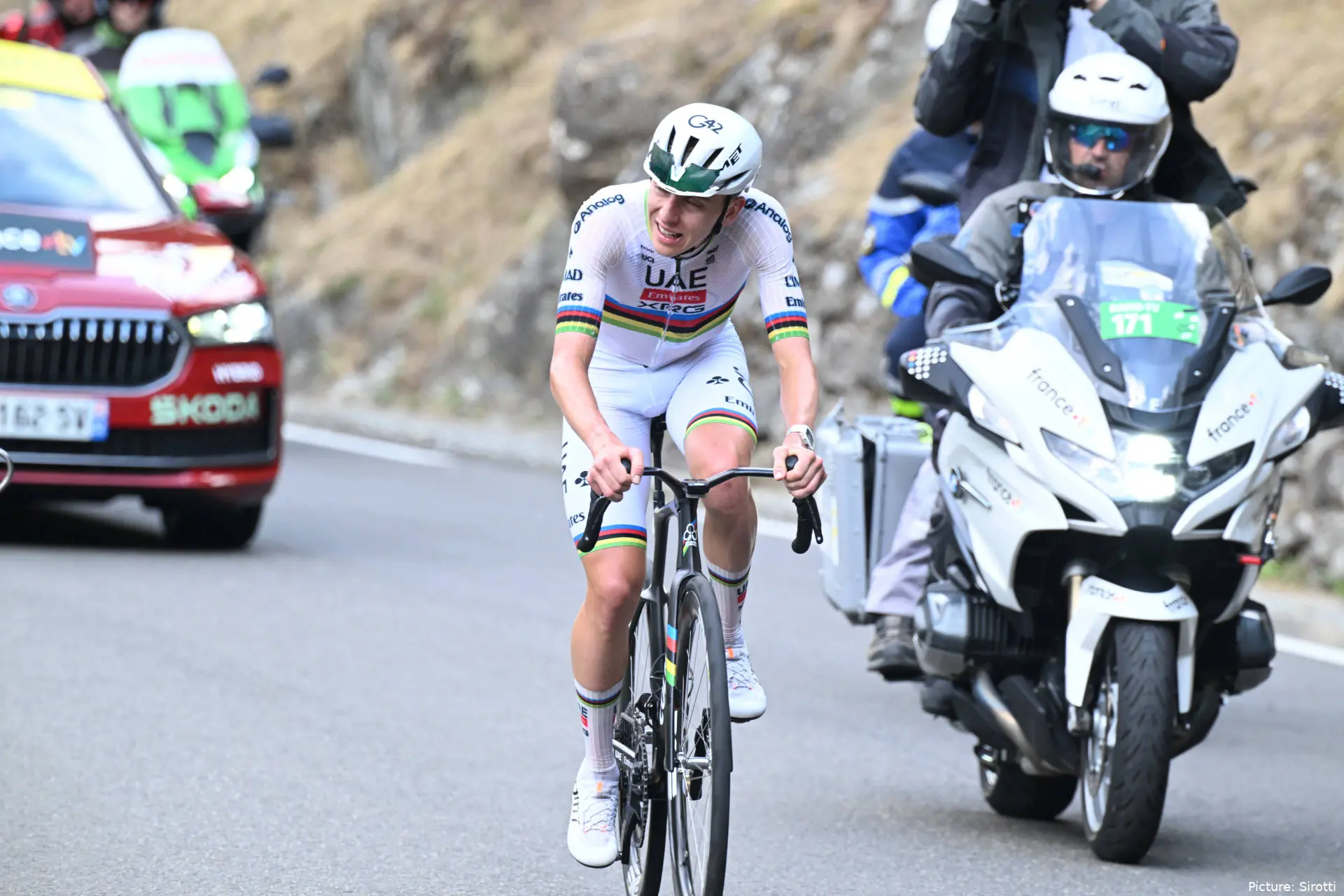
Florian Lipowitz delivered one of the strongest climbing performances of his career on stage six of the Tour de France 2026. The German clearly smashed the existing record on the Col du Tourmalet and was part of an exceptionally powerful lead group that repeatedly rewrote the legendary benchmark.
Pogacar sets record time on the Tourmalet
The previous Tourmalet record - climbed through Campan, not Luz Saint-Sauver - was previously held by by Tadej Pogacar and Jonas Vingegaard who in 2023 climbed it at a time of 45:35 minutes - at the time, also in the Tour's first week, with a similar stage profile and similar attack from the Dane.
The famous 1993 time by Tony Rominger and Zenon Jaskula was also clearly improved. Rominger and Jaskula needed 45:50 back then. That record stood for 30 years.
Comparación de los tiempos históricos en el Tourmalet
-
Tadej Pogacar y Jonas Vingegaard Tour de Francia 2023 – anterior récord45:35 min
-
Tony Rominger y Zenon Jaskula Tour de Francia 199345:50 min
-
David Gaudu y Pierre Latour Tour de Francia 202147:35 min
-
Rafal Majka Tour de Francia 201848:36 min
-
Riccardo Ricco Tour de Francia 200849:04 min
Ten riders under the previous mark
The scale of this stage is reflected not only in Pogacar’s ride. According to the available climbing data, as many as ten riders went under the previous 45:35 record. Pogacar has ridden it at 43:13 minutes, setting the new time record and putting in an estimated power of 6.38W/Kg throughout this potentially race-deciding effort.
Jonas Vingegaard posted an extraordinary 43:45 despite his crisis. He finished almost two minutes under the former record, even though he could not follow Pogacar at the front.
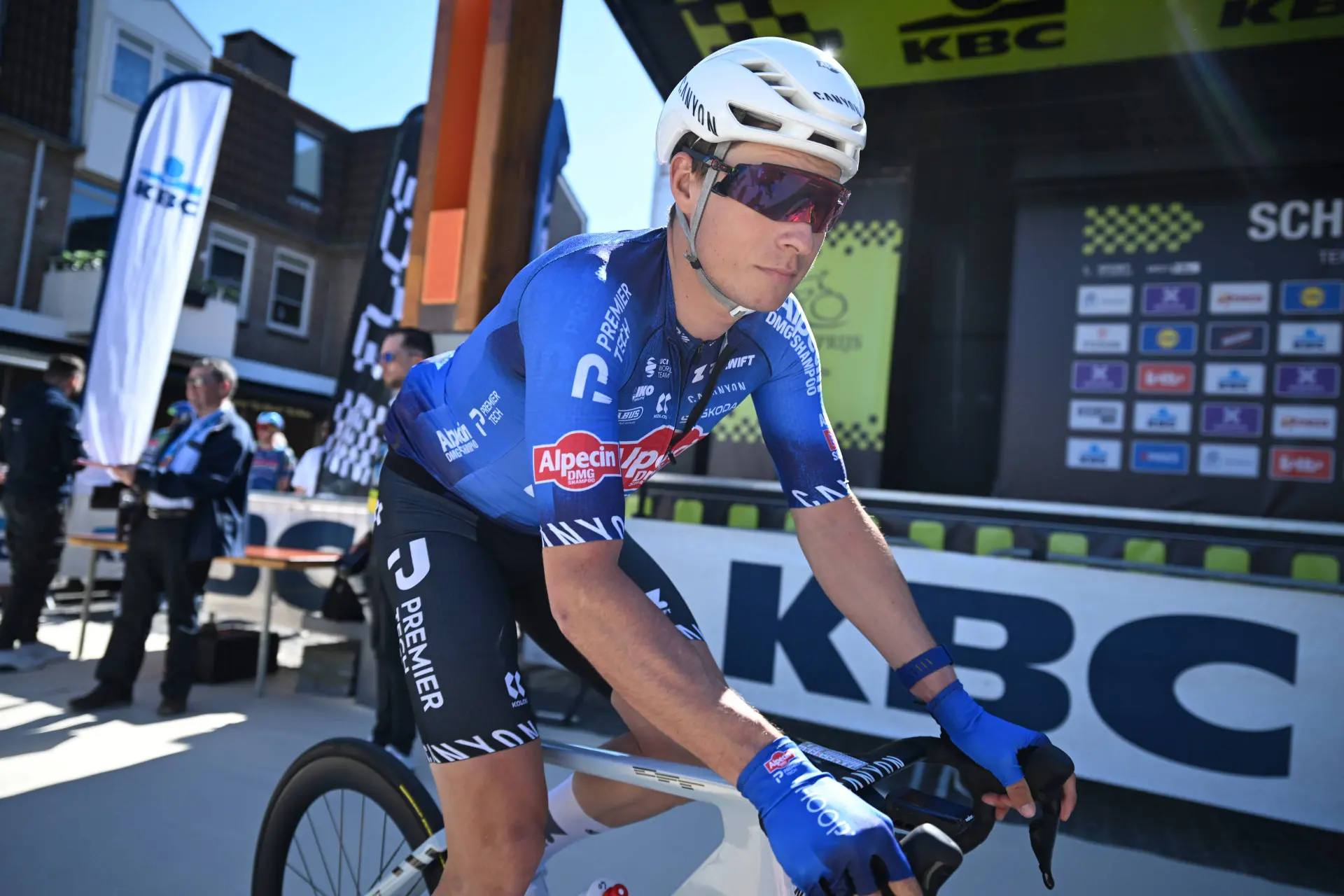
Even more eye-catching was Paul Seixas’s ride. With 44:39 he set the third-best time of the day and confirmed he now ranks among the race’s strongest climbers. Isaac Del Toro arrived only seconds later. Lipowitz operated at virtually the same level and was part of that small group that clearly distanced the rest of the Tour elite.
Lenny Martinez stopped the clock at 44:58, Remco Evenepoel at 45:01, and Sepp Kuss at 45:02. Juan Ayuso and Mattias Skjelmose also posted performance values that point to times just under the former record; all of them going through the summit together.
The old benchmark was therefore not toppled by a single rider. An entire lead group shifted the historical reference on the Tourmalet.
For Lipowitz, Ayuso and Skjelmose, these are partly inferred times, as the summary did not display the full ascent time. However, their power, speed and VAM indicate they too would have come in under the previous record.
Full list of the new marks on the Col du Tourmalet
| Position | Rider | Ascent time | Estimated power |
| 1 | Tadej Pogacar | 43:13 | 6.38 W/kg |
| 2 | Jonas Vingegaard | 43:45 | 6.29 W/kg |
| 3 | Paul Seixas | 44:39 | 6.14 W/kg |
| 4 | Isaac Del Toro | 44:44 | 6.13 W/kg |
| 5 | Florian Lipowitz | approx. 44:44 | 6.13 W/kg |
| 6 | Lenny Martinez | 44:58 | 6.09 W/kg |
| 7 | Remco Evenepoel | 45:01 | 6.08 W/kg |
| 8 | Sepp Kuss | 45:02 | 6.08 W/kg |
| 9 | Juan Ayuso | approx. 45:02 | 6.08 W/kg |
| 10 | Mattias Skjelmose | approx. 45:02 | 6.08 W/kg |
claps 0visitors 0
Just in

Popular news
Latest comments
- Hey MajorPayne, I think you've noticed by now, how many fools there are in cycling, calling themselves "fans."... I can't understand it either. I guess Michael Jordan, Le Bron, Gretzky, Messi, Ronaldo, Shumacher, Novak Džoković, Federer, Rossi, Marquez, Phelps, Michaela Shiffrin, Venus Williams, Merckx, Hinault, Indurain... etc. were all boring.PogiSloFans20-10-2026
- Listen to this BS: "Whilst I love Tadej (and Remco, who deserves to be mentioned here, too), @JumpyJohn makes a valid point, and he isn’t wrong @MajorPayne. It is a fact that today’s official broadcasters of cycling struggle to keep our attention once the likes of Tadej (or Remco) attacks at ~80km or so.... bla bla bla ... OK, now I wil bla bla bla ... Reading BS comments brings me to saying: Let's cancel road cycling as a sport. The history books, that will be read in the future, will say: "Years ago, there was a sport called road cycling and it stopped to exist. A cyclist from Slovenia, Tadej Pogačar-Pogi, was so good, cycling became boring. Everyone stopped watching, even the Slovenians. Snooker, curling, chess, dart throwing and Olympic games shooting (rifle, pistol and shotgun) which is watched mostly by the Americans, are very popular sports... bla bla bla bla ..." ... STOP MAKING FOOLS OF YOURSELVES!!!PogiSloFans20-10-2026
- Look at all this BS!!! Yes, I repeat...BS...!!! - Tadej Pogacar's 2027 Tour-World-Vuelta combo under scrutiny. - We're going to have nonstop Pogacar action pretty much from the beginning of the Tour to the end of the Vuelta. - It's a surprise that he's announced his intention to ride the Vuelta so explicitly. - Can Pogacar keep his form throughout Tour and Vuelta? - Pogacar won't be able to recover much, but instead train to maintain his form - and that could prove costly for the Vuelta. I just don't understand. Is this hatred towards Pogi, or just sheer stupidity? 1) Pogi proved this year that he had no problem winning the Vuelta after the Tour. We all know he would have won by a big margin if he didn't crash out. 2) Last year Jonas proved that he could have won the Tour and Vuelta, but unlucky for him, he was second in the Tour. If Pogi wasn't at the Tour, Jonas would have done it. So WTF are they talking about??? 3) Pogi proved in 2024, by winning the Giro, Tour and WC, that it was no problem for him. If journalists have no material to write about because of cyclists winter break, then don't write anything...PogiSloFans20-10-2026
- He’s already had months off racing, so he’s probably ready to get back to business.wrsty20-10-2026
- CyclingUpToDate - can't not do a headline about Tadej Pogacar
 leedorney20-10-2026
 - that is why I used the word "hope" lolmij20-10-2026
- I didn't see it so I can't comment, but I'll take your word for it, and your stats.mij20-10-2026
- disrespectful thats a joke ...
 Davide20-10-2026
 - EF’s “island of misfit toys” squad is probably one of my favorites in the peloton. They are fun to watch, always trying stuff - they ride with heart and panache, and their kits are excellent.wrsty20-10-2026
- 'Children these days'... Wout, since the caveman learned to say "Ug", older generations have always said this about younger generations. Not every young rider is a cowboy. So what's to say that the fact that Poels was respectful meant that his peers were equally so?
 Rafionain-Glas19-10-2026
Loading
Write a comment