"Shouldn't you then say: we stop now, we are going to the hospital" - Decathlon's management of Paul Seixas after Auvergne crash raises questions
Cycling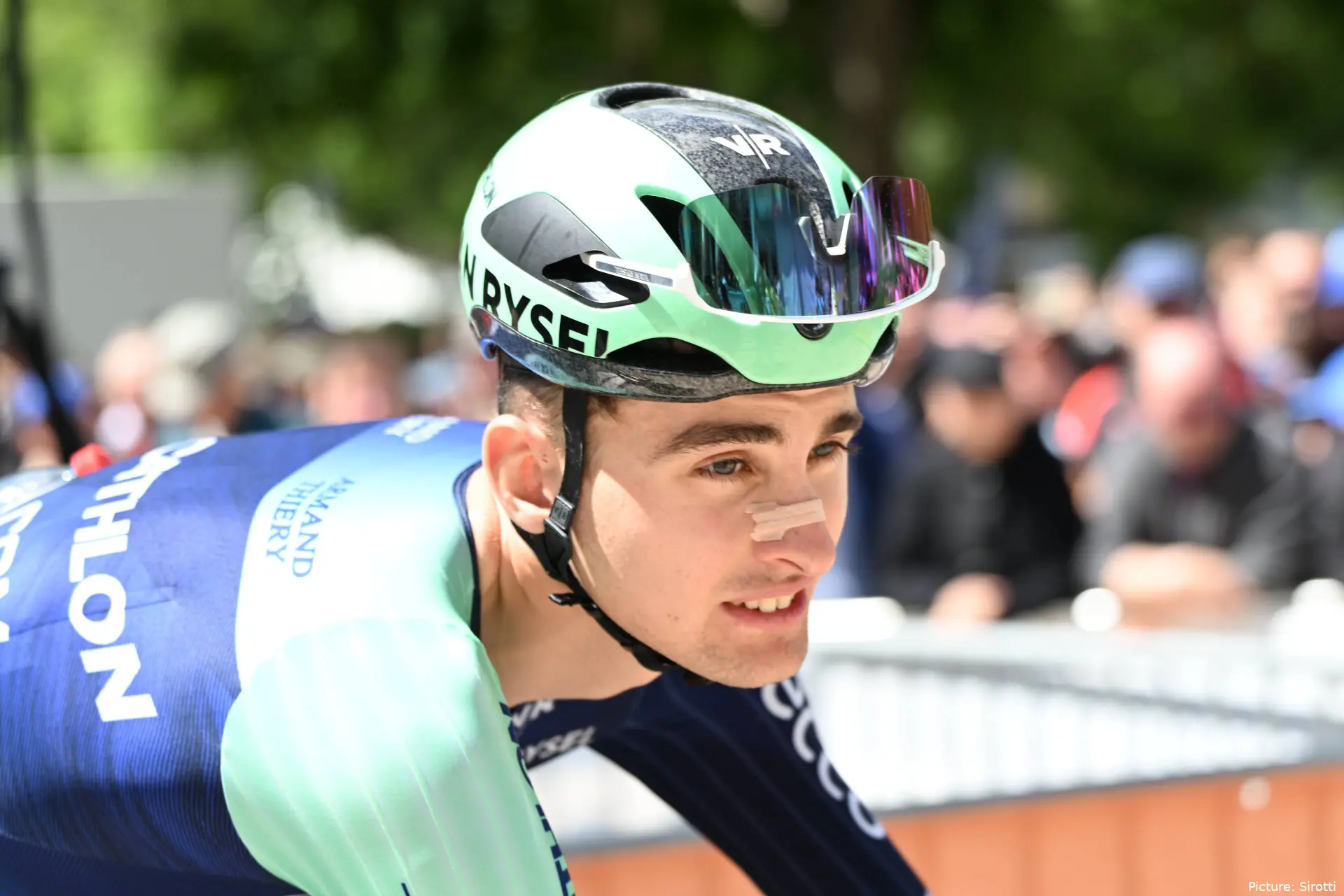
The 2026 Tour Auvergne-Rhône-Alpes has shown a lot regarding the contenders for the upcoming Tour de France contenders, but has also left unanswered questions such as Paul Seixas' current form in the high mountains. This won't be clear until the Tour, but questions were raised on Decathlon CMA CGM Team's handling of the situation in Auvergne.
Was Seixas able to win Auvergne?
With the main GC men staying conservative on stage 1, the first long climbing effort where the GC men would go to the max would be the ascent to the Grand Colombier on the penultimate stage. Beforehand, the team time trial and the climb to Crest-Voland have provided important conclusions, but the latter was still a rather short effort.
"We actually don't know anything at all right now. Of course, we know he was doing well, but did we see a real battle? Not really. And he didn't make very big differences in that first mountain stage either," former pro Bobbie Traksel said on the Kop over Kop podcast.
It was in the final weekend that the main expectations laid, but after Paul Seixas crashed on stage 7, Isaac del Toro proved to be the superior climber and took the overall win after two strong stage wins. Luke Tuckwell and Juan Ayuso filled out the two remaining positions on the podium.
Read also
Traksel questions Decathlon's push for Seixas to continue in Auvergne
The Dutchman believes that everyone started the race looking at the Frenchman and that they saw him as the man to beat, even in a seasoned peloton. "They all thought: Paul Seixas is the big man. But that isn't entirely true. At 19, that boy surely still needs to work on his status."
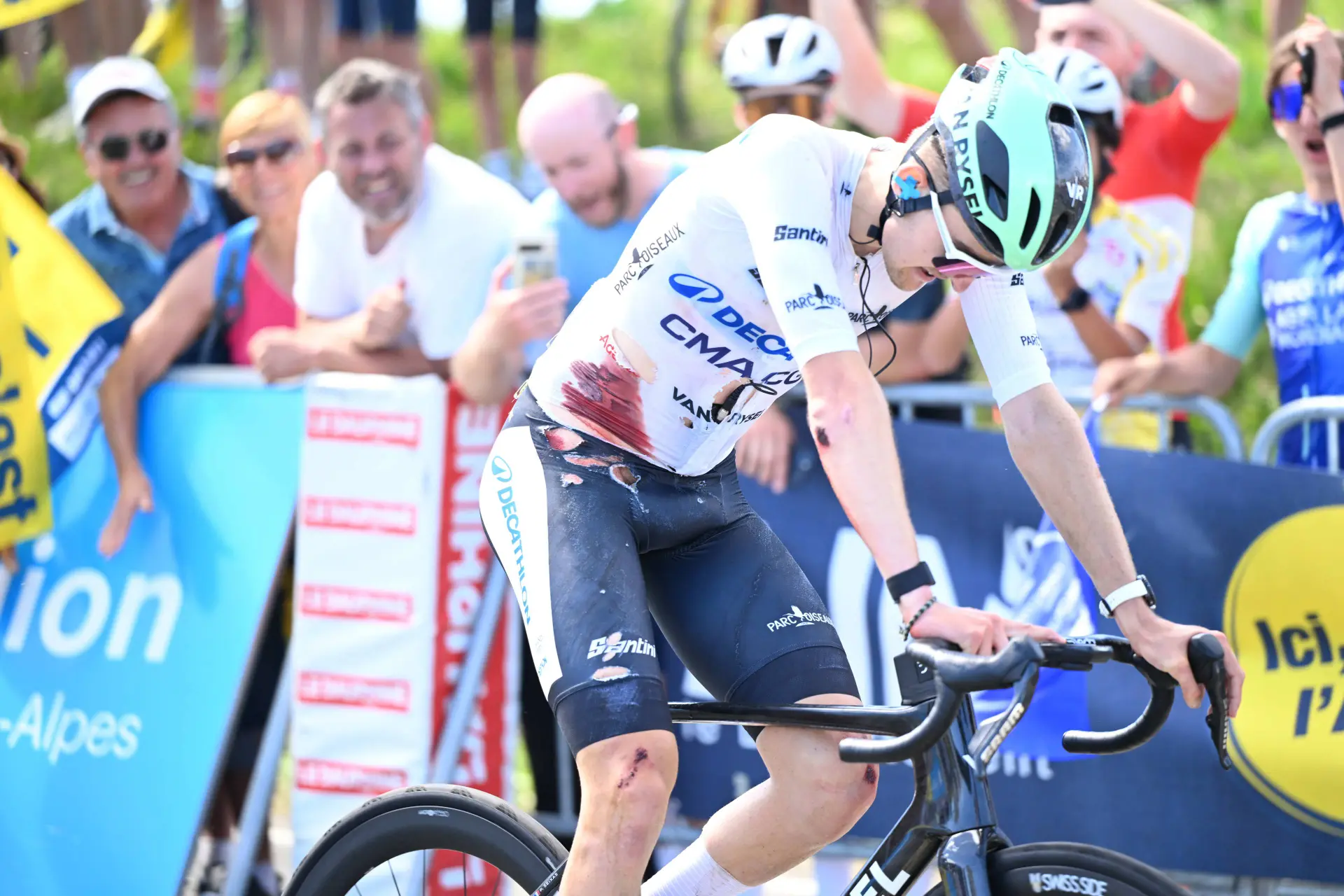
Experience and dealing with the inevitable setbacks is also important. Seixas crashed at high-speed during a descent and although he did not suffer fractures, he had extensive abrasions and difficulties holding onto the handlebars from there on out.
Traksel believes that the youngster should've been pulled out of the race at that moment. "He is a rider who could potentially achieve a Tour podium for them, but is also still very young. Shouldn't you then say: we stop now, we are going to the hospital, we are going to check everything, this is simply the situation, end of story."
Seixas remained in the race, recovered a four-minute deficit to the peloton and remained in GC contention. However the next day, he would withdraw from the race shortly after starting out, struggling with his injuries.
This could've been a mistake, thinking about the short-term goal instead of the Tour de France. "I think they thought: we're not going to win the Tour, but if we can win the Dauphiné, then we've got that in the bag and we can start the Tour more relaxed," Traksel concluded.
Rúben SilvaEditor-in-Chief
A founding contributor to CyclingUpToDate since its launch in January 2022, Ruben Silva has played a central role in shaping the site’s editorial direction and long-term growth. Before joining the project, he built his experience through independent blogging at Echelons Hub and by producing race previews for Ciclismo Internacional, developing a strong analytical voice rooted in daily engagement with professional cycling.
Beyond editorial work, he has been closely involved in the expansion and coordination of CyclingUpToDate’s wider network, helping establish and support sister platforms across multiple languages. This includes ongoing collaboration with CiclismoAlDia (Spanish), CiclismoAtual (Portuguese), WielrennenUpToDate (Dutch), and RadsportAktuell (German), contributing to a shared editorial vision and consistent international coverage.
He also helps oversee editorial governance across the network, setting standards for accuracy and consistency and coordinating updates or corrections when needed.
Originally from the Porto metropolitan area in Portugal, he holds a bachelor’s degree in Geography. His path into cycling journalism was shaped not through formal media training, but through independent reporting, community engagement, and sustained on-the-ground involvement in the sport.
Over the course of his career, he has conducted approximately 100 interviews across road cycling and cyclocross, ranging from one-to-one conversations and online formats to press conferences and on-site pre- and post-race coverage. His interviews include leading riders, team managers, and prominent figures within cycling media: Tadej Pogacar, Jonas Vingegaard, Mathieu van der Poel, Primoz Roglic, Wout van Aert, Joao Almeida and Tom Pidcock; managers like Patrick Lefevere and Joxean Matxin; and YouTube personality Bryan Kennedy (BKXC)...
Within 18 months of launch, he helped grow CyclingUpToDate’s English-language platform into one of the most-read cycling news websites, built entirely from the ground up. As both a professional journalist and lifelong cycling enthusiast, his focus remains on delivering accurate, timely, and well-contextualized coverage.
claps 3visitors 3
Just in

Popular news
Latest comments
- He didn't even try to sprint all outvappaxbipmv18-10-2026
- Campenaerts looked like a rolling pumpkin with that all orange leaders skinsuit !frieders318-10-2026
- He can take his dumb a$$ politics somehwere else !frieders318-10-2026
- good to have her back. fingers crossed she‘ll be able to stay!Ketterechts17-10-2026
- A tenner and he wins the Tour next year, too 😂anonymouscyclist17-10-2026
- the answer is either stick to classics or GTs but not bothabstractengineer17-10-2026
- the exodus already stared with Ciccone. Already they were struggling with two sprinters, now there are three. Also Ganna will demand leadership. Gall is the most proven GC, Ayuso has the most potential. GC leadership for everybody will be impossible. Literally a UAE style mess without pogi.abstractengineer17-10-2026
- I raced as an amateur for 12 years, including six years on my country’s national road cycling team. I secured two national titles and competed in three World Championships plus more than 15 international stage races. At 23, we travelled to Italy for a training camp—or so I assumed. On a rest day, we watched a presentation about adopting a more “professional” training approach. It was crystal clear what “professional” meant. That moment first exposed me to this dilemma. After returning from Italy, I left cycling—at least at the competitive level I had known. Over the following two years, the whole team was caught doping. I hold that everyone is innocent until proven guilty. In my view, current stakeholders operate on a different scale, and the sums involved are vast. I am unsure whether any doping would ever be revealed. I try to stay positive and enjoy the show. My 2c.
 vannpelt17-10-2026
 - Fiver he wins 🤣
 leedorney17-10-2026
 - “…measures to reduce speeds.” Might as well shorten the race course to just 50km as well? ASO generates at minimum €300m a year and 30- 40% profit. Maybe stop being greedy and spend more of the profit to protect the riders instead.b3tlla17-10-2026
Loading
1 Comments