Revealed: The crazy numbers that turned Jonas Abrahamsen into the most exciting rider of the 2024 Tour de France
Cycling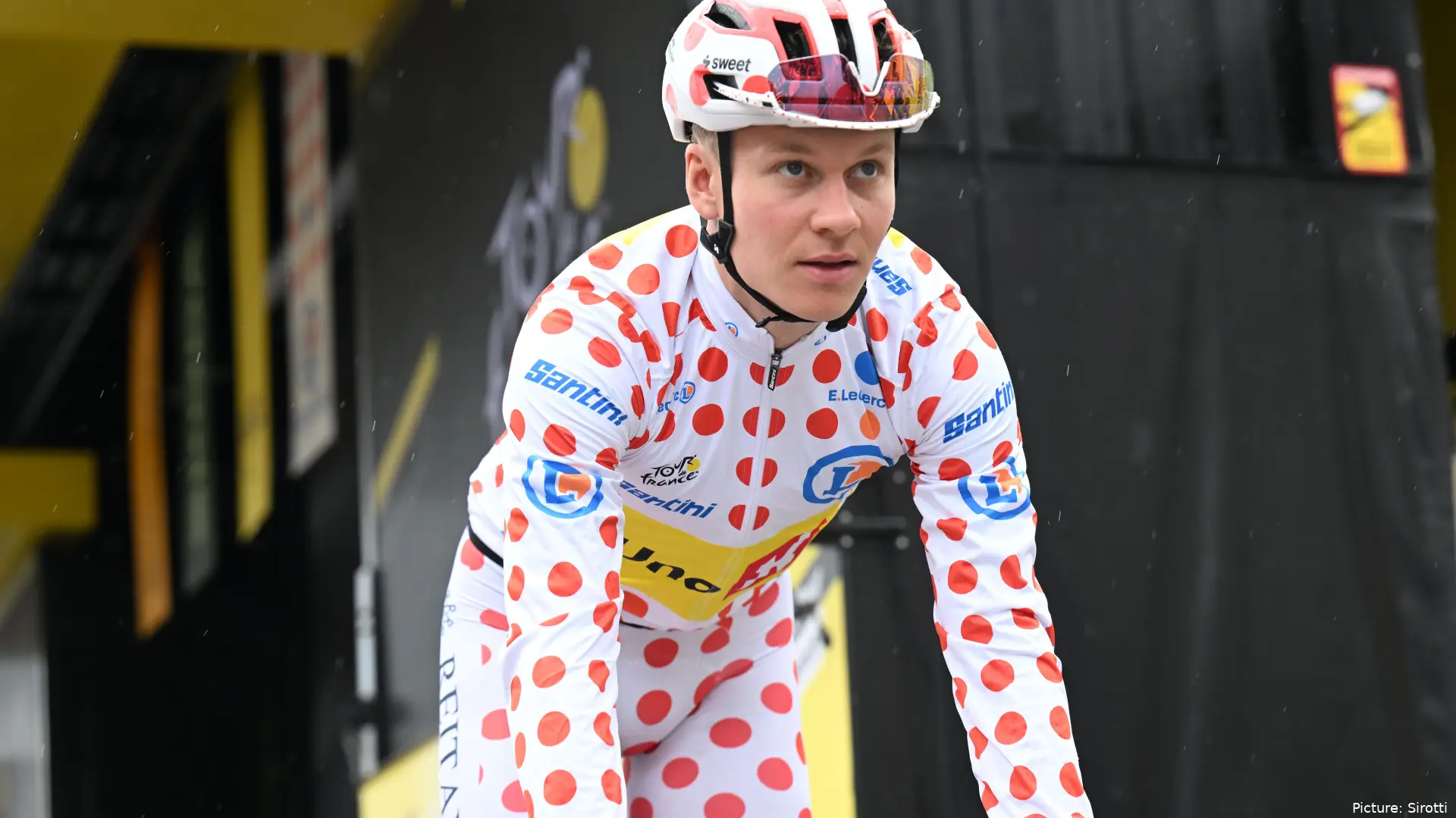
Jonas Abrahamsen emerged as one of the standout riders
during the 2024 Tour de France, captivating fans with his relentless attacking
style. Over the first two weeks of the race, he was a near-constant presence in
the breakaways and even claimed the polka-dot jersey for a period, highlighting
his exceptional climbing efforts. During the off-season, Velo caught up
with the Norwegian rider to delve into the details of his intense training
regime.
In the first two weeks of December, Abrahamsen and his Uno-X
teammates dedicated over 60 hours to training on the Spanish island of Gran
Canaria. Each day involved more than four hours of activity, including cycling,
gym exercises, and running. While such a workload is standard for WorldTour
professionals during the winter months, Abrahamsen’s volume of training went
beyond what most riders typically undertake in December.

After returning to Norway, he wasted no time in resuming his
training. Over the course of December, his commitment to maintaining high
volume was evident. During the first week in Gran Canaria, he accumulated 33
hours and 7 minutes of training. The second week added another 27 hours and 26
minutes. Back in Norway, his indoor training sessions during the third week
totalled 22 hours and 23 minutes, followed by 26 hours and 32 minutes in the
final week.
A key aspect of Abrahamsen’s approach involved heat
training, a method he emphasised even while training indoors. In just 21 days
of indoor sessions, he managed to complete 15 heat-focused workouts. Heat
training involves exercising in higher temperatures to improve the body’s
ability to regulate heat, enhancing endurance and performance in warmer
conditions, and this form of preparation is crucial for riders aiming to excel
in hot climates or during challenging summer races.
Read also

Strength training also played an important role in
Abrahamsen’s winter routine, with exercises such as lunges and squats featuring
prominently in his gym sessions. Even during interval training, his performance
metrics demonstrated his remarkable fitness level. In one session, he spent 2
hours and 29 minutes on the bike, maintaining an average power of 325 watts
(equating to 4.2 watts per kilogram) and a normalised power of 348 watts (4.5
watts per kilogram), with an average heart rate of 132 beats per minute. These
eye watering numbers certainly show just what it takes to compete in the Tour
de France!

Fin MajorCycling Journalist
Fin Major is a UK-based writer at CyclingUpToDate and has been part of the team since 2024. He is the site’s main writer for FAQs and evergreen explainers and has written around 2,000 pieces for the platform. Alongside this work, he focuses on in-depth analysis and covers the biggest races on the calendar, including the Tour de France, the Giro d’Italia, and La Vuelta a España, providing clear context around performance trends, tactics, and key storylines.
In his reporting, Fin uses reputable data sources such as ProCyclingStats for results, statistics, and historical context. He places strong emphasis on careful sourcing, editorial accuracy, and updating articles promptly when new, verified information becomes available. Outside of writing, Fin is an active cyclist, which supports his practical understanding of the sport and its demands.
claps 2visitors 2
Just in
Popular news

Latest comments
- Pogi is a Goat. He has power numbers that are once in a century. Jonas is a once in a generation, He has power numbers 1 level lower than Pogi. Even if both are equal which they were before 2024, Pogi would have won on sprint bonuses. For Jonas to win he has to crack Pogi, which is impossible. Therefore Giro is a good option considering the TT in TDF. He cannot win but if something happens to Pogi , he should be still in a position to win the TDF, Giro or no Giro, because the others are a level below him.abstractengineer11-11-2026
- for what?frieders311-11-2026
- Blah blah blah!frieders311-11-2026
- Where Merckx just rode every single race he could and won all the time, Hinault won less often (percentage wise) because he was more judicious in what he raced. His palmares are nuts. He had amazing rivals, one to start his career and another to end it in the grand tours. His classics were solid. What sets him apart from Merckx and Pogačar are that he basically dabbled in the classics while the other two love(d) them. I used to compare Pogačar to Hinault for his grand tour record and occasional classics win, until I realized that the comparison was wrong. Pogačar loves the classics - ah, the memory of his reaction to finishing fourth in a 2 person sprint in Flanders in ‘22: utter domination in any one day race since then, even when he doesn’t win. Hinault lived for the grand tours and I don’t think anyone else will ever reach his record. 10 wins in 13 attempts? Good lord. An amazing rider. Wish there was more footage to watch.RidesHills11-11-2026
- I had no idea about that either.
 santiagobenites10-11-2026
- great analysis thanks! appreciate you posting this. I didn't realize CX had a different standard for deviation. this is even more egregious it seems.mij10-11-2026
- As he isn't currently with Red Bull, I guess if he want to race for one more year he needs to find a team. He's 37 so this will be his last year I would guess, unless he wants to race for almost nothing like Froome did.awp10-11-2026
- I think some are making much ado about nothing. Even though Jonas is getting older, before his crash in the Tour, he looked like a solid 2nd all the way home. No one can really climb with Tadej until this year, Eric Mas showed himself which I think was a one off year for him and Paul Seixas has been able to be pretty close to him. Whatever stage race Jonas enters as long as Tadej is not there he is a favorite to win.awp10-11-2026
- Giro or not Giro, he won't win the Tour!MajorPayne10-11-2026
- Very true.awp10-11-2026
Loading
Write a comment