Results Middlekerke - Wevelgem 2026 | Jasper Philipsen wins dramatic In Flanders Fields Van der Poel vs Van Aert rivalry lights up another classic
CyclingSunday, 29 March 2026 at 16:20
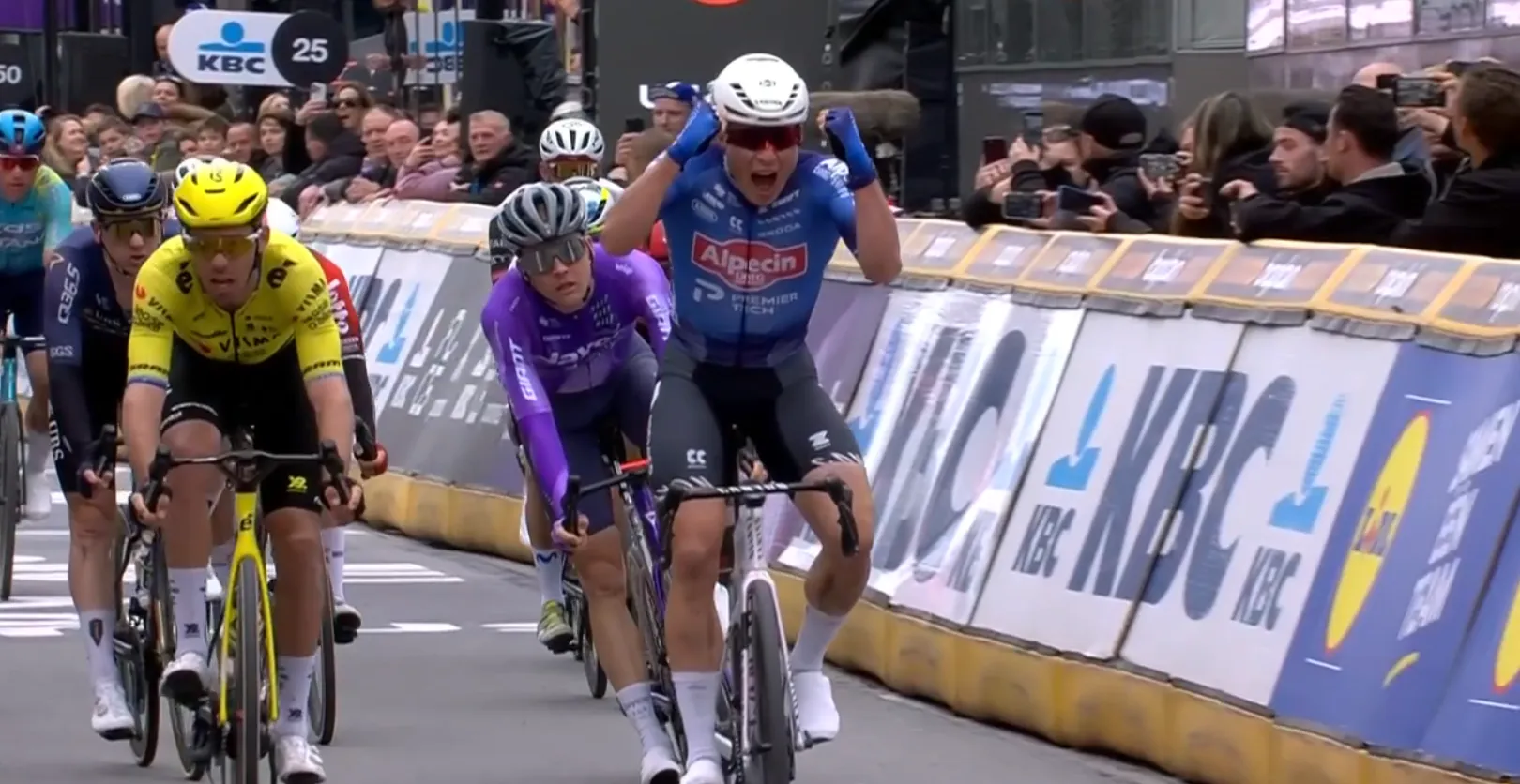
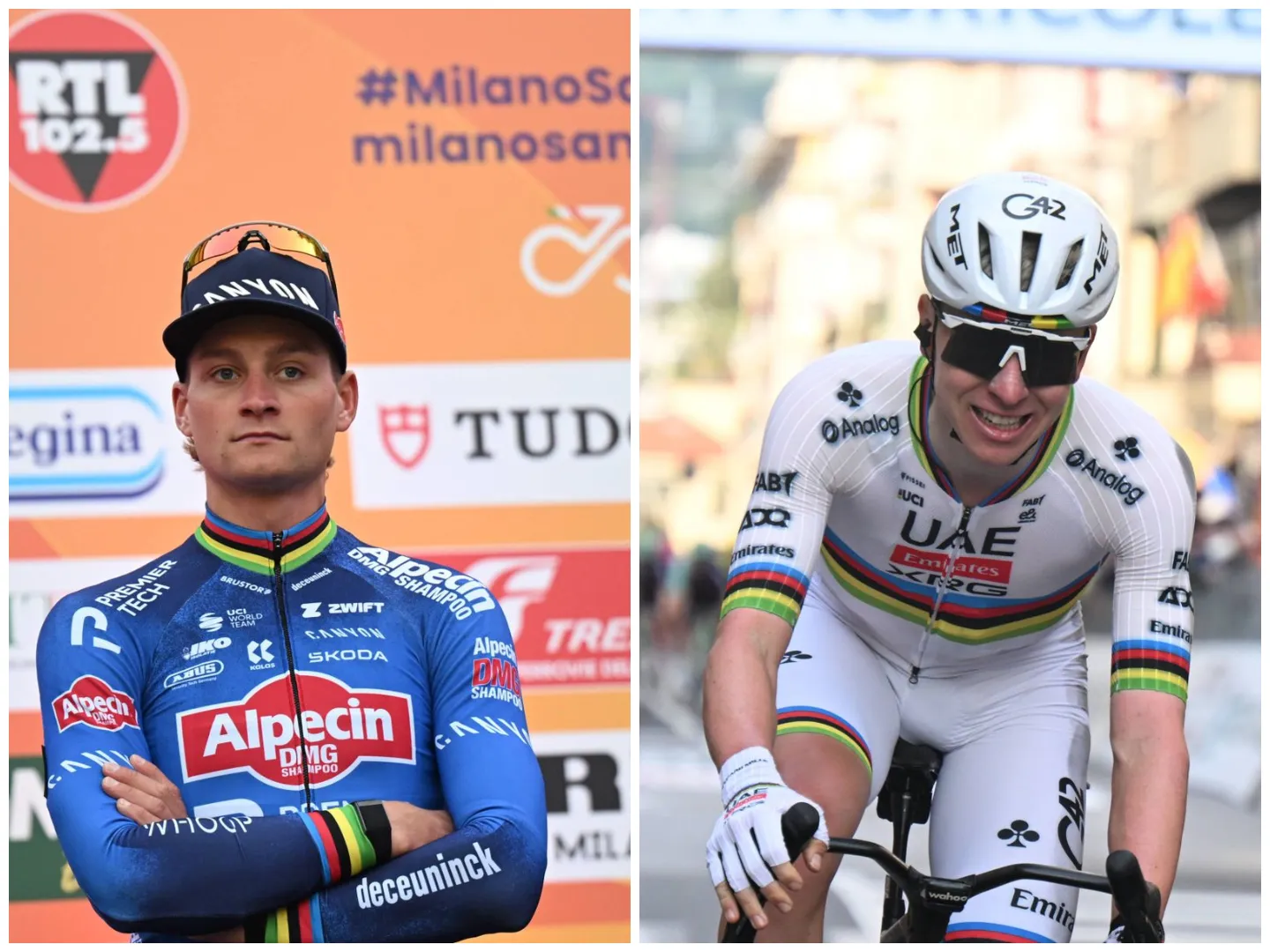
Jasper Philipsen sprinted to victory in the fastest ever edition of In Flanders Fields 2026, but the race will be remembered for another gripping chapter in the rivalry between Mathieu van der Poel and Wout van Aert.
After a long day marked by crosswinds, crashes and constant attacking, the final ascent via the steep Ossuaire side delivered the decisive move, with only Van Aert able to follow Van der Poel’s acceleration as the rest of the race fractured behind them.
An early eight-rider breakaway set the tone from the start in Middelkerke, forming after a series of attacks and quickly building a lead of over five minutes. Dries De Bondt, Jules Hesters and Victor Vercouillie were among those up the road as the peloton allowed the move to establish itself heading towards the exposed coastal roads.
The expected crosswind action in De Moeren increased the pace but did not immediately split the race. While it did not produce a decisive selection, the sustained effort and positioning battle began to wear the peloton down, laying the foundations for the fractures that followed inland.
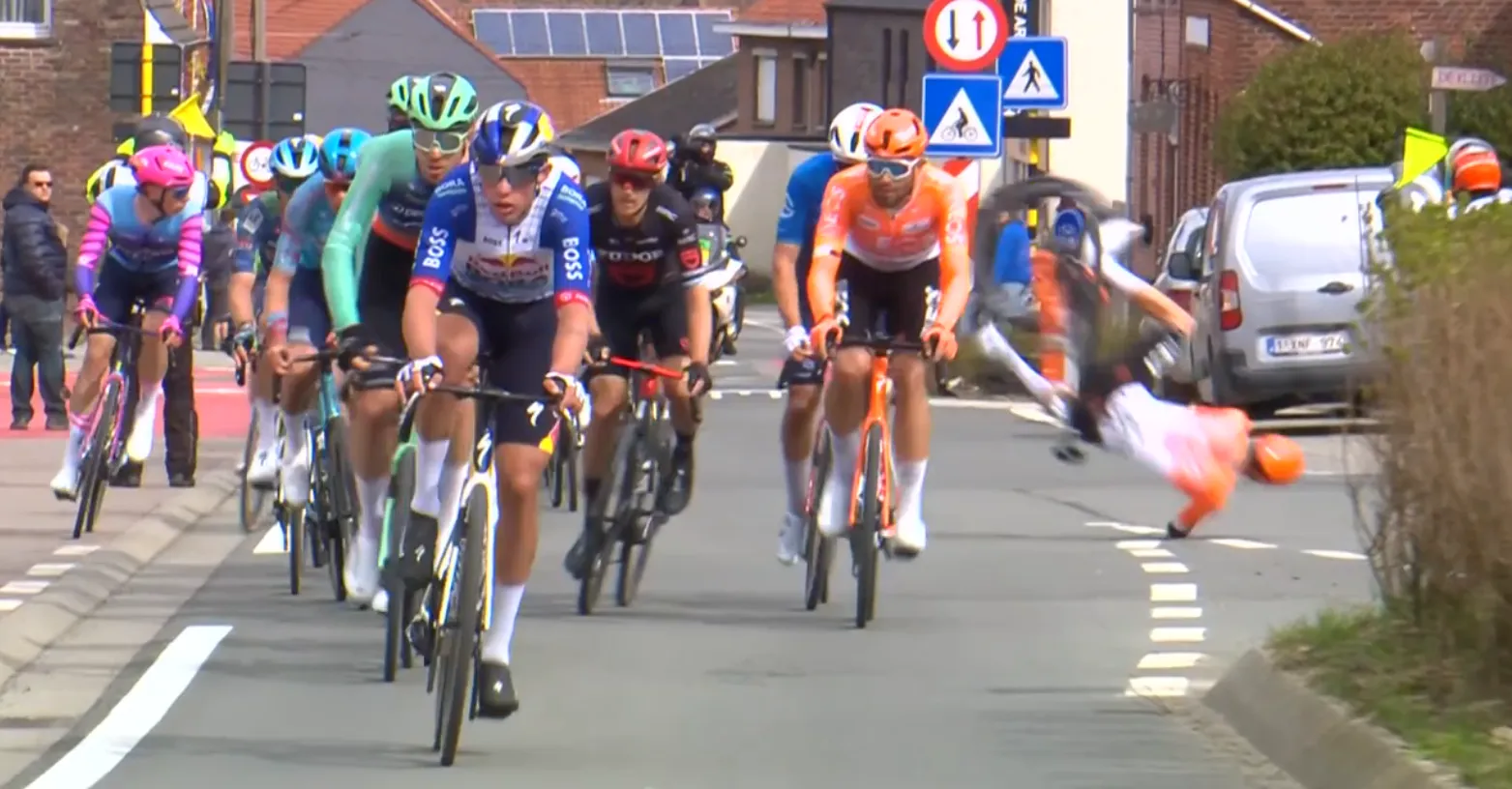
A crash in the feed zone disrupted the rhythm further, leaving several riders on the ground and forcing teams to reorganise before the race had reached the climbs.
Pressure builds before chaotic middle phase
It was only after leaving the coastal roads that the race began to fracture. A front echelon formed on the exposed roads inland, with several riders caught out behind and forced into an early chase, though the move did not fully settle the race.
What followed was a prolonged and aggressive middle phase. Attacks came repeatedly across the hills and plugstreets, with Jasper Stuyven among the most active, forcing the pace on narrow sectors and stretching the peloton into a long line.
The repeated accelerations over the plugstreets further thinned the field and ensured that the decisive climb would be ridden under heavy fatigue. Moves from riders such as Christophe Laporte, Gianni Vermeersch and Ben Turner failed to establish separation, as no group was allowed to gain control.
Mechanical issues and incidents added further disruption. Paul Magnier lost ground after a bike change, while Turner later crashed heavily in a high-speed fall that ended his race. The crash also disrupted INEOS Grenadiers’ chase, removing a key rider at a crucial point in the race.
Meanwhile, the early breakaway began to lose its advantage, but it was Wout van Aert who ultimately brought the race back together. His acceleration on the Kemmelberg split the front of the race and carried himself, Mathieu van der Poel and Florian Vermeersch across to the remnants of the break, reshaping the race around a new leading group.
Kemmelberg delivers decisive split
The race finally broke apart on the final ascent of the Kemmelberg. Van der Poel set a fierce pace on the climb, immediately reducing the leading group. Riders from the early breakaway were the first to crack, and while Vermeersch initially held on as the selection was made, he was eventually distanced. Only Van Aert remained alongside Van der Poel.
The Belgian matched the acceleration on the steep slopes and crested the climb with the Dutchman, leaving the two riders clear at the front as the race split behind them.
Chaotic finale turns race on its head
With 20 kilometres remaining, the race had taken on its final form. Van der Poel and Van Aert led together at the front, working smoothly to extend their advantage. Florian Vermeersch remained in between at around 15 seconds, briefly threatening to close the gap before fading again on the false flats.
Behind them, the peloton had reorganised and was riding at speed, gradually absorbing the remnants of the early breakaway. Several fast finishers remained in contention, increasing the pressure on the leading duo.
That pressure intensified in the final kilometres. Vermeersch was eventually caught after a strong ride, removing the buffer between the leaders and the peloton. At the same time, the sprint threat shifted, with Jonathan Milan delayed by a bike change and losing contact, while Luke Lamperti also dropped out of contention after a puncture.
Despite those setbacks, the chase remained organised. Red Bull-BORA-hansgrohe committed riders to the front in support of Jordi Meeus, helping to bring the gap down rapidly inside the final 15 kilometres.
Inside the final 10 kilometres, the gap collapsed. Van der Poel and Van Aert were caught in the closing kilometres as the peloton finally made contact, bringing the race back together at the front.
However, the moment of regrouping immediately sparked a decisive counter.
Alec Segaert attacked just before the flamme rouge, timing his move perfectly as hesitation rippled through the peloton. The Belgian surged clear, catching the field off guard and quickly opening a gap.
The move proved short-lived. Segaert was reeled in inside the final kilometre as the peloton surged forward once more, setting up a reduced bunch sprint after a day that never settled. Jasper Philipsen emerged fastest in that sprint, taking victory in the fastest ever edition of the race ahead of Tobias Lund Andresen, bringing a breathless and unpredictable edition of In Flanders Fields to a close.
Results powered by FirstCycling.com
claps 3visitors 2
Just in
Popular news

Latest comments
- After such a thrilling race, to end in a sprint was mildly disappointing for me. To see Ganna pull them back only to have Alpecin win anyway, not the wisest.RidesHills29-03-2026
- 🤞
 parisbound0029-03-2026
 - Philipsen's victory today is like Max Verstappen winning in Japan today... after everyone went into the pits to change tires except him, and half a lap later the safety car came out due to a Sainz crash and the safety car stays until the end of the race and Max won. Who cares WTF!!!Mou-Cro-HR29-03-2026
- Wout and Mathieu managed to make the racing exciting once again, and Jasper was in the right place at the right time. I was thoroughly entertained.
 santiagobenites29-03-2026
 - If Segaert wins then he'll make the big two look like idiots
 Rafionain-Glas29-03-2026
 - Welcome back! At least Evenepoel is true to his teammates, unlike your man RogličRafionain-Glas29-03-2026
- OMG... how much money was paid for Remco, and what has he delivered? Nothing!!! He won a few second and third class races, but when it got for real, he capitulated. Ad acta.Mou-Cro-HR29-03-2026
- The biggest blow would be Jarno WidarRafionain-Glas29-03-2026
- More to the point, Merckx faced a significantly different peloton. Back then, it was almost all western/southern European riders - today’s peloton is pulling the best riders from at least half the globe. So being the best of that is a much more impressive task. Much like how an English Football League player from the 1970s wasn’t facing the whole world the way today’s players do. Which just underlines why it’s really pointless to make the comparison. Apples and oranges.antipodeanpedalfan29-03-2026
- The same Wout who managed to lose a sprint to Neilson Powless?
 Front24229-03-2026
Loading
4 Comments