"This was a textbook example of finishing it together” - Jasper Philipsen plays Van der Poel card to perfection to win In Flanders Fields
Cycling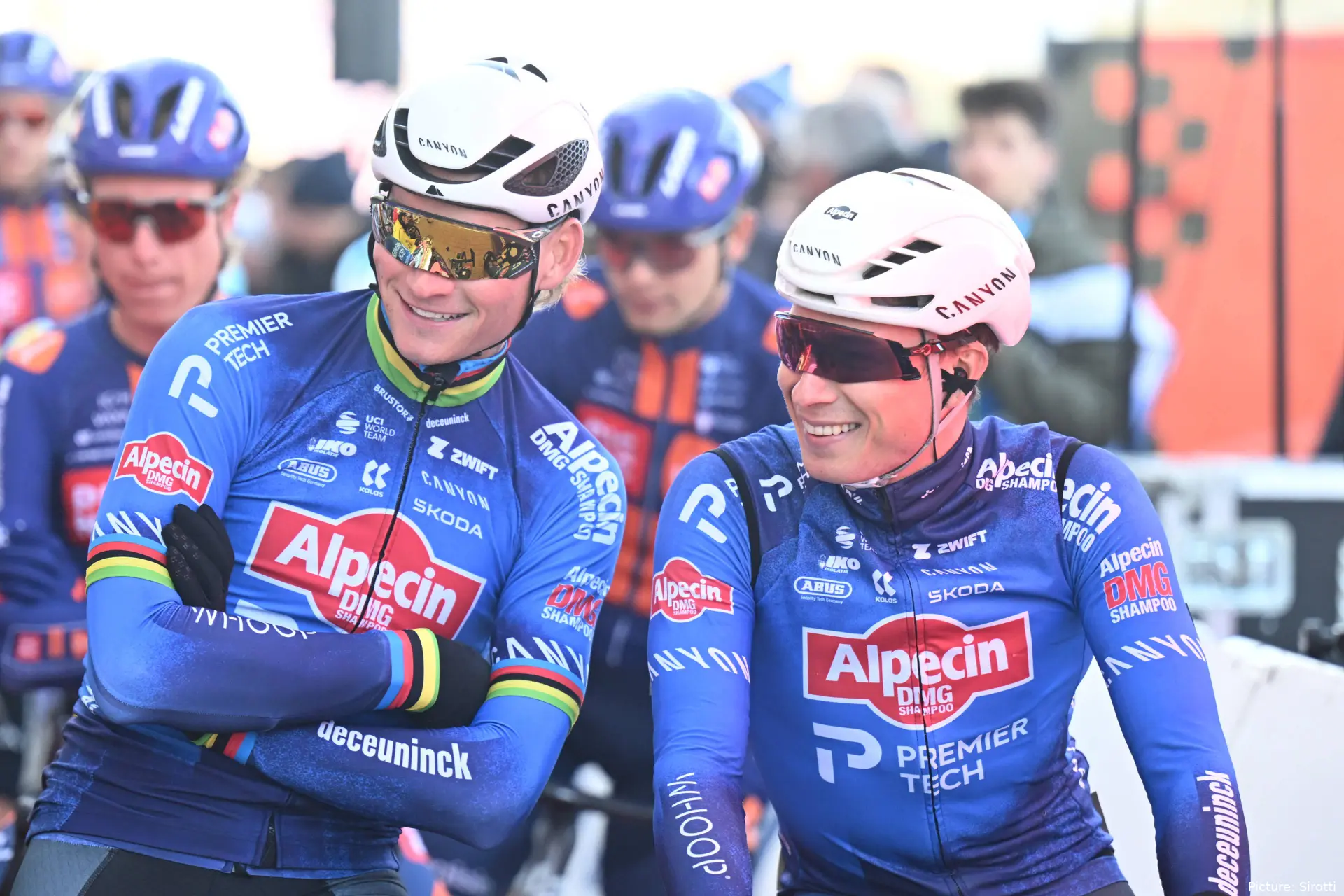
Jasper Philipsen delivered on a long-standing target with victory at In Flanders Fields 2026, finishing off a chaotic race that had been turned on its head in the closing kilometres after Mathieu van der Poel and Wout van Aert were brought back.
For much of the finale, the race appeared destined to be decided between those two rivals, who had forced clear on the Kemmelberg and built a narrow advantage into the final phase. But as the peloton reorganised behind and the gap collapsed inside the last 10 kilometres, the scenario shifted sharply back towards a sprint.
That change played directly into Alpecin-Premier Tech’s hands.
“It finally worked out. This has been a goal for a long time,” Philipsen said after the finish. “In previous editions, I never had the perfect feeling you need to win here, but today it was all or nothing. With Mathieu van der Poel up the road, we were in an ideal situation.”
Patience rewarded after chaotic finale
The closing kilometres were anything but straightforward. Van der Poel and Van Aert were reeled in only inside the final stretch, before a late attack from Alec Segaert briefly threatened to disrupt the sprint setup once again.
Behind, teams had been committing fully to the chase. Red Bull - BORA - hansgrohe drove the pace for Jordi Meeus, while other sprint teams worked to keep their leaders in contention as the race swung back together.
Despite the repeated accelerations and the toll of earlier efforts, Philipsen remained in position when it mattered. “It definitely wasn’t easy to get the legs feeling fresh again,” he explained. “I could still feel the fatigue from E3, and we were working with a new sprint train, but it’s great to win like this.”
Alpecin execution delivers under pressure
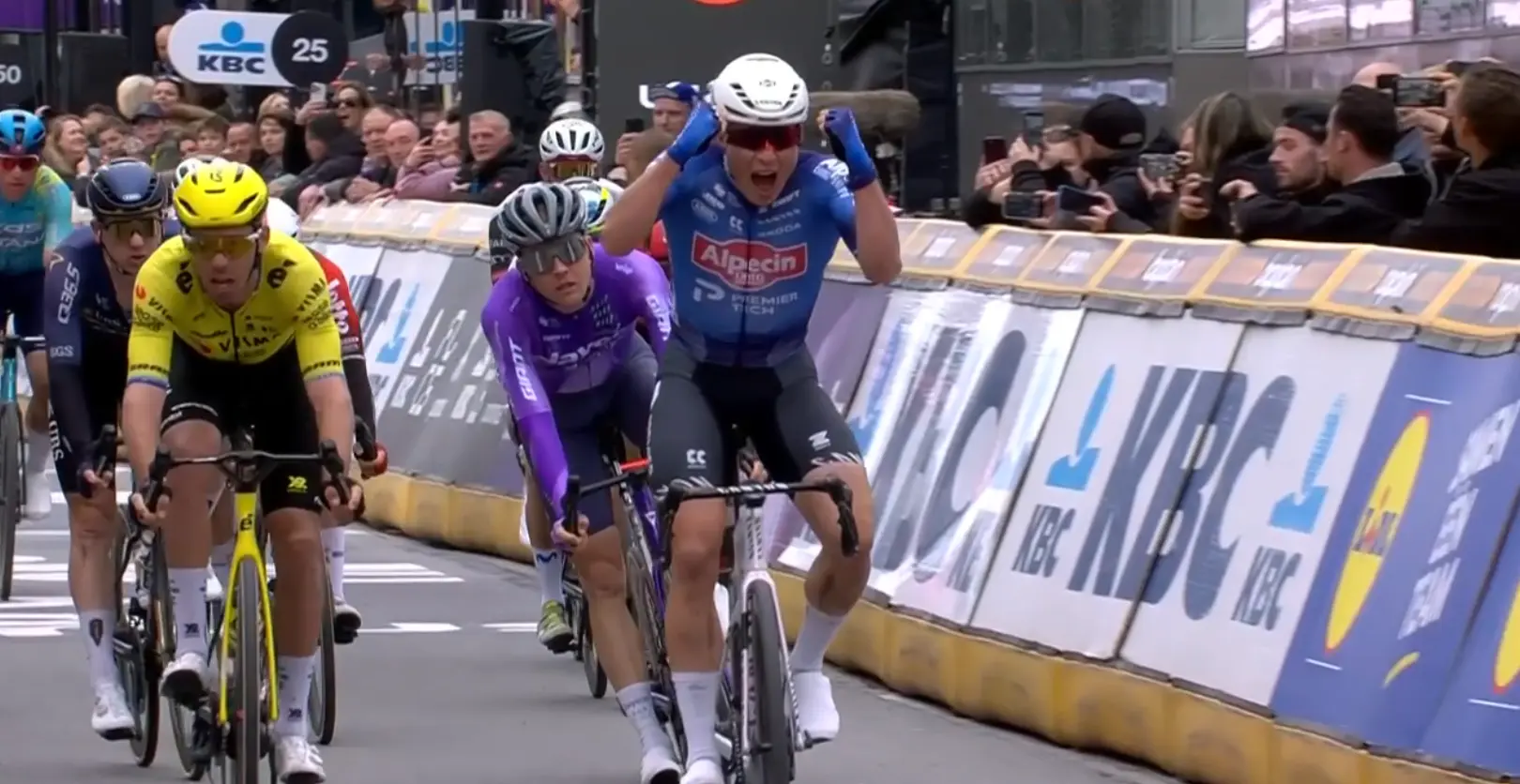
When Segaert was caught and the sprint finally opened, Philipsen proved the fastest, beating Tobias Lund Andresen to the line to cap the fastest ever edition of the race.
The victory was as much about collective execution as individual speed. “This was a textbook example of finishing it together,” Philipsen said.
After a day defined by crosswinds, crashes and constant reshaping of the race, the outcome ultimately hinged on timing and control. With Van der Poel forcing the race open earlier and the team remaining composed as the situation evolved, Philipsen was left to complete the job. This time, everything aligned.

Kieran WoodDeputy Editor-in-Chief
Kieran Wood is a sports journalist based in Wales and has been active in journalism since 2022. He regularly contributes to DartsNews.com and CyclingUpToDate.com, where he covers professional cycling and darts. In cycling, his work includes liveblogs from major races, including the Tour de France, the Giro d’Italia, and La Vuelta a España, alongside race reports and analysis. He has also conducted interviews with professional riders.
His reporting spans the full racing calendar, from one-day classics to stage races, with a focus on accurate, real-time coverage and clear contextual analysis. For statistics, results, and historical context, he regularly uses resources such as ProCyclingStats. To support reporting on rider activity and training context where relevant, he also references Strava.
In his work, Kieran places strong emphasis on careful sourcing, editorial accuracy, and updating articles as new, verified information becomes available.
claps 21visitors 2
Just in
Popular news
Latest comments
- Campenaerts looked like a rolling pumpkin with that all orange leaders skinsuit !frieders318-10-2026
- He can take his dumb a$$ politics somehwere else !frieders318-10-2026
- good to have her back. fingers crossed she‘ll be able to stay!Ketterechts17-10-2026
- A tenner and he wins the Tour next year, too 😂anonymouscyclist17-10-2026
- the answer is either stick to classics or GTs but not bothabstractengineer17-10-2026
- the exodus already stared with Ciccone. Already they were struggling with two sprinters, now there are three. Also Ganna will demand leadership. Gall is the most proven GC, Ayuso has the most potential. GC leadership for everybody will be impossible. Literally a UAE style mess without pogi.abstractengineer17-10-2026
- I raced as an amateur for 12 years, including six years on my country’s national road cycling team. I secured two national titles and competed in three World Championships plus more than 15 international stage races. At 23, we travelled to Italy for a training camp—or so I assumed. On a rest day, we watched a presentation about adopting a more “professional” training approach. It was crystal clear what “professional” meant. That moment first exposed me to this dilemma. After returning from Italy, I left cycling—at least at the competitive level I had known. Over the following two years, the whole team was caught doping. I hold that everyone is innocent until proven guilty. In my view, current stakeholders operate on a different scale, and the sums involved are vast. I am unsure whether any doping would ever be revealed. I try to stay positive and enjoy the show. My 2c.
 vannpelt17-10-2026
 - Fiver he wins 🤣
 leedorney17-10-2026
 - “…measures to reduce speeds.” Might as well shorten the race course to just 50km as well? ASO generates at minimum €300m a year and 30- 40% profit. Maybe stop being greedy and spend more of the profit to protect the riders instead.b3tlla17-10-2026
- he also had quite the life off the bike during his pro years. he used his celebrity status to full affect.mij17-10-2026
Loading
Write a comment