PRESS CONFERENCE | “It was not on our bingo card before Christmas” – Grischa Niermann explains Simon Yates surprise retirement and Visma reshuffle for 2026
Cycling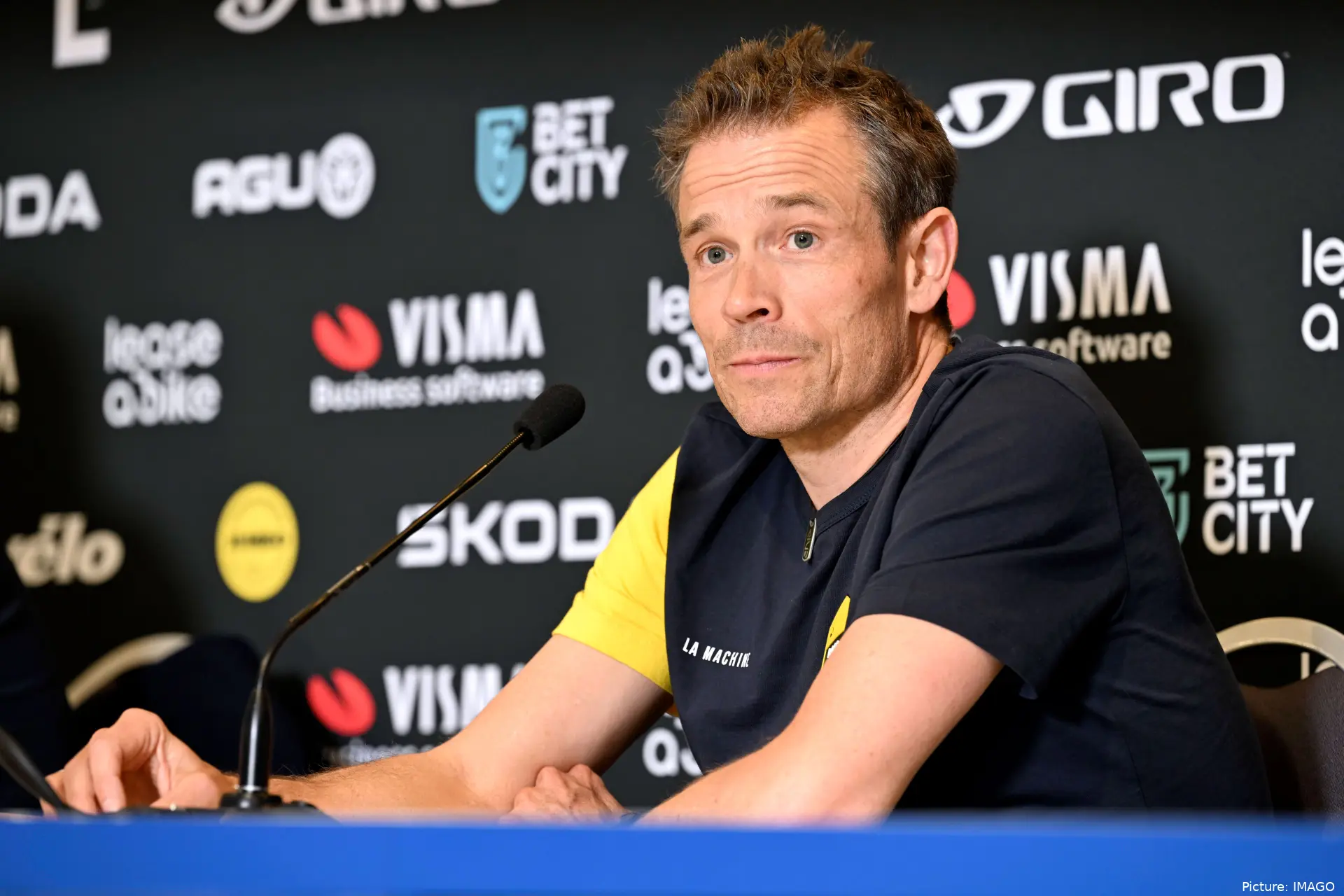
Team Visma | Lease a Bike’s January media day was always likely to revolve around fresh schedules, new signings and renewed ambition. Instead, the talking point that kept dragging everything back was the one nobody inside the team expected to be discussing so soon, and CyclingUpToDate were present to document every word.
Grischa Niermann faced questions on Simon Yates retirement and admitted the move landed as a shock despite the team taking time to process it internally. He stressed that Yates did not flag any warning signs to management and that the decision appeared to have been made quietly, with only his closest circle.
From a sporting point of view, Niermann outlined the practical consequences. Yates had been central to Visma’s early season planning, including a leadership role at Paris-Nice, and his absence forces adjustments to the Tour de France support cast in particular. He framed that kind of rewiring as an unavoidable part of modern race planning.
Beyond the immediate Yates fallout, Niermann also laid out the broader reset behind the team’s 2026 approach, including a stronger emphasis on the Monuments and giving key riders a different type of motivation boost. He repeatedly returned to the same idea: plans can be data-informed, but they still need to work for the person riding them.
Full Grischa Niermann Press Conference
You said you thought about it for a long time and you made a decision, but it was still a surprise. Was there ever a discussion with Simon about being fed up with cycling or struggling mentally?
No. I think you know Simon a little bit. He’s a very quiet guy and I think he takes decisions by himself. He’s not the one who needs 20 people to talk to or to discuss things with. He really made it up with himself and surely with the closest people to him, his family. We never had these talks with him, and so it was very surprising.
No. I think you know Simon a little bit. He’s a very quiet guy and I think he takes decisions by himself. He’s not the one who needs 20 people to talk to or to discuss things with. He really made it up with himself and surely with the closest people to him, his family. We never had these talks with him, and so it was very surprising.
It sounds like you were blindsided. How frustrating was it to go back and redraw plans for the season?
Of course, this was not on our wish list for Christmas, like I said, but it is what it is. I think in cycling you always have to adapt and make new plans. We made plans in the off-season period in September, October and November. We also made plans with Simon and he was totally behind it, and now we have to adapt these plans. We don’t have to adapt all the plans, but for the races Simon was going to do, certainly we need somebody else for the Tour de France. He was our leader for Paris-Nice, for example. We have to decide now how we tackle these things. Most likely it will also happen somewhere in the year that somebody gets injured or has a crash or is sick and we have to adapt the plans again. In the end, that’s also part of my job and part of our job.
Of course, this was not on our wish list for Christmas, like I said, but it is what it is. I think in cycling you always have to adapt and make new plans. We made plans in the off-season period in September, October and November. We also made plans with Simon and he was totally behind it, and now we have to adapt these plans. We don’t have to adapt all the plans, but for the races Simon was going to do, certainly we need somebody else for the Tour de France. He was our leader for Paris-Nice, for example. We have to decide now how we tackle these things. Most likely it will also happen somewhere in the year that somebody gets injured or has a crash or is sick and we have to adapt the plans again. In the end, that’s also part of my job and part of our job.
Did you try to change his mind?
No. It was quite clear. Once again, in the end, at least when I speak for myself, I am more happy that he takes this decision and says, OK, I want to stop, than that he finds out in two or three months that he cannot bring it up mentally anymore. I think it was for him a well thought out decision. He may not go for a lot of words, but for sure he thought about it a lot and he makes a decision. That’s a decision and we have to accept it.
No. It was quite clear. Once again, in the end, at least when I speak for myself, I am more happy that he takes this decision and says, OK, I want to stop, than that he finds out in two or three months that he cannot bring it up mentally anymore. I think it was for him a well thought out decision. He may not go for a lot of words, but for sure he thought about it a lot and he makes a decision. That’s a decision and we have to accept it.
Did you consider trying to find a replacement, or was it too late?
Yeah, it was the beginning of January, and if I know the rules correctly, then the first moment we could sign a rider that has a contract with another team is the first of August. So for now, there’s no possibility to replace him. Also, there’s not a rider on the market to replace Simon Yates. Of course, we will look for the future for next year. Of course, we need to find a Simon replacement, and of course, we want to have the strongest possible team. But for now, there’s not so much we can do, and we are confident with the 28 riders we have.
Yeah, it was the beginning of January, and if I know the rules correctly, then the first moment we could sign a rider that has a contract with another team is the first of August. So for now, there’s no possibility to replace him. Also, there’s not a rider on the market to replace Simon Yates. Of course, we will look for the future for next year. Of course, we need to find a Simon replacement, and of course, we want to have the strongest possible team. But for now, there’s not so much we can do, and we are confident with the 28 riders we have.
How was Simon’s preparation until Christmas?
In terms of training? It was going fine. He was on the track in December and everything was OK. Yeah, no problem.
In terms of training? It was going fine. He was on the track in December and everything was OK. Yeah, no problem.
What do you expect from the new riders coming into the team, especially those linked to the Grand Tours?
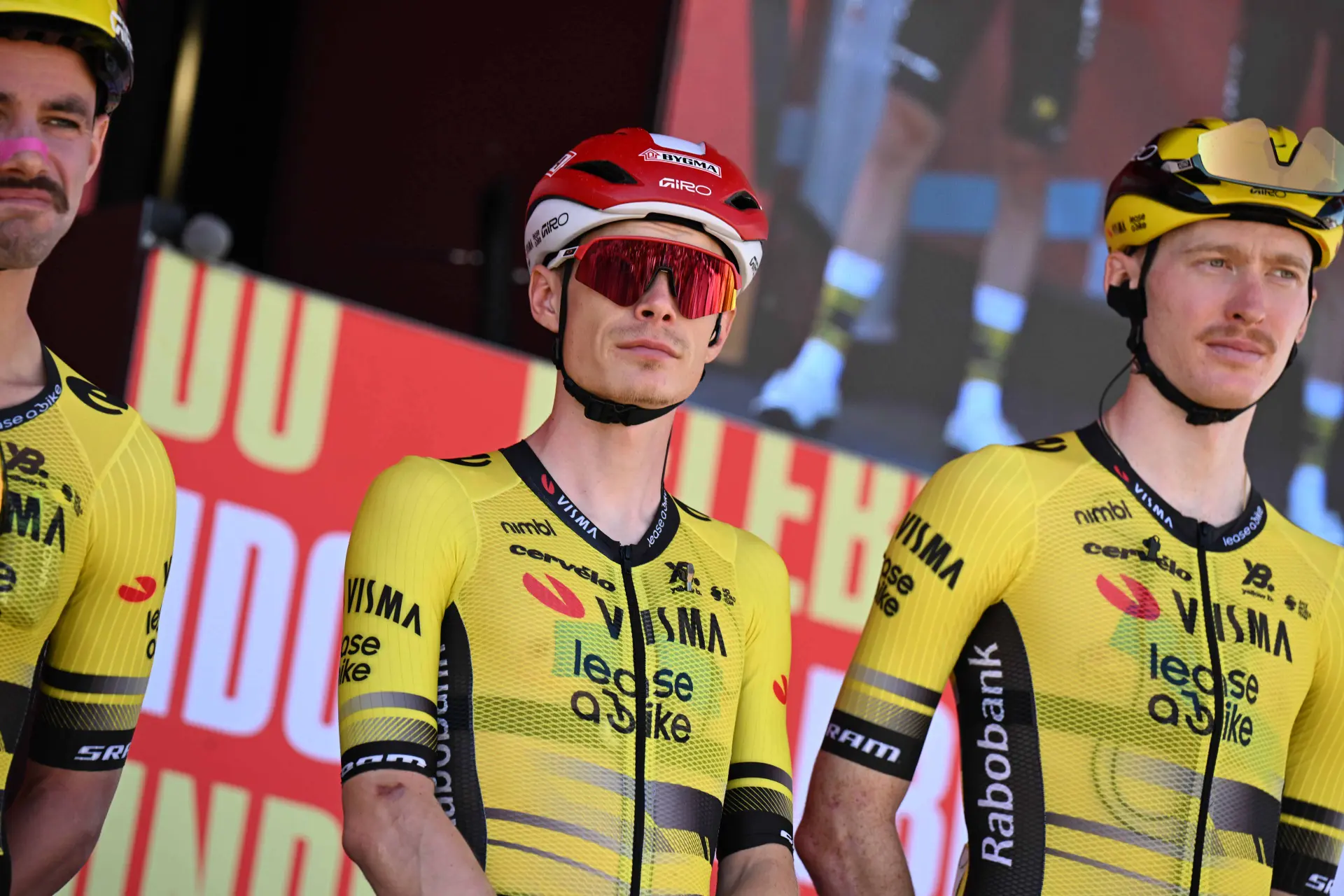
Yeah, I think with Davide, we of course have a big talent for GC, also for the Grand Tours, also for the future. He finished 12th in the Giro already on a small team. He will go to the Giro together with Jonas. We absolutely believe he needs time and he needs to become stronger. He is maybe somebody who can also surprise in the future. We are looking forward to the new signings, especially Bruno. Bruno is a guy that has a lot of experience, that has done already multiple Grand Tours. He is a very, very strong rider. He is a good climber, he can go on the flats, and he will be an important help.
Yeah, I think with Davide, we of course have a big talent for GC, also for the Grand Tours, also for the future. He finished 12th in the Giro already on a small team. He will go to the Giro together with Jonas. We absolutely believe he needs time and he needs to become stronger. He is maybe somebody who can also surprise in the future. We are looking forward to the new signings, especially Bruno. Bruno is a guy that has a lot of experience, that has done already multiple Grand Tours. He is a very, very strong rider. He is a good climber, he can go on the flats, and he will be an important help.
Which new rider could be used in the cobbled classics team?
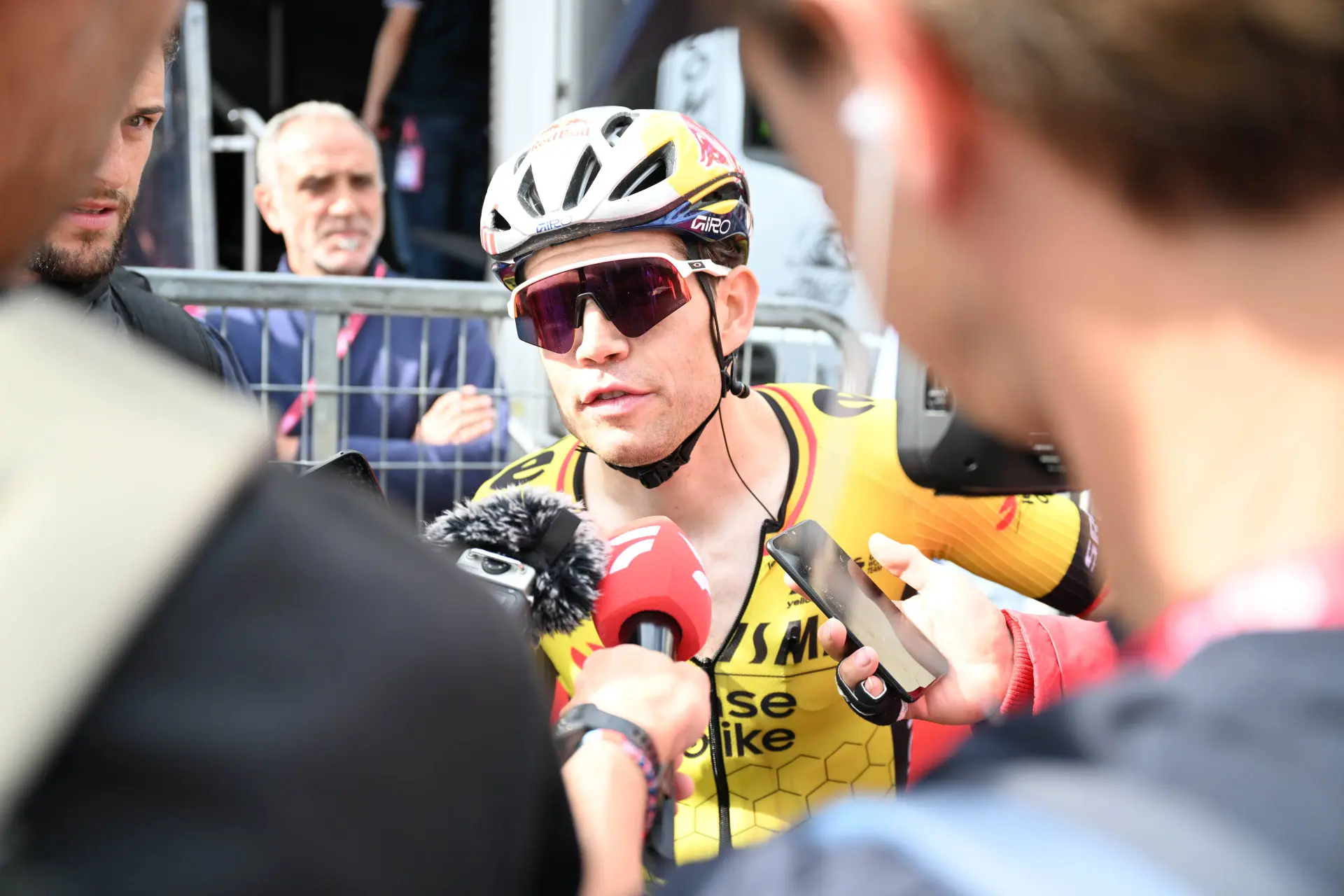
I think we have quite a big team for the cobbled classics, but certainly there is somebody who will be added to that team. He never did a cobbled classic because with his Italian team he was never invited to these races, but I would really like to see him in some of these races. His rider profile should suit these races a lot. It’s a bit far-fetched, we have to see how it goes. It’s also not the first one that I say now is going to the Tour of Flanders, but he could maybe also surprise us. We have a few riders that fit in there. Timo is someone we signed for the cobbled classics. We saw him last year in some of these races where he was doing really well. We think we have a really good, young, talented rider who is dreaming of these races every time he goes to bed. He will certainly play a role in our ideas and our ambitions. Then we have another rider, Christophe Laporte. He has missed the whole last year, at least the whole spring. He is certainly one of the big riders for our team for these races.
I think we have quite a big team for the cobbled classics, but certainly there is somebody who will be added to that team. He never did a cobbled classic because with his Italian team he was never invited to these races, but I would really like to see him in some of these races. His rider profile should suit these races a lot. It’s a bit far-fetched, we have to see how it goes. It’s also not the first one that I say now is going to the Tour of Flanders, but he could maybe also surprise us. We have a few riders that fit in there. Timo is someone we signed for the cobbled classics. We saw him last year in some of these races where he was doing really well. We think we have a really good, young, talented rider who is dreaming of these races every time he goes to bed. He will certainly play a role in our ideas and our ambitions. Then we have another rider, Christophe Laporte. He has missed the whole last year, at least the whole spring. He is certainly one of the big riders for our team for these races.
With riders missing and others changing focus, how do you assess the strength of the cobbled classics group now?
We have a bit of a different team. We are adding Christophe, we are also adding Mathieu in even more races. Maybe also Axel will do some races. We have a lot of fast men. When you look at how you win these races, a lot of times you win them in the spring, in a certain way. We have a lot of options. I believe we have a very strong team. Of course, Wout will still be our spearhead. Most likely the strongest one, the one that should really be competitive in the finals. Still, of course, we don’t have Dylan anymore. We have different ambitions with Mathieu, but we will have a very strong team.
We have a bit of a different team. We are adding Christophe, we are also adding Mathieu in even more races. Maybe also Axel will do some races. We have a lot of fast men. When you look at how you win these races, a lot of times you win them in the spring, in a certain way. We have a lot of options. I believe we have a very strong team. Of course, Wout will still be our spearhead. Most likely the strongest one, the one that should really be competitive in the finals. Still, of course, we don’t have Dylan anymore. We have different ambitions with Mathieu, but we will have a very strong team.
How do you see the long term combination of Wout and Brennan?
I think ideally they are a perfect combination. With Brennan we really have to decide on a long term plan. We have great ambitions with him for the future. We absolutely believe he will become a world class rider, but it doesn’t have to happen immediately. You really need some time to adapt. He’s certainly going also to the Monuments. He will do San Remo. He will do Flanders. He will do Roubaix. But that’s also to learn in the shadow of Wout. In the ideal scenario, in the future, we will have a rider that we always have in the first bigger group that will certainly win the sprint. But I think we all need to give Brennan a little bit of time. This year, I would say, everything can happen, but nothing has to happen this year. I do believe he will win the Monuments in the future.
I think ideally they are a perfect combination. With Brennan we really have to decide on a long term plan. We have great ambitions with him for the future. We absolutely believe he will become a world class rider, but it doesn’t have to happen immediately. You really need some time to adapt. He’s certainly going also to the Monuments. He will do San Remo. He will do Flanders. He will do Roubaix. But that’s also to learn in the shadow of Wout. In the ideal scenario, in the future, we will have a rider that we always have in the first bigger group that will certainly win the sprint. But I think we all need to give Brennan a little bit of time. This year, I would say, everything can happen, but nothing has to happen this year. I do believe he will win the Monuments in the future.
Who do you expect to take the Monuments and Grand Tours, particularly the Tour, in terms of support?
We will have a few guys. For example, Sepp Kuss, who will do the double as well, because Sepp showed already in the past that he can do three Grand Tours in one year. Looking at the Tour, it will be a totally different team from last year. Victor is a very important rider for us in these races. With Bruno, like I said, we have a rider who can play a big role in the Grand Tours. We believe that we have a very strong team.
We will have a few guys. For example, Sepp Kuss, who will do the double as well, because Sepp showed already in the past that he can do three Grand Tours in one year. Looking at the Tour, it will be a totally different team from last year. Victor is a very important rider for us in these races. With Bruno, like I said, we have a rider who can play a big role in the Grand Tours. We believe that we have a very strong team.
What about the Giro, and the role of younger riders there?
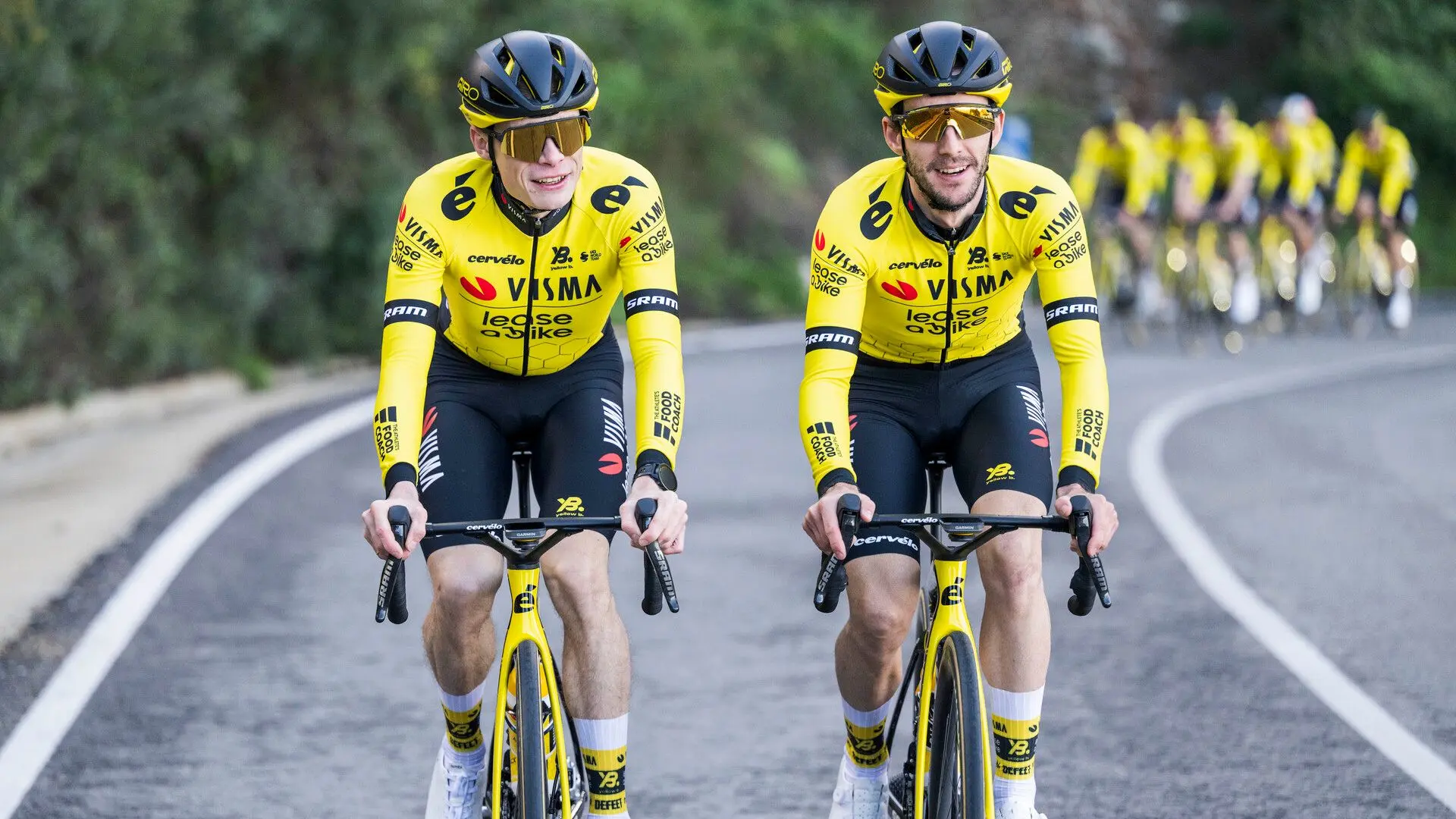
I said that David will go to the Giro in support of Jonas, but that’s not because we want to bring young riders. That’s because we believe that David can play a very big role there. And Wilco Kelderman, for example, will go to the Giro in support of Jonas. We hope that we will go to these races with the best possible team on the start line. And I think when you are able to do well there, that will also give some of the young talented riders a chance. We will see how it goes.
I said that David will go to the Giro in support of Jonas, but that’s not because we want to bring young riders. That’s because we believe that David can play a very big role there. And Wilco Kelderman, for example, will go to the Giro in support of Jonas. We hope that we will go to these races with the best possible team on the start line. And I think when you are able to do well there, that will also give some of the young talented riders a chance. We will see how it goes.
Is the team less expensive than last year?
You have to ask Richard for the actual numbers, but I don’t think so. We have nine new riders, that’s a lot. But when you look at the team, of course you could say it’s unfortunate that we lost riders, for example. But we also signed Matteo on a long-term deal. We signed Brennan on a long-term deal. And these riders are not becoming cheap. I feel that a lot of teams are increasing their budget. When you go on the market and you search for new signings, you notice that it’s more difficult, because there’s more money coming into the WorldTour and there are big teams with a lot of money.
You have to ask Richard for the actual numbers, but I don’t think so. We have nine new riders, that’s a lot. But when you look at the team, of course you could say it’s unfortunate that we lost riders, for example. But we also signed Matteo on a long-term deal. We signed Brennan on a long-term deal. And these riders are not becoming cheap. I feel that a lot of teams are increasing their budget. When you go on the market and you search for new signings, you notice that it’s more difficult, because there’s more money coming into the WorldTour and there are big teams with a lot of money.
Does that extra money in the WorldTour make recruitment harder?
I don’t know. There’s no secret that there’s more budget coming into the WorldTour and a lot of big teams with a lot of money. On the other hand, when I look at our philosophy, where we’ve been the most successful in the past, for me that is absolutely with signing good riders who are not world class yet. We signed Jonas, nobody knew him. We signed Sepp as a very unknown rider. Even guys like Christophe, like Wout, like Matteo, they were not superstars when we signed them. We signed riders that we have the ambition to make better and to help them unleash their full potential. In that light, there are no guarantees, but we signed a few riders this year that we absolutely believe can make big steps with us. When we look to the past, this is where we were the most successful, and it is part of our philosophy. That’s where we want to go.
I don’t know. There’s no secret that there’s more budget coming into the WorldTour and a lot of big teams with a lot of money. On the other hand, when I look at our philosophy, where we’ve been the most successful in the past, for me that is absolutely with signing good riders who are not world class yet. We signed Jonas, nobody knew him. We signed Sepp as a very unknown rider. Even guys like Christophe, like Wout, like Matteo, they were not superstars when we signed them. We signed riders that we have the ambition to make better and to help them unleash their full potential. In that light, there are no guarantees, but we signed a few riders this year that we absolutely believe can make big steps with us. When we look to the past, this is where we were the most successful, and it is part of our philosophy. That’s where we want to go.
With older signings as well as younger ones, is it still about finding unfulfilled potential?
Yeah, absolutely. Certainly when you talk about a rider like Filippo, who spent a lot of years in a very small team, and when you actually look up his results, you will probably be pretty surprised. He was also under the radar for me, but luckily the younger people that now work together noticed him. There are certainly riders that we believe, in our structure and our team, can make the next big step, and these guys are certainly in there. With Bruno, maybe it’s a bit of a different story, because there we see somebody with a lot of experience. He already comes from a good team, but we saw that he can solve a lot of things. He will most likely not be a big winner, but certainly he will be somebody who will be very important for the team.
Yeah, absolutely. Certainly when you talk about a rider like Filippo, who spent a lot of years in a very small team, and when you actually look up his results, you will probably be pretty surprised. He was also under the radar for me, but luckily the younger people that now work together noticed him. There are certainly riders that we believe, in our structure and our team, can make the next big step, and these guys are certainly in there. With Bruno, maybe it’s a bit of a different story, because there we see somebody with a lot of experience. He already comes from a good team, but we saw that he can solve a lot of things. He will most likely not be a big winner, but certainly he will be somebody who will be very important for the team.
Is it difficult to keep the team culture with so much turnover?
No, I wouldn’t say so. I don’t think it’s a Dutch culture. If you have a lot of turnover, of course you also need the help of the more experienced riders to bring in our culture and make sure the new guys understand how we want to work and how we go forward. For me it’s not a nationality issue. I think we are a very open team and everybody works well with each other. But with a lot of new people, not only riders but also staff, it’s always a continuous challenge to bring people into our culture, because that’s very important for us.
No, I wouldn’t say so. I don’t think it’s a Dutch culture. If you have a lot of turnover, of course you also need the help of the more experienced riders to bring in our culture and make sure the new guys understand how we want to work and how we go forward. For me it’s not a nationality issue. I think we are a very open team and everybody works well with each other. But with a lot of new people, not only riders but also staff, it’s always a continuous challenge to bring people into our culture, because that’s very important for us.
Do you think changing programmes helps prevent burnout, and was that part of backing the Giro Tour double?
For Jonas, we saw him here, he’s very relaxed, he’s very happy, he’s really looking forward to the season, and for me that does play a role with the rider. Also with Wout, we do now a different approach to the classics. It’s not because we didn’t win Flanders and Roubaix in recent years and we say now, oh, this is not working, we have to do something else. But I think for every rider, every once in a while, to change stuff and change the approach that works really well gives them extra and new motivation, and that was part of why we were fully behind going for the Giro Tour double with Jonas, because we also saw how much energy and motivation that gives to him. You cannot put that in numbers, you cannot say that gains him 15 watts or gives him 20 watts extra, but certainly it plays a very big role.
For Jonas, we saw him here, he’s very relaxed, he’s very happy, he’s really looking forward to the season, and for me that does play a role with the rider. Also with Wout, we do now a different approach to the classics. It’s not because we didn’t win Flanders and Roubaix in recent years and we say now, oh, this is not working, we have to do something else. But I think for every rider, every once in a while, to change stuff and change the approach that works really well gives them extra and new motivation, and that was part of why we were fully behind going for the Giro Tour double with Jonas, because we also saw how much energy and motivation that gives to him. You cannot put that in numbers, you cannot say that gains him 15 watts or gives him 20 watts extra, but certainly it plays a very big role.
Is early retirement something you talk about more now in cycling?
I think in general, riders get younger and younger when they start performing, and they will probably also get younger and younger when they stop. It’s a sport where you have to make a lot of sacrifices, and when you’re not motivated anymore, then it becomes hard to do it. Even if you earn a lot of money, if you’re not motivated anymore to wake up every morning to train, to watch your diet, to weigh every day, then it becomes complicated.
I think in general, riders get younger and younger when they start performing, and they will probably also get younger and younger when they stop. It’s a sport where you have to make a lot of sacrifices, and when you’re not motivated anymore, then it becomes hard to do it. Even if you earn a lot of money, if you’re not motivated anymore to wake up every morning to train, to watch your diet, to weigh every day, then it becomes complicated.
Is the Giro Tour plan for Jonas data-driven?
Yes, we believe that with the Giro in his legs, he can be in even better shape in the Tour de France. You have the classical approach of doing an altitude camp, going to the Dauphiné, then another altitude camp going to the Tour. We proved that it works. But to give him extra motivation and to give us new challenges, we absolutely believe he can be even better by going to the Giro. But there are more variables. We cannot control circumstances in the Giro in the same way.
Yes, we believe that with the Giro in his legs, he can be in even better shape in the Tour de France. You have the classical approach of doing an altitude camp, going to the Dauphiné, then another altitude camp going to the Tour. We proved that it works. But to give him extra motivation and to give us new challenges, we absolutely believe he can be even better by going to the Giro. But there are more variables. We cannot control circumstances in the Giro in the same way.
Is that based on data, or more on feeling?
No, it’s data-driven. Of course we can compare. We can compare Jonas when he did the Tour and then the Worlds afterwards. We can compare with other riders, how they came out of the Giro and how they went into the Tour. But cycling is not an exact science. We cannot say, OK, when Jonas goes to the Giro and this is the effort we expect there, then he will be in this shape in the Tour. It is data-driven for as much as it can be done.
No, it’s data-driven. Of course we can compare. We can compare Jonas when he did the Tour and then the Worlds afterwards. We can compare with other riders, how they came out of the Giro and how they went into the Tour. But cycling is not an exact science. We cannot say, OK, when Jonas goes to the Giro and this is the effort we expect there, then he will be in this shape in the Tour. It is data-driven for as much as it can be done.
Is adding Strade Bianche and Milan San Remo for Wout driven by the same thinking?
Yeah, to a certain extent. One part is that we, as a team, thought about how we want to approach the year. Our mission is to win the biggest races and be the best team in the world. Then we also have to be competitive at the biggest races, and the Monuments are certainly some of them. Some decisions in recent years were very conscious because we had other goals, but now we want to make these races more important, and that was part of it. The other part is fresh motivation. It’s not that we do this now because we conclude that altitude in March did not work for the classics. But changing the programme again a little bit, including Strade, a race he really loves, including San Remo, gives fresh motivation. And if we can compete for victory with Wout in one of these races, it would be a big thing. That doesn’t take away that he can still be in top shape in Flanders and Roubaix.
Yeah, to a certain extent. One part is that we, as a team, thought about how we want to approach the year. Our mission is to win the biggest races and be the best team in the world. Then we also have to be competitive at the biggest races, and the Monuments are certainly some of them. Some decisions in recent years were very conscious because we had other goals, but now we want to make these races more important, and that was part of it. The other part is fresh motivation. It’s not that we do this now because we conclude that altitude in March did not work for the classics. But changing the programme again a little bit, including Strade, a race he really loves, including San Remo, gives fresh motivation. And if we can compete for victory with Wout in one of these races, it would be a big thing. That doesn’t take away that he can still be in top shape in Flanders and Roubaix.
Were you hesitant to change Jonas’ schedule, given the old Tour formula had worked?
Yeah, it’s always complicated. When it works out, everything is perfect. When it doesn’t work out, people can say they knew it before. We have our own ideas, but we really want to talk, especially with the main riders, in our process of coming to a year plan. Ideally the ambition of the team is also the ambition of the rider, because it gives an extra effect. Certainly we did listen and made some hard decisions. In the end, it can be more risky, but every once in a while it’s also good to adapt the plans a little bit and not do exactly the same as the last two, three, four years.
Yeah, it’s always complicated. When it works out, everything is perfect. When it doesn’t work out, people can say they knew it before. We have our own ideas, but we really want to talk, especially with the main riders, in our process of coming to a year plan. Ideally the ambition of the team is also the ambition of the rider, because it gives an extra effect. Certainly we did listen and made some hard decisions. In the end, it can be more risky, but every once in a while it’s also good to adapt the plans a little bit and not do exactly the same as the last two, three, four years.
Were you more impressed with Jonas in the Tour or the Vuelta, given how he handled the quick turnaround?
Jonas showed before, in 2023, when he did the Tour Vuelta combination, that he’s capable of doing it. He was on a very high level in the Tour. Back in the Vuelta this year, he actually had quite a lot of health issues during the Vuelta. Nevertheless, he was on a high level during the whole race, but certainly not at his absolute best. He recovered really well and started really good. We were not surprised, but this is another part of why we see it is possible for Jonas to recover from a Grand Tour in a short period of time and prepare for the next one.
Jonas showed before, in 2023, when he did the Tour Vuelta combination, that he’s capable of doing it. He was on a very high level in the Tour. Back in the Vuelta this year, he actually had quite a lot of health issues during the Vuelta. Nevertheless, he was on a high level during the whole race, but certainly not at his absolute best. He recovered really well and started really good. We were not surprised, but this is another part of why we see it is possible for Jonas to recover from a Grand Tour in a short period of time and prepare for the next one.
Kieran WoodDeputy Editor-in-Chief
Kieran Wood is a sports journalist based in Wales and has been active in journalism since 2022. He regularly contributes to DartsNews.com and CyclingUpToDate.com, where he covers professional cycling and darts. In cycling, his work includes liveblogs from major races, including the Tour de France, the Giro d’Italia, and La Vuelta a España, alongside race reports and analysis. He has also conducted interviews with professional riders.
His reporting spans the full racing calendar, from one-day classics to stage races, with a focus on accurate, real-time coverage and clear contextual analysis. For statistics, results, and historical context, he regularly uses resources such as ProCyclingStats. To support reporting on rider activity and training context where relevant, he also references Strava.
In his work, Kieran places strong emphasis on careful sourcing, editorial accuracy, and updating articles as new, verified information becomes available.
claps 1visitors 1
Just in
Popular news
Latest comments
- He won in exactly the same way as others. By being the fastest to complete the stages.mobk08-10-2026
- Very surprised del toro couldn't beat everyone here against lesser competition. He's well on his way to being top 5 in the worldbruins3008-10-2026
- Being the best rider left in the race is pretty much the only way to win in any edition, surely? Seems reductive to say "they only won because the entire peloton wasn't as absolutely stacked as it could've been" - you can only beat who is in front of you.wrsty08-10-2026
- I’m sorry but generally the coverage on your site is first class but this incident highlights something I just don’t get with cycling journalism. This accident should never have been allowed to happen, it comes uncomfortably close to the Finlay Tarling tragedy and two other incidents took place within days of this. I checked all of the cycling websites and you all put out basically the same story. Pidcock gave journalists the perfect opening to blow this sky high, what has the UCI got to say? What is Adam Hansen doing? What do the organisers say? Nothing, you all trot out the same easy quotes taken from Pidcocks interview after the race but do nothing to follow it up. I see it time and time again, journalists taking the easy way out but being outraged when it happens again as it surely will. Riders can’t do this but journalists should be independent and should be able to raise these uncomfortable questions but cyclinguptodate and every other on line publication prefer to take the easy way out. That’s the real tragedy here.Paul53108-10-2026
- Happy to help :-)Mistermaumau08-10-2026
- Well, ok but, it’s also a structural, team, budgeting, direction and all sorts of other issueMistermaumau08-10-2026
- I wouldn’t call it an analogy but maybe his criticism is a little unfair. On the other hand, the fact Cicco made a public affair out of it despite having received all the explanations and proof makes me feel he now deserves being criticised for not accepting there is nothing to discuss.Mistermaumau08-10-2026
- Much as I like him (one of my favourites), I do want to attract a little attention to the coincidence of his recent performances in the current context. Not the first time a rider improves noticeably when there’s a job interview to prepare. In the same lighthearted humour of his, i hope the UCI will let him wear it at home as the rules quite strictly state you can only wear it during participation in the discipline you won in, and we all know how capable they are of interpreting rule interpretation ;-) Also, if it’s going to be retirement (please not), I wouldn’t call that an agreement as somebody will probably feel they didn’t get what they wanted.Mistermaumau08-10-2026
- Agreed. There used to be a team willing to pay though. I take all these figures (that vary enormously according to who is publishing) with handfuls of salt. We don’t know how salaries are treated (especially between a UK employer and Andorran resident), we don’t know how numbers are derived and from where, if deductions have been taken into consideration, etc. but if he returns to Colombia, he’s going to need quite a bit in protection money.Mistermaumau08-10-2026
- And another one gone, another one gone, another one bites the dust. Ah gonna get you too…Mistermaumau08-10-2026
Loading
Write a comment