Pogacar-esque at 19! Paul Seixas matches Slovenian superstar’s European Championship climb in Ardèche solo
Cycling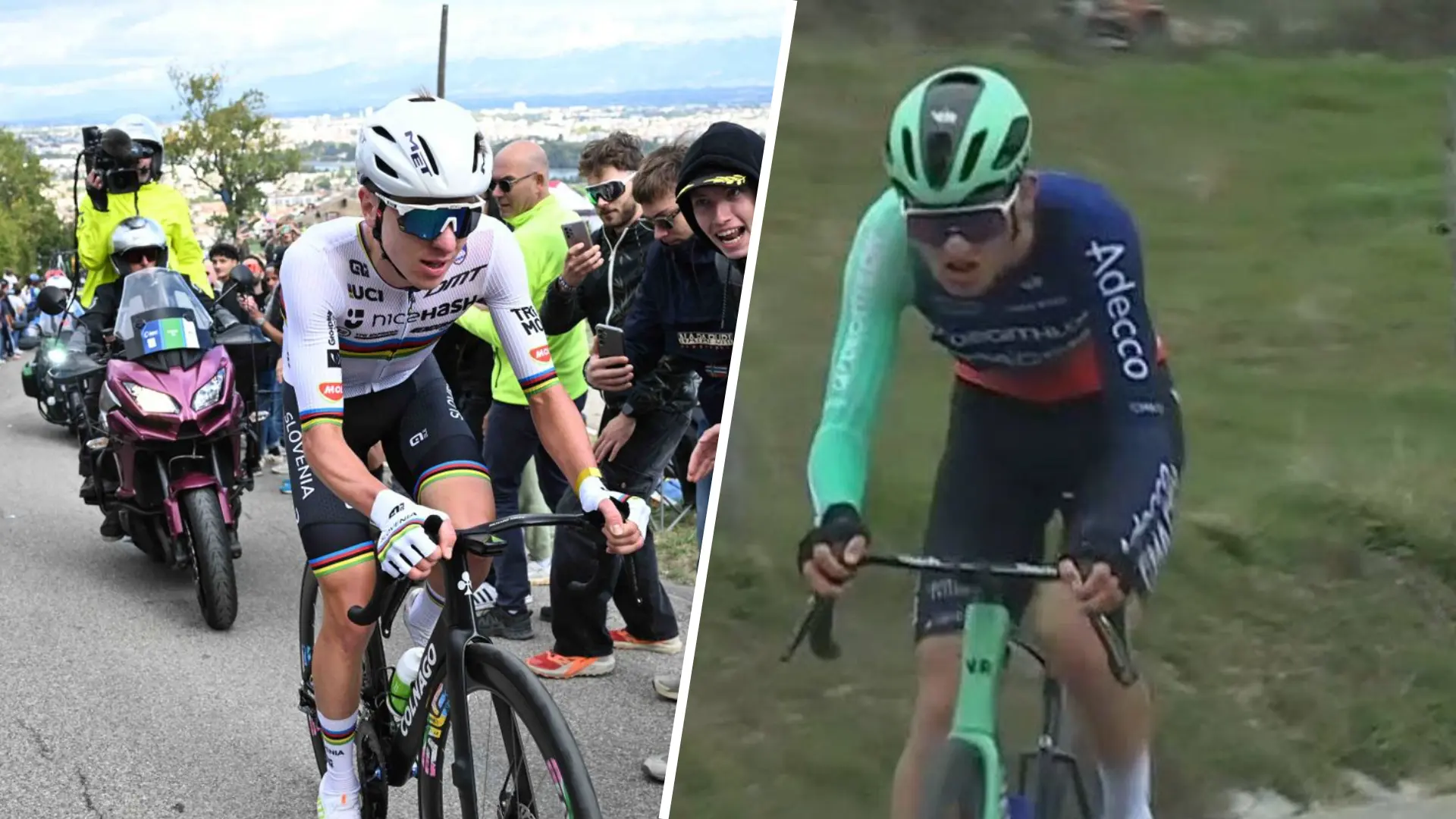
The decisive moment of the 2026 Faun-Ardeche Classic came, once again, on the Côte de Saint Romain de Lerps. That alone would not have been unusual. What happened on it was.
Paul Seixas covered the 6.9-kilometre climb at 7.2 per cent in 16 minutes and 28 seconds during his race-winning solo.
That is the exact same time recorded by Tadej Pogacar on the same ascent during his victorious ride at the 2025 European Championships.
Same climb. Same gradient. Same stopping of the watch.
The climb that shapes races
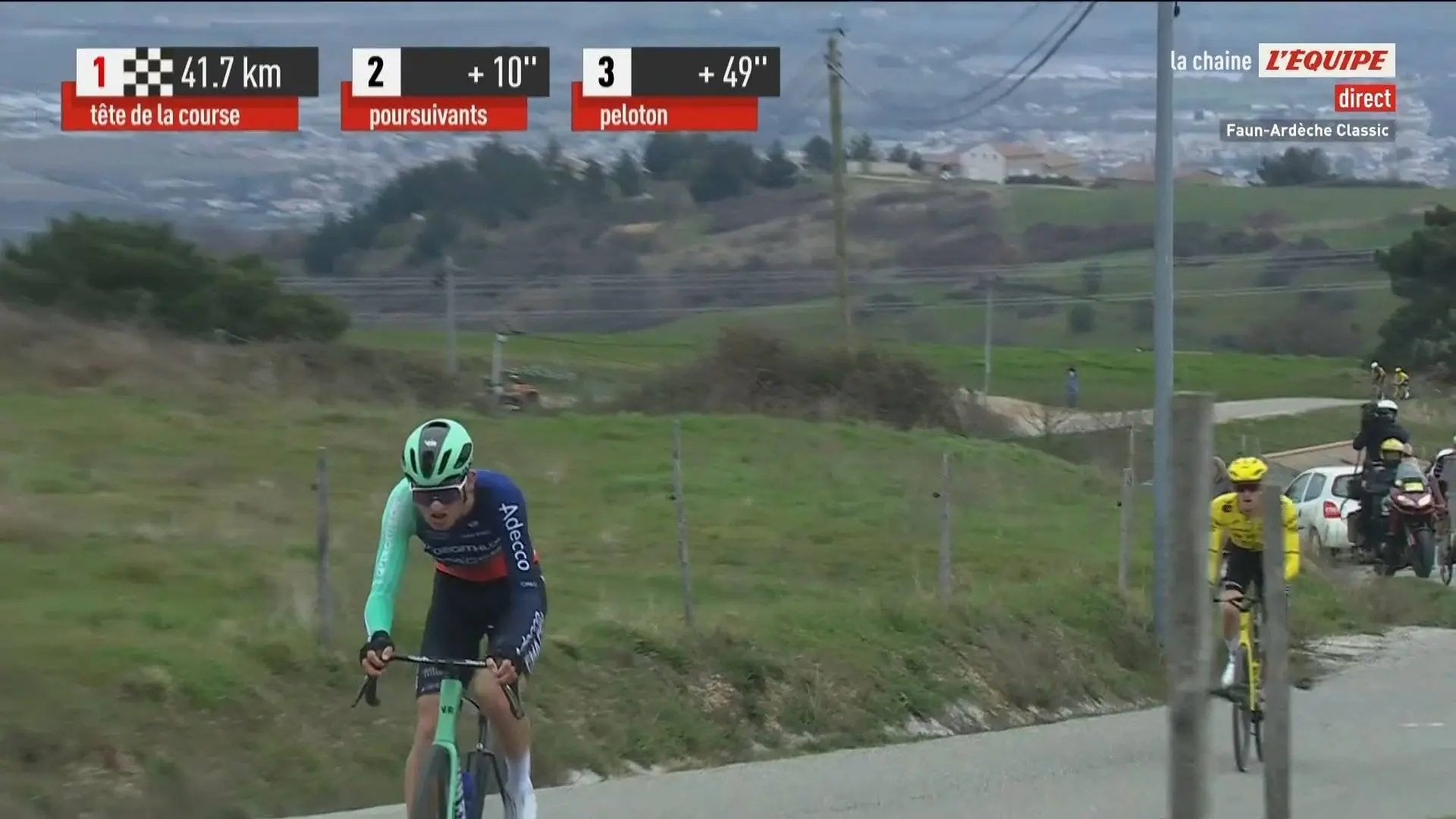
Saint Romain de Lerps is not a decorative feature of this circuit. In 2025, it was the launchpad for Pogacar’s European title, the point where the race split and the strongest rider imposed himself. In 2026, it again served as the trigger, this time for a 19-year-old who sensed weakness beside him and committed.
When the early break was caught with 41 kilometres remaining in Ardèche, Seixas accelerated on this climb and immediately distanced Matteo Jorgenson. The attack began as a tactical read. The data now shows it was backed by elite-level climbing power.
Matching Pogacar’s benchmark on the same road gives that move a different weight.

Seixas finished alongside Pogacar on the final podium of the 2025 European Championship
The internal comparison may be even more revealing
The external comparison to Pogacar grabs attention. The internal comparison to Seixas’ own past performance is arguably more telling.
At the 2025 European Championships, on this exact climb, Seixas was 35 seconds slower than the time he recorded on Saturday. One winter later, he erased that gap entirely.
That is not marginal improvement. On a climb of this length and gradient, 35 seconds represents a substantial performance leap. It suggests not just better positioning or race dynamics, but a meaningful physiological progression.
7.46 watts per kilogram at 19
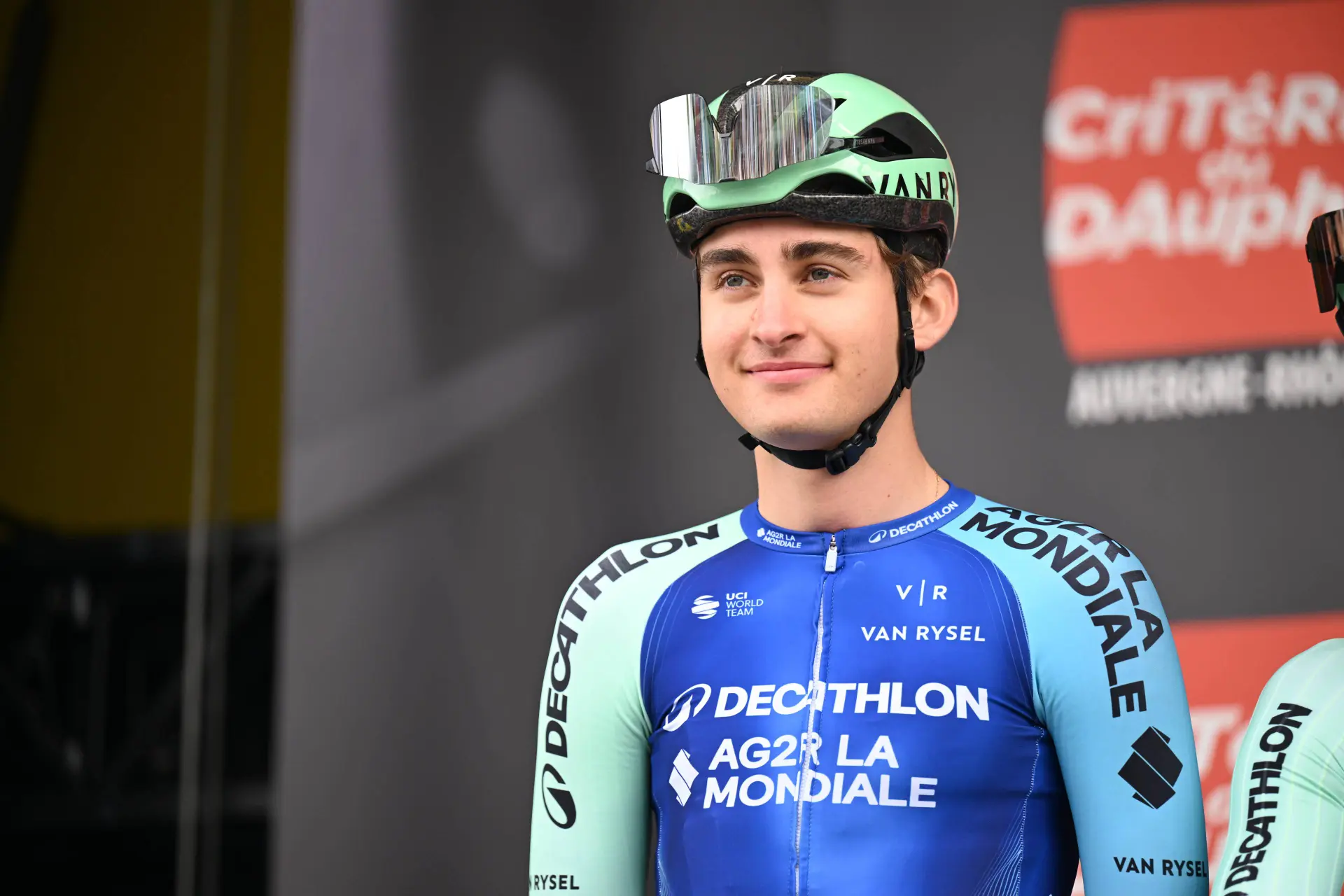
Estimated figures from the ascent point to an average of 7.46 watts per kilogram.
Sustaining that level of output for over 16 minutes places the effort firmly in the range normally associated with established Grand Tour contenders in peak condition. For a rider aged 19 years and 157 days, it moves the performance beyond promising and into exceptional territory.
Context matters. This was not a fresh effort in the opening kilometres of a stage race. It came deep into a 188.5 kilometre one-day race with repeated climbs already in the legs, and it preceded a solo of more than 40 kilometres to the finish.
The climb did not win Seixas the race on its own. But it created the separation that allowed him to build a minute advantage and fracture the chase behind into multiple groups.
A benchmark, not a coronation
Matching Pogacar’s time on Saint Romain de Lerps does not make Seixas the Slovenian’s equal. It does, however, anchor his performance to a known elite benchmark on a climb that has already defined a major championship.
In 2025, Pogacar used that ascent to launch a long-range attack en route to European gold. In 2026, Seixas used it to drop one of the peloton’s most established names and ride to a commanding victory.
For now, the headline is simple: on the climb that crowned Pogacar, a 19-year-old matched the clock.
What comes next will determine whether this was a singular performance or the first clear data point of something much bigger.

Kieran WoodDeputy Editor-in-Chief
Kieran Wood is a sports journalist based in Wales and has been active in journalism since 2022. He regularly contributes to DartsNews.com and CyclingUpToDate.com, where he covers professional cycling and darts. In cycling, his work includes liveblogs from major races, including the Tour de France, the Giro d’Italia, and La Vuelta a España, alongside race reports and analysis. He has also conducted interviews with professional riders.
His reporting spans the full racing calendar, from one-day classics to stage races, with a focus on accurate, real-time coverage and clear contextual analysis. For statistics, results, and historical context, he regularly uses resources such as ProCyclingStats. To support reporting on rider activity and training context where relevant, he also references Strava.
In his work, Kieran places strong emphasis on careful sourcing, editorial accuracy, and updating articles as new, verified information becomes available.
claps 0visitors 0
Just in
Popular news

Latest comments
- C’mon, don’t follow in Horner’s footsteps. At least he had the courage to post HIS prediction ahead, I didn’t see many others disagreeing or claiming it was ridiculous.Mistermaumau10-10-2026
- @SLO: Your ridiculously rude language about riders makes it really hard to read your consistently condescending comments. "BS losers," how is it ok to talk about people like that? Also, you truly sound like you do not understand that this is a team sport, where del Toro rides for his leader and therefore doesn't follow his attacks. We can all agree that we are watching a once in a generation (really, a once in a century) rider in Pogačar, and that's great, but come on, you don't have to be a jerk when it comes to other riders. It's clear that I prefer to praise the positive in what I see, mostly because I am in awe of what these humans can do (including the ones who don't win), but your negativity about anyone but your idol is just so very very exhausting.RidesHills10-10-2026
- Huh??? You’ve obviously forgotten all the contrary you’ve been trying to sell us the last weeks. Shall I dig some out for you?Mistermaumau10-10-2026
- Doesn’t sound like it from his post-race interview. That old record you’re still playing is starting to jump a bit too often.Mistermaumau10-10-2026
- Sorry but who is this guy? If HE doesn’t know that « much » about Seixas by now, I’m recalibrating my opinion of his finish line questioning. As for PS, the most amazing thing about him so far is not what he’s won or almost won at this age, although that’s already phenomenal, it’s how consistent, numerous and long this seasons’ results have been. I don’t think there’s ever been a 19/20 year old quite as developed. Of course, you can’t expect development at this level to go backwards in time but it’s amazing to witness a rider you assume won’t be able to keep things up forever prove you wrong.Mistermaumau10-10-2026
- I agree, it was a good feeling to end the season this way... and only hope the knee injury held Del Toro back. Some how I have a feeling it wasn't just that... I wish my feelings are wrong.PogiSloFans10-10-2026
- Seixas is an amazing rider. Remco disappointed. Del Toro should rather have withdrawn if he had an injury linked to over-training. Anyway, a satisfying end to the season.Hills3310-10-2026
- History books won't care who had good legs or bad legs, or who did or didn't get laid last night; what the history books say is that Del Toro and Remco are two losers, while Seixas is a Monument winner at the age of 20. Let's not forget who was the only one that could follow Pogi in Strade Bianche. Paul Seixas, not Del Toro. Ad acta!!!PogiSloFans10-10-2026
- History books don't care who had good legs or bad legs, or who did or didn't get laid last night; what the history books say is that Del Toro and Remco are two BS losers, while Seixas is a Monument winner at the age of 20. Let's not forget who was the only one that could follow Pogi in Strade Bianche. Paul Seixas, not Del Toro.PogiSloFans10-10-2026
- Del Toro has a knee injury.Hills3310-10-2026
Loading

⏱️ Paul Seixas climbed today Cote de Saint Romain de Lerps (6,9 km@7,2%) in 16 min 28 sec, EXACTLY SAME TIME AS TADEJ POGACAR climbing record from last year! Paul went 35 sec faster today than he did at Euro Champs. Unreal w/kg for a 19-year old. #BDA26
1 Comments