“You have to put the age factor aside – he’s a UFO” – Paul Seixas’ rapid ascent through the eyes of a Decathlon teammate
Cycling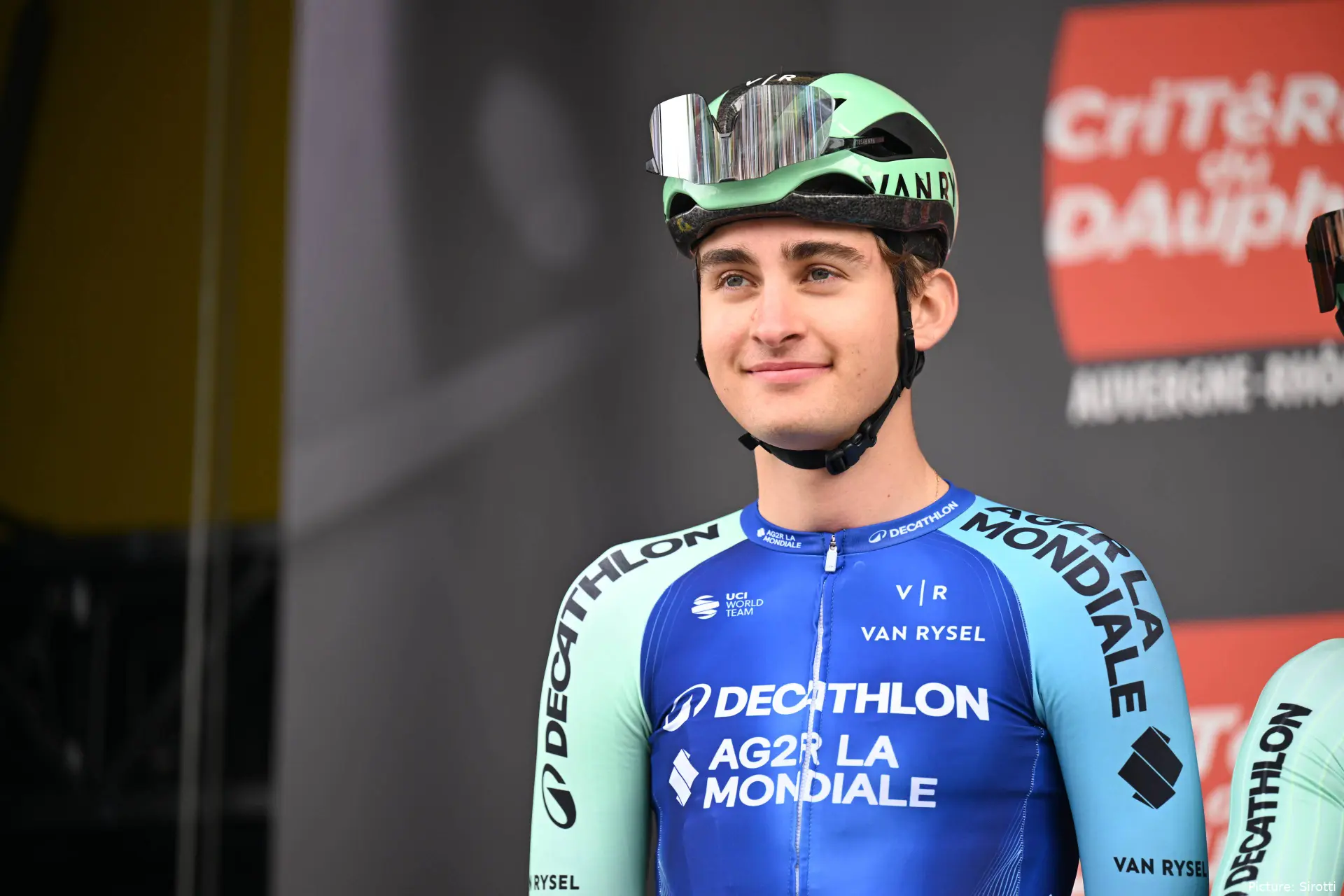
Within Decathlon CMA CGM, the discussion around Paul Seixas has shifted noticeably in the space of twelve months.
Last season, he was a gifted support rider learning the demands of the WorldTour. This winter, he trained as a protected leader, arrived at the Volta ao Algarve ready to race for the general classification, won a summit finish and delivered a time trial performance that placed him within seconds of established specialists.
That progression has altered the internal lens through which he is viewed.
Speaking on Eurosport’s Bistrot Velo, teammate Paul Lapeira made it clear that Seixas is no longer being assessed on age or potential curves. “You have to put the age factor aside, because he’s a UFO.”
Continuity, not a breakthrough
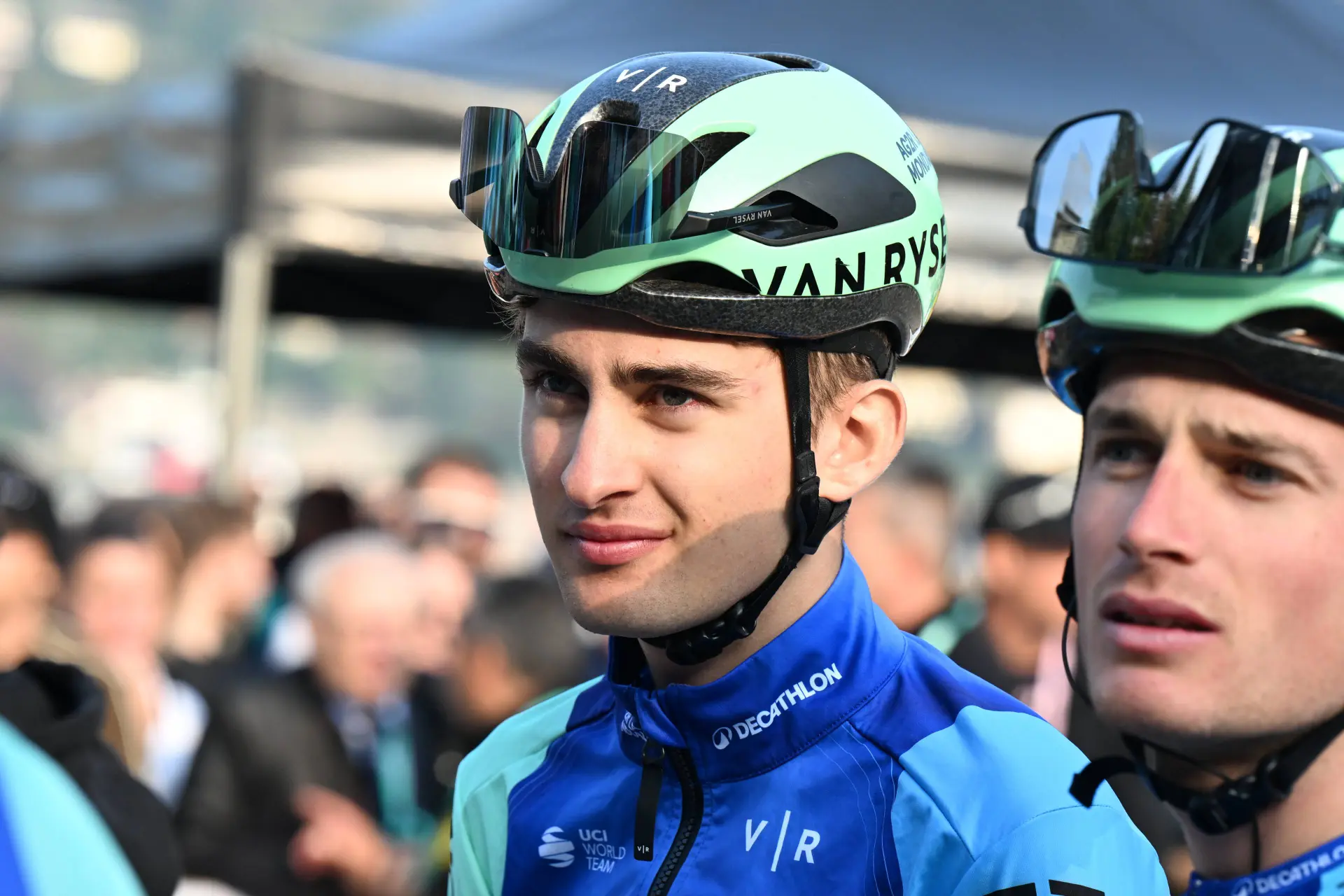
The outside narrative has understandably focused on the spectacle of his ride at the Volta ao Algarve. A summit victory on Alto da Foia, second overall behind Juan Ayuso, and a time trial just 13 seconds slower than a specialist such as Filippo Ganna. For many, it felt like a breakout.
Lapeira does not see it that way. “When you consider his age, of course, you’re surprised. But when you know his talent and the expectations on his shoulders, you’re not surprised, because it’s what we expect from him,” he explained. “What he did in the Algarve is simply a continuation.”
That word – continuation – is key.
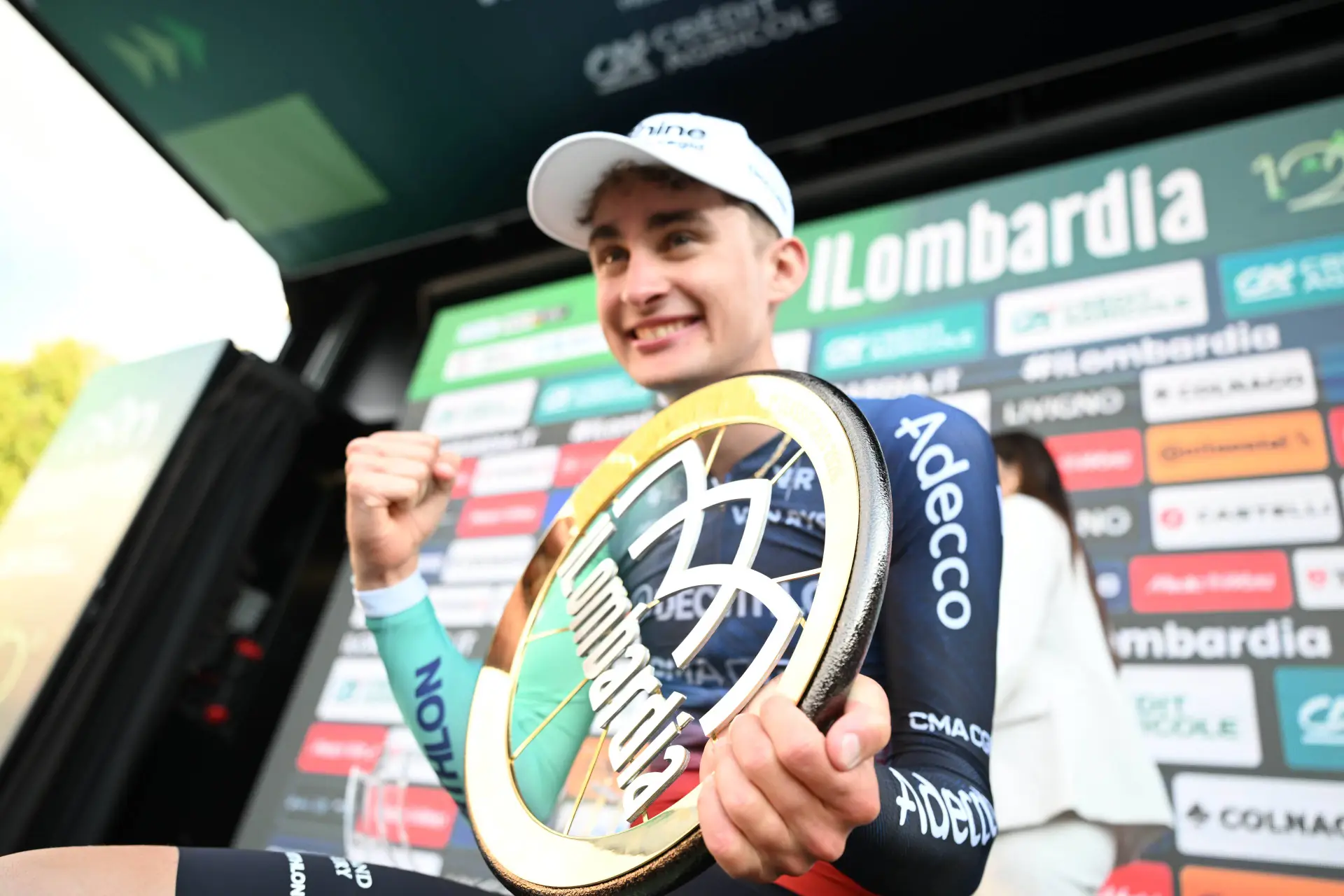
Seixas closed last season with a European Championships podium and a top ten at Il Lombardia. He began this one by immediately racing for overall victory in his first outing of 2026. The trajectory has not stalled. It has not dipped. It has accelerated.
And it has done so under increasing responsibility.

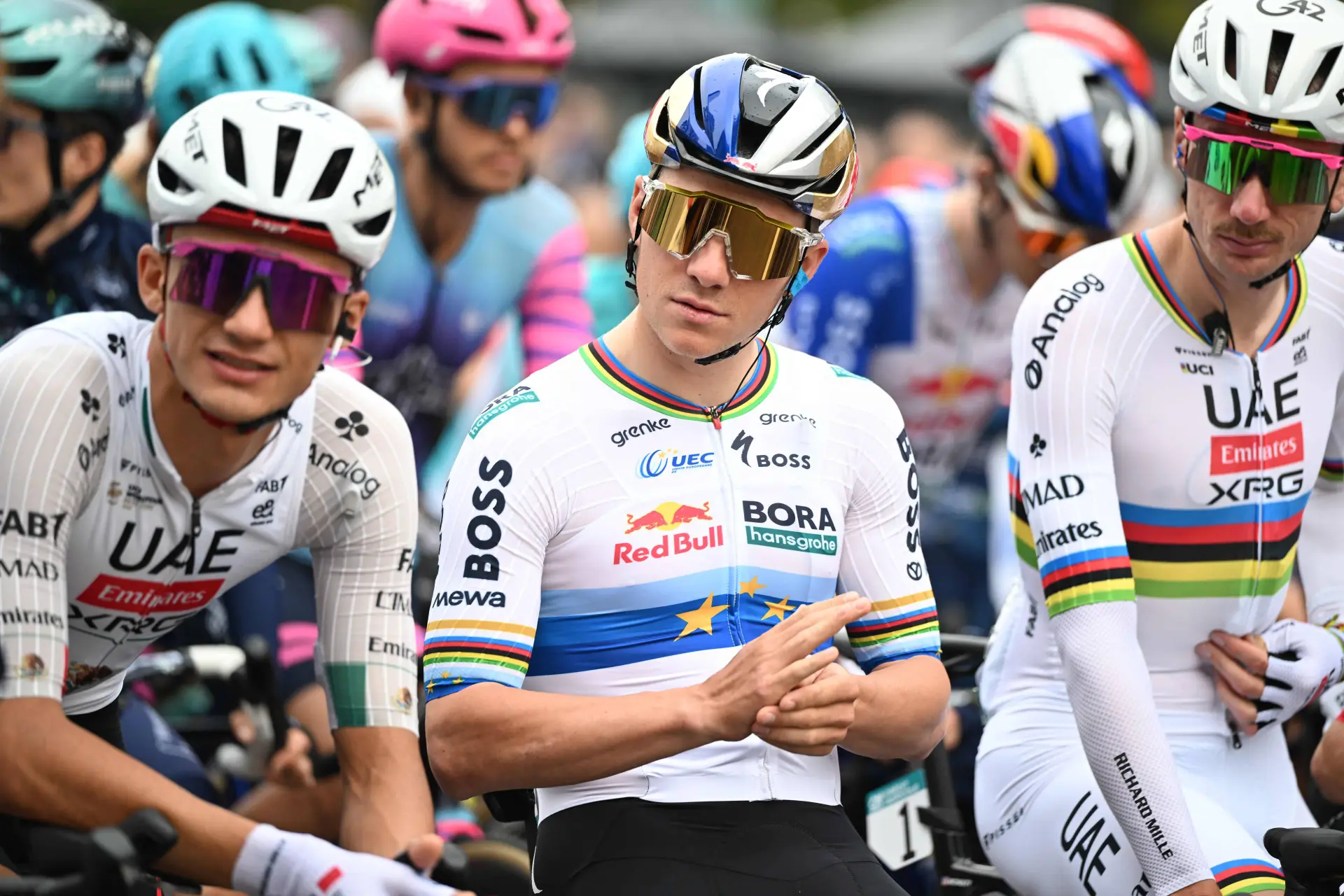
Seixas podiumed at the 2025 European Championships alongside Remco Evenepoel and Tadej Pogacar
A leader at 19
Unlike 12 months ago, Seixas is no longer just an ambitious support rider. He is a protected figure in selected races, even with experienced winners such as Lapeira in the same squad.
“There is a co-leadership planned when we are racing together with Paul Seixas,” said Lapeira, the 2024 French national champion. “I will have my chance. The team manages that quite well. It doesn’t put astronomical pressure on Paul.”
That final point is revealing. The pressure is obvious from the outside. Inside the team, it is being managed rather than amplified.
Seixas’ winter preparation underlined that shift in status. He spent months at altitude in Sierra Nevada, even speaking openly about not seeing his parents or girlfriend for two months in order to focus fully on performance. The work translated directly into his Algarve level, particularly in the time trial, where optimisation around position, equipment and detail played a role alongside raw climbing ability.
Lapeira was quick to highlight that structure.
“His result in the time trial obviously comes largely from his physical condition, because without the legs he has, he would never achieve that placing,” he said. “But there is also all the optimisation work around him, everything done around the time trial within the team – the bike, the clothing… All those small details added together mean that in the end, you get the kind of good results he is capable of.”
The ceiling is still moving
For Decathlon, Seixas is not just a prodigy to protect but a long-term project to build around. Recruitment has strengthened the squad, but the investment in infrastructure appears just as significant.
“It’s good because we are putting every possible chance on the riders’ side,” Lapeira added. “For the future, the team is capable of providing him with a lot to take him even higher. I think he is in the right place.”
That assessment carries more weight than external hype.
Seixas’ rise has been steady rather than explosive, but the numbers and the results are beginning to force a shift in tone. When a 19-year-old is competitive in the mountains, competitive against time trial specialists, and entrusted with leadership without visible strain, the conversation changes.
Inside Decathlon, it already has.
Age, as Lapeira bluntly put it, is no longer the defining metric.

Kieran WoodDeputy Editor-in-Chief
Kieran Wood is a sports journalist based in Wales and has been active in journalism since 2022. He regularly contributes to DartsNews.com and CyclingUpToDate.com, where he covers professional cycling and darts. In cycling, his work includes liveblogs from major races, including the Tour de France, the Giro d’Italia, and La Vuelta a España, alongside race reports and analysis. He has also conducted interviews with professional riders.
His reporting spans the full racing calendar, from one-day classics to stage races, with a focus on accurate, real-time coverage and clear contextual analysis. For statistics, results, and historical context, he regularly uses resources such as ProCyclingStats. To support reporting on rider activity and training context where relevant, he also references Strava.
In his work, Kieran places strong emphasis on careful sourcing, editorial accuracy, and updating articles as new, verified information becomes available.
claps 0visitors 0
Just in


Popular news
Latest comments
- Well if UAE the best team in history comes knocking their the only team in the world who can get Seixas. Seixas will become unbeatable and incredible there. Lets see if he stays at decathlon or goes to UAE.miguel11-10-2026
- Pogi would have won the Vuelta at around 10 min. But it would have been boring for fools like you. Capish?PogiSloFans11-10-2026
- Rather than me describing the technology at length on here, If you google. Line-scan cameras. They are also sometimes called Slit-Scan cameras. Either search will fill you in. You can read all about how they. work. Enjoy! Just to be clear the cyclist is saying he wants to see exactly where the digital finish line is in relation to the actual physical finish. At this point we only have the word of the authority that the digital line corresponds to the exact starting edge of the physical finish line. That seems like a reasonable request to me.Prorodsandstuff11-10-2026
- 100% @Jumpyjohn, good point well raised.anonymouscyclist11-10-2026
- The media keep stirring the soup.. or spitting in it
 leedorney11-10-2026
 - Yes, he has won many races... second class races. He isn't the real deal... Seixas is the real deal. Capish?PogiSloFans11-10-2026
- What are you guys talking about? I'm not the one you guys think I am. I'm a Slovenian Pogi fan, that's all... the guy you're talking about is a Croation Ustasha. Capish?PogiSloFans11-10-2026
- It would be epic if Seixas came to UAE. 3/4 of the commentators on this site would stop watching cycling... ha ha ha ha ha ha...PogiSloFans11-10-2026
- UAE's problem is Seixas wants to beat Tadej.Renz11-10-2026
- You are blinded by your infatuation with Pogi. IdT has done crazy good stuff. One of the strongest ever first three years in the peloton. poor showing in his last couple of races btu I don't think he is quite washed up yetmobk11-10-2026
Loading
Write a comment