“Already more than good enough” – Mathieu van der Poel skips Kuurne after Omloop win as Alpecin prioritise control over risk
Cycling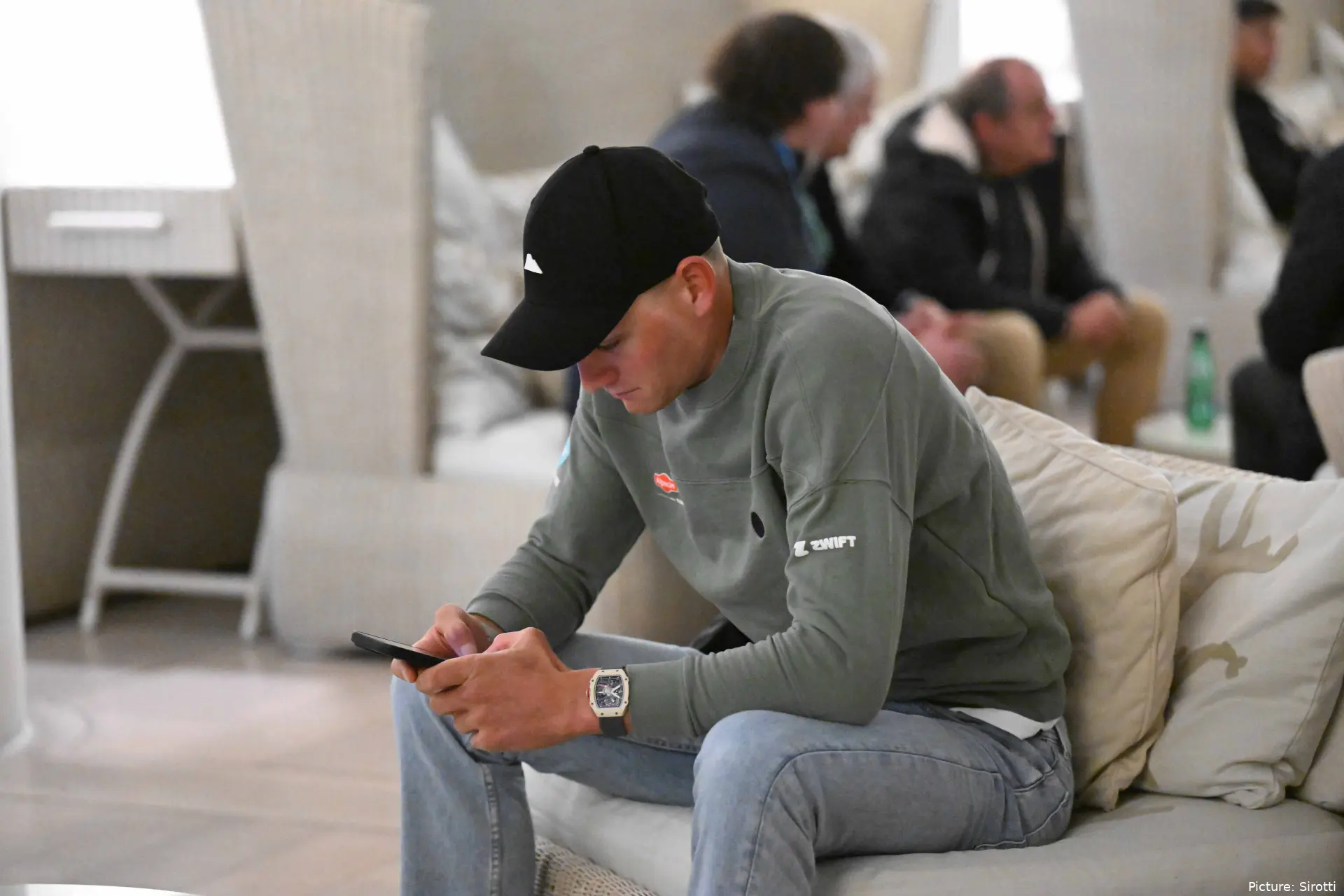
Less than 24 hours after a dominant solo victory at Omloop Het Nieuwsblad, Mathieu van der Poel will not take the start at Kuurne - Bruxelles - Kuurne.
The decision was confirmed by Alpecin–Premier Tech sports director Christoph Roodhooft, who made clear that the call was strategic rather than reactive.
“But especially the course and a few small elements made us decide that Mathieu will not race today,” Roodhooft explained in comments collected by HLN.
Form proven, risk unnecessary
There had been genuine uncertainty on Saturday evening. Van der Poel himself admitted after his Omloop triumph that “nothing has been decided yet” regarding Kuurne, adding that the team would discuss it later on the bus.
By Sunday morning, the calculation had shifted. “Yesterday in the Omloop, Mathieu also showed that he is already more than good enough,” Roodhooft said. “Then in training, there is, for example, less risk of crashing.”
The subtext was clear. After a chaotic, crash-heavy Omloop that left multiple riders hospitalised, there was little to gain and more to risk by doubling up. Van der Poel had already demonstrated sharp form, decisive power on the Molenberg and Muur, and the ability to finish off a race solo in harsh conditions.
With Tirreno–Adriatico looming, restraint made sense.

Controlled build toward Italy
Rather than line up again in Kuurne, Van der Poel will remain in Belgium to train through the coming week. From there, he will travel to Italy to begin Tirreno–Adriatico on Monday, 9 March.
The decision reflects a broader pattern in modern Classics preparation. Winning form in late February is valuable, but protecting it is often more important. After showing he could attack from distance, survive chaos on the Molenberg and ride clear on the Muur, there was no urgent need to prove anything further.
Omloop delivered confirmation. Kuurne was optional.
By stepping back, Alpecin–Premier Tech have chosen control over accumulation and preserved their leader for the bigger objectives that lie ahead.

Kieran WoodDeputy Editor-in-Chief
Kieran Wood is a sports journalist based in Wales and has been active in journalism since 2022. He regularly contributes to DartsNews.com and CyclingUpToDate.com, where he covers professional cycling and darts. In cycling, his work includes liveblogs from major races, including the Tour de France, the Giro d’Italia, and La Vuelta a España, alongside race reports and analysis. He has also conducted interviews with professional riders.
His reporting spans the full racing calendar, from one-day classics to stage races, with a focus on accurate, real-time coverage and clear contextual analysis. For statistics, results, and historical context, he regularly uses resources such as ProCyclingStats. To support reporting on rider activity and training context where relevant, he also references Strava.
In his work, Kieran places strong emphasis on careful sourcing, editorial accuracy, and updating articles as new, verified information becomes available.
claps 2visitors 2
Just in
Popular news
Latest comments
- I made a mistake and already fixed it. Hey twat, thanks.PogiSloFans16-10-2026
- Davide Piganzoli said: "Pogacar looked less brilliant at TDF than usual." We all see how stupid this comment is. What is happening to his brain cells? ... Hey Piganzoli, Tadej Pogačar’s record breaking ascent of Alpe d’Huez was one of the standout performances in the history of the Tour de France. Pantani's 1995 ascent stood for 31 years. Pogi went more than a minute faster. He accelerated near the foot of the climb, despite the leading breakaway being around three and a half minutes ahead. But in your delusional brain Pogi looked less brilliant???? .... Why don't you go find a corner and bang your head against a wall for about 10 minutes. Everyone is making fun of you.PogiSloFans16-10-2026
- MTB WC ? If he doesnt compete maybe allows MvDP to have a crack
 Davide16-10-2026
 - Jonas is declining now. A podium next year would be a good result for him.Renz16-10-2026
- unpredictability is not an issue. Most riders not named Pogi have that. The excuses are and the blaming teammates and other riders for insufficient support and blocking are. if weight is an issue get a nutritionist. If aircon is not working switch rooms. Position yourself or get your teammates and DS to keep reminding you of basic stuff if it is difficult to remember in a long race. Dont whine about other riders not working with you, use tactics yourself or get your DS to develop the tactics. Dont talk about noballs when you yourself have no ballsabstractengineer16-10-2026
- It’s worth remembering that cycling journalism has entered it’s “Shit-Stirring Hot Takes Winter” now in order to keep the clicks and views trickling in.wrsty16-10-2026
- Well that would be a major disappointment. The last two years are the first times I have bothered watching the last day. Maybe at worst it could be the 2nd last day but two classic finishes and then wompWaranga16-10-2026
- Vingegaard was the one showing signs of weakness. He was looking more likely to lose a podium spot or two than to make inroads on Tadej.Papijan16-10-2026
- Disagree with Ardennes, he has never done well there, not even a top 10. Giro Vuelta, avoid the stacked TDF where crashes can derail the rest of the season and even if he avoid that, at best a top 5 is possible. He is 31, no more time left for testing/trying.abstractengineer16-10-2026
- Respectfully disagree. He and the team will want to qualify the result at the Tour against TP, JV, and the other GT specialists who weren't in Spain. And remember, the team is looking for a new title sponsor. Or, at least a co-sponsor. So a run at the TDF would go a long way in securing that! As a fan of the team dating back to the Indurain days, I would love to see it. But I do not think that he can really take it to them in July. But I do think he will try. I do agree that he can do good rides, if not win, in Belgium.coachjulianx16-10-2026
Loading
Write a comment