“People will need to buy a ticket, and be subject to security checks” – Danish legend sees changes coming to cycling after Vuelta protest disruption
Cycling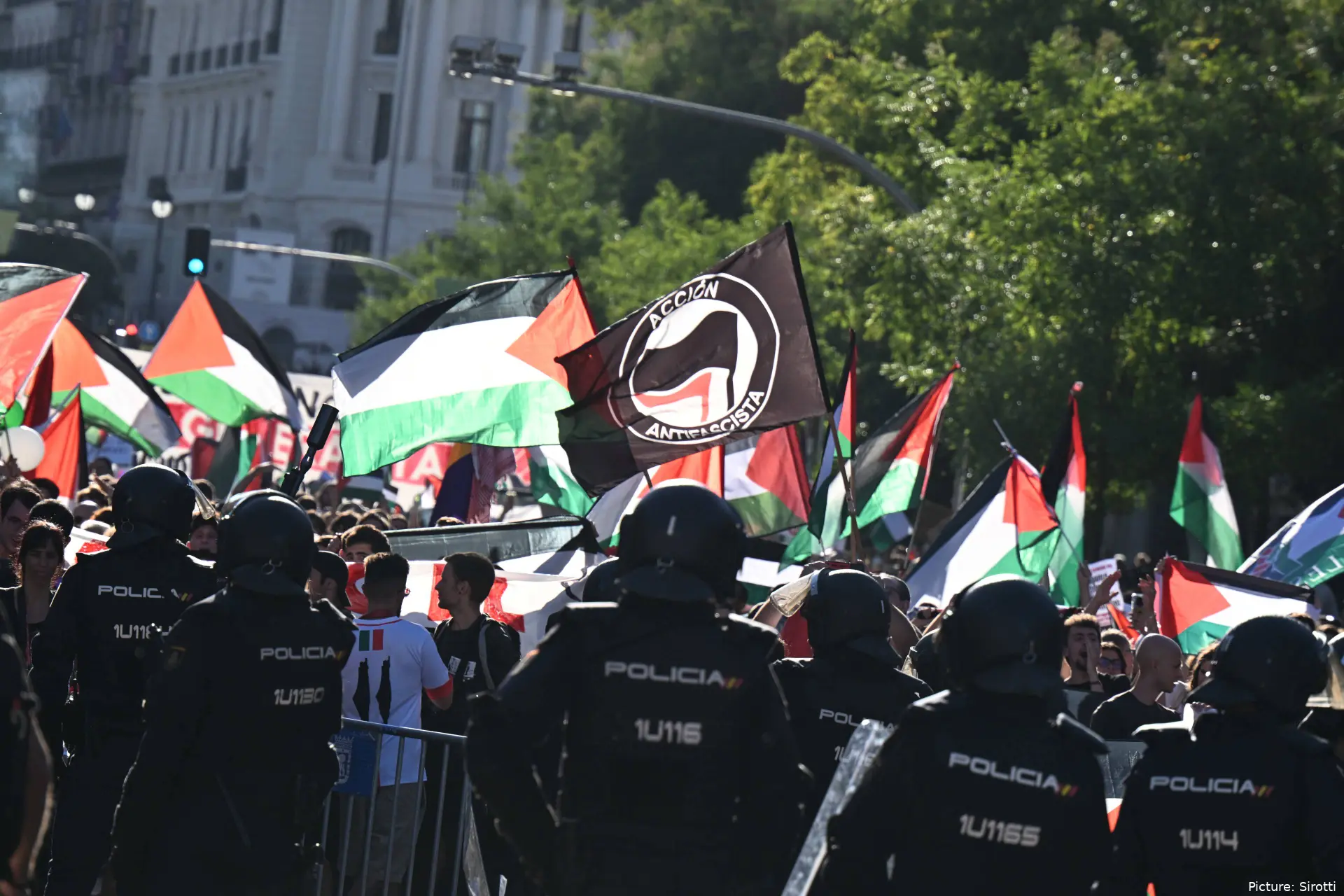
Michael Rasmussen has warned that cycling may be heading for fundamental change after the 2025 Vuelta a Espana was repeatedly disrupted by pro-Palestinian protests — even suggesting a future where roadside access is no longer free.
Speaking on Viaplay, the former Tour de France star — better known as The Chicken — floated the possibility of cycling moving towards closed-circuit formats, with barriers, ticketing, and even security checks akin to stadium events.
“You could end up in situations where it turns into circuit races, where barriers have to be set up at such a distance that it effectively becomes a closed arena,” Rasmussen said. “I’m thinking in very extreme terms here – that people would need to buy a ticket, and like at a stadium, be subject to security checks.”
The remarks reflect growing unease within the sport after demonstrations disrupted no fewer than eight Vuelta stages. While the UCI eventually condemned the protests as “a serious breach of the Olympic Charter and the fundamental principles of sport,” Rasmussen believes cycling’s governing body was too slow to act. “From an official standpoint, some people have stuck their heads in the sand. I think, for instance, that the UCI has been enormously passive throughout this saga,” he argued.
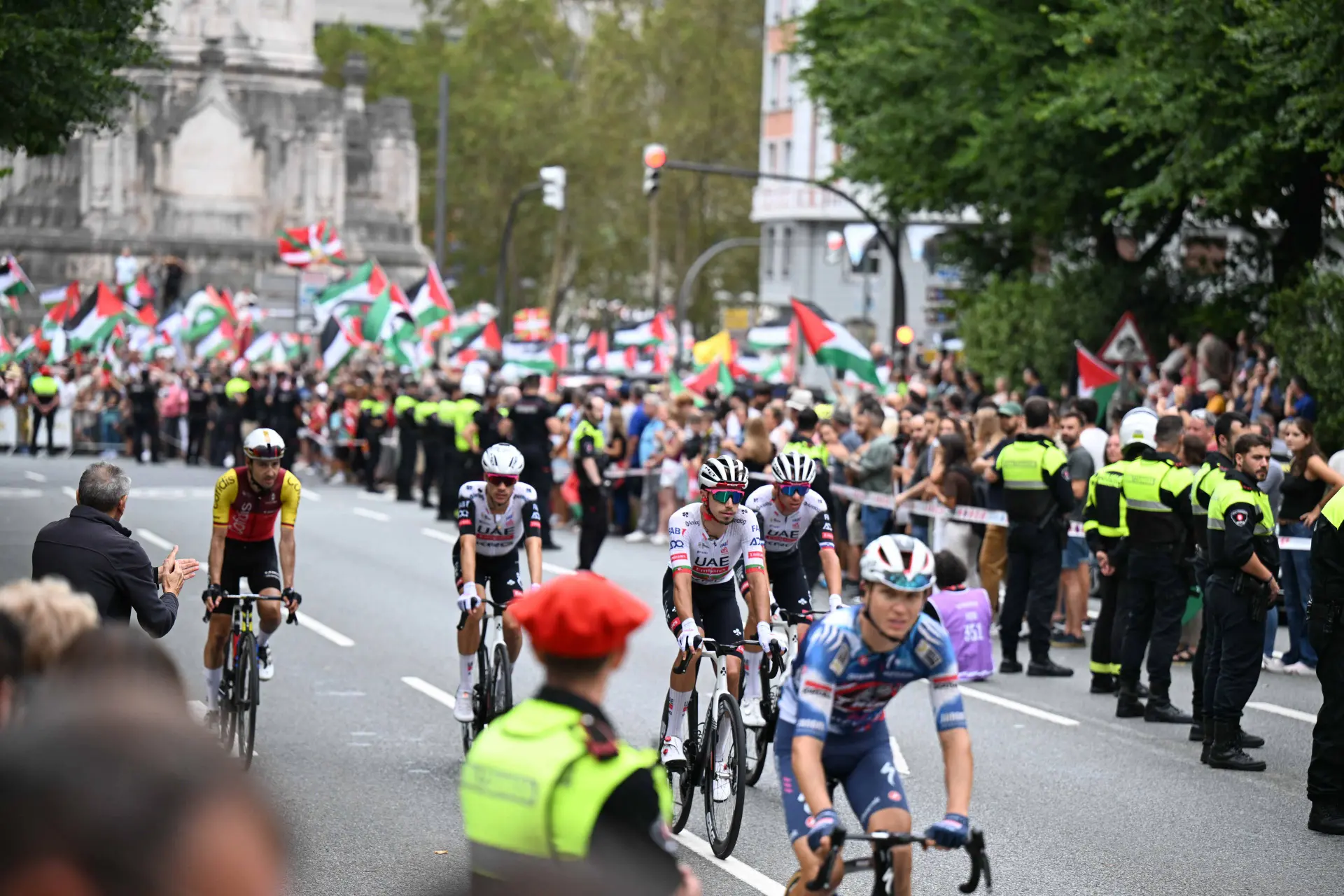
Spanish politics adds fuel to the fire
If the UCI was sluggish, the Spanish government was the opposite. Prime Minister Pedro Sánchez went as far as praising the demonstrators, calling Spain “a role model and a source of pride” for its defence of human rights.
That stance sparked fury from Madrid’s mayor, José Luis Martínez-Almeida, who accused Sánchez of encouraging violence — and Rasmussen has echoed the criticism. “It’s catastrophic to incite and even praise the demonstrators for their actions,” he said.
What’s next for cycling?
Michal Kwiatkowski has already voiced fears that cycling could be exploited as a protest stage, with serious sporting consequences. Rasmussen shares that concern, though he admits a fully ticketed, closed-arena model is unrealistic given that grand tours run through towns and cities.
Still, with political tensions simmering and the memory of the Vuelta disruptions still raw, the question is no longer whether cycling will need to rethink its open-access model — but how far organisers will be forced to go.
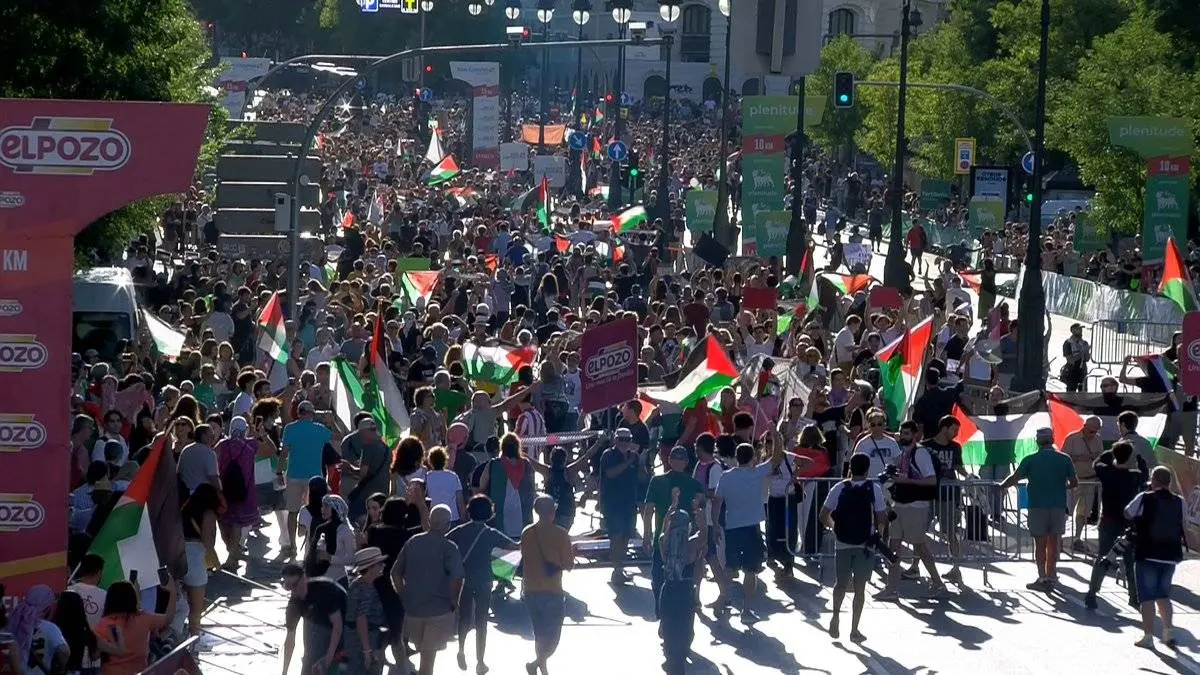
🔴ÚLTIMA HORA | La Policía carga contra los manifestantes propalestinos tras irrumpir estos en el recorrido de la Vuelta a la altura de Atocha, Cibeles y Gran Vía. Sigue la última hora de la etapa https://t.co/HNDVruwZ06
— EL PAÍS (@el_pais) September 14, 2025
📹 @juanjoglar pic.twitter.com/xpEeOMDwBj

Kieran WoodDeputy Editor-in-Chief
Kieran Wood is a sports journalist based in Wales and has been active in journalism since 2022. He regularly contributes to DartsNews.com and CyclingUpToDate.com, where he covers professional cycling and darts. In cycling, his work includes liveblogs from major races, including the Tour de France, the Giro d’Italia, and La Vuelta a España, alongside race reports and analysis. He has also conducted interviews with professional riders.
His reporting spans the full racing calendar, from one-day classics to stage races, with a focus on accurate, real-time coverage and clear contextual analysis. For statistics, results, and historical context, he regularly uses resources such as ProCyclingStats. To support reporting on rider activity and training context where relevant, he also references Strava.
In his work, Kieran places strong emphasis on careful sourcing, editorial accuracy, and updating articles as new, verified information becomes available.
claps 2visitors 2
Just in
Popular news

Latest comments
- Bernal won the Tour because his attack stuck after Thomas’s was reeled in, and then they ended the stage due to the landslide - a deserved win, but contingent on many things. He won the Giro with quality and skill. And then, like so often happens for the cruelest of reasons, his injuries left him an incomplete version of his former self. He’s had a great career, what a great GC rider (8 of his 23 wins are GC, including 2 grand tours and 2 of the 7 major GC races), but already was struggling after COVID. I wish him the best, and if he retires, he should retire with pride for a career well done!RidesHills07-10-2026
- Roglič? In an interview he’ll continue to be hilariously dry about his goals, emphasize that he’s still having fun, and keep churning along until he doesn’t want to do this anymore. “Ah, you know, 100 wins would be nice, but eh - it’s just a number. I have fun, you know?” I can almost hear him saying those words. He’s not heading for low rank races to get the wins, he continues to race the major races (and I suspect would have won the Vuelta again were it not for that awful accident and that disgusting purple leg right before racing began).RidesHills07-10-2026
- BTW the list of classics you gave from PCS is participation, not winning
 Rafionain-Glas07-10-2026
 - Yes, though we saw that last week already.Jumpyjohn07-10-2026
- Or that riders get out in time.Jumpyjohn07-10-2026
- Hope he doesn’t stick with it just for that, would hate to see him exhibiting any has been footballer behaviour.Jumpyjohn07-10-2026
- Yep, that’s about it, couldn’t imagine someone wouldn’t get that.Jumpyjohn07-10-2026
- Time for your meds I thinkJumpyjohn07-10-2026
- No surprise here. Nice the oldies are having success, not the first discipline where you expect age to be an advantageJumpyjohn07-10-2026
- Any idea why Remco wasn’t there, Lombardia?Jumpyjohn07-10-2026
Loading
2 Comments